Quick Verdict: The 2025 Lexus UX 300h at a Glance
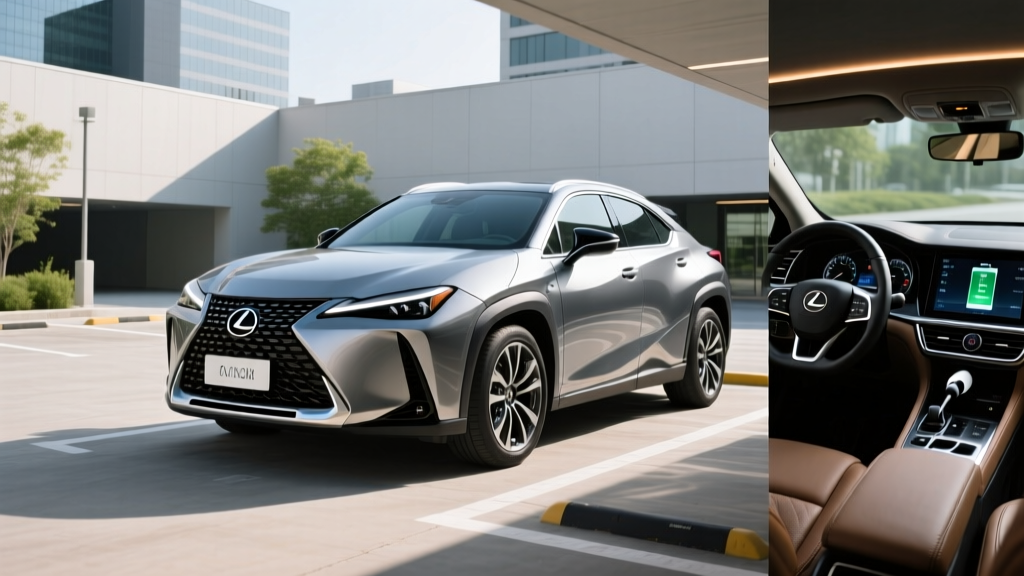
The 2025 Lexus UX 300h occupies a specific niche: a luxury subcompact crossover that prioritizes fuel efficiency and urban drivability over raw performance or cargo space. With an EPA-estimated 42 MPG combined, it ranks among the most efficient luxury vehicles on the market — hybrid or otherwise. Lexus refreshed the UX lineup for the 2025 model year, dropping the gas-only UX 200 and making the hybrid UX 300h the sole offering. That decision simplifies the buying process and signals where Lexus sees the strongest demand: in electrified efficiency without the plug-in commitment.
This is a conventional hybrid (HEV), not a plug-in hybrid (PHEV). You never plug it in. The 1.4 kWh nickel-metal hydride battery charges itself through regenerative braking and engine operation. If you want electric-only driving, you'll need to look elsewhere — but if you want a set-it-and-forget-it luxury crossover that sips fuel in stop-and-go traffic, the UX 300h delivers exactly that.
| Spec | Value |
|---|---|
| Powertrain | 2.0L 4-cyl + 2 electric motors (AWD) |
| Combined Horsepower | 196 hp |
| Hybrid Battery | 1.4 kWh NiMH (self-charging, no plug) |
| EPA MPG (City / Hwy / Combined) | 43 / 41 / 42 |
| 0–60 mph | 8.0 seconds |
| Drivetrain | Electronic AWD (e-AWD) |
| Cargo Volume (rear seats up) | 21.7 cu ft |
| Base MSRP (UX 300h Premium) | $37,490 |
| Battery Warranty | 10 years / 150,000 miles |
| Federal Tax Credit | Not eligible (HEV, not PHEV/BEV) |
How Many MPG Does the 2025 Lexus UX Hybrid Get?
The EPA rates the 2025 Lexus UX 300h at 43 MPG city, 41 MPG highway, and 42 MPG combined across all trims. These figures apply to the all-wheel-drive configuration, which is the only drivetrain offered — Lexus equips every UX 300h with its e-AWD system that uses a dedicated rear electric motor.
| Driving Cycle | EPA MPG |
|---|---|
| City | 43 MPG |
| Highway | 41 MPG |
| Combined | 42 MPG |
Real-World MPG vs. EPA Estimates
Toyota and Lexus hybrids have a well-documented tendency to exceed their EPA city estimates in real-world driving, and the UX 300h is no exception. In mixed urban commuting with frequent stops, owners regularly report 44–46 MPG. The hybrid system recovers energy during braking and low-speed deceleration, making stop-and-go traffic an efficiency advantage rather than a penalty.
Highway driving tells a different story. At sustained 75–80 mph speeds, expect closer to 38–40 MPG. The relatively small 2.0-liter engine works harder at high speeds, and the aerodynamic profile of a crossover creates more drag than a sedan. On a 300-mile highway trip in moderate temperatures, you'll likely see the combined trip computer settle around 39–40 MPG. In cold weather (below 35°F), the engine runs more frequently to maintain cabin heat, which can drop city MPG into the upper 30s until the powertrain reaches operating temperature.
Source: EPA fueleconomy.gov — 2025 Lexus UX 300h
Hybrid (HEV) vs. Plug-In Hybrid (PHEV): What the UX 300h Is — and Isn't
A common point of confusion among luxury crossover shoppers is whether the UX 300h can drive on electric power alone or needs to be plugged in. It cannot, and it doesn't. Here's the distinction:
| Feature | Conventional Hybrid (HEV) | Plug-In Hybrid (PHEV) |
|---|---|---|
| Plug-in charging | No — self-charging via regen + engine | Yes — plug in to charge a larger battery |
| Electric-only range | None (EV assist only at low speeds) | Typically 20–45 miles on battery alone |
| Battery size | ~1–2 kWh | ~10–20 kWh |
| Federal tax credit (§30D) | Not eligible | Up to $7,500 if requirements met |
| Example | Lexus UX 300h | Toyota RAV4 Prime |
The UX 300h's 1.4 kWh battery is far too small to propel the vehicle any meaningful distance on electricity alone. Instead, the electric motors assist the gasoline engine during acceleration, enable engine-off coasting at low speeds, and capture energy during braking. The result is dramatically improved fuel economy without any change to your fueling routine — you still visit a gas station, just less often.
Lexus does not currently offer a PHEV version of the UX. If plug-in capability is a priority, you'd need to look at larger vehicles like the Toyota RAV4 Prime (42 miles electric-only, ~$44,000) or step up to the Lexus NX 450h+ (37 miles electric-only, ~$59,000). Both are PHEVs, both qualify for partial or full federal tax credits depending on sourcing and income, and both are substantially larger and more expensive than the UX 300h.
Powertrain and Performance: 196 HP with e-AWD
The 2025 UX 300h pairs a 2.0-liter inline-four Atkinson-cycle engine with two electric motor-generators in a series-parallel hybrid configuration. Total system output is 196 horsepower. A third electric motor on the rear axle provides electronic all-wheel drive, engaging automatically when slip is detected or during hard acceleration.
The 0–60 mph time of 8.0 seconds is adequate for a luxury subcompact but not quick by modern standards. For comparison, the Tesla Model Y Long Range hits 60 in roughly 4.8 seconds, and even the BMW X1 xDrive28i (gas-only) manages about 6.3 seconds. The UX 300h prioritizes smoothness and efficiency over acceleration, and the CVT-style hybrid transaxle keeps the engine in its most efficient operating range.
Where the powertrain shines is in city driving. Electric motor torque fills in the low-rpm gap that makes small-displacement engines feel sluggish, and the transition between electric assist and engine power is nearly imperceptible. At highway merging speeds, there's enough reserve power, but you won't mistake this for a sporty crossover. Lexus tuned the suspension for comfort, and the steering is light and precise — ideal for urban environments, less engaging on canyon roads.
Pricing, Trims, and Tax Credit Eligibility
The 2025 Lexus UX 300h is offered in two main trims:
- UX 300h Premium — $37,490 MSRP (includes destination)
- UX 300h F SPORT Handling — $43,140 MSRP
The Premium trim includes a 12.3-inch touchscreen with wireless Apple CarPlay and Android Auto, Lexus Safety System+ 3.0 (adaptive cruise, lane-keeping, pre-collision), heated front seats, and the e-AWD system. The F SPORT Handling trim adds sport-tuned suspension, unique styling, a panoramic moonroof, and upgraded interior materials.
Does the 2025 Lexus UX Hybrid Qualify for a Federal Tax Credit?
No. The UX 300h is a conventional hybrid (HEV), and the IRS §30D Clean Vehicle Credit applies only to plug-in electric vehicles — battery-electric (BEV) and plug-in hybrid (PHEV) models with a battery capacity of at least 7 kWh. The UX 300h's 1.4 kWh battery doesn't come close. There is no federal tax credit for purchasing a conventional hybrid vehicle as of current IRS rules.
Some states offer their own incentives for hybrid purchases, though these are far less common than EV incentives. Check your state's department of revenue or energy office for current programs. A few states have offered rebates or reduced registration fees for hybrids, but these vary widely and change frequently. Consult a tax professional for your specific situation.
Source: IRS.gov — Clean Vehicle Credits
Battery Warranty, Reliability, and Replacement Costs
Hybrid battery longevity is consistently the top concern among first-time hybrid buyers. Lexus addresses this with one of the strongest hybrid battery warranties in the industry.
Lexus Hybrid Battery Warranty
Coverage: 10 years or 150,000 miles (whichever comes first)
What's covered: Hybrid battery pack and hybrid system components
Capacity threshold: Lexus warrants against defects and abnormal degradation; specific capacity-retention percentages are evaluated case-by-case
Transferable: Yes — warranty transfers to subsequent owners
How Reliable Is the UX 300h?
Lexus consistently ranks at or near the top of J.D. Power and Consumer Reports reliability studies, and the UX 300h benefits from the brand's decades of hybrid powertrain experience. Toyota and Lexus have produced millions of hybrids since the original Prius in 1997, and the hybrid synergy drive system in the UX 300h is a mature, well-proven architecture.
The 1.4 kWh nickel-metal hydride battery is deliberately small and conservatively managed. Unlike larger EV batteries that experience significant degradation over time, the UX 300h's hybrid battery cycles within a narrow state-of-charge window — typically between 40% and 80%. This shallow cycling dramatically extends battery life. Real-world data from Toyota/Lexus hybrids shows that most original hybrid batteries last well beyond 150,000 miles, and many exceed 200,000 miles without replacement.
Hybrid Battery Replacement Cost
If the hybrid battery does eventually need replacement outside of warranty, expect to pay between $2,000 and $4,000 for a new OEM battery pack, including labor. Refurbished or reconditioned packs are available for $1,000–$2,000. This is a fraction of the cost of replacing a full EV traction battery (which can run $10,000–$20,000+), because the UX 300h's battery is small and the chemistry (NiMH) is well-understood and inexpensive to manufacture.
For most buyers who plan to own the vehicle within the 10-year/150,000-mile warranty window, battery replacement cost should be a non-issue. The risk is real but statistically low.
Who Should Buy the 2025 Lexus UX 300h — and Who Shouldn't
Pros
- 42 MPG combined — among the best in luxury crossovers
- No plug-in required — zero behavior change from a gas car
- Standard AWD across all trims
- Lexus Safety System+ 3.0 included standard
- 10-year / 150,000-mile hybrid battery warranty
- Strong resale value and brand reliability reputation
Cons
- Modest 196 hp — not a performance-oriented crossover
- 21.7 cu ft cargo space — tight for the segment
- No federal tax credit eligibility
- No electric-only driving capability
- Rear seat space is snug for tall passengers
- F SPORT Handling trim pushes price past $43,000
Choose the UX 300h If:
- You want luxury-brand quality with hybrid efficiency and no plug-in hassle
- Your commute is primarily urban or suburban with frequent stops
- You value reliability, strong warranty coverage, and low maintenance costs
- You don't need more than ~22 cubic feet of cargo space
- You want AWD standard without a fuel-economy penalty
Look Elsewhere If:
- You want electric-only driving for short commutes — consider a PHEV like the Lexus NX 450h+ or Toyota RAV4 Prime
- You need maximum cargo space — the Lexus NX or RAV4 Hybrid offer significantly more room
- You want to qualify for the $7,500 federal EV tax credit — you'll need a BEV or eligible PHEV
- Performance is a priority — the BMW X1 or Genesis GV60 deliver more engaging driving dynamics
2025 Lexus UX 300h vs. Key Competitors
| Vehicle | Type | EPA MPG / MPGe | HP | Base MSRP | Tax Credit |
|---|---|---|---|---|---|
| Lexus UX 300h | HEV | 42 MPG combined | 196 | $37,490 | None |
| BMW X1 xDrive28i | Gas | 28 MPG combined | 241 | $40,500 | None |
| Volvo XC40 Recharge | BEV | 85 MPGe combined | 402 | $53,550 | Up to $7,500* |
| Audi Q3 45 TFSI | Gas | 25 MPG combined | 228 | $38,700 | None |
*Federal tax credit eligibility depends on MSRP caps, buyer income limits, and battery-sourcing requirements under IRS §30D. Verify current eligibility on IRS.gov.
Frequently Asked Questions
How many MPG does the 2025 Lexus UX 300h hybrid get?
The EPA rates it at 43 MPG city, 41 MPG highway, and 42 MPG combined. Real-world city driving often exceeds the EPA estimate, with many owners reporting 44–46 MPG in stop-and-go traffic. Highway MPG tends to run slightly below the sticker at 38–40 MPG.
Does the 2025 Lexus UX hybrid need to be plugged in?
No. The UX 300h is a conventional hybrid (HEV), not a plug-in hybrid. The 1.4 kWh battery charges itself through regenerative braking and the gasoline engine. You fuel it like any other car — at a gas station.
Can the UX 300h drive on electric power only?
Not in any practical sense. The electric motors assist the engine and enable brief engine-off coasting at very low speeds, but there is no meaningful electric-only driving range. For that capability, you need a plug-in hybrid (PHEV) or a battery-electric vehicle (BEV).
Does the 2025 Lexus UX 300h qualify for any tax credit?
It does not qualify for the federal §30D Clean Vehicle Credit, which is reserved for plug-in vehicles (BEVs and PHEVs). Some states may offer their own hybrid incentives, but these are less common. Check your state's energy or revenue department for current programs.
Is the Lexus UX 300h hybrid reliable?
Lexus ranks among the most reliable luxury brands in major reliability studies. The hybrid powertrain is based on decades of Toyota/Lexus hybrid engineering. The hybrid battery is warranted for 10 years or 150,000 miles, and real-world data shows most hybrid batteries last well beyond the warranty period.
What does a Lexus UX hybrid battery replacement cost?
Out-of-warranty replacement of the hybrid battery pack typically costs $2,000–$4,000 for a new OEM unit, or $1,000–$2,000 for a refurbished pack. Given the 10-year/150,000-mile warranty and the conservative cycling of the NiMH battery, most owners will never face this expense.
Hybrid vs. PHEV vs. EV — which is right for me?
Choose a conventional hybrid (HEV) like the UX 300h if you want maximum fuel efficiency with zero lifestyle change — no plug, no range planning, just fill up and go. Choose a PHEV if you can charge at home and want 20–40 miles of electric-only commuting with a gas engine for longer trips. Choose a BEV if you want zero tailpipe emissions, the lowest per-mile fuel cost, access to HOV lanes and tax credits, and you have reliable charging access at home or work. The right choice depends entirely on your charging access, commute distance, and willingness to adapt your fueling routine.