Quick Verdict: Which Lexus Hybrid SUV Fits You?
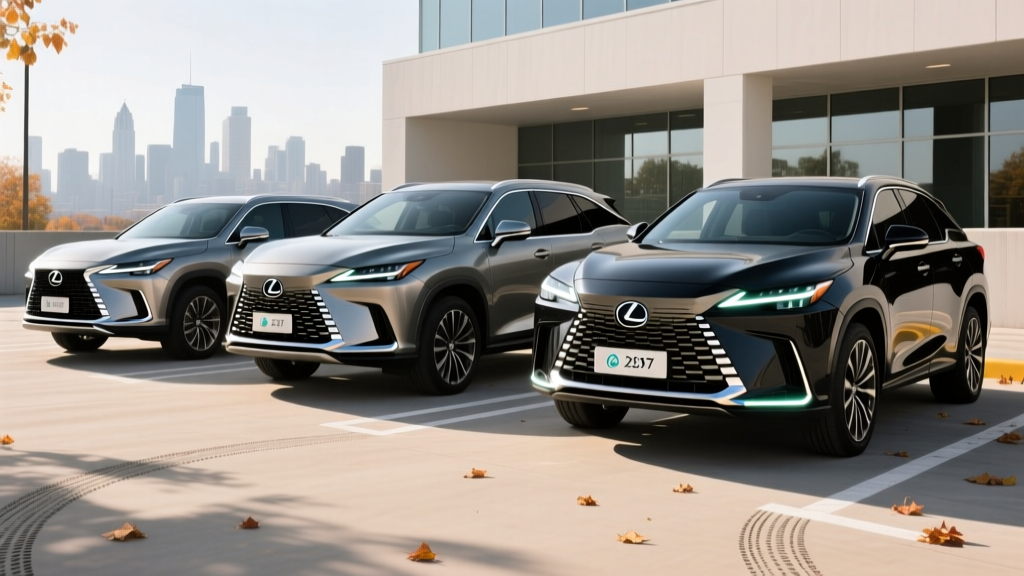
Lexus offers one of the broadest hybrid SUV lineups in the luxury segment for 2025, spanning compact crossovers to three-row family haulers. Five models carry the hybrid badge — four conventional hybrids (HEVs) and one plug-in hybrid (PHEV) — and they are not interchangeable. If you want zero plug-in hassle and 36+ MPG, the NX 350h or RX 350h deliver. If you have home charging and want 37 miles of electric-only commuting before the gas engine kicks in, the NX 450h+ is the lone PHEV option. Below, every model broken down by powertrain, efficiency, price, and who it's actually for.
HEV vs PHEV — Know the Difference Before You Buy
Conventional Hybrid (HEV): Self-charging via regenerative braking and the gas engine. No plug, no cord, no range anxiety. Battery is small (1–2 kWh). You get better MPG, especially in city driving, but zero electric-only range.
Plug-in Hybrid (PHEV): Larger battery (18+ kWh) you charge via a wall outlet or Level 2 charger. Delivers meaningful electric-only range (typically 20–40 miles) for daily commutes, then operates as a regular hybrid once depleted. Requires charging access to realize full value.
2025 Lexus Hybrid SUV Spec Comparison
| Model | Type | Powertrain | Combined HP | 0-60 mph | Battery | EPA EV Range | EPA MPG (City/Hwy/Comb) | Base MSRP |
|---|---|---|---|---|---|---|---|---|
| NX 350h | HEV | 2.5L I4 + 2 motors (AWD) | 240 hp | 7.2 sec | ~1.6 kWh NiMH | N/A | 41 / 37 / 39 | $43,815 |
| NX 450h+ | PHEV | 2.5L I4 + 2 motors (AWD) | 304 hp | 6.0 sec | 18.1 kWh Li-ion | 37 mi | 38 / 37 / 38 (hybrid) / 84 MPGe | $59,905 |
| RX 350h | HEV | 2.5L I4 + 2 motors (AWD) | 246 hp | 7.4 sec | ~1.6 kWh NiMH | N/A | 37 / 34 / 36 | $52,710 |
| RX 450h+ | PHEV | 2.5L I4 + 2 motors (AWD) | 304 hp | 6.2 sec | 18.1 kWh Li-ion | 37 mi | 36 / 34 / 35 (hybrid) / 83 MPGe | $64,150 |
| TX 500h | HEV | 2.4L Turbo I4 + hybrid (AWD) | 366 hp | 5.9 sec | ~1.4 kWh NiMH | N/A | 27 / 28 / 27 | $67,855 |
Sources: fueleconomy.gov, Lexus USA. EPA estimates; real-world results vary with driving style, climate, and terrain. MSRP excludes $1,195 destination fee.
Fuel Economy Deep Dive: Real-World MPG vs EPA Stickers
Toyota's hybrid system — which underpins every Lexus hybrid — is famous for one quirk: it frequently exceeds EPA estimates in city driving. The Atkinson-cycle engine shuts off at stops, and regenerative braking recovers energy that gas cars waste as heat. Owners of the NX 350h and RX 350h routinely report 42–44 MPG in stop-and-go traffic.
The trade-off is highway driving. At sustained 70–80 mph speeds, the electric motor contributes less and the relatively small four-cylinder engine carries the load. Expect highway fuel economy to land 2–4 MPG below the EPA sticker on the HEV models. Here's what to plan for:
| Model | EPA Combined | Real-World City (typical) | Real-World Highway (70-80 mph) | Annual Fuel Cost* |
|---|---|---|---|---|
| NX 350h | 39 MPG | 41–44 MPG | 33–36 MPG | ~$1,420 |
| RX 350h | 36 MPG | 38–40 MPG | 30–33 MPG | ~$1,540 |
| TX 500h | 27 MPG | 26–28 MPG | 25–27 MPG | ~$2,060 |
*Based on 15,000 miles/year, 55% city / 45% highway, $3.50/gallon regular unleaded.
PHEV Note: NX 450h+ and RX 450h+ Real-World Efficiency
When the 18.1 kWh battery is charged, the NX 450h+ and RX 450h+ deliver 37 miles of electric-only range — enough for most commutes. Real-world EV range in mild weather (60–75°F) typically reaches 34–39 miles. In freezing conditions, expect 25–30 miles before the gas engine activates. Once the battery depletes, both operate as conventional hybrids at 35–38 MPG combined. Total system range exceeds 520 miles on a full tank plus full charge.
Powertrain Breakdown: What's Under the Hood
Every 2025 Lexus hybrid SUV uses a variant of Toyota's hybrid synergy drive, but the configurations differ meaningfully:
NX 350h / RX 350h — Efficiency-First HEV
A naturally aspirated 2.5-liter inline-four pairs with two electric motor-generators and an electronically controlled CVT. Combined output is 240–246 hp. The system prioritizes seamless low-speed electric assist and regenerative braking. Standard electronic AWD uses a rear-mounted motor — no mechanical driveshaft — that engages only when slip is detected.
NX 450h+ / RX 450h+ — The Plug-In Twins
Same 2.5L engine, but paired with a larger 18.1 kWh lithium-ion battery and more powerful electric motors for a combined 304 hp. The key advantage: you can drive at highway speeds (up to 84 mph) on electric power alone. When the battery depletes, the system defaults to standard hybrid operation. Charging: Level 1 (120V) takes approximately 12 hours; Level 2 (240V, 3.3 kW onboard charger) takes about 5.5 hours. No DC fast charging — this is typical for PHEVs in this class.
TX 500h — The Performance Hybrid
The three-row TX 500h uses a different formula: a turbocharged 2.4-liter inline-four paired with Toyota's Hybrid MAX system. Combined output is 366 hp and 406 lb-ft of torque routed through a 6-speed automatic (no CVT). This is the quickest Lexus hybrid SUV in the lineup at 5.9 seconds to 60 mph, but efficiency takes a back seat at 27 MPG combined.
Pricing, Trims, and Tax Credit Eligibility
Here's where the HEV vs PHEV distinction has real financial consequences:
| Model | Base MSRP | Top Trim MSRP | Federal Tax Credit (§30D) | State Incentives |
|---|---|---|---|---|
| NX 350h | $43,815 | $52,565 (F Sport Handling) | Not eligible | Varies by state |
| NX 450h+ | $59,905 | $63,405 (F Sport) | Up to $7,500* | Varies by state |
| RX 350h | $52,710 | $62,810 (Luxury) | Not eligible | Varies by state |
| RX 450h+ | $64,150 | $68,560 (Luxury) | Up to $7,500* | Varies by state |
| TX 500h | $67,855 | $72,755 (F Sport Handling) | Not eligible | Varies by state |
*The §30D federal tax credit for PHEVs requires meeting battery-component and critical-mineral sourcing rules, buyer income caps ($150K single / $300K joint AGI), and the vehicle must have a battery capacity of at least 7 kWh (both PHEVs qualify). The credit can now be transferred to the dealer at point of sale as an instant discount. Rules change frequently — verify current eligibility at IRS.gov or consult a tax professional before purchasing.
Conventional hybrids (NX 350h, RX 350h, TX 500h) do not qualify for the §30D federal tax credit. This credit applies exclusively to plug-in vehicles (BEVs and PHEVs) with sufficient battery capacity. Some states offer separate rebates for hybrids — check your state's energy office for details.
Reliability, Battery Lifespan, and Warranty Coverage
This is where Lexus's hybrid lineup earns its reputation. Toyota/Lexus hybrid systems have been in production since 1997 (Prius), and the long-term data is robust:
- Hybrid battery warranty: 10 years / 150,000 miles (whichever comes first) on all 2025 Lexus hybrid models — covering capacity loss below a defined threshold and defects.
- Powertrain warranty: 6 years / 70,000 miles.
- Basic warranty: 4 years / 50,000 miles.
Battery Replacement Cost Reality
Out-of-warranty hybrid battery replacement for the NX 350h and RX 350h typically runs $3,000–$5,000 at a Lexus dealer, including labor. The PHEV models (NX 450h+, RX 450h+) use a larger lithium-ion pack that costs $8,000–$12,000 to replace. However, real-world data from Toyota/Lexus hybrids shows that most original batteries last well beyond 150,000 miles with minimal degradation, particularly the NiMH packs in the HEVs, which degrade more gracefully than early lithium-ion cells.
Individual hybrid battery modules can often be replaced rather than the full pack, reducing out-of-warranty costs to $500–$1,500 at specialized hybrid repair shops. Lexus's 10-year/150,000-mile hybrid battery warranty is among the best in the industry and covers the primary failure risk window.
Pros
- Class-leading reliability and resale value across all models
- HEVs need no charging infrastructure — fill up and go
- NX 350h achieves 41+ MPG city in real-world driving
- PHEVs offer 37 miles EV range for gas-free commuting
- 10-year / 150,000-mile hybrid battery warranty
- Quiet, refined cabin with Lexus Safety System+ 3.0 standard
- PHEV models eligible for up to $7,500 federal tax credit
Cons
- TX 500h fuel economy disappoints at 27 MPG combined
- PHEV models carry $15K+ premium over HEV equivalents
- No DC fast charging on PHEV models
- HEV models do not qualify for federal tax credits
- CVT drone under hard acceleration (except TX 500h)
- PHEV cargo space slightly reduced due to larger battery
- Rear-seat space in NX is tighter than German rivals
Hybrid vs PHEV vs EV: Which Lexus Fits Your Life?
Choosing between a Lexus hybrid, a Lexus PHEV, or a full battery-electric vehicle comes down to three variables: your daily mileage, your charging access, and your road-trip frequency.
Choose a Lexus HEV (NX 350h, RX 350h, TX 500h) if:
- You have no home charging access (apartment, street parking)
- You want maximum simplicity — no plugs, no cords, no apps
- You drive 30+ miles daily and want consistent 35–42 MPG
- You take frequent long road trips and don't want to plan charging stops
- You prioritize lowest upfront cost and proven long-term reliability
Choose a Lexus PHEV (NX 450h+, RX 450h+) if:
- You can install a Level 2 charger at home or have reliable workplace charging
- Your daily commute is under 35 miles round-trip (gas-free most days)
- You want EV-like daily driving but zero range anxiety on longer trips
- You want to capture the $7,500 federal tax credit (if eligible)
- You plan to own the vehicle 5+ years and want to hedge against gas price spikes
Choose a Full EV (e.g., Lexus RZ 450e) if:
- You have reliable home Level 2 charging
- Your daily driving is under 200 miles and you rarely tow
- You want to eliminate oil changes, spark plugs, and transmission fluid entirely
- You want the lowest per-mile fuel cost (electricity is typically $0.04–0.06/mile vs $0.10–0.14/mile for hybrid gas)
Frequently Asked Questions
How many MPG does the 2025 Lexus NX 350h get?
The EPA rates the NX 350h at 41 city / 37 highway / 39 combined MPG. In real-world city driving, owners commonly see 42–44 MPG thanks to frequent regenerative braking. Highway cruising at 75+ mph typically yields 33–36 MPG.
How far can the Lexus NX 450h+ go on electric only?
The EPA rates the NX 450h+ at 37 miles of electric-only range. In mild weather, expect 34–39 real-world miles. In freezing temperatures, plan for 25–30 miles before the gas engine engages. Total combined range (full battery + full tank) exceeds 520 miles.
Do Lexus hybrid SUVs need to be plugged in?
No — the conventional hybrids (NX 350h, RX 350h, TX 500h) never need to be plugged in. They self-charge through regenerative braking and the gas engine. Only the plug-in hybrids (NX 450h+, RX 450h+) benefit from being plugged in to recharge their larger batteries for electric-only driving.
Is the Lexus hybrid battery reliable and expensive to replace?
Lexus hybrid batteries carry a 10-year / 150,000-mile warranty. Real-world data shows most Toyota/Lexus hybrid batteries last 150,000–200,000+ miles. Out-of-warranty replacement for HEV models runs $3,000–$5,000; PHEV packs cost $8,000–$12,000. Individual module replacement at specialty shops can reduce costs significantly.
Does any 2025 Lexus hybrid SUV qualify for a federal tax credit?
Only the plug-in hybrid models — the NX 450h+ and RX 450h+ — may qualify for the §30D federal tax credit of up to $7,500, subject to battery sourcing requirements, buyer income limits ($150K single / $300K joint), and MSRP caps. Conventional hybrids (NX 350h, RX 350h, TX 500h) do not qualify for any federal tax credit. Always verify current rules at IRS.gov before purchasing.
How long does it take to charge the Lexus NX 450h+?
On a standard 120V household outlet (Level 1), a full charge takes approximately 12 hours. On a 240V Level 2 charger, expect about 5.5 hours. The NX 450h+ has a 3.3 kW onboard charger and does not support DC fast charging. Plug in overnight and you'll wake up to a full battery every morning.
Which Lexus hybrid SUV is best for a family of five?
The TX 500h is the only three-row option, seating up to seven. However, its 27 MPG combined is the lowest in the lineup. For a family of five that doesn't need the third row, the RX 350h offers more rear-seat legroom, a larger cargo area, and 36 MPG combined — a better balance of space and efficiency.
Is the Lexus RX 450h+ worth the premium over the RX 350h?
The RX 450h+ costs roughly $11,440 more than the RX 350h at base. You gain 37 miles of EV range, 58 more horsepower, and potential eligibility for the $7,500 tax credit (netting the premium to ~$4,000 if you qualify). If you can charge at home and your commute is under 35 miles, the 450h+ pays for itself in fuel savings within 3–4 years. If you can't charge at home, the 350h is the smarter buy.