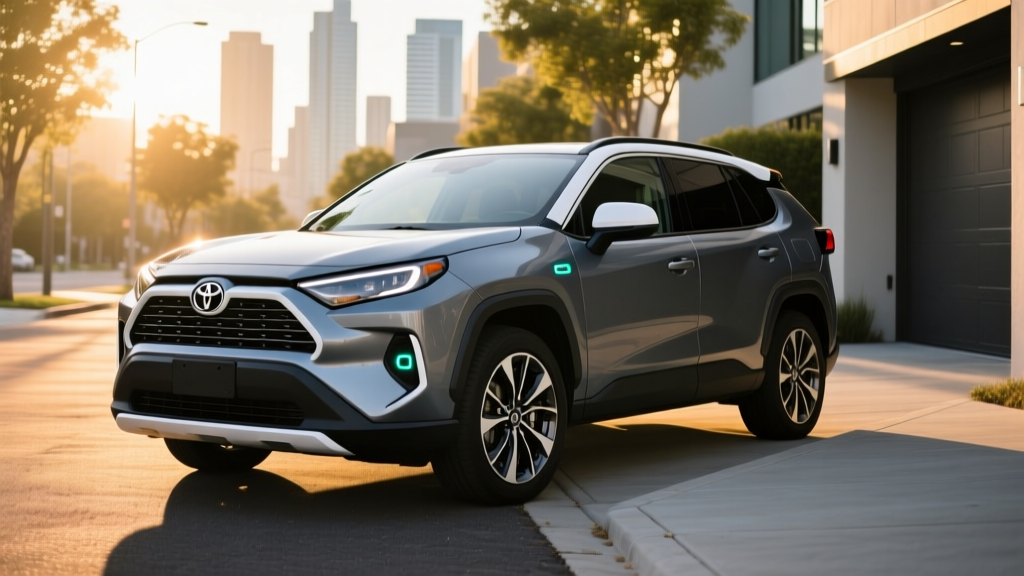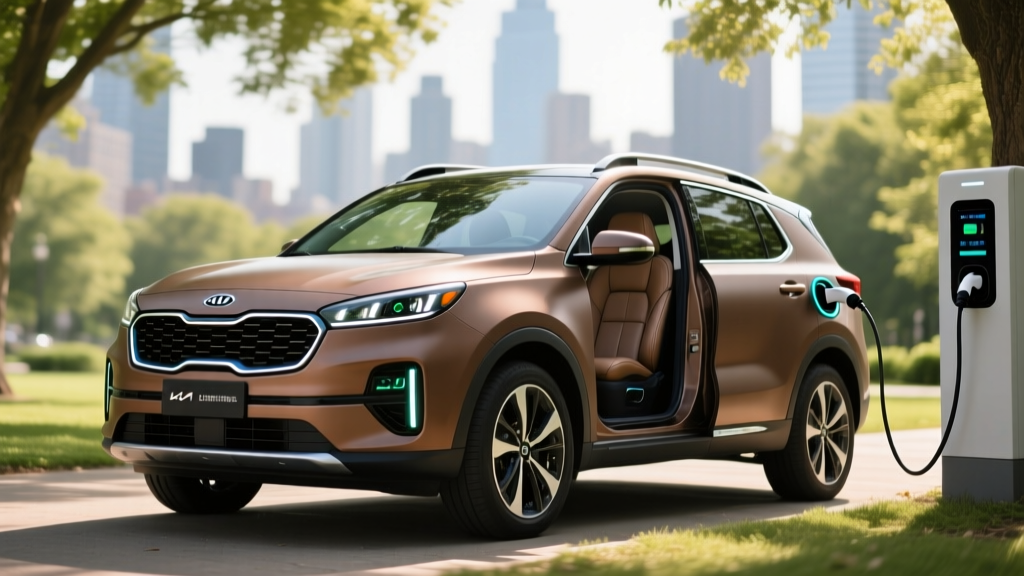
The 2025 Kia Sportage Plug-In Hybrid X-Line Prestige sits at a crossroads that many compact SUV buyers are navigating: enough electric-only range for daily commuting, a gasoline engine for weekend road trips, and a premium trim level that rivals luxury crossovers on features. But does the PHEV math actually work once you factor in real-world efficiency, charging logistics, and the current federal tax credit landscape?
After examining EPA data, manufacturer specifications, and ownership variables, here is a comprehensive breakdown of what the Sportage PHEV delivers — and where its limitations live.
HEV vs. PHEV: Understanding What You're Buying
Before evaluating the Sportage PHEV specifically, it's critical to distinguish it from the conventional Sportage Hybrid (HEV). Kia sells both, and they serve different use cases.
| Feature | Sportage Hybrid (HEV) | Sportage Plug-In Hybrid (PHEV) |
|---|---|---|
| Plug-in charging required | No — charges via regenerative braking and engine | Yes — plugs in for electric-only driving |
| Battery capacity | ~1.49 kWh | 13.8 kWh (usable) |
| Electric-only range | None (EV assist only) | 34 miles (EPA) |
| Combined horsepower | 226 hp | 261 hp |
| Drivetrain | AWD | AWD |
| EPA combined MPG (gas) | 38 MPG | 35 MPG (charge-sustaining) |
| Starting MSRP | ~$29,590 | $40,590 (X-Line Prestige) |
The HEV is a traditional hybrid: the small battery buffers energy from regenerative braking and the engine, providing electric assist but never propelling the vehicle on electricity alone for meaningful distances. You never plug it in. The PHEV, by contrast, carries a substantially larger 13.8 kWh battery pack and a more powerful electric motor, enabling 34 miles of zero-tailpipe-emission driving before the gasoline engine takes over.
Fuel Economy and Electric-Only Range
The EPA rates the 2025 Sportage PHEV at 84 MPGe (miles per gallon equivalent) when operating on combined battery and gasoline energy. Once the battery is depleted and the vehicle runs in charge-sustaining (hybrid) mode, it returns 35 MPG combined.
| Driving Mode | City | Highway | Combined |
|---|---|---|---|
| Charge-sustaining (gas hybrid mode) | 36 MPG | 35 MPG | 35 MPG |
| Blended (EV + gas) | 84 MPGe | ||
Electric-only range: The EPA rates the Sportage PHEV at 34 miles on battery alone. In real-world mixed driving at moderate temperatures, expect 28–32 miles. Highway-speed driving (70+ mph) and cold weather (below 40°F) can reduce electric range to 22–26 miles. Cabin heating is a significant energy draw in winter since the PHEV uses a PTC heater rather than a heat pump in EV mode.
Total combined range: With a full charge and a full 11.1-gallon fuel tank, the Sportage PHEV can cover approximately 430 miles before needing to refuel or recharge.
How does this compare to real-world ownership? Drivers with commutes under 30 miles round-trip who charge nightly may use almost zero gasoline on weekdays. According to fueleconomy.gov, the Sportage PHEV's annual fuel cost is estimated at approximately $950, assuming 15,000 miles per year and regular charging — compared to roughly $1,850 for the gasoline-only Sportage AWD.
Powertrain and Performance Specs
The Sportage PHEV pairs a 1.6-liter turbocharged four-cylinder engine with a 72 kW (97 hp) permanent-magnet synchronous electric motor, routed through a 6-speed automatic transmission to all four wheels. Combined output is 261 horsepower and 258 lb-ft of torque.
| Specification | 2025 Sportage PHEV X-Line Prestige |
|---|---|
| Engine | 1.6L turbocharged I-4 |
| Electric motor | 72 kW (97 hp) permanent-magnet |
| Combined output | 261 hp / 258 lb-ft |
| Transmission | 6-speed automatic |
| Drivetrain | AWD |
| Battery capacity | 13.8 kWh (lithium-ion polymer) |
| EV-only range (EPA) | 34 miles |
| 0–60 mph | ~7.4 seconds |
| Fuel tank | 11.1 gallons |
| Towing capacity | 2,000 lbs |
| Cargo volume (rear seats up) | 34.5 cu ft |
| Base MSRP | $40,590 |
The 261 hp output makes the PHEV the most powerful Sportage variant outside the 2.5T gasoline model. Acceleration is brisk and the electric motor provides immediate torque from standstill, which makes city driving feel more responsive than the HEV's 226 hp. The 6-speed automatic is a conventional torque-converter unit — not a CVT — which most drivers find more natural under hard acceleration.
Charging: What You Need to Know
The Sportage PHEV charges exclusively via AC — it does not support DC fast charging. This is standard for most compact PHEVs, as the relatively small battery doesn't justify the cost and weight of DC hardware.
| Charging Level | Power | Time (0–100%) | Notes |
|---|---|---|---|
| Level 1 (120V household outlet) | ~1.4 kW | ~10–11 hours | Adequate for overnight top-up |
| Level 2 (240V, 3.3 kW onboard charger) | 3.3 kW | ~4 hours 15 min | Standard home wallbox or public L2 |
The onboard charger is rated at 3.3 kW — this is the maximum AC power the vehicle can accept, even if connected to a 7.2 kW or 11.5 kW Level 2 station. The battery will only draw 3.3 kW. This is a deliberate engineering choice: for a 13.8 kWh battery, 3.3 kW fully replenishes it overnight and keeps cost and weight down.
Home charging setup: Most PHEV owners find Level 1 (a standard 120V outlet in the garage) sufficient if they drive less than 34 miles daily. A full overnight charge from near-empty takes about 10–11 hours on Level 1. If you regularly deplete the battery or want faster turnaround, a Level 2 home charger ($300–$600 for equipment, $500–$1,500 for electrician installation, depending on panel proximity) cuts that to just over 4 hours. No panel upgrade is typically needed for a 3.3 kW PHEV draw.
X-Line Prestige Trim: What's Included
The X-Line Prestige is the top-tier PHEV trim, and it carries a $40,590 MSRP (before destination). Key standard features include:
- 12.3-inch dual panoramic displays (instrument cluster + infotainment)
- Harman Kardon premium audio (8 speakers)
- Heated and ventilated front seats, heated steering wheel
- Leather-trimmed seats with power driver's seat and memory
- Panoramic sunroof with LED interior lighting
- Highway Driving Assist 2 (HDA2) — adaptive cruise with stop-and-go and lane centering
- Remote Smart Parking Assist
- Surround-view monitor with blind-spot view
- Wireless Apple CarPlay and Android Auto
- LED projector headlights with auto-leveling
The X-Line designation adds rugged exterior cladding, blacked-out trim accents, and unique 19-inch alloy wheels. Ground clearance is 7.1 inches — adequate for light trails and snow but not serious off-roading.
Kia's infotainment system is responsive and the physical climate controls (a toggle panel that switches between HVAC and media) are functional if occasionally confusing for first-time users. Navigation-based charging preconditioning is not a feature here, as the PHEV battery doesn't require thermal preconditioning for AC charging the way a BEV does for DC fast charging.
Federal Tax Credit and Incentive Eligibility
§30D Clean Vehicle Credit — 2025 Rules:
- Credit amount: Up to $7,500 for qualifying new PHEVs (must have ≥7 kWh battery — Sportage PHEV qualifies at 13.8 kWh)
- MSRP cap: SUVs/vans/pickups must be under $80,000 — Sportage PHEV at $40,590 qualifies
- Buyer income limits: AGI must not exceed $150,000 (single), $225,000 (head of household), or $300,000 (joint)
- Battery sourcing: Critical minerals and battery components must meet phased percentage thresholds from US/FTA countries — eligibility varies by production batch
- Point-of-sale transfer: Buyers can transfer the credit to the dealer for an upfront price reduction at purchase
- Assembly: Vehicle must undergo final assembly in North America — the Sportage PHEV is assembled in West Point, Georgia
Source: IRS §30D Clean Vehicle Credit. Eligibility can change based on battery component sourcing — verify current status on the IRS qualified vehicles list before purchasing.
Based on current IRS guidance, the Sportage PHEV has been eligible for at least a partial §30D credit ($3,750 or $7,500 depending on critical-mineral and battery-component sourcing thresholds met at the time of delivery). Because battery-sourcing compliance can shift between production runs, confirm the vehicle's VIN on the IRS qualified-vehicle list at the time of purchase. The credit can be transferred to the dealer at point of sale, reducing your out-of-pocket cost immediately.
Additionally, many states and utilities offer their own PHEV incentives — Colorado, for example, has offered state tax credits for PHEVs, and various utilities provide rebates for Level 2 charger installation. Check your state energy office and local utility for current programs.
Battery Warranty, Reliability, and Replacement Cost
Kia PHEV Battery Warranty: Kia covers the high-voltage battery pack for 10 years or 100,000 miles (whichever comes first) in all 50 states. In California Air Resources Board (CARB) states, the hybrid battery and related components are covered for 10 years/150,000 miles under emissions warranty provisions.
The warranty guarantees the battery will retain sufficient capacity to function as a PHEV — Kia defines this as retaining the ability to hold a charge and deliver electric propulsion. If capacity degrades below a functional threshold during the warranty period, Kia will repair or replace the battery at no cost.
Real-world degradation: PHEV batteries typically experience less severe degradation than BEV batteries because they operate in a narrower state-of-charge window (the system protects the battery by never fully draining or fully charging it at the cell level). Lithium-ion polymer cells in the Sportage PHEV are expected to retain 85–90% of original capacity after 5 years of typical use, based on industry averages for similar Hyundai/Kia PHEV powertrains (the Tucson PHEV and Sorento PHEV share this architecture).
Out-of-warranty replacement cost: Should the battery need replacement after the warranty period, expect a cost in the range of $4,000–$7,000 for the pack itself plus labor, based on current Hyundai/Kia PHEV battery pricing. This is significantly less than a full BEV battery replacement but is still a meaningful expense in the vehicle's second decade.
Overall reliability: Kia's turbocharged 1.6L engine and 6-speed automatic have been in production across multiple Hyundai/Kia models since 2021 with generally positive durability records. The PHEV powertrain adds complexity (electric motor, inverter, high-voltage wiring) but eliminates some wear items — regenerative braking extends brake pad life, and the engine runs fewer hours than in a pure ICE vehicle. According to IIHS, the Sportage earns strong crash-test ratings, which matters for family-oriented buyers considering this segment.
Sportage PHEV vs. Full EV vs. Gasoline: Which Fits You?
Choose the Sportage PHEV if:
- Your daily commute is under 30 miles round-trip and you can charge at home
- You regularly take road trips beyond 200 miles and don't want to plan around DC fast-charger availability
- You want to reduce gasoline consumption by 60–80% on typical weekdays without full EV commitment
- You live in a region with extreme cold where BEV range loss (20–40%) is a practical concern
Choose a full EV (BEV) if:
- You have reliable home charging and your daily driving stays under 200 miles
- You want zero tailpipe emissions and minimal maintenance (no oil changes, fewer moving parts)
- You qualify for the full $7,500 federal credit on a BEV and your state offers additional EV incentives
- You want the lowest per-mile energy cost (electricity at $0.13/kWh ≈ $0.04/mile vs. gas at $3.50/gal ≈ $0.13/mile)
Choose the Sportage HEV (conventional hybrid) if:
- You cannot charge at home (apartment, street parking, no garage access)
- Your budget is tighter — the HEV starts ~$11,000 lower than the PHEV
- You want strong fuel economy (38 MPG combined) without any plug-in behavior
- You drive long distances daily and the 34-mile EV range wouldn't meaningfully reduce your gas use
The PHEV's sweet spot is clear: home-charging access plus a short commute plus periodic long trips. If you can't plug in regularly, you're carrying 300+ pounds of battery you're not using, and the HEV's 38 MPG combined with lower purchase price makes more financial sense. If you can plug in and rarely drive beyond 34 miles, a full BEV eliminates gasoline entirely and typically offers lower operating costs over time.
Pros and Cons at a Glance
Pros
- 34-mile EV range covers most daily commutes gas-free
- 261 hp provides confident acceleration and highway merging
- X-Line Prestige trim is loaded: ventilated seats, HDA2, panoramic sunroof
- 10-year/100,000-mile battery warranty is among the best in the segment
- North American assembly supports §30D tax credit eligibility
- AWD standard — useful in snow and rain without a fuel-economy penalty as severe as ICE AWD
Cons
- 3.3 kW onboard charger means slow Level 2 replenishment (~4+ hours)
- No DC fast charging — can't quick-charge on road trips
- 35 MPG in charge-sustaining mode is lower than the HEV's 38 MPG (due to extra battery weight)
- $40,590 starting price is steep for a compact SUV, even with tax credit offset
- Cargo space (34.5 cu ft) is reduced vs. non-PHEV Sportage variants due to battery placement
- Real-world EV range drops to 22–26 miles in cold weather or at highway speeds
Frequently Asked Questions
How many MPG does the 2025 Kia Sportage PHEV get?
The EPA rates it at 35 MPG combined in charge-sustaining (hybrid) mode — 36 city / 35 highway. When factoring in electric-only driving, the combined rating is 84 MPGe. In real-world city driving where regenerative braking is maximized, some owners report exceeding the EPA city figure in hybrid mode, achieving 37–39 MPG. Highway driving at 75+ mph typically yields 32–34 MPG in hybrid mode.
How far can the Sportage PHEV go on electric only?
The EPA rates it at 34 miles of electric-only range. Real-world results vary: expect 28–32 miles in mild weather with mixed driving, and 22–26 miles in cold conditions or sustained highway speeds above 70 mph. The electric motor can propel the vehicle up to approximately 80 mph in EV mode before the engine engages.
Does the 2025 Sportage PHEV qualify for the federal tax credit?
It is potentially eligible for up to $7,500 under §30D, depending on battery-sourcing compliance at the time of manufacture. The vehicle meets the MSRP cap ($40,590, under the $80,000 SUV limit), is assembled in North America (West Point, GA), and has a battery exceeding 7 kWh. Buyer income limits apply ($150K single / $300K joint). Verify the specific VIN on the IRS qualified-vehicle list before purchase, as sourcing compliance can vary by production batch.
Is the Sportage PHEV reliable, and what does battery replacement cost?
Kia's 1.6T PHEV powertrain has been in use across multiple models since 2021 with generally positive reliability outcomes. The high-voltage battery is warranted for 10 years/100,000 miles. Out-of-warranty replacement is estimated at $4,000–$7,000 including labor, based on current parts pricing for the Hyundai/Kia PHEV platform. PHEV batteries typically degrade less than BEV batteries due to their narrower charge-discharge cycling window.
Should I get the PHEV or the regular Sportage Hybrid?
If you have home charging access and a daily commute under 30 miles, the PHEV lets you drive most weekdays without burning gasoline. If you lack charging access or your daily mileage far exceeds the 34-mile EV range, the conventional HEV delivers 38 MPG combined at roughly $11,000 less — a gap that takes years of fuel savings to recoup with the PHEV even after tax credits.
Does the Sportage PHEV need premium gasoline?
No. The 1.6L turbocharged engine runs on regular 87-octane unleaded fuel. Using premium is unnecessary and provides no measurable performance or efficiency benefit.
Can the Sportage PHEV tow?
Yes, the Sportage PHEV is rated to tow up to 2,000 pounds when properly equipped with a dealer-installed hitch. This is sufficient for a small utility trailer or a pair of jet skis but not for larger boat or camper trailers. Towing will reduce both electric-only range and hybrid fuel economy noticeably.