Quick Verdict: A Minivan That Sips Fuel Without Sacrificing Space
The 2025 Kia Carnival Hybrid pairs the spacious, SUV-styled minivan body that debuted for 2022 with a 1.6-liter turbocharged hybrid powertrain borrowed from the Sorento HEV. The result is a three-row family hauler that achieves an EPA-estimated 33 MPG combined — a meaningful improvement over the gas-only Carnival's 22 MPG combined — while retaining the cargo volume and passenger flexibility that define the segment. The interior carries over the Carnival's premium cabin design with dual 12.3-inch displays, available VIP Lounge Seating, and up to 145.1 cubic feet of cargo space behind the first row.
This is a conventional hybrid (HEV), not a plug-in hybrid (PHEV). You never plug it in. The hybrid system recovers energy during braking and deceleration to charge a small battery, which then assists the gas engine. There is no electric-only driving range to manage, no charging cable to deal with, and no need for a home charger. If you want plug-in capability in a Kia minivan, you'll need to look at other brands — Kia does not currently offer a Carnival PHEV.
The 2025 Kia Carnival Hybrid is a conventional hybrid (HEV). It uses a small battery (approximately 1.5 kWh) that charges through regenerative braking and the gas engine. You never plug it in. A plug-in hybrid (PHEV), by contrast, has a larger battery (typically 10-20+ kWh) that you charge via a wall outlet or public charger, giving 20-40+ miles of electric-only range before the gas engine kicks in. The Carnival Hybrid offers no electric-only mode — it's a fuel-efficiency upgrade over the gas model, not a bridge to full electric driving.
2025 Kia Carnival Hybrid: Core Specs at a Glance
| Specification | 2025 Kia Carnival Hybrid |
|---|---|
| Powertrain | 1.6L turbocharged 4-cylinder + electric motor |
| Combined Horsepower | 242 hp |
| Combined Torque | 271 lb-ft |
| Transmission | 6-speed automatic |
| Drivetrain | Front-wheel drive (FWD) |
| EPA MPG (City / Highway / Combined) | 34 / 31 / 33 |
| Fuel Tank Capacity | 15.9 gallons |
| Total Driving Range (est.) | ~525 miles |
| Hybrid Battery | ~1.5 kWh lithium-ion (HEV, non-plug-in) |
| Seating Capacity | 7 or 8 passengers |
| Cargo Volume (behind 3rd / 2nd / 1st row) | 41.1 / 86.9 / 145.1 cu ft |
| Towing Capacity | 3,500 lbs |
| Starting MSRP (HEV LXS trim) | $40,700 |
| Hybrid Battery Warranty | 10 years / 100,000 miles |
Interior Design and Technology: What the Cabin Offers
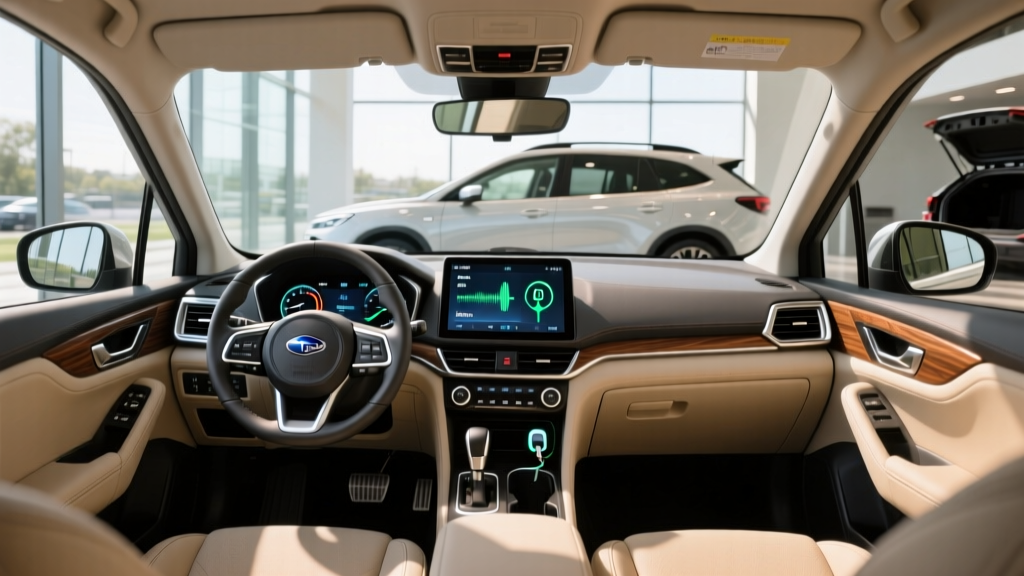
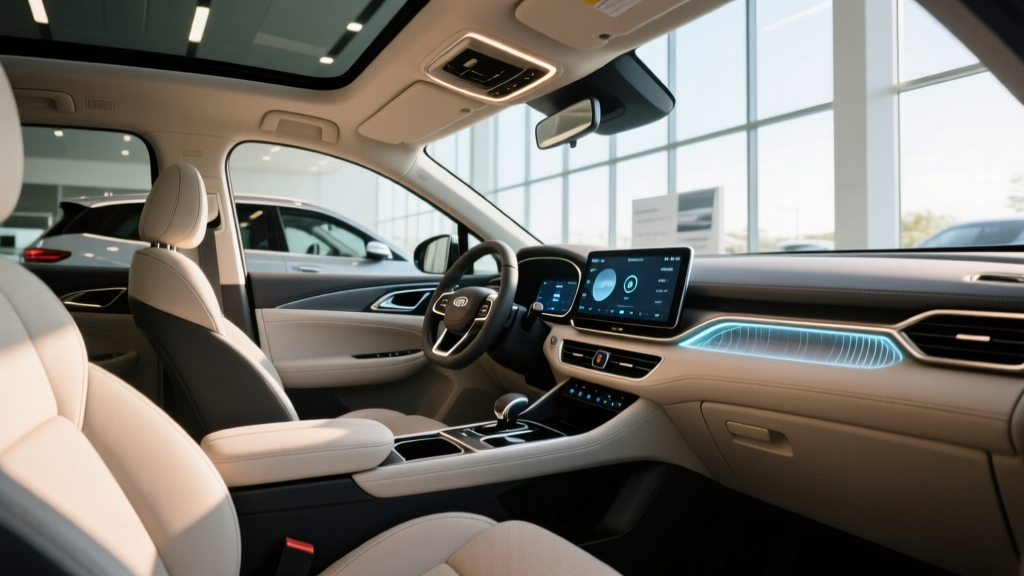
The keyword drawing shoppers to this minivan — 2025 Kia Carnival Hybrid interior — reflects genuine interest in what the cabin delivers. Kia designed the Carnival's interior to blur the line between minivan and SUV, and the hybrid variant carries that same architecture forward without compromise.
Dual Panoramic Displays
The dashboard centers on a dual-screen setup: a 12.3-inch digital instrument cluster and a 12.3-inch touchscreen infotainment system housed in a single curved panel on upper trims (EX and above). Lower trims (LXS, EX) feature an 8-inch touchscreen with wireless Apple CarPlay and Android Auto. The system supports Kia Connect services, over-the-air navigation updates, and multi-device Bluetooth connectivity for up to two phones simultaneously.
Seating Configurations and VIP Lounge Seating
The Carnival Hybrid is available in 7- or 8-passenger layouts. The available VIP Lounge Seating package (SX Prestige trim) replaces the second-row bench with two captain's chairs featuring heated and ventilated cushions, power-adjustable leg rests, and recline functionality — essentially first-class airline seats in a minivan. This configuration reduces capacity to 7 but dramatically improves second-row comfort for long trips.
Cargo and Practicality
Cargo volume remains identical to the gas-only Carnival because the hybrid battery is packaged compactly beneath the floor. You get 41.1 cubic feet behind the third row (enough for a full week of groceries or several suitcases), 86.9 cubic feet with the third row folded, and 145.1 cubic feet with both rear rows down. The available power-folding third row and power-sliding doors make loading effortless.
Driver Assistance
Every 2025 Carnival Hybrid comes standard with Kia's suite of driver-assistance features, including:
- Forward Collision-Avoidance Assist (with pedestrian and cyclist detection)
- Lane Keeping Assist and Lane Following Assist
- Blind-Spot Collision-Avoidance Assist
- Rear Cross-Traffic Collision-Avoidance Assist
- Highway Driving Assist (on EX and above)
- Adaptive Cruise Control with Stop & Go
Fuel Economy: EPA Ratings and Real-World MPG
The 2025 Kia Carnival Hybrid is rated by the EPA at 34 MPG city, 31 MPG highway, and 33 MPG combined. That's a 50% improvement over the gas-only Carnival's 22 MPG combined, and it translates to real savings at the pump over the life of the vehicle.
| Model | City MPG | Highway MPG | Combined MPG |
|---|---|---|---|
| 2025 Carnival Hybrid | 34 | 31 | 33 |
| 2025 Carnival (gas, 3.5L V6) | 19 | 26 | 22 |
| Toyota Sienna Hybrid (AWD) | 35 | 36 | 35 |
| Chrysler Pacifica Hybrid (PHEV) | 82 MPGe | 30 (gas only) | 32 (gas) / 82 MPGe |
Real-World MPG Expectations
Hybrids tend to exceed their EPA city ratings in stop-and-go traffic because regenerative braking recovers more energy at low speeds. On the highway, where regen opportunities are fewer and aerodynamic drag dominates, real-world MPG may fall slightly below the EPA highway number. In mixed driving, expect the Carnival Hybrid to deliver 30-35 MPG depending on conditions. Cold weather, aggressive acceleration, and heavy cargo loads will push you toward the lower end of that range. Owners who do mostly city and suburban driving will see the best results — this is where hybrid powertrains shine.
Annual Fuel Cost Estimate
At 15,000 miles per year and $3.50/gallon regular unleaded, the Carnival Hybrid costs approximately $1,591/year in fuel. The gas-only Carnival at 22 MPG combined would cost about $2,386/year — a difference of roughly $795 annually, or nearly $4,000 over five years. That savings partially offsets the hybrid's higher purchase price.
Powertrain Deep Dive: The 1.6L Turbo Hybrid System
The Carnival Hybrid uses Kia's TMED-II (Transmission-Mounted Electric Device) hybrid system, which places the electric motor between the engine and the 6-speed automatic transmission. This is a parallel hybrid architecture — both the engine and motor can drive the wheels, and the system seamlessly blends power sources based on driving conditions.
The 1.6-liter turbocharged four-cylinder produces 180 horsepower and 195 lb-ft of torque on its own. The 47.7 kW (64 hp) electric motor supplements this, bringing the combined system output to 242 horsepower and 271 lb-ft of torque. That's actually less peak power than the gas-only Carnival's 3.5L V6 (290 hp, 262 lb-ft), but the hybrid delivers torque more immediately thanks to the electric motor's instant response. In real-world driving, the hybrid feels responsive off the line and confident during highway merges, even if it won't win drag races against the V6.
One trade-off: the Carnival Hybrid is front-wheel drive only. The gas-only Carnival is also FWD-only, but competitors like the Toyota Sienna offer available AWD with their hybrid powertrain. If you live in a region with heavy snow or need the traction advantage, this is a limitation worth noting.
Pricing, Trims, and Tax Credit Eligibility
The 2025 Kia Carnival Hybrid is offered in four trims. Here's the MSRP breakdown:
| Trim | MSRP | Key Features |
|---|---|---|
| LXS | $40,700 | 8-inch touchscreen, Smart Power Sliding Doors, 8-passenger seating |
| EX | $43,700 | 12.3-inch dual displays, Highway Driving Assist, leatherette seats |
| SX | $47,700 | Navigation, Bose 12-speaker audio, power-folding 3rd row |
| SX Prestige | $51,700 | VIP Lounge Seating, Nappa leather, 360° surround-view monitor |
Federal Tax Credit Status
The 2025 Kia Carnival Hybrid does not qualify for the federal §30D Clean Vehicle Credit. That credit — up to $7,500 — applies only to battery electric vehicles (BEVs) and plug-in hybrids (PHEVs) that meet battery sourcing, critical mineral, MSRP cap, and buyer income requirements as outlined by the IRS. Conventional hybrids like the Carnival HEV are excluded from §30D entirely.
Some states offer their own incentives for hybrid vehicles, though these are far less common than EV incentives. Check your state's energy office or department of revenue for current programs. There is no point-of-sale transfer option for conventional hybrids.
Battery Warranty, Reliability, and Replacement Cost
How Long Will the Hybrid Battery Last?
Modern hybrid batteries are designed to last the life of the vehicle. Toyota's hybrid batteries (a useful benchmark given their decades of hybrid production) routinely exceed 150,000-200,000 miles before any significant degradation. Kia's lithium-ion hybrid pack uses a similar conservative state-of-charge window — it never fully charges or fully discharges, which dramatically extends cycle life. Most Carnival Hybrid owners will never need to replace the hybrid battery.
Replacement Cost If Needed
If the hybrid battery does fail outside warranty, replacement costs for a minivan-class HEV battery typically range from $2,000 to $4,000 (parts and labor). This is significantly less than a full EV battery replacement ($10,000-$20,000+) because the HEV battery is much smaller (~1.5 kWh vs. 60-100+ kWh in a BEV). Refurbished or remanufactured battery packs are also available at lower cost.
Overall Reliability
Kia's 1.6L turbo hybrid powertrain has been in production since 2020 (Sorento HEV) and has accumulated a solid reliability track record. The 6-speed automatic transmission avoids the droning sensation associated with CVTs found in some competing hybrids. IIHS testing of the Carnival platform has yielded strong crash-test results, though buyers should verify the latest ratings for the hybrid variant specifically.
Who Should Buy the Carnival Hybrid vs. an EV or Gas Minivan?
✓ Choose the Carnival Hybrid If:
- You want a 3-row minivan with significantly better fuel economy than a gas V6
- You don't have access to home charging (apartment, street parking, no garage)
- You take frequent long road trips and don't want to plan around charging stops
- You want Kia's 10-year/100,000-mile warranty peace of mind
- Your annual mileage is high enough that fuel savings offset the ~$4,000 hybrid premium
✗ Look at a Full EV or PHEV Instead If:
- You have reliable home Level 2 charging and want to minimize or eliminate gas use
- You qualify for the $7,500 federal EV tax credit, which can make a BEV more affordable
- You want electric-only driving for short daily commutes (consider the Chrysler Pacifica PHEV)
- You want AWD — the Toyota Sienna Hybrid offers available AWD; the Carnival HEV does not
- You prioritize the lowest possible emissions and have access to clean electricity
The Sienna Hybrid Comparison
The most direct competitor is the Toyota Sienna Hybrid, which achieves 35-36 MPG combined (slightly better than the Carnival's 33 MPG) and offers available electronic AWD. The Sienna's trade-off: its interior feels more utilitarian, it lacks the Carnival's available VIP Lounge Seating, and its cargo volume is slightly lower. The Carnival Hybrid wins on interior luxury and features; the Sienna wins on fuel economy and drivetrain options.
Frequently Asked Questions
How many MPG does the 2025 Kia Carnival Hybrid get?
The EPA rates it at 34 MPG city, 31 MPG highway, and 33 MPG combined. In real-world mixed driving, expect 30-35 MPG depending on conditions. City-heavy driving tends to produce higher numbers thanks to regenerative braking.
Does the Carnival Hybrid need to be plugged in?
No. The 2025 Kia Carnival Hybrid is a conventional hybrid (HEV). The battery charges automatically through regenerative braking and the gas engine. You fuel it exactly like any other vehicle — at a gas station.
How far can it go on electric only?
It can't. As a conventional hybrid, the Carnival HEV does not have an electric-only driving mode. The electric motor assists the gas engine but cannot propel the vehicle on its own for any meaningful distance. If electric-only range is a priority, look at the Chrysler Pacifica Hybrid PHEV (32 miles electric-only) or a full BEV like the Kia EV9.
Is the Carnival Hybrid reliable?
Kia's 1.6L turbo hybrid system has been in use since 2020 in the Sorento HEV with a generally strong reliability record. The hybrid battery is covered by a 10-year/100,000-mile warranty. Hybrid powertrains tend to be more reliable than conventional gas powertrains over time because regenerative braking reduces wear on brake pads, and the engine operates under less stress.
What does a hybrid battery replacement cost?
Outside warranty, expect $2,000-$4,000 for a replacement HEV battery pack. However, hybrid batteries rarely fail before 150,000+ miles, and most will outlast the vehicle. Kia's 10-year/100,000-mile warranty covers premature failures.
Does it qualify for any tax credit?
No. The federal §30D Clean Vehicle Credit applies only to plug-in hybrids (PHEVs) and battery electric vehicles (BEVs). The Carnival Hybrid is a conventional HEV and is ineligible. Check your state's incentive programs for any hybrid-specific rebates, though these are uncommon.
Is the hybrid slower than the gas V6 Carnival?
Yes, slightly. The hybrid produces 242 combined horsepower versus the V6's 290 hp. The 0-60 mph time is approximately 7.5-8.0 seconds for the hybrid versus roughly 7.0 seconds for the V6. However, the hybrid's electric motor provides instant low-end torque, so it feels responsive in everyday driving despite the lower peak number.
Does the hybrid sacrifice cargo space?
No. The Carnival Hybrid offers the same 41.1 / 86.9 / 145.1 cubic feet of cargo volume (behind 3rd / 2nd / 1st row) as the gas model. The compact hybrid battery is packaged beneath the floor without intruding on passenger or cargo space.