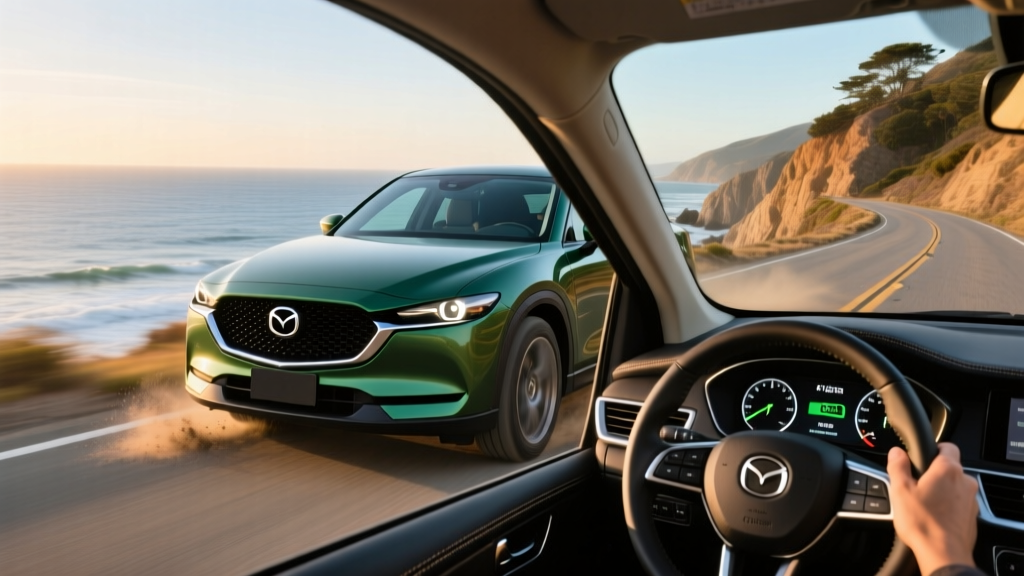
The 2025 Mazda CX-50 Hybrid arrives with a compelling proposition: the premium feel and rugged styling Mazda has cultivated, paired with Toyota's proven hybrid system. It is not a plug-in hybrid, and it does not pretend to be an EV. Instead, it targets buyers who want meaningful fuel savings without altering their fueling habits. With an EPA-estimated 38 MPG combined and a starting price around $33,970, the CX-50 Hybrid slots into a competitive compact SUV segment where the Toyota RAV4 Hybrid and Honda CR-V Hybrid have long dominated.
But does Mazda's first hybrid SUV deliver beyond the spec sheet? After examining the powertrain, real-world efficiency data, ownership costs, and warranty coverage, here is what buyers need to know before signing the paperwork.
HEV vs PHEV: What the 2025 CX-50 Hybrid Actually Is
Before diving into the numbers, it is critical to establish what this vehicle is — and what it is not. The 2025 CX-50 Hybrid is a conventional hybrid electric vehicle (HEV). It cannot be plugged in, has no electric-only driving range to speak of, and refuels exclusively at the gas pump. The hybrid system recovers energy during braking and deceleration, storing it in a small battery to assist the gasoline engine during acceleration and low-speed driving.
| Feature | HEV (CX-50 Hybrid) | PHEV (e.g., RAV4 Prime) |
|---|---|---|
| Plugs in to charge? | No | Yes |
| Electric-only range | Less than 1 mile at low speed | 25–42 miles typical |
| Battery capacity | ~1.1 kWh (NiMH) | 18.1 kWh (Li-ion) |
| Federal tax credit | Not eligible | Up to $7,500 (§30D, subject to sourcing/income rules) |
| Home charging needed | No | Yes, Level 1 or Level 2 recommended |
| Typical price premium over gas model | $1,500–$2,500 | $5,000–$8,000 |
If you need electric-only commuting capability or want to chase federal tax incentives, the CX-50 Hybrid is not the right fit. But if your goal is straightforward fuel savings with zero lifestyle change, a conventional HEV makes strong economic sense.
Fuel Economy: EPA Ratings and Real-World MPG
The headline number for the 2025 CX-50 Hybrid is its EPA-rated efficiency. Here is the full breakdown from fueleconomy.gov:
| Driving Cycle | EPA Rating |
|---|---|
| City | 39 MPG |
| Highway | 37 MPG |
| Combined | 38 MPG |
Real-World MPG: What Owners Actually See
Hybrid systems excel in stop-and-go city driving, where regenerative braking and electric motor assist do the most work. The CX-50 Hybrid's 39 MPG city rating is no accident — Toyota's hybrid synergy drive is engineered for urban efficiency. On real-world city routes with frequent stops, many owners report matching or slightly exceeding the EPA city figure, hitting 40–42 MPG in warm weather.
Highway driving tells a different story. At sustained 70–80 mph speeds, the gasoline engine carries nearly all the load, and the CX-50's boxy, rugged styling creates more aerodynamic drag than sleeker crossovers. Expect 33–36 MPG on flat interstate runs, with further drops in mountainous terrain or when carrying heavy cargo. Cold weather typically shaves 2–4 MPG off combined figures as the engine runs longer to heat the cabin and the battery operates less efficiently.
For context, the non-hybrid CX-50 with the turbocharged 2.5-liter engine rates at 24 MPG combined. The hybrid delivers a 58% improvement in combined fuel economy — substantial enough to meaningfully reduce annual fuel costs.
Powertrain: Toyota Hybrid Hardware Under a Mazda Badge
The CX-50 Hybrid uses a powertrain sourced directly from Toyota — specifically, the same 2.5-liter four-cylinder hybrid system found in the RAV4 Hybrid and Toyota Highlander Hybrid. This is a deliberate engineering partnership, not a Mazda-developed system.
| Specification | 2025 CX-50 Hybrid |
|---|---|
| Engine | 2.5L inline-4 (Atkinson cycle) |
| Engine horsepower | 176 hp |
| Electric motor | Front-mounted, permanent magnet |
| Combined system output | 219 hp |
| Transmission | eCVT (planetary gearset) |
| Drivetrain | AWD (electronic rear motor assist) |
| 0–60 mph (est.) | ~7.5 seconds |
| Towing capacity | 1,500 lbs |
| Hybrid battery | ~1.1 kWh, nickel-metal hydride (NiMH) |
| Fuel tank | 14.5 gallons |
| Total range (est.) | ~550 miles |
The 219 combined horsepower figure places the CX-50 Hybrid between the base non-turbo CX-50 (187 hp) and the turbo variant (up to 256 hp on premium fuel). Acceleration is adequate for merging and passing, though the eCVT's drone under hard acceleration reminds you this is an efficiency-first powertrain. The electronic AWD system uses a separate rear-mounted electric motor to power the rear wheels when slip is detected — there is no mechanical driveshaft connecting the front and rear axles.
One trade-off to note: the hybrid's towing capacity drops to 1,500 lbs, compared to 3,500 lbs for the turbo CX-50. If you tow a small trailer or jet ski regularly, the hybrid is not the right trim.
Pricing, Trims, and Tax Credit Eligibility
The 2025 CX-50 Hybrid is offered across several trims, with pricing starting in the mid-$30,000 range. Here is the approximate MSRP structure:
- Preferred Hybrid: ~$33,970
- Premium Hybrid: ~$37,500
- Premium Plus Hybrid: ~$40,500
All prices include destination charge but exclude dealer add-ons, taxes, and registration.
Federal Tax Credit: What Hybrid Buyers Need to Know
The 2025 CX-50 Hybrid does not qualify for the federal §30D clean vehicle tax credit. Under current IRS rules, the §30D credit of up to $7,500 is reserved for plug-in electric vehicles (BEVs and PHEVs) that meet specific battery capacity, critical mineral sourcing, and buyer income requirements. Conventional hybrids like the CX-50 Hybrid — which cannot be plugged in — are categorically ineligible.
Some states offer their own incentives for hybrid vehicles, though these are typically modest ($250–$1,000 rebates) and vary significantly by jurisdiction. Check your state's environmental or energy agency website for current programs.
Battery Warranty, Reliability, and Replacement Cost
Hybrid battery longevity is the single most common concern among first-time hybrid buyers. The CX-50 Hybrid benefits from Toyota's deep hybrid expertise — this powertrain architecture has been in continuous production and refinement since the 1997 Prius.
| Coverage | Term |
|---|---|
| Hybrid battery warranty | 10 years / 150,000 miles (federal emission states); 8 years / 100,000 miles in other states |
| Hybrid system components | 8 years / 100,000 miles |
| Powertrain warranty | 5 years / 60,000 miles |
| Bumper-to-bumper | 3 years / 36,000 miles |
How Long Do Hybrid Batteries Actually Last?
Real-world data from Toyota's hybrid fleet shows that NiMH hybrid batteries routinely last 150,000–200,000+ miles before significant degradation. The CX-50's relatively small ~1.1 kWh battery undergoes shallow charge-discharge cycles (typically operating between 40% and 80% state of charge), which dramatically extends cell life compared to full EV batteries that cycle through wider ranges.
If the hybrid battery does fail outside of warranty, replacement costs for Toyota-sourced NiMH hybrid batteries typically run $2,000–$4,000 installed, depending on whether you choose a new OEM unit or a refurbished pack. Independent hybrid specialists often offer refurbished replacements at the lower end of that range. This is a fraction of EV battery replacement costs, which can exceed $10,000–$20,000.
Mazda's reliability track record with conventional components is strong, and because the hybrid system is Toyota-sourced, the powertrain inherits Toyota's hybrid reliability data. IIHS and NHTSA ratings should be monitored as crash-test results are published for the hybrid variant specifically.
Who Should Buy the CX-50 Hybrid vs. a Full EV or Gas SUV
The CX-50 Hybrid occupies a specific niche. Here is a decision framework based on driving patterns and ownership priorities:
Choose the CX-50 Hybrid if:
- You drive 10,000–15,000 miles per year in mixed city/highway conditions
- You want lower fuel costs without installing a home charger or changing your routine
- You value Mazda's interior quality and design over maximum cargo space
- You plan to keep the vehicle 5–10 years (the fuel savings compound over time)
- You live in an area with unreliable public charging infrastructure
Choose a full EV (e.g., Tesla Model Y, Hyundai Ioniq 5) if:
- You can install a Level 2 home charger
- Your daily commute is under 60 miles round-trip
- You want to qualify for the $7,500 federal tax credit
- You want near-zero routine maintenance (no oil changes, no spark plugs)
Stick with the gas CX-50 (turbo) if:
- You tow more than 1,500 lbs regularly
- You prioritize acceleration and passing power over efficiency
- You drive fewer than 8,000 miles per year (the hybrid premium takes longer to recoup)
Annual Fuel Cost Comparison
At 12,000 miles per year and $3.50/gallon regular unleaded:
- CX-50 Hybrid (38 MPG combined): ~$1,105/year
- CX-50 Turbo AWD (24 MPG combined): ~$1,750/year
- Annual savings: ~$645/year
- 5-year savings: ~$3,225 (before accounting for fuel price inflation)
The hybrid trim premium of roughly $2,000–$3,000 over an equivalently equipped gas model pays back in approximately 3–5 years at current fuel prices — faster if gas prices rise.
Pros, Cons, and the Bottom Line
Pros
- 38 MPG combined — best-in-class for a premium-feel compact SUV
- Toyota-sourced hybrid system with proven long-term reliability
- Standard AWD with electronic rear motor
- No plug-in required — zero lifestyle change from gas vehicles
- Strong 10-year/150,000-mile hybrid battery warranty (in federal emission states)
- Mazda's upscale interior materials and build quality
Cons
- No federal tax credit eligibility (HEV, not PHEV)
- Towing limited to 1,500 lbs (turbo CX-50 tows 3,500 lbs)
- eCVT drone under hard acceleration
- Highway MPG drops noticeably at 75+ mph
- Rear cargo space slightly reduced vs. gas CX-50 due to hybrid battery placement
- No plug-in hybrid variant available in the CX-50 lineup
Frequently Asked Questions
How many MPG does the 2025 CX-50 Hybrid get?
The EPA rates the 2025 CX-50 Hybrid at 39 MPG city, 37 MPG highway, and 38 MPG combined. Real-world city driving often yields 40–42 MPG, while sustained highway driving at 70+ mph typically returns 33–36 MPG.
Can I plug in the CX-50 Hybrid to charge?
No. The CX-50 Hybrid is a conventional HEV, not a plug-in hybrid. It charges its small battery exclusively through regenerative braking and the gasoline engine. You fuel it at the gas pump like any other vehicle.
How far can the CX-50 Hybrid drive on electric power alone?
Less than one mile, and only at very low speeds (under 25 mph). The hybrid battery is too small (~1.1 kWh) to provide meaningful electric-only range. This is by design — the system uses electric assist to boost efficiency, not to replace the gas engine.
Is the CX-50 Hybrid reliable? What will battery replacement cost?
The CX-50 Hybrid uses Toyota's proven hybrid system, which has an extensive reliability track record spanning millions of vehicles. Hybrid battery replacement, if needed outside the 10-year/150,000-mile warranty, typically costs $2,000–$4,000. Most Toyota NiMH hybrid batteries last 150,000–200,000+ miles.
Does the 2025 CX-50 Hybrid qualify for a federal tax credit?
No. The federal §30D clean vehicle tax credit applies only to plug-in electric vehicles (BEVs and PHEVs). As a conventional hybrid, the CX-50 Hybrid is not eligible. Some states may offer modest hybrid incentives — check your state energy agency for details.
How does the CX-50 Hybrid compare to the RAV4 Hybrid?
Both use the same Toyota 2.5L hybrid powertrain producing 219 hp. The RAV4 Hybrid rates slightly higher at 40 MPG combined (vs. 38 for the CX-50) due to more aerodynamic styling. The CX-50 Hybrid trades a small efficiency penalty for Mazda's more premium interior, standard AWD, and distinctive rugged design. Pricing is comparable at the Preferred trim level.
Should I buy the CX-50 Hybrid or wait for a PHEV version?
Mazda has not announced a CX-50 PHEV variant as of the 2025 model year. If plug-in electric range and federal tax credit eligibility are priorities, consider the Toyota RAV4 Prime (42 miles electric-only, up to $7,500 credit) or the Ford Escape PHEV (37 miles electric-only). If you simply want excellent fuel economy without plugging in, the CX-50 Hybrid is available now and delivers.