Quick Verdict: The 2025 Corolla Cross Hybrid S Delivers Where It Counts
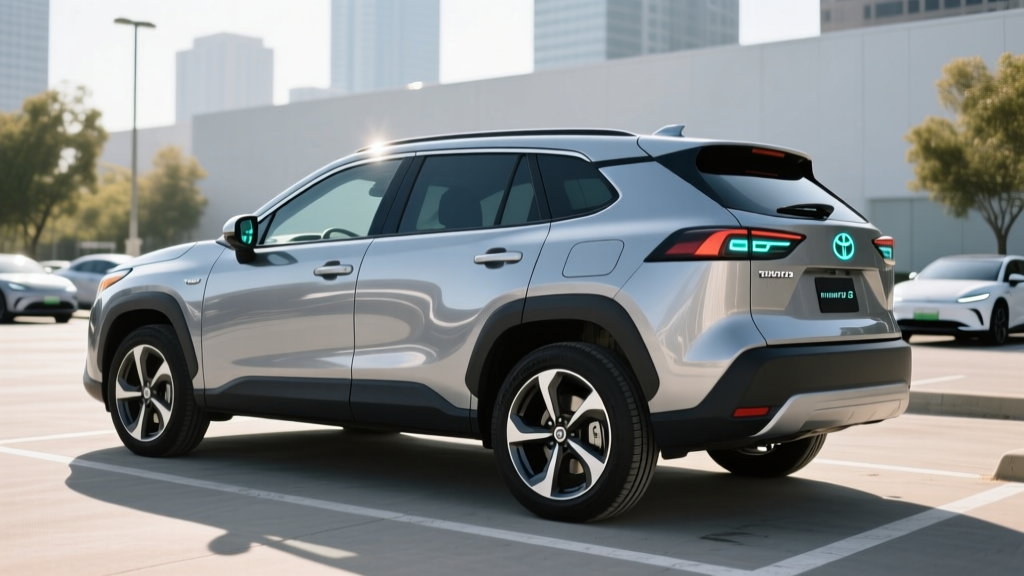
If you want a compact crossover that sips fuel without requiring you to plug in, change your driving habits, or stretch your budget, the 2025 Toyota Corolla Cross Hybrid S makes a compelling case. Starting at roughly $29,000, this base-trim hybrid pairs a 2.0-liter four-cylinder with Toyota's fifth-generation hybrid system and standard electronic all-wheel drive (AWD) to achieve an EPA-estimated 42 MPG combined. It isn't the most tech-laden or luxurious entry in the segment, but it nails the fundamentals: efficiency, reliability, and everyday practicality.
This guide breaks down everything you need to know about the Corolla Cross Hybrid S — from exact EPA fuel economy figures and real-world MPG expectations, to the hybrid powertrain specs, battery warranty, and how it stacks up against plug-in hybrids and full EVs for different types of buyers.
EPA Fuel Economy and Real-World MPG
The headline number for any hybrid buyer is fuel economy. The 2025 Corolla Cross Hybrid carries the same EPA ratings across all trims, including the S:
| Metric | EPA Estimate |
|---|---|
| City MPG | 45 MPG |
| Highway MPG | 38 MPG |
| Combined MPG | 42 MPG |
| Fuel Tank Capacity | 10.6 gallons |
| Total Driving Range | ~445 miles |
Source: EPA fueleconomy.gov
HEV vs. PHEV: What the Corolla Cross Hybrid Actually Is
A common point of confusion for shoppers is the difference between a conventional hybrid (HEV) and a plug-in hybrid (PHEV). The Corolla Cross Hybrid is a conventional hybrid (HEV). Here's what that means in practice:
| Feature | Conventional Hybrid (HEV) | Plug-In Hybrid (PHEV) |
|---|---|---|
| Plugs into a charger? | No — refuels at gas stations only | Yes — can plug into Level 1/Level 2 |
| Electric-only driving range | None (EV assists at low speeds only) | Typically 20–45 miles on battery alone |
| Battery size | Small (~1.0–1.6 kWh) | Larger (10–20+ kWh) |
| DC fast charging | Not applicable | Rarely; most PHEVs are AC-only |
| Federal tax credit (§30D) | Not eligible | Eligible if battery ≥7 kWh + sourcing rules met |
| Toyota example | Corolla Cross Hybrid | RAV4 Prime |
The Corolla Cross Hybrid does not plug in. Its small lithium-ion traction battery charges through regenerative braking and the gasoline engine. You simply fill it up at any gas station and drive. Toyota does not currently offer a Corolla Cross PHEV variant in the U.S. market. If electric-only commuting is a priority, you'd need to look at a PHEV like the Toyota RAV4 Prime or a full BEV.
Powertrain Specs: 196 HP with Standard AWD
The Corolla Cross Hybrid uses Toyota's fifth-generation hybrid synergy drive, pairing a 2.0-liter Dynamic Force four-cylinder engine with two front-mounted motor-generators and a separate rear-mounted electric motor that provides electronic AWD. Here's the full spec breakdown:
| Specification | Detail |
|---|---|
| Engine | 2.0L 4-cylinder Dynamic Force (Atkinson cycle) |
| Engine Output | 150 hp / 139 lb-ft torque |
| Front Electric Motor | 83 kW (111 hp) |
| Rear Electric Motor (AWD) | 30 kW (40 hp) |
| Net Combined System Power | 196 hp |
| Transmission | Electronic Continuously Variable (eCVT) |
| Drivetrain | Electronic AWD (standard, all trims) |
| 0–60 MPH (est.) | ~7.5 seconds |
| Towing Capacity | Not rated for towing |
The 196 combined horsepower is a meaningful step up from the non-hybrid Corolla Cross (169 hp), and you feel it during highway merges and passing maneuvers. The rear electric motor engages automatically when the system detects front-wheel slip or when extra traction is needed — there's no mechanical driveshaft connecting the front and rear axles. This "e-AWD" system is seamless in rain and light snow, though it's not designed for serious off-road use.
Pricing, Trims, and Tax Credit Eligibility
The 2025 Corolla Cross Hybrid is offered in three trims: S, SE, and XSE. Here's the MSRP breakdown (destination charge included):
| Trim | MSRP (incl. destination) | Key Additions Over S |
|---|---|---|
| S (base) | ~$29,390 | LED headlights, 8" touchscreen, Toyota Safety Sense 3.0, 17" alloy wheels |
| SE | ~$31,040 | SofTex seats, heated front seats, leatherette steering wheel, 18" wheels |
| XSE | ~$33,290 | Wireless Apple CarPlay/Android Auto, JBL audio, power liftgate, ambient lighting |
Some states and local utilities offer rebates for conventional hybrids, though these are far less common than EV incentives. Check your state energy office or utility provider for any current programs.
Hybrid Battery Warranty, Reliability, and Replacement Cost
Battery longevity is the top concern for first-time hybrid buyers. Toyota addresses this with one of the strongest hybrid battery warranties in the industry:
- Hybrid Battery: 10 years / 150,000 miles (whichever comes first), covering capacity below a defined threshold
- Hybrid System Components: 8 years / 100,000 miles (motor-generators, inverter, control module)
- Basic New Vehicle: 3 years / 36,000 miles
- Powertrain: 5 years / 60,000 miles
Toyota's hybrid systems have an exceptional reliability track record. The Prius, now in its fifth generation, has demonstrated that Toyota hybrid batteries routinely last 150,000–200,000+ miles before needing replacement. The Corolla Cross Hybrid uses a similar architecture with a lithium-ion traction battery that's smaller and less stressed than a full EV pack.
If the hybrid battery does eventually need replacement out of warranty, expect a cost in the range of $2,000–$4,000 for a Toyota hybrid battery (parts and labor), depending on the service provider. Independent hybrid specialists often offer refurbished or reconditioned batteries at the lower end of that range. This is dramatically less than a full EV battery replacement, which can run $10,000–$20,000+.
Toyota's hybrid reliability is well-documented across millions of vehicles sold globally since the original Prius in 1997. For model-specific safety and crash data, consult NHTSA and IIHS ratings as they become available for the 2025 model year.
Who Should Choose the Corolla Cross Hybrid S?
The Corolla Cross Hybrid S occupies a specific niche. Here's a practical decision framework:
- You want 40+ MPG without plugging in or changing your refueling routine
- You don't have reliable access to home or workplace charging (apartment dwellers, street parkers)
- You want standard AWD for rain and snow at a sub-$30K starting price
- You prioritize long-term reliability and low maintenance costs
- Your daily commute is under 50 miles and includes city driving
Consider a PHEV (like the RAV4 Prime) instead if:
- You can charge at home and want 30–42 miles of electric-only commuting
- You want eligibility for the federal tax credit (up to $7,500 if sourcing rules are met)
- You want more power and cargo space
Consider a full EV (like the Hyundai Kona Electric) instead if:
- You have Level 2 home charging and want zero tailpipe emissions
- Your daily driving is under 200 miles and you rarely road-trip beyond DC fast-charger range
- You want to eliminate gasoline costs entirely
The S trim specifically is the value pick. You get the full hybrid powertrain, AWD, Toyota Safety Sense 3.0 (pre-collision braking, lane departure alert, full-speed adaptive cruise control, lane tracing assist), and an 8-inch touchscreen with wireless Apple CarPlay and Android Auto. What you give up versus the SE and XSE are creature comforts — heated seats, premium audio, larger wheels — not efficiency or capability.
Ownership Costs: Fuel Savings vs. Gas-Only Corolla Cross
To put the hybrid's efficiency advantage in dollar terms, here's a 5-year fuel cost comparison assuming 15,000 miles per year and $3.50/gallon regular unleaded:
| Metric | Hybrid (42 MPG combined) | Gas-Only FWD (29 MPG combined) |
|---|---|---|
| Gallons used per year | 357 gal | 517 gal |
| Annual fuel cost | $1,250 | $1,810 |
| 5-year fuel cost | $6,250 | $9,050 |
| 5-year savings with hybrid | ~$2,800 | |
The hybrid carries roughly a $1,500–$2,000 price premium over the equivalent gas-only Corolla Cross trim. Based on fuel savings alone, you'll break even in about 3–4 years at current gas prices. If gas rises, the payback shortens. Factor in the hybrid's stronger resale value (Toyota hybrids consistently command premiums on the used market) and the total cost of ownership advantage grows.
Pros and Cons
- 42 MPG combined EPA — top of the compact crossover segment
- Standard AWD on every trim at no extra cost
- 196 hp is peppy for the class; 0–60 in ~7.5 seconds
- 10-year / 150,000-mile hybrid battery warranty
- Sub-$30K starting price on the S trim
- Toyota Safety Sense 3.0 standard (ADAS suite)
- No plug-in charging required — zero infrastructure barrier
- No plug-in / electric-only driving capability
- Not eligible for federal §30D tax credit
- Cargo space is modest (~25 cu ft behind rear seats)
- S trim interior is basic — cloth seats, basic infotainment
- No DC fast charging (not applicable for HEV)
- Highway MPG drops noticeably above 70 MPH
- Not rated for towing
Frequently Asked Questions
How many MPG does the 2025 Corolla Cross Hybrid S get?
The EPA rates it at 45 MPG city, 38 MPG highway, and 42 MPG combined. In real-world city driving, many owners match or slightly exceed the city figure thanks to the hybrid system's regenerative braking. Highway driving at sustained speeds above 70 MPH typically yields 34–37 MPG.
Does the Corolla Cross Hybrid plug in?
No. The Corolla Cross Hybrid is a conventional hybrid (HEV). It charges its small battery through regenerative braking and the gasoline engine. You refuel it exclusively at gas stations. There is no plug, no charging cable, and no electric-only driving range.
Is there a Corolla Cross PHEV with electric-only range?
Toyota does not currently offer a plug-in hybrid version of the Corolla Cross in the United States. If you want a Toyota PHEV with electric-only range, the RAV4 Prime (42 miles EV range, 94 MPGe combined) is the closest option, though it's larger and significantly more expensive (starting around $44,000).
Is the Corolla Cross Hybrid reliable?
Toyota's hybrid systems are among the most proven in the automotive industry, with over 25 years of production history across millions of vehicles. The hybrid battery is covered by a 10-year / 150,000-mile warranty. Out-of-warranty replacement costs are estimated at $2,000–$4,000, far less than a full EV battery.
Does the 2025 Corolla Cross Hybrid qualify for any tax credit?
No. The federal §30D Clean Vehicle Credit applies only to plug-in electric vehicles (BEVs and qualifying PHEVs) that meet battery capacity, sourcing, MSRP, and buyer income requirements. Conventional hybrids like the Corolla Cross Hybrid are not eligible. Some state or utility programs may offer small incentives — check your local providers.
How does the Corolla Cross Hybrid compare to a full EV?
A full EV eliminates gasoline entirely and has lower per-mile "fuel" costs if you charge at home, but requires charging infrastructure access and carries a higher purchase price. The Corolla Cross Hybrid is the right choice if you can't charge at home, regularly drive beyond 250 miles between stops, or want a lower upfront cost with no behavioral changes required.