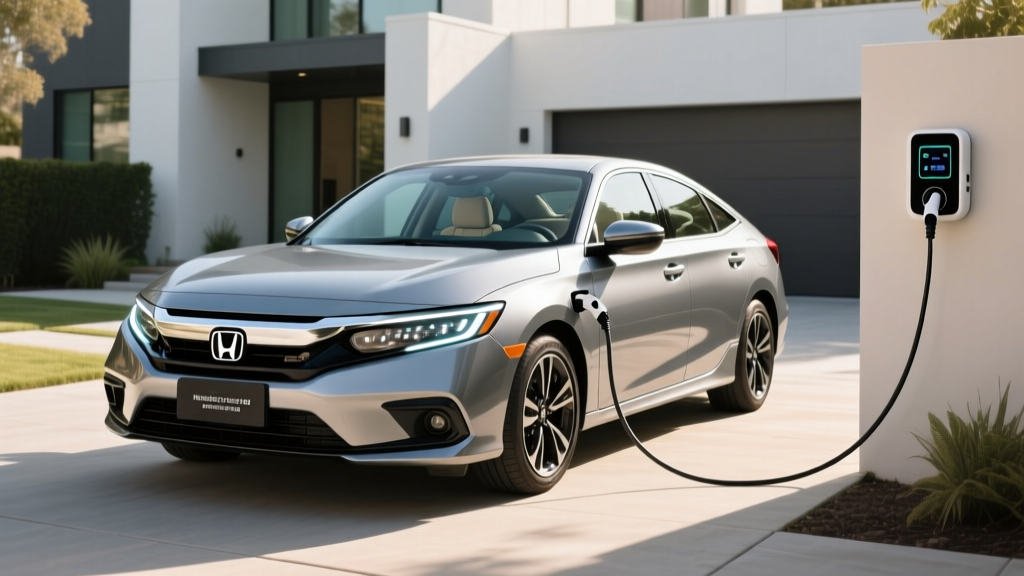
The 2025 Honda Civic Hybrid returns to the lineup after a long hiatus, and it arrives with a clear mission: deliver exceptional fuel economy without the plug-in complexity of a PHEV or the charging infrastructure dependency of a full battery-electric vehicle. For buyers researching 2025 Civic Hybrid MPG figures, the headline is impressive — Honda's two-motor hybrid system pushes this compact sedan past 50 MPG combined. But EPA stickers only tell part of the story. Below, we break down exactly what this hybrid delivers in real-world driving, how its powertrain works, what the battery warranty covers, and whether it's the right electrified choice for your commute.
2025 Civic Hybrid MPG: EPA Ratings and Real-World Results
The 2025 Civic Hybrid is rated by the EPA at 50 MPG city, 47 MPG highway, and 49 MPG combined for the Sport sedan trim. The Sport Touring sedan, which rides on larger 18-inch wheels, drops slightly to 48 city / 43 highway / 46 combined. These numbers place the Civic Hybrid among the most efficient non-plug-in compact sedans on the market, rivaling the Toyota Prius and Hyundai Elantra Hybrid.
| Trim | City MPG | Highway MPG | Combined MPG | Fuel Tank (gal) | Total Range (mi) |
|---|---|---|---|---|---|
| Sport Sedan | 50 | 47 | 49 | 10.6 | ~519 |
| Sport Touring Sedan | 48 | 43 | 46 | 10.6 | ~488 |
| Sport Hatchback | 50 | 45 | 48 | 10.6 | ~509 |
Source: EPA Fuel Economy
HEV vs PHEV: Why the Civic Hybrid Doesn't Plug In
A common question from shoppers new to electrified vehicles: does the Civic Hybrid need to be plugged in? The answer is no. The 2025 Civic Hybrid is a conventional hybrid electric vehicle (HEV), not a plug-in hybrid (PHEV). It has no charging port, no electric-only driving range, and no need for home charging infrastructure.
HEV (Civic Hybrid)
- No plug — charges via regen braking & engine
- Small battery (~1.0 kWh usable)
- No electric-only range
- 50 MPG combined, always gas-powered
- No federal tax credit (§30D)
- Lower purchase price
PHEV (e.g., Toyota Prius Prime)
- Plugs in — charges at home or public Level 2
- Larger battery (~13.6 kWh usable)
- ~44 miles electric-only range
- Gas engine kicks in after battery depletes
- May qualify for up to $3,750 §30D credit
- Higher purchase price, needs charging access
The Civic Hybrid's small lithium-ion battery pack (approximately 1.0 kWh of usable capacity) is recharged entirely through regenerative braking and the gasoline engine. You simply fill up at any gas station and drive. This makes it ideal for apartment dwellers, street parkers, or anyone without access to home or workplace charging — situations where a PHEV or full EV becomes impractical.
Powertrain: How the Two-Motor System Generates 200 HP
Honda's fourth-generation two-motor hybrid system in the 2025 Civic pairs a 2.0-liter Atkinson-cycle four-cylinder engine with two electric motors. The combined system output is 200 horsepower and 232 lb-ft of torque, routed through the front wheels. Unlike a traditional parallel hybrid, Honda's system operates primarily in series-hybrid mode at low and moderate speeds — the gasoline engine acts as a generator, and the electric drive motor handles propulsion. At highway cruising speeds, a lock-up clutch connects the engine directly to the wheels for efficiency.
| Specification | Detail |
|---|---|
| Engine | 2.0L DOHC Atkinson-cycle inline-4 |
| Engine Power | 146 HP @ 6,000 RPM |
| Drive Motor Power | 184 HP / 232 lb-ft torque |
| Combined System Output | 200 HP / 232 lb-ft |
| Battery Type | Lithium-ion (IPU) |
| Battery Capacity | ~1.0 kWh usable |
| Drivetrain | Front-wheel drive (FWD) |
| Transmission | Direct-drive (no traditional gearbox) |
| 0-60 MPH (est.) | ~7.3 seconds |
The result is a powertrain that feels more like an EV in city driving — smooth, immediate torque delivery with no shift shock — while retaining the range and refueling convenience of a gas car. The 200 HP output is a meaningful upgrade over the non-hybrid Civic's 158 HP (2.0L) and 180 HP (1.5T), making the hybrid the quickest standard Civic variant short of the Civic Si.
2025 Civic Hybrid Pricing and Tax Credit Eligibility
The 2025 Civic Hybrid starts at $29,845 (including destination) for the Sport sedan trim. The Sport Touring sedan comes in at $32,845, while the Sport hatchback starts at $30,845. These prices represent a roughly $1,500-$2,000 premium over equivalent non-hybrid Civic Sport trims.
| Trim | Body Style | MSRP (incl. destination) |
|---|---|---|
| Sport | Sedan | $29,845 |
| Sport Touring | Sedan | $32,845 |
| Sport | Hatchback | $30,845 |
Despite no federal credit, the Civic Hybrid's fuel savings close the price gap quickly. At $3.40/gallon and 12,000 miles/year, a driver upgrading from a 30 MPG non-hybrid Civic saves roughly $680/year in fuel costs, paying back the hybrid premium in about 2.5 years.
Battery Warranty, Reliability, and Replacement Cost
Honda covers the Civic Hybrid's lithium-ion Intelligent Power Unit (IPU) battery with a 8-year / 100,000-mile warranty (10 years / 150,000 miles in CARB states including California, New York, Massachusetts, and others). This warranty covers battery capacity loss below a defined threshold and any manufacturing defects. Honda does not publish the exact capacity-retention percentage that triggers a warranty claim, but industry standard is typically 60-70% of original capacity.
Honda's hybrid systems have proven durable over multiple generations. The previous Civic Hybrid (discontinued after 2015) and the Accord Hybrid, CR-V Hybrid, and Insight all used similar two-motor architectures with strong long-term reliability records. The lithium-ion IPU in the 2025 model is smaller and less stressed than a PHEV or EV battery — it operates in a narrow state-of-charge window (roughly 40-60%), which significantly reduces degradation.
Battery replacement cost: If the IPU needs replacement outside of warranty, expect a dealer-installed cost in the range of $2,000-$4,000. This is considerably less than a full EV battery replacement ($8,000-$20,000+). Third-party and refurbished hybrid battery options may reduce this further. In practice, hybrid battery failures before 150,000 miles are uncommon based on historical Honda and Toyota data.
Hybrid vs PHEV vs EV: Which Electrified Civic Fits Your Life?
The 2025 Civic lineup now offers a clear decision tree for electrified buyers. Here's how to choose:
Choose the Civic Hybrid (HEV) if:
- You lack access to home or workplace charging (apartment, street parking)
- You want maximum MPG with zero behavior change — just fill up and drive
- Your budget is under $33,000 and you don't want to wait for a tax credit
- You take frequent road trips and don't want to plan around charging stops
Choose a PHEV (e.g., Prius Prime, Elantra PHEV) if:
- You can install a Level 2 charger at home or have reliable workplace charging
- Your daily commute is under 40 miles — you'd drive electric most days
- You want to reduce gas consumption dramatically while keeping a gas backup
- You may qualify for a partial §30D federal tax credit
Choose a full EV (e.g., Chevy Bolt, Tesla Model 3) if:
- You have home Level 2 charging and a daily commute under 200 miles
- You want to eliminate gas station visits entirely
- You qualify for the full $7,500 §30D credit (income, MSRP, sourcing rules met)
- You want the lowest per-mile "fuel" cost and minimal drivetrain maintenance
Pros and Cons of the 2025 Civic Hybrid
✓ Pros
- 49 MPG combined EPA — top-tier efficiency
- 200 HP — the quickest non-Si Civic
- No plug needed — zero charging infrastructure required
- Over 500 miles of total range per tank
- Strong 8-yr/100k-mi battery warranty
- Refined ride, premium interior for the class
- Available as sedan or hatchback
✗ Cons
- No federal tax credit eligibility
- Highway MPG drops to low 40s at 75+ MPH
- Only two trims available (Sport, Sport Touring)
- CVT-like engine drone under hard acceleration
- FWD only — no AWD option unlike Toyota Prius
- No electric-only driving mode
2025 Civic Hybrid FAQ
How many MPG does the 2025 Civic Hybrid get?
The EPA rates the 2025 Civic Hybrid Sport sedan at 50 city / 47 highway / 49 combined MPG. The Sport Touring sedan is rated at 48/43/46 MPG due to larger wheels. Real-world results vary: city drivers often exceed 50 MPG thanks to regenerative braking, while sustained highway driving at 75+ MPH typically yields 41-44 MPG.
Does the Civic Hybrid need to be plugged in?
No. The 2025 Civic Hybrid is a conventional HEV (hybrid electric vehicle). It has no charging port. The small lithium-ion battery recharges automatically through regenerative braking and the gasoline engine. You only ever need to fill up at a gas station.
Is the 2025 Civic Hybrid reliable?
Honda's two-motor hybrid system has a strong track record across the Accord Hybrid, CR-V Hybrid, and previous Civic Hybrid generations. The IPU battery operates in a narrow charge window to minimize degradation and is backed by an 8-year/100,000-mile warranty (10 years/150,000 miles in CARB states). Long-term reliability is expected to be excellent based on historical data.
How much does a Civic Hybrid battery replacement cost?
Out-of-warranty replacement of the Civic Hybrid's IPU battery is estimated at $2,000-$4,000 through a Honda dealer. This is significantly less than EV battery replacement costs. Refurbished or third-party options may be available for less. In practice, hybrid battery failures before 150,000 miles are rare.
Does the 2025 Civic Hybrid qualify for a tax credit?
No. The IRS §30D Clean Vehicle Credit applies only to plug-in vehicles (BEVs and PHEVs). As a conventional hybrid (HEV), the Civic Hybrid does not qualify for the federal credit. Some states may offer separate hybrid incentives — check the AFDC state incentives database for programs in your area.
How fast is the 2025 Civic Hybrid?
Honda rates the Civic Hybrid at 200 combined system horsepower and 232 lb-ft of torque. Estimated 0-60 MPH time is approximately 7.3 seconds, making it quicker than the standard 2.0L Civic (158 HP) and competitive with the turbocharged 1.5T model (180 HP).
Is the Civic Hybrid better than a Prius?
It depends on priorities. The Toyota Prius (57 MPG combined, LE trim) beats the Civic Hybrid on pure fuel economy and offers available AWD. The Civic Hybrid counters with more horsepower (200 vs 196), a more engaging driving experience, a more upscale interior, and a hatchback body style option. Both are excellent — test-drive both and weigh what matters most to you.
Final Assessment: Who Should Buy the 2025 Civic Hybrid?
The 2025 Civic Hybrid is the right electrified vehicle for drivers who want significant fuel savings without any lifestyle adjustment. If you can't plug in at home, don't want to think about charging, and take regular road trips, this is one of the best compact cars you can buy. The 49 MPG combined EPA rating is legitimate — and in city driving, you'll likely beat it. The 200 HP output means you're not sacrificing performance for efficiency, and Honda's hybrid battery warranty provides long-term peace of mind.
For buyers who can charge at home and have short commutes, a PHEV like the Prius Prime (44 miles electric-only) or a full EV will deliver lower operating costs and may qualify for federal tax credits. But for the majority of American drivers — those in apartments, those who street-park, those who drive 400+ miles between fill-ups — the Civic Hybrid hits the sweet spot of efficiency, convenience, and value.