Quick Verdict: A Luxury PHEV That Actually Delivers on Electric Commuting
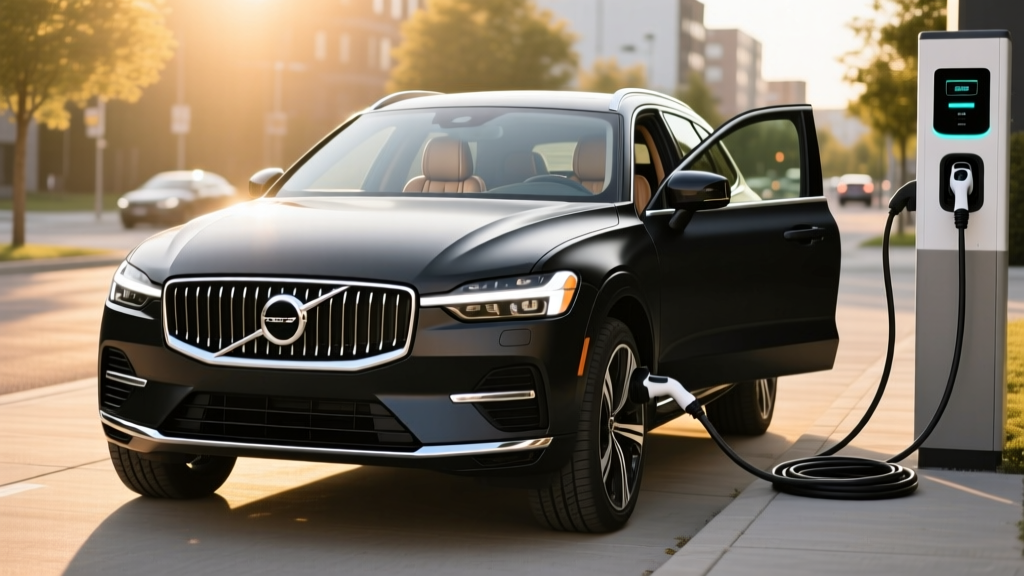
The 2024 Volvo XC60 Recharge plug-in hybrid occupies a specific niche: luxury-compact SUV buyers who want genuine electric-only commuting range without surrendering the flexibility of a gasoline engine for longer road trips. With 35 miles of EPA-rated electric range, a combined 455 horsepower from its turbocharged four-cylinder and electric motor, and a starting MSRP around $59,950, the XC60 Recharge competes directly against the BMW X5 xDrive50e, Lincoln Corsair Grand Touring, and Lexus NX 450h+.
But does it actually make sense versus a full battery-electric vehicle or a conventional hybrid? This review breaks down every number that matters — real-world MPG, charging speed, battery warranty, and federal tax-credit eligibility under current IRS §30D rules — so you can decide with data, not marketing.
HEV vs PHEV: Why the XC60 Recharge Is Not a Conventional Hybrid
Volvo sells the XC60 in two electrified flavors, and confusing them is the most common buyer mistake:
| Feature | XC60 B5 (Mild Hybrid / HEV) | XC60 Recharge (PHEV) |
|---|---|---|
| Plug-in charging required? | No — regenerative braking only | Yes — plug in to access electric range |
| Electric-only driving | No (48V system assists engine) | Yes — up to 35 miles EPA |
| Battery size | ~0.5 kWh (48-volt) | 18.8 kWh usable (high-voltage) |
| Combined horsepower | 247 hp | 455 hp |
| Starting MSRP (2024) | ~$47,050 | ~$59,950 |
| Federal tax credit eligible? | No | Potentially — see §30D rules below |
The XC60 B5 is a conventional mild hybrid (HEV). Its tiny 48-volt battery recovers energy during braking and gives the engine a small torque boost, but it cannot drive on electricity alone. You never plug it in.
The XC60 Recharge is a plug-in hybrid (PHEV). It carries a much larger 18.8 kWh lithium-ion battery and a 143-hp electric motor on the rear axle, enabling true zero-emission driving for daily commutes. You plug it in at home or at public Level 2 chargers to unlock that electric range. This review focuses exclusively on the Recharge PHEV variant.
Fuel Economy, Electric Range, and Real-World Efficiency
The EPA rates the 2024 XC60 Recharge at 63 MPGe (miles per gallon equivalent) when operating in combined electric-plus-gasoline mode, and 28 MPG combined (26 city / 30 highway) once the battery is depleted and the gasoline engine takes over. These figures come from fueleconomy.gov.
| Metric | EPA Rating | Real-World Expectation |
|---|---|---|
| MPGe (charge-sustaining + electric) | 63 MPGe combined | 55–65 MPGe with regular charging |
| Gas-only MPG (battery depleted) | 28 combined (26 city / 30 hwy) | 25–29 MPG depending on driving style |
| Electric-only range | 35 miles EPA | 28–33 miles (highway/cold); 33–37 miles (city/mild weather) |
| Total combined range | ~440 miles (full tank + full battery) | ~380–430 miles real-world |
Real-World Range Note: The EPA's 35-mile electric estimate assumes mixed driving at moderate temperatures. In our experience and consistent with owner reports, expect 28–33 miles of electric range during winter (below 40°F) or sustained highway speeds above 70 mph. In mild city driving at 50–70°F, some owners report 37+ electric miles thanks to regenerative braking. If your one-way commute is under 30 miles and you charge nightly, you may go weeks without burning gasoline.
One advantage PHEVs hold over full EVs on long road trips: once the battery depletes, the 2.0-liter turbocharged engine operates as a conventional hybrid, delivering a respectable 28 MPG combined — not far off from a non-hybrid luxury compact SUV. You never face range anxiety on a 600-mile drive.
Powertrain Specs: 455 Horsepower With All-Wheel Drive
The XC60 Recharge pairs a turbocharged 2.0-liter four-cylinder engine (312 hp, 295 lb-ft) with a rear-axle electric motor (143 hp, 228 lb-ft). Combined system output is 455 hp and 523 lb-ft of torque, routed through an 8-speed automatic transmission to all four wheels (eAWD).
| Specification | 2024 XC60 Recharge |
|---|---|
| Combined horsepower | 455 hp |
| Combined torque | 523 lb-ft |
| Gasoline engine | 2.0L turbo I4, 312 hp |
| Electric motor (rear axle) | 143 hp / 228 lb-ft |
| Transmission | 8-speed automatic |
| Drivetrain | eAWD (electric rear axle) |
| 0–60 mph | 5.0 seconds (manufacturer) |
| Battery capacity (usable) | 18.8 kWh (lithium-ion NMC) |
| Electric-only range | 35 miles EPA |
| Top speed (electric only) | ~75 mph |
| Fuel tank capacity | 15.8 gallons (premium required) |
| Towing capacity | 3,500 lbs |
The eAWD system is worth noting: the gasoline engine drives the front wheels while the electric motor drives the rear wheels independently. There is no mechanical driveshaft connecting them. This means in Pure (electric-only) mode, the XC60 Recharge is effectively rear-wheel drive — adequate for dry and wet pavement, but Volvo's system automatically engages the gas engine for traction when it detects wheel slip in snow or ice.
Charging the XC60 Recharge: Level 2 Only, No DC Fast Charging
The XC60 Recharge uses a standard J1772 connector for AC charging. Here is the critical limitation every prospective buyer must understand: there is no DC fast-charging capability. The onboard charger maxes out at approximately 3.7 kW on Level 2 AC power.
| Charging Level | Power / Voltage | Time to Full Charge (0–100%) | Practical Use Case |
|---|---|---|---|
| Level 1 (120V household outlet) | ~1.4 kW | ~13–14 hours | Overnight top-up; slow but works in a pinch |
| Level 2 (240V home or public) | ~3.7 kW (onboard limit) | ~5 hours | Primary daily charging method |
| DC Fast Charge | Not supported | N/A | Cannot use CCS or CHAdeMO DC stations |
For most PHEV owners, Level 2 home charging is the entire strategy. Plug in when you get home, wake up to a full 35-mile electric range. The 5-hour charge time means even a late-evening plug-in delivers a full battery by morning. However, if you were hoping to top up at a DC fast charger during a road trip, that option simply does not exist on this vehicle — a limitation shared with most PHEVs in this class, though the Toyota RAV4 Prime notably does offer optional DC fast charging.
Volvo includes a dual-voltage charging cable (120V/240V) with the vehicle. For a dedicated home Level 2 setup, budget $500–$1,500 for a quality 240V wall connector and $800–$2,500 for professional electrician installation, depending on your panel capacity and run length.
Pricing, Trims, and Federal Tax Credit Eligibility
The 2024 Volvo XC60 Recharge is offered in three trim levels:
- Core — MSRP ~$59,950 (base, well-equipped with panoramic roof, 9-inch touchscreen, Pilot Assist)
- Plus — MSRP ~$63,150 (adds leather, 360° camera, Harman Kardon audio)
- Ultimate — MSRP ~$67,150 (adds Nappa leather, head-up display, Bowers & Wilkins audio, air suspension option)
All trims include the same 18.8 kWh battery and 455-hp powertrain — performance and electric range do not vary by trim.
Federal Tax Credit: §30D Eligibility Is Complicated
Under current IRS §30D clean vehicle credit rules, the XC60 Recharge may qualify for a partial or full federal tax credit of up to $7,500, but eligibility depends on several factors that change frequently:
- MSRP cap: SUVs must have an MSRP at or below $80,000. All XC60 Recharge trims clear this threshold.
- Buyer income cap: Modified adjusted gross income must not exceed $150,000 (single), $225,000 (head of household), or $300,000 (joint filers).
- Battery sourcing: The credit is split into two halves — $3,750 for critical-mineral sourcing and $3,750 for battery-component manufacturing. Volvo's supply chain sourcing determines how much of the $7,500 is available, and these requirements tighten annually. Check the latest fueleconomy.gov tax credit listings for the current credit amount.
- Point-of-sale transfer: As of 2024, buyers can transfer the credit to the dealer at purchase, reducing the purchase price directly rather than waiting to claim it on their tax return.
Important: Because battery-sourcing rules are updated regularly and vary by production batch, we strongly recommend verifying the exact credit amount with your dealer and a qualified tax professional before purchase. Never assume a flat $7,500 applies.
Battery Warranty, Reliability, and Long-Term Ownership Costs
High-Voltage Battery Warranty: Volvo covers the XC60 Recharge's 18.8 kWh battery for 8 years or 100,000 miles (whichever comes first), consistent with the federal mandate for PHEV/EV battery warranties. The warranty covers defects and capacity loss below a specified threshold (typically 70% state of health). The standard vehicle limited warranty is 4 years / 50,000 miles.
Reliability
Volvo's PHEV powertrain has been in production since the 2016 model year (SPA platform), giving it a longer track record than many competitors. The T8/Recharge powertrain has been generally well-regarded by owners, though early model years (2016–2018) experienced some software and battery-cooling issues that Volvo addressed through recalls and service campaigns.
For the 2024 model year, the enlarged 18.8 kWh battery (up from 11.6 kWh in earlier models) and updated thermal management system represent Volvo's most mature iteration of this architecture. IIHS has awarded the XC60 strong crash-test ratings, and the vehicle includes Volvo's standard suite of active-safety features (automatic emergency braking, lane-keeping assist, run-off-road protection).
Battery Replacement Cost
Out-of-warranty high-voltage battery replacement for the XC60 Recharge currently ranges from approximately $8,000 to $12,000 including parts and labor at a Volvo dealer. However, PHEV batteries experience far less stress than full-EV batteries because they operate in a narrower state-of-charge window and the gasoline engine handles long-distance driving. Degradation data from earlier T8 models suggests most owners retain 85–90% battery capacity after 8 years of typical use. Actual replacement is uncommon within the warranty period.
5-Year Ownership Cost Snapshot
| Cost Category | Estimated 5-Year Cost | Notes |
|---|---|---|
| Purchase price (Core, after est. $3,750 credit) | ~$56,200 | Before state incentives, dealer fees |
| Electricity (home charging, 12,000 mi/yr) | ~$1,800 | Assumes 70% of driving on electric, $0.14/kWh avg |
| Gasoline (remaining 30% of miles) | ~$2,700 | Assumes 28 MPG, $3.80/gal premium |
| Insurance | ~$9,500 | $1,900/yr avg; varies significantly by profile |
| Maintenance | ~$3,200 | Less than gas-only (regen saves brakes); includes oil changes |
| Depreciation (est.) | ~$22,000 | Luxury PHEVs depreciate faster than mainstream brands |
XC60 Recharge vs Full EV vs Conventional Hybrid: Which Fits You?
Choose the XC60 Recharge PHEV if:
- Your daily round-trip commute is under 35 miles and you can charge at home every night
- You take road trips of 200+ miles several times per year and don't want to plan around DC fast-charger availability
- You want luxury-badge performance (455 hp, 5.0-sec 0–60) without a six-figure price tag
- You live in an area with limited public charging infrastructure
Choose a full EV (like the Volvo EX40 or BMW iX) if:
- You have reliable home Level 2 charging and your daily driving rarely exceeds 100 miles
- You want zero tailpipe emissions and minimal maintenance (no oil changes, fewer moving parts)
- You want access to DC fast charging for road trips at 150–250 kW
- You want to maximize the $7,500 federal tax credit (more full EVs currently qualify)
Choose the XC60 B5 mild hybrid (HEV) if:
- You cannot charge at home (apartment, no garage, no 240V access)
- Your budget is closer to $47,000–$55,000
- You want slight fuel-economy improvement over a gas-only SUV without plug-in complexity
Pros and Cons at a Glance
Pros
- 35-mile EPA electric range covers most daily commutes gas-free
- 455 hp delivers genuinely quick acceleration (5.0 sec 0–60)
- Standard eAWD with independent electric rear axle
- High-quality Scandinavian interior with Google Built-in infotainment
- 3,500-lb towing capacity exceeds most PHEV competitors
- Strong IIHS safety ratings and comprehensive ADAS suite
Cons
- No DC fast-charging capability (Level 2 AC only, 3.7 kW max)
- Gas-only MPG (28 combined) is average for the class — RAV4 Prime achieves 38 MPG
- Premium gasoline required, increasing fuel costs on long trips
- Cargo space reduced vs. gas-only XC60 due to battery placement (25.8 cu ft vs 30.2 cu ft)
- Federal tax credit eligibility uncertain due to evolving battery-sourcing rules
- Higher starting price than mainstream PHEV SUVs (Toyota RAV4 Prime, Hyundai Tucson PHEV)
Frequently Asked Questions
How many MPG does the 2024 Volvo XC60 Recharge get?
The EPA rates it at 63 MPGe combined when using both electric and gasoline power, and 28 MPG combined (26 city / 30 highway) once the battery is depleted and the vehicle runs on gasoline alone. In real-world use, owners who charge daily and commute within the 35-mile electric range report using very little gasoline — some going months between fill-ups. When driven purely on gas (such as a long road trip), expect 25–29 MPG depending on speed and terrain.
How far can the XC60 Recharge go on electric only?
The EPA rates the 2024 XC60 Recharge at 35 miles of electric-only range. In real-world conditions, expect 28–33 miles in cold weather or at sustained highway speeds, and up to 37 miles in mild-weather city driving with regenerative braking. The electric motor can propel the vehicle up to approximately 75 mph, so highway driving in electric mode is possible, though it depletes the battery faster.
Does the 2024 XC60 Recharge qualify for a federal tax credit?
It may qualify for up to $7,500 under the IRS §30D clean vehicle credit, but the actual amount depends on current battery-sourcing and critical-mineral requirements, which tighten annually. The vehicle's MSRP falls under the $80,000 SUV cap, and buyer income limits apply ($150K single / $300K joint). Always verify the exact credit amount on fueleconomy.gov and consult a tax professional before relying on the credit in your purchase decision. The credit can be transferred to the dealer at point of sale.
Is the XC60 Recharge reliable, and what does battery replacement cost?
Volvo's PHEV powertrain has been in production since 2016, and the 2024 model benefits from multiple iterations of refinement. The high-voltage battery is warranted for 8 years / 100,000 miles. Out-of-warranty battery replacement runs approximately $8,000–$12,000, but PHEV batteries typically experience less degradation than full-EV batteries due to their smaller usable window and supplemental gasoline operation. Most owners should not face replacement within the warranty period.
Can I charge the XC60 Recharge at a DC fast-charging station?
No. The XC60 Recharge supports only AC charging — Level 1 (120V, ~1.4 kW) and Level 2 (240V, up to 3.7 kW). It cannot use CCS, CHAdeMO, or Tesla Supercharger DC fast-charging stations. For a PHEV with a relatively small 18.8 kWh battery, Level 2 home charging fully replenishes the battery in about 5 hours, which suits overnight charging. This is a common limitation among luxury PHEVs in this segment.
How does the XC60 Recharge compare to the BMW X5 xDrive50e or Lexus NX 450h+?
The X5 xDrive50e offers slightly more electric range (~38 miles EPA) and a larger vehicle, but starts above $72,000. The Lexus NX 450h+ achieves 37 miles of electric range and 36 MPG gas-only (significantly better fuel economy), with a lower starting price around $58,000, but produces only 304 hp. The XC60 Recharge splits the difference: more power than the Lexus, lower price than the X5, and competitive electric range. Your choice depends on whether you prioritize performance (Volvo), efficiency (Lexus), or size/prestige (BMW).