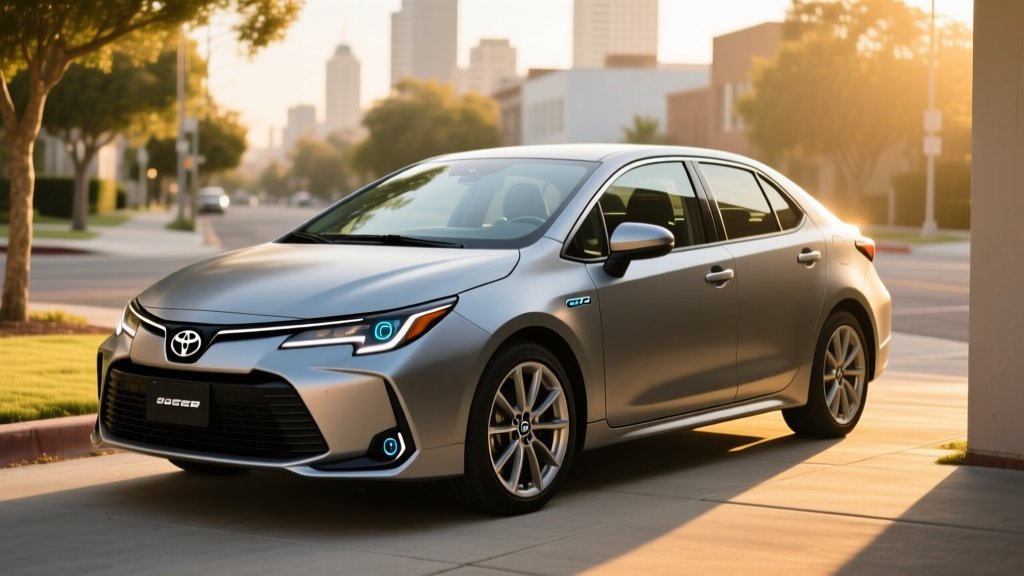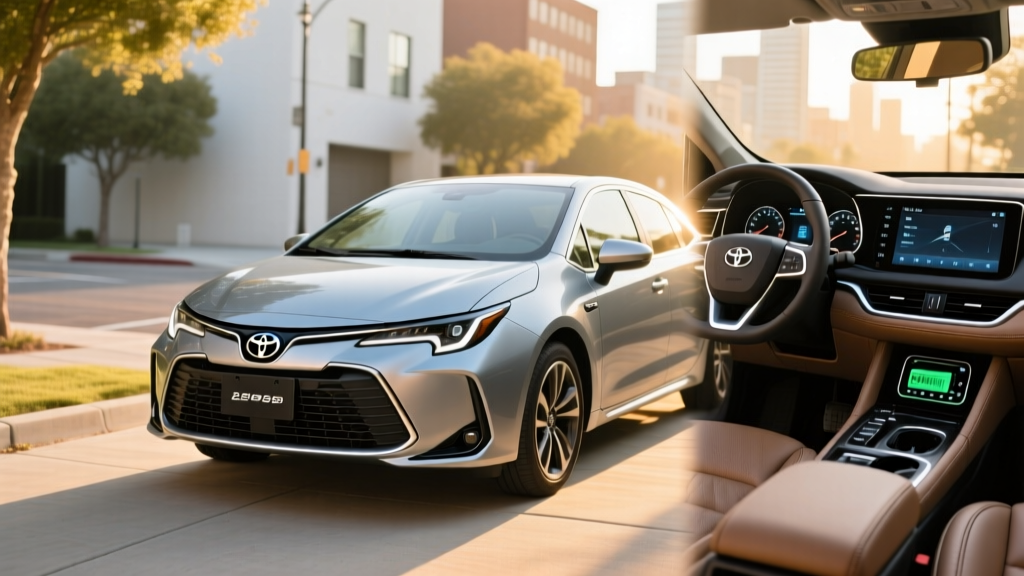
The 2024 Toyota Corolla Hybrid SE occupies a narrow but compelling lane: a sport-tuned compact hybrid sedan with all-wheel drive, a sub-$26,000 starting price, and EPA-rated fuel economy that embarrasses vehicles costing twice as much. Unlike Toyota's Prius or RAV4 Prime, the Corolla Hybrid is a conventional hybrid (HEV) — not a plug-in — meaning it never needs to be plugged in. It recovers energy through regenerative braking and engine cycling to keep its compact nickel-metal hydride traction battery charged.
For buyers cross-shopping the Corolla Hybrid SE against the Honda Civic Hybrid, Hyundai Elantra Hybrid, or even stepping up to a plug-in hybrid or full battery-electric vehicle, this profile covers the exact numbers you need: EPA and real-world MPG, powertrain output, battery warranty, pricing, and whether any tax credits apply.
HEV vs PHEV vs EV: Where the Corolla Hybrid SE Fits
Before diving into specs, it is critical to understand what the 2024 Corolla Hybrid SE is — and what it is not. Toyota sells this car strictly as a conventional hybrid (HEV). There is no plug-in hybrid (PHEV) variant of the Corolla Hybrid in the US market, and there is no battery-electric (BEV) Corolla.
| Attribute | Corolla Hybrid SE (HEV) | Typical PHEV (e.g., Prius Prime) | Full EV (e.g., Tesla Model 3) |
|---|---|---|---|
| Plugs in to charge? | No — self-charging via regen + engine | Yes — Level 1/2 AC charging | Yes — Level 1/2 + DC fast charging |
| Electric-only range | ~1 mile at low speed (creep mode) | 39–44 miles (Prius Prime SE) | 272–363 miles (Model 3) |
| Total range | ~550+ miles (11.3-gal tank × 50 MPG) | ~440+ miles combined | 272–363 miles (battery only) |
| Federal tax credit (§30D) | Not eligible (no plug) | Up to $7,500 (if sourcing/income rules met) | Up to $7,500 (if sourcing/income rules met) |
| Home charging install needed? | No | Recommended (240V Level 2) | Required for practical ownership |
| Best for | Apartment dwellers, no-charging-access buyers | Home chargers with short commutes | Home chargers seeking lowest per-mile cost |
The Corolla Hybrid SE is purpose-built for buyers who want maximum fuel economy without changing their refueling habits. You fill up at a gas station. The car handles the rest.
2024 Corolla Hybrid SE Fuel Economy: EPA Ratings vs Real-World MPG
| Metric | EPA Rating | Real-World Expectation |
|---|---|---|
| City MPG | 53 MPG | 50–56 MPG (hybrids often exceed EPA in city) |
| Highway MPG | 46 MPG | 42–48 MPG (highway reduces regen advantage) |
| Combined MPG | 50 MPG | 47–52 MPG depending on route mix |
| Fuel tank capacity | 11.3 gallons | — |
| Total estimated range | ~565 miles | ~500–580 miles |
The SE trim's 50 MPG combined figure, sourced from fueleconomy.gov, applies specifically to the all-wheel-drive configuration that comes standard on the SE. The LE trim, which is front-wheel-drive only, rates slightly higher at 53 MPG combined.
Real-world note: Toyota hybrids consistently overperform their EPA city ratings in stop-and-go driving because regenerative braking recovers energy that would otherwise be lost as heat. In warmer climates with mixed city/highway commutes, owners frequently report 52–55 MPG on the SE. Highway-dominant driving at 75+ mph will pull the number closer to 44–46 MPG. Cold weather (below 30°F) typically reduces MPG by 5–10% due to longer engine warm-up cycles and increased accessory load from the heater.
Powertrain and Performance Specs
| Specification | 2024 Corolla Hybrid SE |
|---|---|
| Powertrain type | Series-parallel hybrid (HEV) |
| Engine | 1.8L 4-cylinder Atkinson cycle |
| Engine output | 96 hp / 105 lb-ft torque |
| Front electric motor | 94 hp / 139 lb-ft |
| Rear electric motor (AWD-e) | 40 hp / 38 lb-ft |
| Net combined system horsepower | 138 hp |
| Drivetrain | Electronic AWD (AWD-e) — standard on SE |
| Transmission | Continuously variable (eCVT) |
| 0–60 mph (estimated) | ~9.0 seconds |
| Traction battery | NiMH, ~1.3 kWh (not plug-accessible) |
| Towing capacity | Not rated for towing |
The 138 combined horsepower figure may sound modest, but the electric motors deliver peak torque from zero RPM, which makes the Corolla Hybrid SE feel responsive in city acceleration. The AWD-e system activates the rear motor automatically when slip is detected — there is no mechanical driveshaft connecting the axles. This electronic AWD adds roughly 100 lbs and costs about 3 MPG compared to the FWD-only LE trim, but provides meaningful traction in rain and light snow.
The SE trim adds sport-tuned suspension, a leather-trimmed steering wheel, paddle shifters (which adjust simulated gear steps in the eCVT), and 18-inch alloy wheels. The ride is firmer than the LE but never harsh — a reasonable trade-off for improved cornering composure.
Pricing, Trims, and Tax Credit Eligibility
The 2024 Toyota Corolla Hybrid SE carries a manufacturer's suggested retail price (MSRP) starting at $25,790 (including destination charge). Key trim details:
- Corolla Hybrid SE: $25,790 — AWD-e, sport suspension, Smart Key, 8-inch touchscreen, wireless Apple CarPlay/Android Auto, Toyota Safety Sense 3.0
- Corolla Hybrid LE (for reference): $23,790 — FWD, 16-inch wheels, slightly higher MPG
Options are limited on the SE. A premium audio/JBL package and a few standalone accessories (body side moldings, cargo tray) can push the as-tested price to approximately $27,500.
Federal Tax Credit: Not Eligible
The Corolla Hybrid SE does not qualify for the IRS §30D Clean Vehicle Credit. Under current IRS rules, only plug-in electric vehicles (BEVs and PHEVs with sufficient battery capacity) are eligible. Conventional hybrids like the Corolla Hybrid are excluded regardless of fuel economy.
Some states offer rebates for high-MPG hybrids, but these vary by jurisdiction and change frequently. Check your state energy office or department of environmental quality for current programs.
Even without a federal credit, the Corolla Hybrid SE's low purchase price means its total cost of ownership undercuts most plug-in alternatives unless you drive very short daily distances with home charging access.
Battery Warranty, Lifespan, and Replacement Cost
| Component | Warranty Coverage |
|---|---|
| Hybrid battery (traction) | 10 years / 150,000 miles (whichever comes first) |
| Hybrid system components | 8 years / 100,000 miles |
| Basic vehicle warranty | 3 years / 36,000 miles |
| Powertrain warranty | 5 years / 60,000 miles |
Toyota's 10-year/150,000-mile hybrid battery warranty is among the strongest in the industry and applies in all 50 states. This is a significant improvement from the earlier 8-year/100,000-mile standard that applied to older Toyota hybrids.
Longevity data: Toyota's NiMH hybrid batteries in the Corolla/Prius platform have demonstrated exceptional durability. Fleet data and owner reports indicate that first-generation Prius batteries (much less advanced than the 2024 system) routinely exceeded 200,000 miles before significant capacity loss. The Corolla Hybrid's smaller, less-stressed battery pack should easily outlast the vehicle's economic life for most original owners.
Replacement cost if out of warranty: A new OEM hybrid battery for the Corolla Hybrid runs approximately $2,500–$3,500 including labor at a Toyota dealer. Independent hybrid specialists can sometimes source refurbished packs for $1,500–$2,000. Given the 10-year warranty and the battery's proven durability, this is a low-probability expense for most buyers.
Who Should Choose the Corolla Hybrid SE vs a PHEV or EV?
Choose the Corolla Hybrid SE if:
- You live in an apartment or rent and cannot install a home charger
- Your daily driving is 40+ miles with mixed city/highway segments
- You want AWD for snow/rain but don't want an SUV's fuel penalty
- Your budget is under $28,000 and you want minimal depreciation risk
- You road-trip frequently and don't want to plan around charging stops
Choose a PHEV (e.g., Prius Prime) if:
- You can install a Level 2 home charger
- Your daily commute is under 40 miles round-trip (covers most days on electric only)
- You want to qualify for the up-to-$7,500 federal tax credit
- You want to minimize gasoline purchases without range-anxiety on longer trips
Choose a full EV (e.g., Tesla Model 3, Chevrolet Equinox EV) if:
- You have reliable home or workplace Level 2 charging
- You want the lowest per-mile fuel cost (~$0.04/mile on home electricity vs ~$0.10/mile at 50 MPG)
- You want to eliminate oil changes and engine maintenance entirely
- Your daily driving is under 250 miles and you're comfortable with public DC fast charging for road trips
The Corolla Hybrid SE's strongest competitive advantage is its zero-infrastructure requirement. You buy it, you drive it, you fill it at any gas station. For the roughly 35% of American households without access to dedicated home charging, this is not a compromise — it is the optimal solution.
Real-World Ownership: Insurance, Maintenance, and Cost Per Mile
At 50 MPG combined and a national average regular gasoline price of approximately $3.15/gallon (early 2026), the Corolla Hybrid SE costs roughly $0.063 per mile in fuel. Compare this to a typical 30 MPG gas compact at $0.105/mile or a home-charged EV at $0.04–$0.05/mile.
Maintenance is minimal: oil changes every 10,000 miles (the Atkinson-cycle engine is under light load), tire rotations, cabin air filter, and brake fluid. The regenerative braking system significantly extends brake pad life — many Toyota hybrid owners report original brake pads lasting 80,000+ miles.
Insurance premiums for the Corolla Hybrid SE are moderate. National averages place a 35-year-old driver with a clean record at approximately $1,400–$1,700 annually, depending on state and coverage level — comparable to the gas Corolla and lower than most EVs due to the lower vehicle MSRP.
According to IIHS testing, the 2024 Corolla sedan earned top marks in crashworthiness, and Toyota Safety Sense 3.0 (standard on all trims) includes pre-collision braking, lane departure alert with steering assist, full-speed-range adaptive cruise control, and lane tracing assist. Note: TSS 3.0 is an SAE Level 2 driver-assist system — it requires active driver supervision and is not a self-driving system.
Pros, Cons, and Final Verdict
Pros
- 50 MPG combined (AWD) — among the highest of any AWD vehicle sold in the US
- Standard AWD-e at a sub-$26K price point
- 10-year/150,000-mile hybrid battery warranty
- No charging infrastructure needed — works for renters and apartment dwellers
- Toyota Safety Sense 3.0 standard on all trims
- Proven hybrid reliability with decades of fleet data
- Sport-tuned suspension gives the SE real handling composure
Cons
- 138 hp means highway merging requires planning — not a quick car
- No federal tax credit eligibility (HEV, not PHEV/BEV)
- Rear seat space is tight for taller passengers (38.1 inches of legroom)
- Cargo volume (13.1 cu ft) is average for the segment — no hatchback utility
- No DC fast charging or meaningful electric-only driving
- Infotainment is functional but the 8-inch screen feels dated vs competitors
The 2024 Toyota Corolla Hybrid SE is not exciting in the way a Tesla Model 3 or even the redesigned Prius is. It is, however, ruthlessly rational: 50 MPG with AWD, a proven powertrain, a 10-year battery warranty, and a price that undercuts most plug-in competitors by $5,000–$10,000. For buyers without home charging access, it is arguably the best value-per-mile vehicle on the market.
Frequently Asked Questions
How many MPG does the 2024 Toyota Corolla Hybrid SE get?
The EPA rates the Corolla Hybrid SE at 53 city / 46 highway / 50 combined MPG. In real-world driving, expect 47–52 MPG combined depending on your route mix and climate. City-dominant driving often exceeds the EPA rating thanks to regenerative braking.
Does the Corolla Hybrid SE plug in?
No. The 2024 Corolla Hybrid SE is a conventional hybrid (HEV), not a plug-in hybrid (PHEV). It charges its small traction battery through regenerative braking and the gasoline engine. You never need to plug it in — you refuel at any gas station.
How far can the Corolla Hybrid SE drive on electric power alone?
Effectively zero meaningful miles. The Corolla Hybrid can creep at very low speeds (under 25 mph) for roughly one mile on battery power in stop-and-go traffic, but it is not designed for electric-only driving. If you want electric-only range, look at a PHEV like the Toyota Prius Prime (39–44 miles electric-only).
Does the 2024 Corolla Hybrid qualify for any tax credit?
It does not qualify for the federal §30D Clean Vehicle Credit, which is restricted to plug-in vehicles (BEVs and PHEVs). Check your state's energy office for any local hybrid incentive programs, as these vary by jurisdiction.
How long will the Corolla Hybrid battery last and what does replacement cost?
Toyota warranties the hybrid battery for 10 years or 150,000 miles. Real-world data from Toyota's hybrid fleet (Prius, Camry Hybrid, RAV4 Hybrid) shows these batteries routinely exceeding 200,000 miles. If replacement is needed out of warranty, expect $2,500–$3,500 at a dealer or $1,500–$2,000 from an independent hybrid specialist.
Is the Corolla Hybrid SE better than the Prius?
They serve different buyers. The Prius (57 MPG combined, FWD) is more efficient and offers a PHEV variant (Prius Prime). The Corolla Hybrid SE offers standard AWD, a lower starting price ($25,790 vs $28,545 for the Prius LE), and a traditional sedan trunk. If you need AWD and budget is a priority, the Corolla Hybrid SE wins. If maximum MPG or plug-in capability matters more, the Prius or Prius Prime is the better pick.
Is the Corolla Hybrid SE reliable?
Toyota's hybrid system is one of the most proven electrified powertrains in automotive history, with over 25 years of continuous production and tens of millions of units on the road. According to NHTSA data, there are no significant safety recalls specific to the Corolla Hybrid's powertrain as of early 2026. Long-term reliability is a core reason buyers choose this platform.