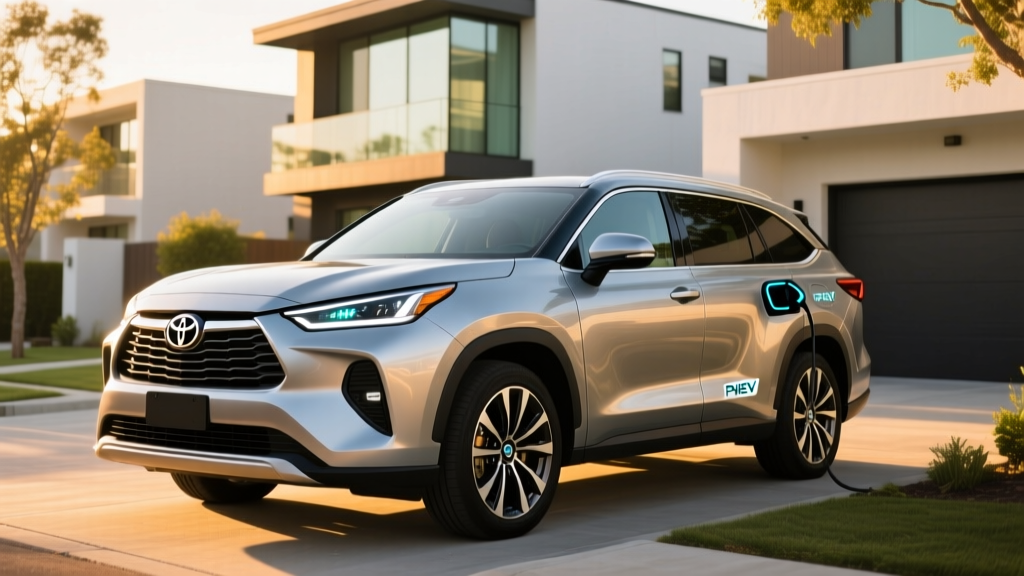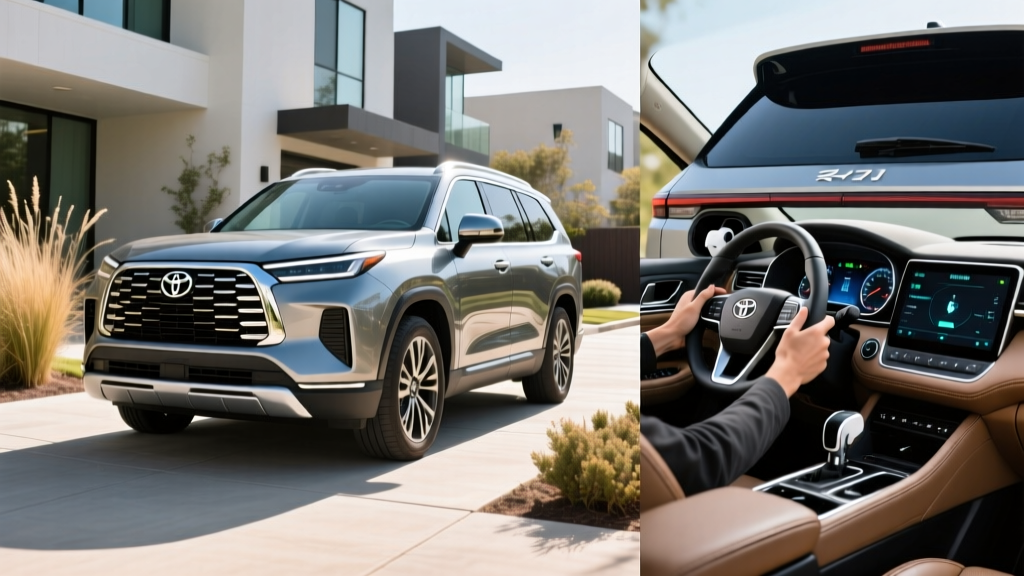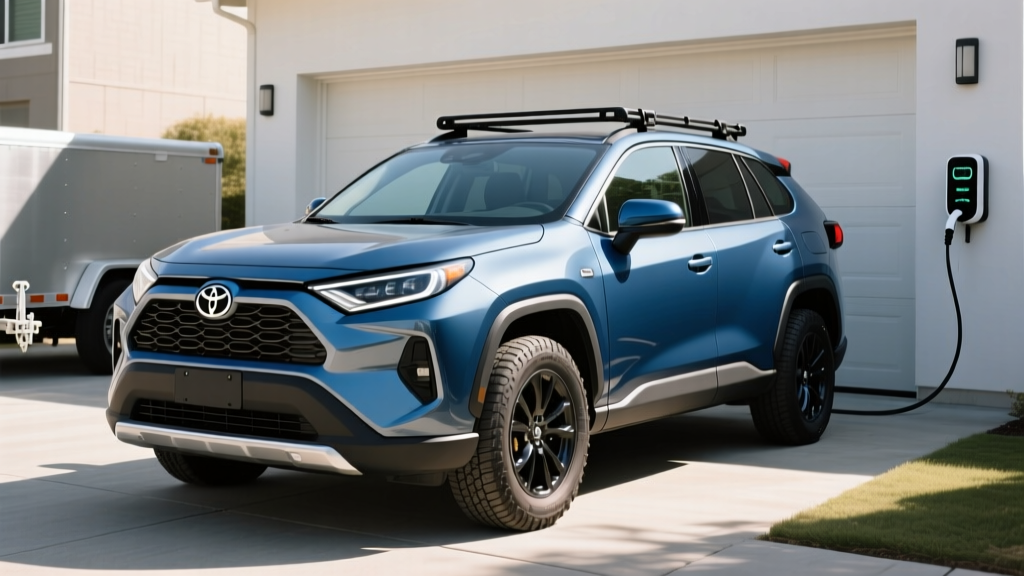
The Toyota RAV4 Hybrid has long been the default compact crossover for buyers who want SUV utility without the fuel-pump punishment. But when you need to pull a small trailer, a pair of jet skis, or a lightweight camping rig, the question shifts from "How many MPG?" to "How much can it actually tow?" For the 2024 model year, the RAV4 Hybrid's towing capacity remains 1,750 pounds across all trims when properly equipped — a figure that demands honest context about what it means in practice.
This guide covers everything a prospective buyer or current owner needs to know: the real towing limits, EPA and real-world MPG, the hybrid powertrain breakdown, battery longevity, and how the RAV4 Hybrid stacks up against the RAV4 Prime (the plug-in variant) and full EVs for your specific use case.
2024 RAV4 Hybrid Towing Capacity: The Exact Numbers
Toyota rates the 2024 RAV4 Hybrid at 1,750 lbs maximum towing capacity (with a factory-installed tow receiver and wiring harness). This applies to every trim — LE, XLE, XLE Premium, SE, XSE, Woodland Edition, and Limited. There is no heavy-duty tow package available that increases this figure.
| Specification | Value |
|---|---|
| Maximum Towing Capacity | 1,750 lbs (all trims) |
| Maximum Tongue Weight | 175 lbs (10% of tow rating) |
| Payload Capacity | ~905–1,035 lbs (varies by trim) |
| Standard Hitch | Not included — dealer or aftermarket install |
| Trailer Sway Control | Standard on all trims |
For reference, 1,750 lbs covers a small utility trailer loaded with landscaping supplies, a lightweight pop-up camper (most weigh 1,200–1,600 lbs empty), two personal watercraft on a single-axle trailer, or a small aluminum boat. It does not cover a loaded enclosed cargo trailer, a mid-size travel trailer, or any horse trailer.
The non-hybrid gas-only 2024 RAV4 (with the 2.5L four-cylinder and 8-speed automatic) is rated at 1,500 lbs, making the hybrid the better tow choice in this lineup. If you need more, the RAV4 Prime plug-in hybrid is also rated at 1,750 lbs, while stepping up to a Toyota Highlander Hybrid gets you 3,500 lbs.
Hybrid vs. Plug-In Hybrid: RAV4 HEV vs. RAV4 Prime
Toyota sells two electrified RAV4 variants, and confusing them is easy. Here is the critical distinction:
- RAV4 Hybrid (HEV): A conventional self-charging hybrid. You never plug it in. The 1.6 kWh battery charges through regenerative braking and the gas engine. It cannot drive on electric power alone for meaningful distances.
- RAV4 Prime (PHEV): A plug-in hybrid with a larger 18.1 kWh battery. You plug it in to charge. It delivers 42 miles of electric-only range before the gas engine engages, and it qualifies for federal tax incentives.
| Attribute | RAV4 Hybrid (HEV) | RAV4 Prime (PHEV) |
|---|---|---|
| Plug-In Required? | No | Yes (Level 1 or Level 2) |
| Battery Capacity | 1.6 kWh | 18.1 kWh |
| Electric-Only Range | Not applicable | 42 miles (EPA) |
| Combined Horsepower | 219 hp | 302 hp |
| EPA Combined MPG/MPGe | 39 MPG | 94 MPGe (electric) / 38 MPG (gas) |
| Towing Capacity | 1,750 lbs | 1,750 lbs |
| Federal Tax Credit (§30D) | Not eligible | Up to $7,500 (see eligibility below) |
| Base MSRP (2024) | $31,725 (LE) | $43,690 (SE) |
| 0–60 mph | 7.4 seconds | 5.7 seconds |
Fuel Economy: EPA Ratings and Real-World MPG
The 2024 RAV4 Hybrid's EPA fuel economy ratings, per fueleconomy.gov, break down as follows:
| Trim | City MPG | Highway MPG | Combined MPG |
|---|---|---|---|
| LE | 41 | 38 | 40 |
| XLE / XLE Premium / SE / XSE / Limited | 41 | 38 | 39 |
| Woodland Edition | 38 | 35 | 37 |
The LE trim's 40 MPG combined is the highest in the lineup, aided by slightly lighter weight and lower rolling-resistance tires. The Woodland Edition's all-terrain tires and standard AWD tuning cost it 2–3 MPG across the board.
Real-World MPG: What Owners Actually See
Hybrids typically exceed their EPA city ratings in stop-and-go driving because regenerative braking recaptures energy that a gas car wastes as heat. In our experience and aggregated owner reports, the RAV4 Hybrid delivers:
- City/suburban driving: 40–44 MPG is common; some hypermilers report 45+.
- Highway cruising (70–75 mph): 33–36 MPG. Hybrids lose their advantage at sustained high speed where the gas engine does all the work.
- Cold weather (below 30°F): Expect a 10–15% drop (roughly 33–36 MPG combined). The engine runs more often to provide cabin heat and warm the catalytic converter.
- While towing: Expect 20–25 MPG depending on trailer weight and terrain. Towing near the 1,750-lb max on hilly routes will push consumption toward the low end.
Powertrain Breakdown: What Moves the RAV4 Hybrid
The 2024 RAV4 Hybrid pairs a 2.5-liter four-cylinder Atkinson-cycle gasoline engine with Toyota's hybrid transaxle and a rear-mounted electric motor for electronic on-demand AWD (standard on all trims). Here is the full powertrain spec:
| Component | Specification |
|---|---|
| Gas Engine | 2.5L 4-cyl Atkinson-cycle (176 hp / 163 lb-ft) |
| Front Electric Motor | 118 hp / 149 lb-ft (integrated in transaxle) |
| Rear Electric Motor (AWD) | 54 hp / 89 lb-ft |
| Net Combined System Output | 219 hp |
| Hybrid Battery | 1.6 kWh lithium-ion (sealed NiMH on early build dates) |
| Transmission | eCVT (planetary gearset, no fixed gears) |
| Drivetrain | Electronic AWD (standard, all trims) |
| 0–60 mph | 7.4 seconds |
The eCVT is not a belt-and-pulley CVT like those in some competitors. Toyota's Hybrid Synergy Drive uses a planetary gearset that seamlessly blends engine and motor power — it's proven durable and avoids the rubber-band feel of traditional CVTs. The rear motor engages automatically when slippage is detected or under hard acceleration, providing AWD traction without a mechanical driveshaft.
For towing, the hybrid system's instant electric torque at low RPM is an advantage over the gas-only RAV4, which needs to rev higher to access peak torque. This makes the hybrid feel more composed pulling away from stops with a trailer attached.
Reliability and Battery Warranty: What You're Signing Up For
Toyota's hybrid system is among the most proven in the industry, with over 25 years of production history since the original Prius. The RAV4 Hybrid specifically has been in the U.S. market since the 2016 model year, giving it a substantial track record.
- Hybrid Battery: 10 years / 150,000 miles (whichever comes first) — covers capacity loss below a defined threshold and component failure.
- Hybrid System Components: 8 years / 100,000 miles — covers the inverter, transaxle, control module, and related electronics.
- Basic New-Vehicle Warranty: 3 years / 36,000 miles.
- Powertrain Warranty: 5 years / 60,000 miles.
Real-world data suggests Toyota hybrid batteries routinely last 150,000–200,000+ miles before significant degradation. Individual cell replacement (rather than the full pack) is sometimes possible through independent hybrid specialists for $500–$1,500. A full OEM hybrid battery replacement from a Toyota dealer runs approximately $3,000–$5,000 including labor, though most owners never face this cost within typical ownership periods.
The hybrid system adds complexity — the inverter, motor-generators, and battery cooling system are components a gas car doesn't have — but Toyota's implementation is notably conservative. The 1.6 kWh battery is small and lightly stressed compared to a full EV pack, which contributes to its longevity.
Pricing, Trims, and Tax Credit Eligibility
The 2024 RAV4 Hybrid is available in seven trims. Pricing below reflects MSRP at launch (destination charge included):
| Trim | MSRP |
|---|---|
| LE | $31,725 |
| XLE | $33,235 |
| XLE Premium | $36,110 |
| SE | $35,475 |
| XSE | $37,160 |
| Woodland Edition | $36,310 |
| Limited | $40,035 |
Does the RAV4 Hybrid Qualify for a Federal Tax Credit?
No. The conventional RAV4 Hybrid (HEV) does not qualify for the federal §30D Clean Vehicle Credit. That credit applies only to plug-in electric vehicles (BEVs and PHEVs) that meet battery sourcing, critical mineral, MSRP cap, and buyer income requirements as defined by the IRS.
If the federal tax credit is a priority, the RAV4 Prime (PHEV) may qualify for up to $7,500 — but eligibility depends on your adjusted gross income (capped at $150,000 single / $300,000 joint), the vehicle's MSRP (SUV cap is $80,000), and whether the battery's critical minerals and components meet domestic-sourcing thresholds, which have tightened annually. The point-of-sale transfer option allows you to apply the credit as a down-payment reduction at the dealer. Consult a tax professional to confirm your specific eligibility.
Some states offer separate incentives for hybrids. Check your state energy office or AFDC incentive database for current programs.
RAV4 Hybrid vs. RAV4 Prime vs. Full EV: Which Fits You?
- Choose the RAV4 Hybrid (HEV) if: You want maximum fuel efficiency with zero lifestyle change — no charging, no plug, no range planning. You tow light loads occasionally. Budget is $31K–$40K. You drive 12,000–15,000 miles/year and want 39–40 MPG without thinking about it.
- Choose the RAV4 Prime (PHEV) if: You have home charging (Level 2 preferred) and a commute under 42 miles round-trip. You want EV-like daily driving with gas-engine backup for road trips. You want 302 hp and potential tax-credit eligibility. Budget is $43K+.
- Choose a full EV (e.g., Tesla Model Y, Hyundai Ioniq 5) if: You have reliable home charging, rarely tow, want the lowest per-mile fuel cost, and are ready to plan charging on road trips. Your budget accommodates $40K–$55K and you want zero tailpipe emissions.
For the specific use case of light towing combined with daily commuting, the RAV4 Hybrid occupies a practical sweet spot: 39 MPG daily, 1,750-lb towing when needed, and no dependency on charging infrastructure. If your towing needs exceed 1,750 lbs regularly, neither the RAV4 Hybrid nor the Prime is the right tool — look at a Highlander Hybrid (3,500 lbs), a truck-based hybrid like the Ford Maverick Hybrid (2,000 lbs with a smaller footprint), or a body-on-frame SUV.
Pros and Cons
- 40 MPG combined (LE) — best-in-class for AWD compact SUVs
- Standard electronic AWD across all trims
- 1,750-lb tow rating exceeds gas RAV4 (1,500 lbs)
- 10-year/150,000-mile hybrid battery warranty
- No plug-in charging required — zero infrastructure dependency
- Strong resale value and proven reliability track record
- Trailer sway control standard
- 1,750-lb tow limit is low for camping trailers and boats
- No factory tow package — dealer or aftermarket hitch install required
- Highway MPG drops to 33–36 at sustained 70+ mph
- No federal tax credit eligibility (HEV)
- Woodland Edition sacrifices 3 MPG for all-terrain tires
- eCVT drone under hard acceleration (common hybrid complaint)
- Infotainment system lags behind competitors in responsiveness
Frequently Asked Questions
Can the 2024 RAV4 Hybrid tow a camper trailer?
It depends on the camper. Lightweight pop-up campers (1,200–1,600 lbs) and teardrop trailers (800–1,500 lbs) are within the 1,750-lb rating. Hard-sided travel trailers almost always exceed this limit once loaded. Always weigh your loaded trailer on a scale before towing — the 1,750-lb rating includes all cargo, water, and propane in the trailer.
How much does the RAV4 Hybrid's MPG drop while towing?
Expect 20–25 MPG while towing near the maximum weight, down from the usual 39–40 MPG combined. The hybrid system's regenerative braking helps on downhill sections, but the gas engine works significantly harder under load. On flat terrain with a light trailer (~800 lbs), some owners report 28–30 MPG.
Does the RAV4 Hybrid need to be plugged in?
No. The RAV4 Hybrid is a conventional (self-charging) hybrid. Its 1.6 kWh battery recharges through regenerative braking and the gasoline engine. You fuel it exclusively at gas stations. Only the RAV4 Prime (PHEV) requires plug-in charging to access its 42-mile electric range.
Is the hybrid battery expensive to replace?
A full OEM replacement from a Toyota dealer costs approximately $3,000–$5,000 including labor. However, Toyota hybrid batteries commonly last 150,000–200,000+ miles, and the 10-year/150,000-mile warranty covers premature failure. Independent hybrid shops can often replace individual failed cells for $500–$1,500.
Does the 2024 RAV4 Hybrid qualify for any tax credit?
The conventional RAV4 Hybrid does not qualify for the federal §30D Clean Vehicle Credit, which is reserved for plug-in vehicles (BEVs and PHEVs). Some states and utilities offer rebates for hybrid purchases — check the AFDC state incentive database for programs in your area. If a federal credit is important, consider the RAV4 Prime PHEV instead.
How does the RAV4 Hybrid's towing compare to competitors?
The Honda CR-V Hybrid is rated at 1,000 lbs. The Ford Escape Hybrid is rated at 1,500 lbs. The Hyundai Tucson Hybrid is rated at 2,000 lbs. The RAV4 Hybrid's 1,750-lb rating sits in the middle of this segment — adequate for light-duty towing but not class-leading. The Tucson Hybrid's 2,000-lb rating is the highest among compact hybrid SUVs.