Quick Verdict: The Efficiency King of Compact Hybrids
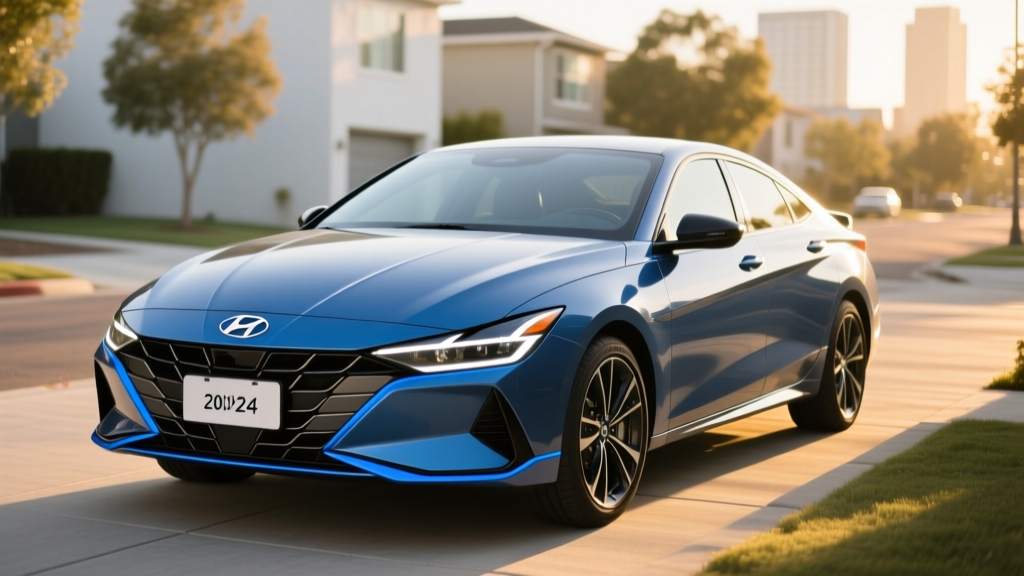
The 2024 Hyundai Elantra Hybrid Blue is a study in restraint done right. With an EPA-rated 54 MPG combined, it sits at the top of the compact hybrid sedan segment for fuel economy, undercutting the Toyota Corolla Hybrid and rivaling the Prius — but with a more conventional driving feel and a starting MSRP of $26,250. If your goal is maximum miles per gallon without plugging in, the Elantra Hybrid Blue trim is the one to pick. But there are trade-offs: less power than higher trims, a firm ride, and no federal tax credit for conventional hybrids.
| Spec | 2024 Elantra Hybrid Blue |
|---|---|
| EPA MPG (City / Hwy / Combined) | 51 / 58 / 54 |
| Combined Horsepower | 139 hp |
| Engine | 1.6L 4-cyl Atkinson-cycle (104 hp) |
| Electric Motor | 32 kW (43 hp) permanent-magnet synchronous |
| Transmission | 6-speed dual-clutch automatic (DCT) |
| Hybrid Battery | 1.32 kWh lithium-ion polymer |
| Drivetrain | FWD |
| 0–60 mph | ~8.5 seconds |
| Curb Weight | ~2,950 lbs |
| Base MSRP | $26,250 (Blue trim) |
| Battery Warranty | 10 years / 100,000 miles |
| Powertrain Warranty | 10 years / 100,000 miles |
HEV vs PHEV: Why the Elantra Hybrid Is a Conventional Hybrid
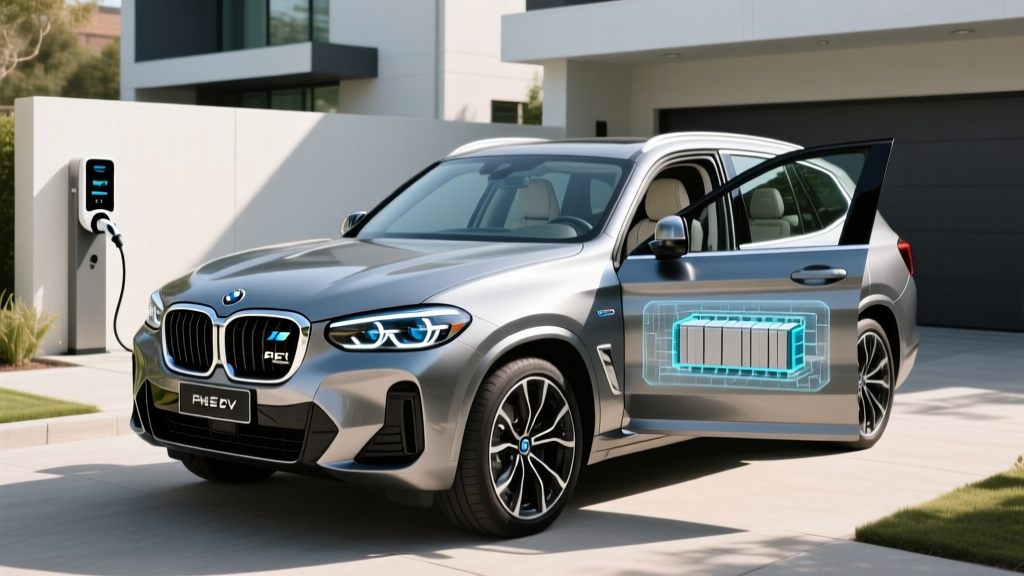
Before diving into the numbers, it's critical to understand what you're buying. The 2024 Elantra Hybrid is a conventional hybrid electric vehicle (HEV), not a plug-in hybrid (PHEV). This distinction shapes everything about ownership:
| Feature | HEV (Elantra Hybrid) | PHEV (e.g., Prius Prime) |
|---|---|---|
| Plug-in charging? | No — charges via engine + regen braking | Yes — plug in for electric-only miles |
| Electric-only range | ~1 mile at low speed | 25–44 miles typical |
| Battery size | 1.32 kWh | 10–14 kWh typical |
| Federal tax credit (§30D)? | No | Up to $7,500 (if eligible) |
| Best for | Drivers without home charging access | Drivers with home/garage charging |
The Elantra Hybrid Blue recovers energy through regenerative braking and the gasoline engine. You never plug it in. The 1.32 kWh battery is small by design — it buffers energy for electric-assist acceleration and low-speed crawling, not for sustained electric-only driving. If you want 25+ miles of EV range before the engine kicks on, you need a PHEV like the Toyota Prius Prime or the Hyundai Tucson PHEV.
Fuel Economy: 54 MPG EPA, But What About Real-World?
| Condition | City | Highway | Combined |
|---|---|---|---|
| EPA Estimate | 51 MPG | 58 MPG | 54 MPG |
| Real-World (mixed driving) | 52–56 MPG | 48–53 MPG | 50–54 MPG |
| Cold Weather (below 32°F) | 44–48 MPG | 43–48 MPG | 44–48 MPG |
Here's what makes the Elantra Hybrid Blue interesting: like most hybrids, it tends to exceed its EPA city rating in real-world stop-and-go driving. The electric motor handles low-speed acceleration where gas engines are least efficient, and regenerative braking recaptures energy at every stoplight. Owners on Fuelly and real-world testing consistently report 52–56 MPG in urban commuting.
Highway driving is where the story shifts. The Elantra Hybrid Blue's 58 MPG highway EPA rating is ambitious. At sustained 70–75 mph speeds, expect 48–53 MPG — still excellent, but below the sticker. The Atkinson-cycle 1.6L engine runs more often at highway speeds, and aerodynamic drag dominates. Cold weather hits all hybrids hard: battery chemistry slows, cabin heating demands engine operation, and expect a 10–15% drop across the board in winter months.
The Blue trim achieves its segment-leading efficiency partly through low-rolling-resistance tires and slightly lighter weight compared to the SEL and Limited trims (which are rated at 49 MPG combined). The trade-off is less grip and a firmer ride quality.
Powertrain: 139 HP From Engine + Motor
The Elantra Hybrid pairs a 1.6-liter Atkinson-cycle four-cylinder engine (104 hp, 109 lb-ft torque) with a 32 kW electric motor (43 hp, 127 lb-ft) integrated into the transmission housing. Combined system output is 139 horsepower.
Unlike the Toyota Prius, which uses an e-CVT (planetary gearset), Hyundai uses a 6-speed dual-clutch transmission (DCT). This is a deliberate engineering choice: the DCT delivers more natural, stepped gear changes that feel familiar to drivers coming from conventional automatics. There's no "rubber-band" drone under acceleration. The trade-off is occasional low-speed shift hesitation — a common DCT characteristic — particularly when pulling away from a stop on a cold morning.
Acceleration is adequate, not thrilling. The 0–60 mph time of approximately 8.5 seconds puts it behind the 2024 Prius (7.2 seconds with AWD) but on par with the Honda Insight (discontinued) and ahead of the Corolla Hybrid. For daily commuting and highway merging, 139 hp is sufficient. If you want more punch, this isn't the car — look at the Elantra N Line or a turbocharged alternative.
Reliability, Battery Lifespan, and Replacement Cost
Hybrid Battery Warranty: 10 years or 100,000 miles (whichever comes first). If the battery drops below approximately 70% of original capacity during the warranty period, Hyundai will repair or replace it at no cost. This warranty is transferable to subsequent owners in most states.
Powertrain Warranty: 10 years / 100,000 miles — covering the engine, transmission, electric motor, and related components.
Hyundai's hybrid system has proven reliable across the Elantra, Sonata, and Ioniq (now discontinued) lineages. The 1.32 kWh lithium-ion polymer battery is small and operates within a conservative state-of-charge window (roughly 40–80% SoC), which dramatically reduces degradation stress. Unlike full EVs that cycle through deep charge/discharge events daily, a hybrid battery experiences shallow, frequent micro-cycles — a far gentler operating pattern.
Based on data from Hyundai's earlier hybrid models (Sonata Hybrid, Ioniq Hybrid), battery replacement outside of warranty is uncommon before 150,000–200,000 miles. If replacement is needed, expect a cost of $2,000–$3,500 for the battery pack (parts and labor) at a dealership. Independent hybrid specialists may offer refurbished packs for $1,200–$2,000. For context, most Elantra Hybrids will outlast their economic life without needing a battery swap.
The 6-speed DCT is generally reliable but has drawn occasional complaints about low-speed shudder in earlier Hyundai/Kia hybrid models. The 2024 model year benefits from updated software calibration that largely addresses this. Still, it's worth noting for buyers coming from the seamless feel of a Toyota e-CVT.
Pricing and Tax Credit Eligibility
| Trim | MSRP | EPA MPG Combined | Federal Tax Credit |
|---|---|---|---|
| Blue | $26,250 | 54 MPG | Not eligible |
| SEL | $28,100 | 49 MPG | Not eligible |
| Limited | $30,550 | 49 MPG | Not eligible |
The 2024 Hyundai Elantra Hybrid does not qualify for the federal §30D clean vehicle tax credit. Under current IRS rules, the §30D credit applies only to plug-in electric vehicles (BEVs and PHEVs) with a battery capacity of at least 7 kWh. The Elantra Hybrid's 1.32 kWh battery falls far short of this threshold. No conventional HEV qualifies for the federal credit.
Some states offer their own incentives for hybrids, though these have become rare as state programs shift focus to zero-emission vehicles. California's CVRP, for example, no longer covers hybrids. Check your state's energy office or Alternative Fuels Data Center for any remaining local programs.
At $26,250 for the Blue trim, the Elantra Hybrid is competitively priced against the Toyota Corolla Hybrid ($23,500 base LE, but with lower equipment levels) and significantly cheaper than the Toyota Prius ($27,950 base LE). The value proposition is strong: 54 MPG, a 10-year warranty, and a well-equipped cabin with an 8-inch touchscreen, wireless Apple CarPlay/Android Auto, and Hyundai SmartSense safety suite as standard.
Who Should Choose the Elantra Hybrid Blue vs. a PHEV or Full EV?
Choose the Elantra Hybrid Blue if:
- You don't have access to home or workplace charging (apartment, street parking)
- You want maximum MPG with zero behavior change — no plugging in, no range planning
- Your budget is under $28,000 and you prioritize low cost of ownership
- You drive 12,000–15,000 miles per year and want to minimize fuel spend
- You value a 10-year/100,000-mile powertrain warranty
Choose a PHEV (e.g., Prius Prime, Tucson PHEV) if:
- You have a garage or driveway with a 120V or 240V outlet
- Your daily commute is under 30 miles round-trip (cover it on electric alone)
- You want to qualify for the $7,500 federal tax credit (subject to income, MSRP, and sourcing rules)
- You want EV-like quietness and instant torque for daily driving, with gas backup for road trips
Choose a full EV (e.g., Chevy Bolt, Hyundai Kona Electric) if:
- You have reliable Level 2 home charging
- You want zero tailpipe emissions and the lowest per-mile "fuel" cost
- Your daily driving is under 200 miles and you're comfortable with public DC fast charging for road trips
- You want to maximize federal and state incentives
The Elantra Hybrid Blue occupies a specific and valuable niche: it's the best choice for drivers who want EV-like efficiency without any charging infrastructure dependency. If you rent, live in a condo without charging, or simply don't want to think about plugging in, this car delivers 54 MPG with the ease of a gas car. The fuel savings over a comparable gas-only compact sedan (say, 30 MPG combined) are approximately $500–$700 per year at 15,000 miles driven and $3.30/gallon gas — meaning the hybrid premium pays for itself within 2–3 years versus a similarly priced gas car.
Pros
- Best-in-class 54 MPG combined (Blue trim)
- 10-year / 100,000-mile hybrid battery and powertrain warranty
- Natural-feeling 6-speed DCT (no CVT drone)
- Strong standard safety suite (SmartSense: AEB, lane-keeping, adaptive cruise)
- Competitive pricing at $26,250
- Real-world city MPG often exceeds EPA estimate
Cons
- 139 hp feels modest for highway passing
- No federal tax credit eligibility
- Low-rolling-resistance tires sacrifice grip and ride comfort
- Small rear seat and trunk compared to Sonata Hybrid
- DCT can hesitate at low speeds from a stop
- Highway MPG falls below EPA rating at 70+ mph
Frequently Asked Questions
How many MPG does the 2024 Hyundai Elantra Hybrid Blue get?
The EPA rates the Elantra Hybrid Blue at 51 MPG city, 58 MPG highway, and 54 MPG combined. In real-world city driving, owners often see 52–56 MPG thanks to regenerative braking. Highway driving at 70+ mph typically yields 48–53 MPG. Cold weather can reduce these figures by 10–15%.
Does the Elantra Hybrid need to be plugged in?
No. The Elantra Hybrid is a conventional hybrid (HEV), not a plug-in hybrid (PHEV). It charges its small 1.32 kWh battery through regenerative braking and the gasoline engine. You fuel it like any other car — with gasoline only.
Does the 2024 Elantra Hybrid qualify for any tax credit?
No. The federal §30D clean vehicle credit requires a plug-in vehicle with at least 7 kWh of battery capacity. The Elantra Hybrid's 1.32 kWh battery does not meet this threshold. No conventional hybrid qualifies for the federal EV tax credit. Some states may offer minor hybrid incentives, but most have shifted to BEV/PHEV-only programs.
How long will the hybrid battery last, and what does replacement cost?
Hyundai warranties the hybrid battery for 10 years or 100,000 miles. Based on historical data from Hyundai's hybrid lineup, the battery typically lasts 150,000–200,000+ miles before significant degradation. If replacement is needed out of warranty, expect $2,000–$3,500 at a dealership, or $1,200–$2,000 from an independent hybrid specialist using a refurbished pack.
Is the Elantra Hybrid Blue reliable?
Hyundai's hybrid powertrain has a solid reliability record, particularly the 1.6L Atkinson-cycle engine and electric motor combination. The 6-speed DCT in earlier model years drew some low-speed shudder complaints, but the 2024 model benefits from improved software calibration. The 10-year/100,000-mile powertrain warranty provides significant peace of mind. IIHS has rated the Elantra well in crash testing.
How does the Elantra Hybrid Blue compare to the Toyota Prius?
The 2024 Prius (57 MPG combined for the LE FWD) slightly beats the Elantra Hybrid Blue on EPA paper and offers more power (194 hp with AWD-e). However, the Prius starts at $27,950 — about $1,700 more than the Elantra Hybrid Blue — and has a polarizing design. The Elantra offers a more conventional sedan profile, a more natural DCT driving feel versus Toyota's e-CVT, and Hyundai's longer 10-year warranty versus Toyota's 8-year/100,000-mile hybrid battery coverage. Both are excellent; the choice comes down to design preference, budget, and whether you prioritize peak MPG (Prius) or value and warranty (Elantra).
Should I get the Blue, SEL, or Limited trim?
The Blue trim exists for one reason: maximum fuel economy. Its 54 MPG combined rating beats the SEL and Limited (both 49 MPG) due to lighter weight and low-rolling-resistance tires. If you prioritize efficiency above all else, the Blue is the answer. The SEL ($28,100) adds features like a larger 10.25-inch screen and heated seats but sacrifices 5 MPG. The Limited ($30,550) adds leather, a sunroof, and Highway Driving Assist but is the least efficient of the three.