Quick Verdict: The 2024 Honda CR-V Sport Hybrid
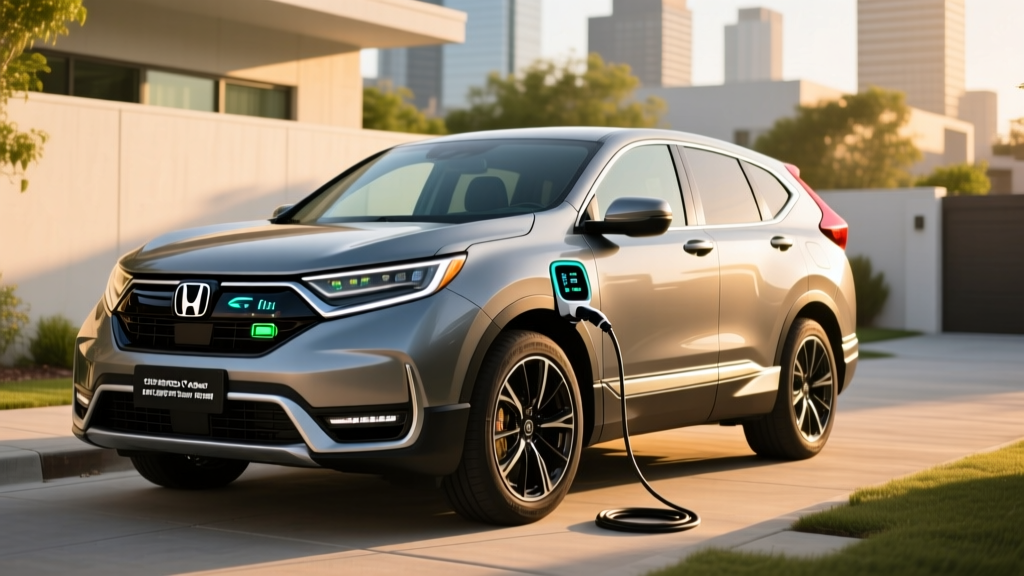
The 2024 Honda CR-V Sport Hybrid occupies a sweet spot for buyers who want electrified efficiency without plugging in. As a conventional hybrid electric vehicle (HEV), it requires zero lifestyle changes — no home charger installation, no range planning, no charging-app frustrations. You simply fill up at any gas station and let Honda's two-motor hybrid system handle the rest.
For 2024, the Sport and Sport Touring trims represent Honda's hybrid push for the CR-V lineup, pairing a 2.0-liter Atkinson-cycle engine with a dual-motor system for 204 combined horsepower and an EPA-estimated 40 MPG combined. That's a meaningful jump over the gas-only CR-V's 30 MPG combined, translating to roughly 100 fewer gallons burned per year for the average driver.
| Specification | 2024 CR-V Sport Hybrid (FWD) | 2024 CR-V Sport Hybrid (AWD) |
|---|---|---|
| Powertrain | 2.0L I4 + dual-motor hybrid | 2.0L I4 + dual-motor hybrid |
| Combined Horsepower | 204 hp | 204 hp |
| Combined Torque | 247 lb-ft (motor) | 247 lb-ft (motor) |
| EPA City MPG | 43 | 40 |
| EPA Highway MPG | 36 | 34 |
| EPA Combined MPG | 40 | 37 |
| Fuel Tank | 14.0 gal | 14.0 gal |
| Total Range | ~560 mi | ~518 mi |
| 0-60 mph (est.) | ~7.8 sec | ~8.0 sec |
| Cargo Volume | 36.3 / 76.5 cu ft | 36.3 / 76.5 cu ft |
| Base MSRP | $33,950 | $35,450 |
| Federal Tax Credit | Not eligible | Not eligible |
HEV vs. PHEV vs. EV: Which CR-V Powertrain Fits You?
Honda offers the 2024 CR-V in three flavors: gas-only, hybrid (HEV), and — notably absent from the US market — a plug-in hybrid variant that's sold in other regions. Understanding the distinction between a conventional hybrid and a plug-in hybrid is essential before you shop.
| Factor | Conventional Hybrid (HEV) | Plug-in Hybrid (PHEV) | Battery Electric (BEV) |
|---|---|---|---|
| Plug in to charge? | No — self-charging via regen + engine | Yes — has a larger battery you charge externally | Yes — battery only |
| Electric-only driving | Very short bursts (under 1 mi at low speed) | 20-50 mi typical | 200-400+ mi |
| Fuel/energy source | Gasoline only | Gasoline + electricity | Electricity only |
| Home charger needed? | No | Recommended (Level 2) | Essential (Level 2) |
| Federal tax credit (§30D) | Not eligible | Up to $7,500 (if eligible) | Up to $7,500 (if eligible) |
| Best for | Apartment dwellers, no home charging access | Home chargers with short commutes | Home chargers wanting zero tailpipe emissions |
The 2024 Honda CR-V Sport Hybrid is a conventional hybrid (HEV). It does not plug in. Its small lithium-ion battery (approximately 1.06 kWh) recharges through regenerative braking and the gasoline engine. You will never need to install a home charger or find a public charging station.
If Honda were to bring the CR-V e:PHEV to the US market in the future, it would likely feature a 17.7 kWh battery with roughly 35-50 miles of electric-only range — but that model is not currently available stateside. For now, the Sport Hybrid is Honda's electrified CR-V offering in the US.
Fuel Economy: EPA Numbers and Real-World MPG
| Trim / Drivetrain | City MPG | Highway MPG | Combined MPG |
|---|---|---|---|
| Sport Hybrid FWD | 43 | 36 | 40 |
| Sport Hybrid AWD | 40 | 34 | 37 |
| Sport Touring Hybrid AWD | 40 | 34 | 37 |
| Gas CR-V (FWD, for comparison) | 29 | 36 | 30 |
Source: EPA Fuel Economy Guide
Real-World MPG: What Owners Actually See
Conventional hybrids like the CR-V Sport Hybrid typically exceed their EPA city rating in stop-and-go traffic, where regenerative braking and electric-motor assist work hardest. In our experience and owner reports, the FWD Sport Hybrid can achieve 42-45 MPG in urban driving during mild weather.
Highway driving is a different story. Honda's hybrid system relies more on the gasoline engine at sustained speeds above 65 mph, and real-world highway fuel economy tends to land between 33-36 MPG for the FWD model — close to or slightly below the EPA highway estimate.
Cold weather impacts all vehicles, but hybrids see a more noticeable hit. Expect city MPG to drop to 35-38 in freezing temperatures as the engine runs more frequently to generate cabin heat. A combined real-world average of 37-40 MPG is realistic year-round for mixed driving in the FWD Sport Hybrid.
Powertrain Deep Dive: How Honda's Hybrid System Works
The 2024 CR-V Sport Hybrid uses Honda's fourth-generation two-motor hybrid system. Here's how the components break down:
- Engine: 2.0-liter Atkinson-cycle inline-4 producing 145 hp and 138 lb-ft of torque. The Atkinson cycle sacrifices some peak power for greater thermal efficiency.
- Drive Motor: One electric motor drives the front wheels, producing 181 hp and 247 lb-ft of torque. This is the primary motivator at low and medium speeds.
- Generator Motor: A second motor acts as a generator, converting engine output into electricity to feed the drive motor or charge the battery.
- Combined System Output: 204 hp (the engine and motor don't peak simultaneously).
- Battery: ~1.06 kWh lithium-ion pack, mounted under the cargo floor. This is far smaller than a PHEV or BEV battery — it's a buffer for energy recapture, not extended electric driving.
- Transmission: No traditional gearbox. The system uses an e-CVT (electronic continuously variable transmission) that seamlessly blends engine and motor power.
In practice, the CR-V Sport Hybrid launches on electric power from a stop, transitions to engine-generated electricity at moderate speeds, and engages the engine directly to the wheels via a lock-up clutch at highway cruising speeds. The result is smooth, responsive acceleration with the electric motor providing instant torque off the line.
Pricing, Trims, and Tax Credit Eligibility
The 2024 Honda CR-V Sport Hybrid is available in three trims:
| Trim | Drivetrain | MSRP | Key Features |
|---|---|---|---|
| Sport Hybrid | FWD | $33,950 | 19" wheels, heated seats, wireless CarPlay/Android Auto, Honda Sensing suite |
| Sport Hybrid | AWD | $35,450 | Same as FWD + rear-motor AWD system |
| Sport Touring Hybrid | AWD | $39,845 | Leather, Bose 12-speaker audio, wireless charging, heated steering wheel, navigation |
Federal Tax Credit: Not Eligible
The 2024 Honda CR-V Sport Hybrid does not qualify for the IRS §30D federal clean vehicle tax credit. Under current IRS rules, the §30D credit is available only to plug-in electric vehicles (BEVs and PHEVs) that meet battery capacity, critical-mineral sourcing, and MSRP thresholds. Conventional hybrids like this CR-V are excluded by statute.
Some states offer their own incentives for hybrid vehicles, though these are far less common than EV rebates. Check your state's energy or DMV website for current programs — availability and amounts vary widely by jurisdiction.
Total Cost of Ownership Context
While you won't get a federal tax credit, the CR-V Sport Hybrid's fuel savings are meaningful. At $3.50/gallon and 12,000 miles per year:
- Gas-only CR-V (30 MPG combined): ~$1,400/year in fuel
- Sport Hybrid FWD (40 MPG combined): ~$1,050/year in fuel
- Annual savings: ~$350/year, or ~$1,750 over five years
That fuel savings partially offsets the Sport Hybrid's ~$2,100 price premium over the gas-only CR-V EX. The break-even point lands around six years at current fuel prices — sooner if gas prices rise.
Reliability, Battery Warranty, and Replacement Cost
Honda Hybrid Battery Warranty
- Coverage: 8 years / 100,000 miles (10 years / 150,000 miles in CARB states including CA, NY, MA, and others)
- What's covered: Hybrid battery pack and hybrid system components against defects and abnormal capacity loss
- Replacement cost (out of warranty): Estimated $2,000-$4,000 for the hybrid battery pack — far less than a full EV battery replacement
Honda's hybrid powertrain has a strong reliability track record. The two-motor system used in the CR-V is an evolution of the hardware in the Accord Hybrid and Insight, both of which demonstrated excellent long-term durability with minimal battery degradation. Unlike full EVs with 60-100 kWh batteries costing $10,000-$20,000 to replace, the CR-V's small ~1 kWh hybrid battery is relatively affordable if it ever needs service outside warranty.
The hybrid battery is not the same as the 12V auxiliary battery (which powers electronics and starts the system). The 12V battery may need replacement every 4-6 years like any conventional vehicle, at a cost of $150-$300.
For long-term reliability data, the 2024 CR-V has earned strong marks from IIHS, receiving a Top Safety Pick designation when equipped with specific headlights.
Who Should Choose the CR-V Sport Hybrid — and Who Shouldn't
Pros
- 40 MPG combined (FWD) — best in the compact SUV hybrid class
- No plug-in charging required — zero lifestyle change
- 204 hp with instant electric torque feels punchy around town
- Spacious interior with 36.3 cu ft cargo behind rear seats
- Comprehensive Honda Sensing safety suite standard
- Strong resale value and reliability reputation
Cons
- No federal tax credit (HEV, not PHEV)
- Highway MPG drops below EPA in real-world driving
- AWD system uses a mechanical connection, not a dedicated rear motor — less sophisticated than some competitors
- Cabin noise under hard acceleration (engine drone from e-CVT)
- No plug-in hybrid option available in the US market
- Sport Touring trim pushes $40,000
Choose the CR-V Sport Hybrid If:
- You live in an apartment or lack access to home charging — a PHEV or EV would mean relying entirely on public infrastructure.
- Your driving is mostly city and suburban, where the hybrid system shines with frequent regenerative braking opportunities.
- You want a compact SUV with low running costs and don't want to think about charging logistics on road trips.
- You plan to keep the vehicle 5+ years, letting fuel savings offset the hybrid premium.
Look at a PHEV or Full EV Instead If:
- You have home charging access and a short commute — a PHEV like the Toyota RAV4 Prime (42 mi electric range) could let you drive months without using gas.
- You want to claim the $7,500 federal tax credit — only plug-in vehicles qualify under §30D.
- You want zero tailpipe emissions — the CR-V Hybrid still burns gasoline, just less of it.
- You drive primarily highway miles — the hybrid advantage shrinks at sustained high speeds, and a diesel or efficient gas SUV might match its economy.
How It Compares to Hybrid Rivals
| Model | Combined MPG | Horsepower | Starting MSRP | Tax Credit |
|---|---|---|---|---|
| 2024 Honda CR-V Sport Hybrid (FWD) | 40 | 204 | $33,950 | None |
| 2024 Toyota RAV4 Hybrid (LE AWD) | 39 | 219 | $33,425 | None |
| 2024 Ford Escape Hybrid (FWD) | 39 | 163 | $33,345 | None |
| 2024 Hyundai Tucson Hybrid (FWD) | 38 | 226 | $33,465 | None |
The CR-V Sport Hybrid leads the pack in fuel economy (by 1-2 MPG) and cargo space, while the RAV4 Hybrid edges it in horsepower and offers a more robust AWD system with a dedicated rear electric motor. None of these conventional hybrids qualify for federal tax credits — for that, you'd need to look at PHEV variants like the RAV4 Prime or Tucson PHEV.
Frequently Asked Questions
How many MPG does the 2024 Honda CR-V Sport Hybrid get?
The FWD Sport Hybrid achieves an EPA-estimated 43 city / 36 highway / 40 combined MPG. The AWD version drops to 40 city / 34 highway / 37 combined. In real-world driving, expect 37-40 MPG combined, with city driving often exceeding the EPA rating and highway driving falling slightly below.
Does the 2024 CR-V Sport Hybrid plug in?
No. The CR-V Sport Hybrid is a conventional hybrid (HEV), not a plug-in hybrid (PHEV). Its small battery recharges through regenerative braking and the gasoline engine. You never need to plug it in — just fill up at any gas station.
How far can the CR-V Sport Hybrid drive on electric only?
Only very short distances at low speeds — typically under one mile. The hybrid system uses the electric motor for launch assist and low-speed maneuvering, but the battery is too small (~1.06 kWh) for meaningful electric-only range. If you want extended electric driving, you need a PHEV or BEV.
Is the Honda CR-V Hybrid reliable?
Honda's hybrid system has demonstrated strong reliability over multiple generations in the Accord Hybrid and Insight. The CR-V Hybrid's battery is covered by an 8-year/100,000-mile warranty (10 years/150,000 miles in CARB states). Out-of-warranty battery replacement is estimated at $2,000-$4,000 — far less than a full EV battery.
Does the 2024 CR-V Hybrid qualify for a tax credit?
No. The IRS §30D federal clean vehicle tax credit applies only to plug-in electric vehicles (BEVs and PHEVs) with sufficient battery capacity. Conventional hybrids like the CR-V Sport Hybrid do not qualify. Some states may offer separate hybrid incentives — check your state's energy office for details.
Is the CR-V Hybrid better than the gas-only CR-V?
If you drive mostly city and suburban routes, yes. The hybrid saves roughly $350/year in fuel, delivers smoother acceleration from electric-motor torque, and operates more quietly at low speeds. The $2,100 price premium breaks even around year six. For primarily highway driving, the advantage narrows, and the gas-only CR-V's lower purchase price may make more sense if you plan to sell within 3-4 years.
How does the CR-V Hybrid compare to a full EV?
A full EV like the Hyundai Ioniq 5 or Tesla Model Y eliminates fuel costs entirely and qualifies for the federal tax credit, but requires home charging infrastructure and involves range planning on long trips. The CR-V Hybrid is the pragmatic choice if you lack reliable charging access or regularly drive 300+ miles between stops. Total cost of ownership can favor either option depending on your electricity rates, mileage, and how long you keep the vehicle.