Quick Verdict: The Hornet R/T PHEV in a Nutshell
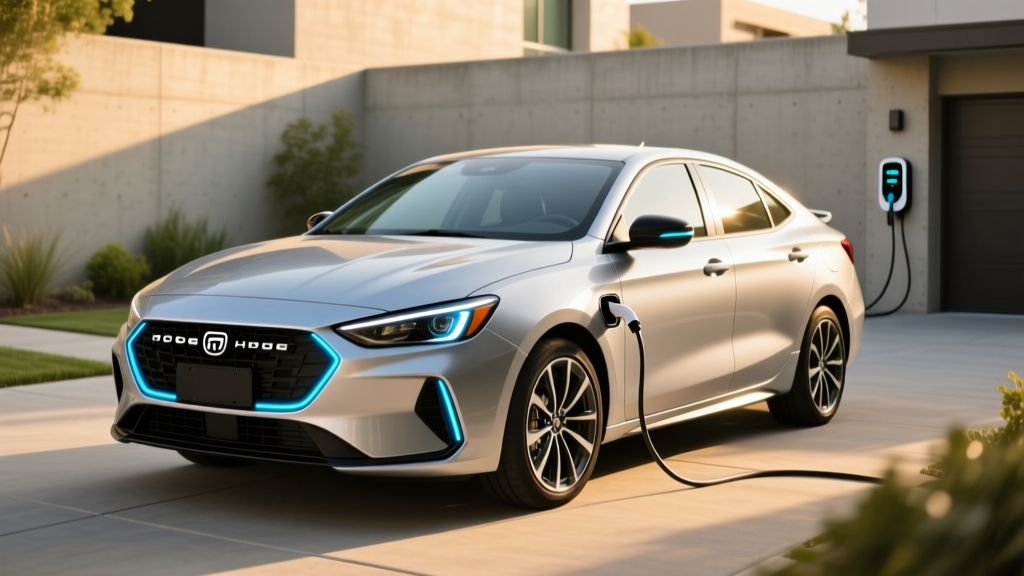
The 2024 Dodge Hornet R/T is a plug-in hybrid (PHEV) compact crossover that pairs a turbocharged 1.3-liter engine with a rear-mounted electric motor for a combined 288 horsepower and 383 lb-ft of torque. With 32 miles of EPA-rated electric-only range and 77 MPGe when running on both electrons and gasoline, it targets buyers who want EV-like daily commuting without the full commitment to a battery-electric vehicle. Starting at $41,490 (including destination), the Hornet PHEV occupies a niche: it's more powerful and electrified than most rivals in its class, but it carries a premium over the gas-only Hornet GT and lacks DC fast charging.
| Specification | Value |
|---|---|
| Powertrain | 1.3L turbo I-4 + rear electric motor (PHEV) |
| Combined Horsepower | 288 hp |
| Combined Torque | 383 lb-ft |
| Battery Capacity | 15.5 kWh (lithium-ion, NMC chemistry) |
| Electric-Only Range (EPA) | 32 miles |
| Total Combined Range | ~370 miles (electric + gas) |
| MPGe (combined, EV+gas) | 77 MPGe |
| MPG (gas-only, combined) | 29 MPG |
| 0–60 mph | 5.6 seconds |
| Drivetrain | AWD (eAWD — front engine, rear electric motor) |
| Level 2 Charge Time (0–100%) | ~2.5 hours at 7.4 kW |
| DC Fast Charging | Not available |
| Base MSRP (R/T trim) | $41,490 (incl. destination) |
| Battery/Powertrain Warranty | 8 years / 100,000 miles |
HEV vs. PHEV: Why the Hornet R/T Is a Plug-In, Not a Conventional Hybrid
Before diving deeper, it's worth clarifying the difference between a conventional hybrid (HEV) and a plug-in hybrid (PHEV), because the distinction directly affects how you'll use the Hornet R/T.
| Feature | Conventional Hybrid (HEV) | Plug-In Hybrid (PHEV) |
|---|---|---|
| Plugs in to charge? | No — charges via regenerative braking and engine | Yes — plugs into Level 1 or Level 2 charger |
| Electric-only range | Typically 0–2 miles at low speed | Typically 20–50 miles at highway-capable speeds |
| Battery size | ~1–2 kWh | ~10–25 kWh |
| Federal tax credit eligible? | No | Yes (up to $7,500, subject to §30D rules) |
| Example | Toyota RAV4 Hybrid | Dodge Hornet R/T, Toyota RAV4 Prime |
The Hornet R/T is firmly in the PHEV camp. It has a 15.5 kWh battery pack, a charge port, and meaningful electric-only driving range. The gas-only Hornet GT, by contrast, has no electrification whatsoever — it's a traditional turbocharged ICE vehicle.
Fuel Economy: EPA Ratings and Real-World MPG
The EPA rates the 2024 Dodge Hornet R/T PHEV at 77 MPGe combined when operating in electric+gas mode, and 29 MPG combined once the battery is depleted and the vehicle runs as a conventional hybrid. Here's the full breakdown:
| Driving Mode | City | Highway | Combined |
|---|---|---|---|
| EV + Gas (MPGe) | — | — | 77 MPGe |
| Gas-only / charge-sustaining (MPG) | 28 | 30 | 29 |
Real-world expectations: In mixed suburban and city driving with regular plug-in charging, owners frequently report effective economy well above the EPA combined figure — sometimes exceeding 50+ MPG equivalent over short commutes where the electric motor does most of the work. However, on sustained highway trips at 70+ mph with a depleted battery, expect the 29 MPG gas-only figure to hold or dip slightly to 26–27 MPG, especially in cold weather or with aggressive driving. The 29 MPG charge-sustaining number is respectable for a 288-hp AWD crossover, but it's not class-leading — the Toyota RAV4 Prime returns 38 MPG in gas-only mode, for comparison.
Electric-Only Range and Charging: What You Need to Know
The Hornet R/T's 15.5 kWh battery delivers an EPA-rated 32 miles of electric-only range. In real-world conditions:
- Mild weather, city/suburban driving: Expect 30–34 miles — the regenerative braking in stop-and-go traffic helps extend range.
- Highway at 70 mph: Expect 22–26 miles — electric motors are less efficient at sustained high speeds.
- Cold weather (below 32°F): Expect 20–25 miles — battery chemistry and cabin heating draw reduce usable capacity.
Charging the Hornet R/T:
| Charging Method | Power | 0–100% Time | Notes |
|---|---|---|---|
| Level 1 (120V household outlet) | ~1.4 kW | ~10–12 hours | Overnight from a standard outlet; adequate for daily top-ups |
| Level 2 (240V home/public charger) | 7.4 kW | ~2.5 hours | Requires a 240V outlet or hardwired Level 2 station (32A+) |
| DC Fast Charging | N/A | N/A | Not supported — no CCS or NACS port |
The lack of DC fast charging is a notable limitation. If you're on a road trip, you cannot top up the battery at a highway fast-charger — you're limited to Level 2 public stations, which means 2.5-hour stops to fully recharge. For daily use, however, most PHEV owners charge overnight at home, making this less of an issue in practice. A 240V Level 2 home charger (typically $500–$1,200 installed, depending on your electrical panel) will fully replenish the battery each night.
Powertrain Deep Dive: How the eAWD System Works
The Hornet R/T uses Stellantis' PHEV architecture, which differs from the front-wheel-drive layout of the gas-only Hornet GT:
- Front axle: 1.3-liter turbocharged inline-4 producing 177 hp and 210 lb-ft, mated to a 6-speed automatic transmission.
- Rear axle: A 121-hp (90 kW) electric motor providing 184 lb-ft of torque, powered by the 15.5 kWh battery pack.
- Combined system output: 288 hp and 383 lb-ft.
This layout gives the Hornet R/T an eAWD system — the engine drives the front wheels while the electric motor drives the rears. There's no mechanical connection between the axles; the vehicle's control software manages torque distribution. The result is a 0–60 mph time of 5.6 seconds, which makes the Hornet R/T one of the quickest compact crossovers in its price range. For context, the gas-only Hornet GT (268 hp) does 0–60 in about 6.5 seconds.
Driving modes include Hybrid (default, blends electric and gas), Electric (EV-only up to ~82 mph), E-Save (reserves battery for later), and Sport (maximum combined output). The E-Save mode is particularly useful for commuters who want to save their electric range for city driving after a highway stretch.
Pricing, Trims, and Federal Tax Credit Eligibility
The 2024 Dodge Hornet R/T PHEV is offered in two trims:
| Trim | Base MSRP (incl. destination) |
|---|---|
| R/T | $41,490 |
| R/T Plus | $46,490 |
Federal §30D tax credit: Under current IRS rules, the Hornet R/T PHEV may qualify for a partial or full federal tax credit of up to $7,500 under the Clean Vehicle Credit (§30D). However, eligibility depends on several conditions that change frequently:
- MSRP cap: The vehicle must have an MSRP at or below $80,000 for SUVs — the Hornet clears this easily.
- Buyer income cap: Modified adjusted gross income must not exceed $150,000 (single), $225,000 (head of household), or $300,000 (joint).
- Battery sourcing requirements: A percentage of critical minerals and battery components must be sourced from the U.S. or free-trade-agreement countries. These thresholds tighten annually. The Hornet's battery sourcing may qualify for the full $7,500, a partial $3,750, or $0 depending on the model year's compliance — check the EPA's qualified vehicle list before purchasing.
- Point-of-sale transfer: As of 2024, buyers can transfer the credit to the dealer at purchase, reducing the upfront cost rather than waiting for a tax refund.
Important: Tax credit eligibility is complex and subject to change. Consult a tax professional and verify on IRS.gov and fueleconomy.gov before relying on the credit in your purchase decision. Some states offer additional PHEV incentives — check your state's energy office or DMV for details.
Battery and Powertrain Warranty
Stellantis backs the Hornet R/T's hybrid battery and electric powertrain components with an 8-year / 100,000-mile warranty (whichever comes first). This covers defects and excessive capacity loss in the 15.5 kWh battery pack. The basic vehicle warranty is 3 years / 36,000 miles, and the powertrain (gasoline engine and transmission) carries a 5-year / 60,000-mile warranty.
Battery replacement cost: If the battery needs replacement out of warranty, expect a dealer price in the range of $6,000–$9,000 including parts and labor, based on comparable Stellantis PHEV battery pricing. However, lithium-ion PHEV batteries are designed to last the life of the vehicle with proper care — significant degradation (below 70% capacity) within the warranty period would be covered.
Who Should Buy the Hornet PHEV — and Who Shouldn't
Pros
- 288 hp and 5.6-second 0–60 make it genuinely quick for the segment
- 32 miles of EV range covers most daily commutes without using gas
- eAWD provides confident traction in rain and snow
- No range anxiety — gas engine provides 370+ total miles
- 8-year / 100,000-mile hybrid battery warranty
- Potential for up to $7,500 federal tax credit (verify eligibility)
Cons
- No DC fast charging — road-trip EV top-ups aren't practical
- 29 MPG gas-only is below rivals like the RAV4 Prime (38 MPG)
- $41,490 starting price is steep for a compact crossover
- Interior material quality lags some competitors
- Cargo space reduced slightly by battery placement (vs. gas Hornet)
- 32-mile EV range is shorter than the RAV4 Prime's 42 miles
Decision Framework: Is the Hornet R/T PHEV Right for You?
Choose the Hornet R/T PHEV if:
- Your daily commute is under 30 miles round-trip and you can charge at home
- You want AWD, quick acceleration, and the option to drive electric most days
- You regularly take longer road trips where a full EV would be inconvenient
- You qualify for the federal tax credit, effectively lowering the price
Choose a full EV (e.g., Tesla Model Y, Hyundai Ioniq 5) if:
- You have reliable home charging and rarely drive more than 250 miles in a day
- You want zero tailpipe emissions and minimal maintenance (no oil changes, no gas engine)
- You want DC fast charging for road trips
Choose a conventional hybrid (e.g., Toyota RAV4 Hybrid) if:
- You can't charge at home (apartment, street parking, no 240V access)
- You want simpler ownership with no plug-in routine
- Budget is a priority — conventional hybrids start several thousand dollars lower
Stick with the gas-only Hornet GT if:
- You want the lowest upfront price ($30,735 starting MSRP)
- You don't want to manage charging routines or battery longevity
- Your annual mileage is low and fuel cost savings wouldn't offset the PHEV premium
Reliability and Long-Term Ownership
The Hornet is Dodge's first compact crossover, and the PHEV variant shares its powertrain architecture with the Jeep Compass 4xe and Alfa Romeo Tonale PHEV — both of which have been on the road since 2022–2023. Early reliability data from these sibling models suggests no systemic battery or powertrain failures, though the platform is still relatively young.
The 1.3-liter turbo engine is a proven Fiat-derived unit used across Stellantis' global lineup. The 6-speed automatic is conventional and well-understood. The rear electric motor is a simpler component with fewer failure points than the combustion side.
For long-term ownership beyond the warranty period, budget for standard PHEV maintenance: oil changes every 5,000–8,000 miles (the engine still runs regularly in hybrid mode), brake fluid, coolant, and eventually the battery if degradation becomes significant after 10–15 years. PHEV brake pads typically last longer than gas-car pads thanks to regenerative braking handling much of the deceleration.
Frequently Asked Questions
How many MPG does the 2024 Dodge Hornet plug-in hybrid get?
The EPA rates it at 77 MPGe combined (electric + gas) and 29 MPG combined in gas-only (charge-sustaining) mode. City gas-only is 28 MPG; highway gas-only is 30 MPG. In real-world commuting with regular plug-in charging, effective economy can be significantly higher.
How far can the Hornet R/T go on electric only?
The EPA rates it at 32 miles of electric-only range. In mild-weather city driving, expect 30–34 miles. On the highway or in cold weather, expect 20–26 miles. The electric motor can propel the vehicle up to approximately 82 mph in EV mode.
Does the Dodge Hornet PHEV qualify for a tax credit?
It may qualify for up to $7,500 under the federal §30D Clean Vehicle Credit, but eligibility depends on your income, the vehicle's battery sourcing compliance, and current IRS rules. Check the IRS qualified vehicle list and consult a tax professional. The credit can be transferred to the dealer at point of sale as of 2024.
Is the Hornet PHEV reliable, and what does battery replacement cost?
The powertrain shares architecture with the Jeep Compass 4xe and Alfa Romeo Tonale, with no widespread failure reports to date. The hybrid battery is warranted for 8 years / 100,000 miles. Out-of-warranty battery replacement is estimated at $6,000–$9,000, though most PHEV batteries last the life of the vehicle.
Can the Hornet R/T DC fast charge?
No. The Hornet R/T PHEV supports Level 1 (120V, ~1.4 kW) and Level 2 (240V, up to 7.4 kW) charging only. A full Level 2 charge takes approximately 2.5 hours. There is no DC fast-charge port.
Hybrid vs. PHEV vs. EV — which should I choose?
If you can charge at home and your daily driving is under 30 miles, a PHEV like the Hornet R/T lets you commute on electricity while keeping a gas engine for longer trips. If you can't charge at home, a conventional hybrid (HEV) is simpler. If you have home charging, rarely exceed 250 miles daily, and want minimal maintenance, a full EV eliminates gasoline entirely.
How does the Hornet R/T PHEV compare to the Toyota RAV4 Prime?
The RAV4 Prime offers 42 miles of EV range (vs. 32), 38 MPG gas-only (vs. 29), and 302 hp (vs. 288). However, the Hornet R/T is quicker to 60 mph (5.6s vs. 5.7s), has a more aggressive design, and starts at a lower MSRP. The RAV4 Prime is the efficiency leader; the Hornet R/T is the performance-oriented alternative.