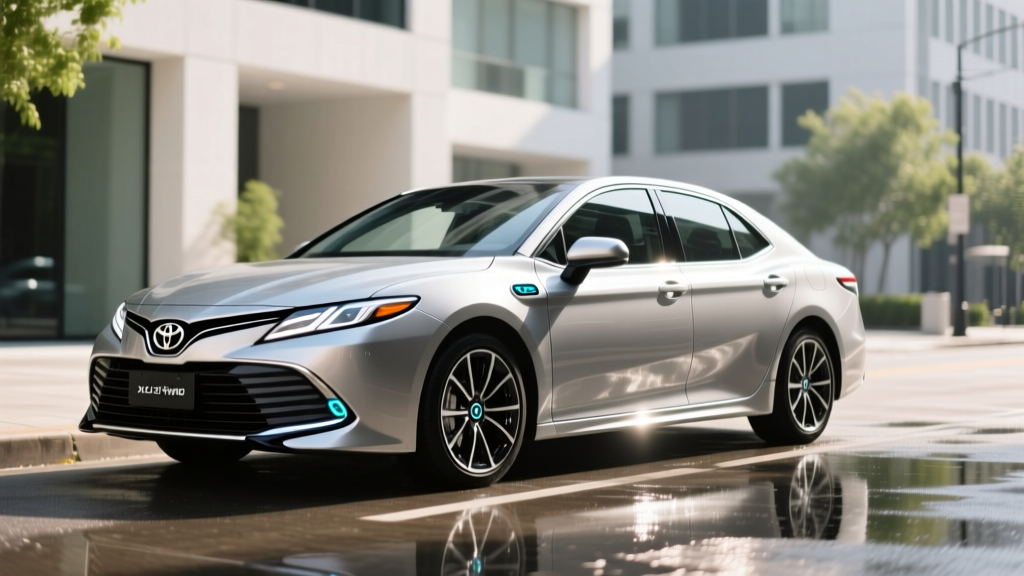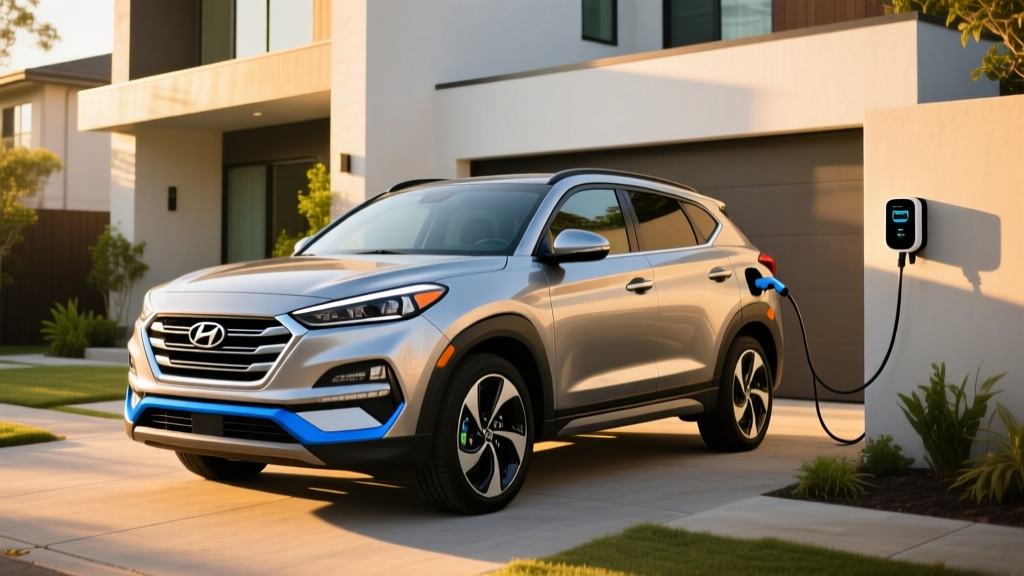
The 2023 Hyundai Tucson Hybrid Limited sits at the top of Hyundai's compact hybrid crossover lineup, pairing a 1.6-liter turbocharged engine with an electric motor for a combined 226 horsepower and an EPA-estimated 37 MPG combined. For buyers who want the efficiency gains of electrification without plugging in, the Tucson Hybrid Limited delivers premium features, strong fuel economy, and Hyundai's industry-leading hybrid battery warranty — all without the range anxiety or charging infrastructure concerns of a full EV.
But how does the real-world fuel economy compare to the EPA sticker? Is the Limited trim worth the premium over the SEL Convenience? And how does this conventional hybrid stack up against the Tucson Plug-In Hybrid or a battery-electric alternative like the Ioniq 5? This guide breaks down every number that matters.
HEV vs. PHEV: Which Tucson Hybrid Is Right for You?
Hyundai sells the Tucson in three powertrain variants: a conventional gas model, a conventional hybrid (HEV), and a plug-in hybrid (PHEV). The 2023 Tucson Hybrid Limited is the conventional hybrid (HEV) — it does not plug in. It recovers energy through regenerative braking and engine optimization to charge its small battery. You simply fuel it with gasoline.
| Attribute | 2023 Tucson Hybrid (HEV) | 2023 Tucson Plug-In Hybrid (PHEV) |
|---|---|---|
| Plugs in? | No | Yes (Level 1/Level 2) |
| Battery capacity | 1.49 kWh | 13.8 kWh |
| Electric-only range | N/A (motor assists engine) | 33 miles (EPA) |
| Combined horsepower | 226 hp | 261 hp |
| EPA combined MPG / MPGe | 37 MPG | 80 MPGe (elec+gas) / 35 MPG (gas only) |
| Federal tax credit (§30D) | Not eligible | Up to $7,500 (subject to eligibility) |
| Starting MSRP (top trim) | ~$39,650 (Limited) | ~$42,600 (Limited) |
Bottom line: The HEV is the simpler, more affordable choice if you lack home charging access. The PHEV rewards those who can plug in nightly with 33 miles of electric-only commuting and potential tax-credit savings.
Fuel Economy: EPA Estimates and Real-World MPG
The 2023 Hyundai Tucson Hybrid carries the following EPA fuel economy ratings:
| Driving Cycle | EPA Estimate | Real-World Expectation |
|---|---|---|
| City | 38 MPG | 38–42 MPG (hybrids excel in stop-and-go) |
| Highway | 38 MPG | 33–36 MPG (sustained 70+ mph reduces regen benefit) |
| Combined | 38 MPG | 35–39 MPG depending on driving mix |
Hyundai's hybrid system uses a 6-speed automatic transmission rather than the CVT found in many competitors (like the Toyota RAV4 Hybrid). This gives the Tucson Hybrid a more natural acceleration feel but can slightly reduce efficiency under certain conditions. In city driving, where regenerative braking is most active, owners frequently report matching or exceeding the 38 MPG city estimate. Highway driving at sustained speeds above 70 mph is where you'll see the largest drop — expect roughly 33–36 MPG on flat interstates, and less in mountainous terrain or when carrying heavy cargo.
Cold weather impacts all vehicles, but hybrids lose less range than EVs since the engine generates waste heat for cabin warming. Still, expect a 2–4 MPG reduction in sub-freezing conditions due to thicker fluids, reduced battery efficiency, and increased engine idling for heat.
Powertrain, Performance, and Driving Impressions
| Specification | 2023 Tucson Hybrid Limited |
|---|---|
| Engine | 1.6L turbocharged 4-cylinder |
| Electric motor | 44.2 kW (59 hp) permanent-magnet synchronous |
| Combined output | 226 hp / 258 lb-ft torque |
| Transmission | 6-speed automatic |
| Drivetrain | HTRAC AWD (standard on all hybrid trims) |
| 0–60 mph | ~7.1 seconds (independent testing) |
| Battery capacity | 1.49 kWh (lithium-ion polymer) |
| Towing capacity | 2,000 lbs |
| Cargo volume | 38.7 cu ft (rear seats up) / 80.3 cu ft (folded) |
The Tucson Hybrid's 226 combined horsepower puts it ahead of the Toyota RAV4 Hybrid (219 hp) and on par with the Honda CR-V Hybrid (204 hp for 2023). The turbocharged engine provides strong low-end torque, and the electric motor fills in the gap during initial acceleration, eliminating the turbo lag common in small-displacement engines.
HTRAC all-wheel drive is standard on every Tucson Hybrid trim. The system uses the electric motor to power the rear axle under certain conditions, providing torque distribution without a mechanical driveshaft. It's competent in rain and light snow, though not a substitute for a dedicated off-road vehicle.
Limited Trim: What You Get for the Price
The 2023 Tucson Hybrid was offered in three trims: Blue, SEL Convenience, and Limited. The Limited is the fully loaded variant with an MSRP of approximately $39,650 (including destination). Key Limited-exclusive features include:
- Leather-trimmed seats with heated and ventilated front seats
- Heated steering wheel
- 10.25-inch digital instrument cluster + 10.25-inch infotainment with navigation
- BOSE premium audio (8 speakers)
- Panoramic sunroof
- Highway Driving Assist (HDA) — adaptive cruise with lane centering
- Remote Smart Parking Assist
- 360-degree surround-view monitor
- LED projector headlights with dynamic bending light
- Hands-free power liftgate
Compared to the SEL Convenience (~$35,590), the Limited adds roughly $4,000 in premium content. For buyers comparing against the RAV4 Hybrid Limited (~$40,300) or CR-V Hybrid Sport Touring (~$39,845), the Tucson Hybrid Limited is competitively priced and offers a more distinctive interior design with Hyundai's dual-screen layout.
Tax Credit Eligibility: What Hybrid Buyers Need to Know
The 2023 Hyundai Tucson Hybrid (HEV) does not qualify for the federal §30D clean vehicle tax credit. Under current IRS rules, conventional hybrids are excluded — only plug-in electric vehicles (BEVs and PHEVs) with sufficient battery capacity are eligible.
Hybrid tax-credit summary:
- Tucson Hybrid (HEV): $0 federal credit — not eligible under §30D
- Tucson Plug-In Hybrid (PHEV): Potentially up to $7,500, subject to buyer income caps ($150K single / $300K joint), MSRP cap ($80K for SUVs), and battery component/critical mineral sourcing requirements
- State incentives: Some states (e.g., California, Colorado, New York) offer rebates for hybrids or PHEVs — check your state's energy office for current programs
If the tax credit is a priority, the Tucson PHEV or a full BEV like the Hyundai Ioniq 5 may deliver stronger financial returns — but only if you meet the income and sourcing requirements and can accommodate plug-in charging.
Battery Warranty, Reliability, and Replacement Costs
Hyundai Hybrid Battery Warranty:
- Hybrid battery: 10 years / 100,000 miles (original owner)
- Hybrid system components: 10 years / 100,000 miles
- Basic vehicle warranty: 5 years / 60,000 miles
- Powertrain warranty: 10 years / 100,000 miles
Hyundai's 10-year/100,000-mile hybrid battery warranty is among the best in the industry, matching Kia and exceeding Toyota's 10-year/150,000-mile coverage in time but not mileage. The warranty guarantees the battery against defects and excessive capacity loss. If the hybrid battery fails within the warranty period, Hyundai covers the replacement at no cost.
Out-of-warranty replacement cost: A Hyundai Tucson Hybrid battery replacement runs approximately $2,000–$3,500 including parts and labor at a dealership. This is significantly less than a full EV battery replacement ($10,000–$20,000+) because the hybrid battery is only 1.49 kWh — roughly 1/50th the size of an EV pack.
Real-world reliability data for the Tucson Hybrid is encouraging. The 1.6T engine and 6-speed automatic are proven components shared across Hyundai's lineup. The hybrid system adds complexity but has been used in the Ioniq and Sonata Hybrid for years with low failure rates. IIHS named the 2023 Tucson a Top Safety Pick+ when equipped with specific headlights, reflecting strong crashworthiness.
Who Should Buy the Tucson Hybrid Limited — and Who Shouldn't?
Pros
- 38 MPG combined — strong for a turbo AWD crossover
- No plug-in required; works with existing fueling habits
- Premium Limited trim features at a competitive price
- 10-year/100,000-mile hybrid battery warranty
- Standard HTRAC AWD on all trims
- Strong 0–60 time (7.1 sec) for the segment
Cons
- No federal tax credit eligibility (HEV)
- Highway MPG drops noticeably above 70 mph
- PHEV variant offers more power and electric-only commuting
- 1.49 kWh battery limits electric-only assist to low speeds
- Limited trim availability can be scarce at dealers
Choose the Tucson Hybrid Limited if:
- You lack reliable access to home or workplace charging
- You want AWD and 35+ MPG without changing your fueling routine
- You prioritize premium features (ventilated seats, panoramic roof, BOSE audio) at ~$40K
- You plan to keep the vehicle 8–10 years (warranty coverage aligns with ownership horizon)
Look at the Tucson PHEV or a full EV if:
- You have Level 2 home charging and a short commute (PHEV covers 33 miles electric-only)
- Federal tax credit eligibility would meaningfully reduce your effective price
- You want maximum performance (PHEV: 261 hp) or zero tailpipe emissions (BEV)
Frequently Asked Questions
How many MPG does the 2023 Hyundai Tucson Hybrid Limited get?
The EPA rates the 2023 Tucson Hybrid at 38 MPG city, 38 MPG highway, and 38 MPG combined. In real-world driving, expect 38–42 MPG in city conditions and 33–36 MPG on the highway at sustained speeds above 70 mph.
Does the Tucson Hybrid need to be plugged in?
No. The Tucson Hybrid (HEV) is a conventional hybrid that charges its battery through regenerative braking and the gasoline engine. You never plug it in. If you want plug-in capability, look at the Tucson Plug-In Hybrid (PHEV), which offers 33 miles of electric-only range.
How far can the Tucson PHEV go on electric only?
The 2023 Tucson Plug-In Hybrid has an EPA-estimated 33 miles of electric-only range from its 13.8 kWh battery. After that, it operates as a conventional hybrid rated at 35 MPG combined. Total combined range exceeds 400 miles.
Is the Tucson Hybrid battery expensive to replace?
Out-of-warranty replacement costs approximately $2,000–$3,500. However, Hyundai covers the hybrid battery for 10 years or 100,000 miles, and most hybrid batteries last well beyond 150,000 miles with minimal degradation due to the small capacity and conservative charge management.
Does the 2023 Tucson Hybrid qualify for any tax credit?
The conventional Tucson Hybrid (HEV) does not qualify for the federal §30D clean vehicle credit. The Tucson Plug-In Hybrid (PHEV) may qualify for up to $7,500 depending on buyer income, MSRP caps, and battery sourcing requirements. Consult a tax professional and check current IRS guidance before purchasing.
Hybrid vs. PHEV vs. EV — which should I choose?
Choose a hybrid (HEV) if you want better MPG without changing your fueling habits or needing a charger. Choose a PHEV if you can charge at home and want electric-only commuting with gas-engine backup for road trips. Choose a full EV if you want zero tailpipe emissions, lowest per-mile fuel cost, and have reliable charging access. The Tucson lineup offers all three options.