Quick Verdict: The Benchmark Compact Hybrid SUV
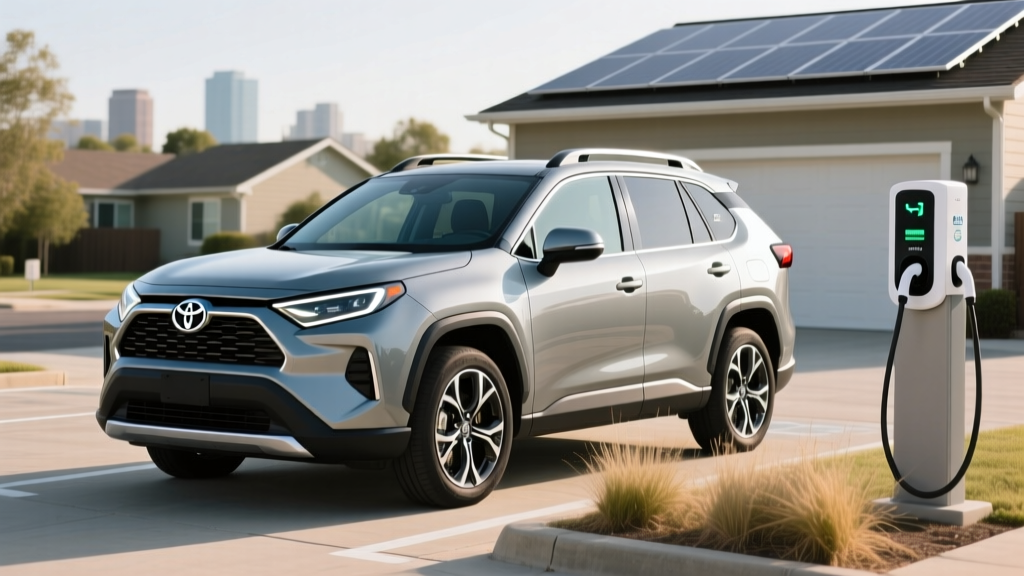
The 2023 Toyota RAV4 Hybrid remains the compact SUV segment's default fuel-sipper for buyers who want electrified efficiency without plugging in. With an EPA-rated 41 MPG combined, standard electronic all-wheel drive, and a starting MSRP around $30,700, it occupies the sweet spot between a conventional gas crossover and a full battery-electric vehicle. For 2023, Toyota refreshed the interior tech and added the rugged Woodland Edition trim, but the core formula — a 2.5-liter four-cylinder paired with three electric motors — carried over from the 2022 model year unchanged.
If you're researching the 2023 Toyota RAV4 Hybrid in 2026, you're likely looking at certified pre-owned or remaining dealer inventory. The powertrain and efficiency figures below apply to all 2023 model-year units, and Toyota's hybrid battery warranty extends well beyond the original sale date.
HEV vs PHEV: Which RAV4 Electrified Model Are You Looking At?
Toyota sold two electrified RAV4 variants for 2023, and confusing them is the most common mistake shoppers make. Here's the critical distinction:
RAV4 Hybrid (HEV)
- Type: Conventional self-charging hybrid
- Plug-in required: No — regenerative braking and the gas engine charge the 1.6 kWh battery
- EPA combined: 41 MPG
- Electric-only driving: Very short low-speed EV mode only (under 1 mile)
- Total range: ~580 miles per tank
RAV4 Prime (PHEV)
- Type: Plug-in hybrid — requires a charging cable for full benefit
- Plug-in required: Yes, to access 42 miles of electric-only range
- Battery: 18.1 kWh lithium-ion (usable ~14.5 kWh)
- EPA combined (gas): 38 MPG after EV range depletes
- EV range: 42 miles EPA electric-only
- Total range: ~600 miles combined EV + gas
This article focuses on the conventional RAV4 Hybrid (HEV). If you have home charging access and a commute under 40 miles, the RAV4 Prime PHEV is worth the premium — but it requires a Level 2 charger to realize its full value and carries a significantly higher MSRP.
Fuel Economy: EPA Ratings and Real-World MPG
| Driving Cycle | EPA Rating | Real-World Expectation |
|---|---|---|
| City | 41 MPG | 42–46 MPG (hybrids excel in stop-and-go) |
| Highway | 38 MPG | 35–38 MPG (aerodynamic drag reduces hybrid advantage) |
| Combined | 41 MPG | 38–44 MPG depending on driving mix |
The 2023 RAV4 Hybrid's 41 MPG combined rating is sourced from fueleconomy.gov. What makes this number unusual is how close the city and highway figures are — a hallmark of Toyota's hybrid synergy drive system. In city traffic, the electric motors handle low-speed propulsion while the gas engine shuts off at stops, meaning you'll often exceed the EPA city estimate in real-world commuting. On sustained highway drives above 70 mph, the gas engine does most of the work, and efficiency drops to the mid-to-high 30s.
Real-world note: Owners in cold climates (below 30°F) should expect a 5–10% efficiency reduction in winter months. The engine runs more frequently to provide cabin heat and maintain battery temperature. In warmer months with moderate driving, 44+ MPG is achievable on mixed suburban routes.
For comparison, the non-hybrid 2023 RAV4 gas AWD achieves 30 MPG combined — a 27% efficiency gap that translates to roughly $400–$550 in annual fuel savings for the hybrid at 15,000 miles per year and $3.50/gallon fuel (savings vary with local prices).
Powertrain Specs: 219 HP With Standard AWD
| Specification | 2023 RAV4 Hybrid |
|---|---|
| Engine | 2.5L Dynamic Force 4-cylinder (176 hp, 163 lb-ft) |
| Front Electric Motor | 88 kW (118 hp) |
| Rear Electric Motor | 40 kW (54 hp) — enables electronic AWD |
| Net System Horsepower | 219 hp |
| Transmission | eCVT (electronically controlled continuously variable) |
| Drivetrain | Electronic On-Demand AWD (standard on all trims) |
| 0–60 mph | 7.4 seconds |
| Towing Capacity | 1,750 lbs |
| Fuel Tank | 14.5 gallons |
| Hybrid Battery | 1.6 kWh nickel-metal hydride (NiMH), sealed |
The AWD system is worth emphasizing: unlike mechanical AWD with a driveshaft, the RAV4 Hybrid uses a dedicated rear electric motor that engages the rear wheels only when slip is detected or during hard acceleration. This means there's no parasitic drivetrain loss during steady cruising — a key reason the AWD model matches the FWD efficiency in EPA testing. The 219 net system horsepower is competitive with turbocharged rivals like the Honda CR-V Hybrid (204 hp) and Hyundai Tucson Hybrid (226 hp).
2023 Trim Pricing and What's Included
| Trim | MSRP (2023) | Key Features |
|---|---|---|
| LE | $30,700 | Toyota Safety Sense 2.5+, 8" touchscreen, wireless CarPlay/Android Auto |
| XLE | $32,200 | Blind-spot monitor, dual-zone climate, smart key, 10-way power driver seat |
| XLE Premium | $34,000 | SofTex seats, moonroof, 12.3" digital cluster |
| SE | $34,500 | Sport-tuned suspension, 19" wheels, paddle shifters |
| Woodland Edition | $35,800 | TRD-tuned off-road suspension, all-terrain tires, roof rack |
| XSE | $36,200 | Sport appearance, 19" black wheels, heated steering wheel |
| Limited | $38,800 | JBL audio, panoramic moonroof, ventilated front seats, 360° camera |
All prices are base MSRP before destination ($1,335). By 2026, certified pre-owned 2023 RAV4 Hybrids typically list between $27,000 and $36,000 depending on trim, mileage, and region.
Tax Credits: What the RAV4 Hybrid Qualifies For
Here's a point that trips up many buyers: the conventional RAV4 Hybrid (HEV) does not qualify for the federal §30D clean vehicle tax credit. That credit, worth up to $7,500, applies only to plug-in electric vehicles (BEVs and PHEVs) meeting battery sourcing and MSRP caps under current IRS rules. Since the RAV4 Hybrid cannot be plugged in, it is classified as a standard hybrid and is ineligible.
RAV4 Prime (PHEV) credit note: The plug-in RAV4 Prime may qualify for a partial or full §30D credit depending on battery component sourcing and your income level. However, availability of the Prime has been severely limited by production constraints. Consult a tax professional and verify current-year IRS guidance before counting on the credit.
Some states and local utilities offer rebates for conventional hybrids, though these are less common than EV incentives. Check your state energy office or utility provider for current programs. The federal used clean vehicle credit (up to $4,000) also applies only to plug-in vehicles, not HEVs.
Battery Warranty, Longevity, and Replacement Cost
Toyota Hybrid Battery Warranty
- Coverage: 10 years / 150,000 miles (whichever comes first)
- Applies to: 2020 and newer model years, including 2023
- What's covered: Hybrid battery pack, hybrid control module, inverter
- Transferable: Yes — warranty follows the vehicle, not the original owner
Toyota's hybrid battery track record is among the best in the industry. The 1.6 kWh NiMH pack in the RAV4 Hybrid is small and lightly stressed compared to full EV batteries — it never fully charges or fully depletes, which dramatically extends cycle life. Real-world data from Toyota's Prius and Camry Hybrid platforms (which share similar architecture) shows hybrid batteries routinely lasting 150,000–200,000+ miles before significant degradation.
If replacement is needed out of warranty, a refurbished RAV4 Hybrid battery typically costs $2,000–$3,500 installed, while a new OEM pack runs $4,000–$5,500 at a dealership. Independent hybrid specialists in most metro areas can perform the swap. This is substantially less than EV battery replacement costs, which can exceed $10,000–$18,000.
Hybrid vs PHEV vs EV: Which RAV4 Fits Your Life?
Choose the RAV4 Hybrid (HEV) if:
- You lack reliable home or workplace charging access
- You want maximum simplicity — no plugs, no range planning, no charging apps
- Your annual mileage is 10,000–18,000 miles and you want lower fuel costs without behavior change
- You want a lower purchase price ($30K–$39K) versus the RAV4 Prime (~$44K+ MSRP)
- You frequently take long road trips and don't want to plan charging stops
Choose the RAV4 Prime (PHEV) if:
- You have Level 2 home charging and a commute under 42 miles round-trip
- You want to drive mostly on electricity on weekdays and use gas for weekend trips
- You may qualify for the §30D federal tax credit, narrowing the price gap
- You want 302 net hp (the Prime is significantly quicker at 5.7 seconds 0–60)
Choose a Full EV (e.g., Tesla Model Y, Hyundai Ioniq 5) if:
- You have reliable home Level 2 charging
- You want zero tailpipe emissions and the lowest per-mile "fuel" cost (electricity at ~$0.04–$0.06/mile vs gas at ~$0.12–$0.15/mile)
- You qualify for the full $7,500 §30D credit
- You're comfortable with public DC fast charging for road trips
Pros, Cons, and the Bottom Line
Pros
- 41 MPG combined with no plug-in requirement — true set-and-forget efficiency
- Standard AWD on every trim with no fuel economy penalty
- Strong reliability record; 10yr/150K hybrid battery warranty
- Competitive 219 hp and 7.4-second 0–60 for the segment
- Excellent cargo space (37.6 cu ft behind rear seats)
- Toyota Safety Sense 2.5+ standard across all trims
Cons
- No federal tax credit eligibility (HEV, not PHEV/BEV)
- eCVT drone under hard acceleration — no simulated gear steps
- 1,750-lb tow rating is low for the class (CR-V Hybrid: 1,000 lbs but gas CR-V: 1,500 lbs)
- Base LE trim uses cloth seats and basic interior at $30K+
- No DC fast charging capability (not applicable to HEV, but relevant vs PHEV)
- Infotainment system improved for 2023 but still behind rivals in responsiveness
Frequently Asked Questions
How many MPG does the 2023 Toyota RAV4 Hybrid actually get?
The EPA rates it at 41 city / 38 highway / 41 combined MPG. In real-world driving, most owners report 38–44 MPG combined. City-heavy commutes tend to push the average above the EPA estimate, while sustained highway driving at 75+ mph can drop it to the mid-30s. Cold weather reduces efficiency by roughly 5–10%.
Does the RAV4 Hybrid need to be plugged in?
No. The RAV4 Hybrid (HEV) is a self-charging conventional hybrid. Its 1.6 kWh battery is charged entirely through regenerative braking and the gasoline engine. You simply fill it with regular unleaded fuel and drive. If you want a RAV4 that plugs in, you're looking for the RAV4 Prime (PHEV), which is a separate, higher-priced model.
How far can the RAV4 Hybrid drive on electric only?
Less than 1 mile. The conventional RAV4 Hybrid has an EV mode button, but it only enables electric-only driving at very low speeds (under 25 mph) for short distances — think creeping through a parking lot. It is not designed for meaningful electric-only commuting. For 42 miles of electric-only range, you need the RAV4 Prime PHEV.
Is the 2023 RAV4 Hybrid reliable, and what does battery replacement cost?
Toyota's hybrid powertrains are among the most proven in the industry, with decades of data from the Prius lineage. The 2023 RAV4 Hybrid carries a 10-year/150,000-mile hybrid battery warranty. Out-of-warranty replacement runs $2,000–$3,500 for a refurbished pack or $4,000–$5,500 for new OEM. Most hybrid batteries last well beyond 150,000 miles based on historical failure data.
Does the 2023 RAV4 Hybrid qualify for any tax credit?
The conventional RAV4 Hybrid (HEV) does not qualify for the federal §30D clean vehicle tax credit, which is reserved for plug-in vehicles (BEVs and PHEVs). Some states or local utilities may offer smaller hybrid incentives — check your state energy office. The plug-in RAV4 Prime may qualify for federal credits depending on battery sourcing rules and your income; verify with a tax professional and current IRS guidance.
How does the RAV4 Hybrid compare to the Honda CR-V Hybrid?
The 2023 Honda CR-V Hybrid is rated at 40 MPG combined (43 city / 36 highway) with 204 hp. The RAV4 Hybrid edges it out on highway MPG (38 vs 36) and horsepower (219 vs 204), while the CR-V Hybrid is slightly better in city driving. Both offer standard AWD and similar cargo volumes. The RAV4 Hybrid has a longer track record with its hybrid system; the CR-V Hybrid's newer two-motor system is less battle-tested but has performed well in early reliability surveys.
What's the difference between the RAV4 Hybrid and the RAV4 Prime?
The RAV4 Hybrid is a conventional HEV — no plug, 41 MPG, 219 hp, starting ~$30,700. The RAV4 Prime is a PHEV — it plugs in, offers 42 miles of electric-only range, produces 302 hp, and starts around $43,000. The Prime is significantly quicker and can eliminate gas use for short commutes, but it costs ~$12,000 more and requires home charging to realize its benefits.