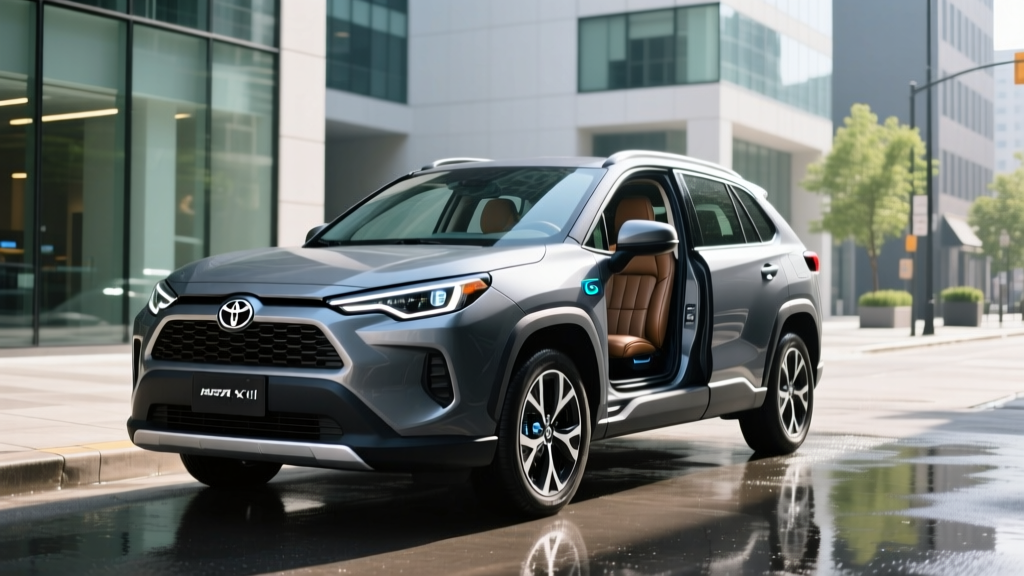
The subcompact crossover segment is crowded, but the 2023 Toyota Corolla Cross Hybrid carves out a distinct position: standard all-wheel drive, 42 MPG combined, and a starting price under $30,000. For buyers who want crossover utility without the charging logistics of a full battery-electric vehicle, it's one of the most practical hybrids on the market.
But how does it perform in the real world? What does long-term ownership look like? And does it make more sense than a plug-in hybrid or a full EV? This guide breaks down every number that matters.
Corolla Cross Hybrid Specs at a Glance
| Spec | Value |
|---|---|
| Powertrain | 2.0L 4-cyl + dual electric motors (AWD) |
| Combined Horsepower | 196 hp |
| EPA MPG (City / Hwy / Combined) | 45 / 38 / 42 MPG |
| Fuel Tank | 10.6 gallons |
| Total Range | ~445 miles |
| 0–60 mph | ~7.5 seconds (est.) |
| Drivetrain | Electronic AWD (eAWD) |
| Cargo Volume (behind rear seats) | 25.0 cu ft |
| Base MSRP (S trim) | $28,835 (2023 launch pricing) |
| Hybrid Battery Warranty | 10 years / 150,000 miles |
| Hybrid System Warranty | 10 years / 150,000 miles |
How Many MPG Does the Corolla Cross Hybrid Get?
The EPA rates the 2023 Corolla Cross Hybrid at 45 city / 38 highway / 42 combined MPG across all trims (S, SE, XSE). That's identical regardless of trim because the powertrain is the same across the lineup.
According to fueleconomy.gov, this puts the Corolla Cross Hybrid near the top of the subcompact AWD crossover class for fuel efficiency, trailing only the Toyota Prius and Prius Prime in the broader Toyota lineup.
Real-World MPG: What to Actually Expect
Hybrids almost always beat their EPA city estimate in real-world stop-and-go driving because regenerative braking recaptures energy that gas-only cars waste as heat. The Corolla Cross Hybrid is no exception.
- City / suburban driving: 44–50 MPG (regen-heavy routes can exceed EPA)
- Highway (70+ mph sustained): 35–38 MPG (aerodynamic drag reduces hybrid advantage)
- Cold weather (below 30°F): 36–40 MPG combined (engine runs more for cabin heat, battery less efficient)
- Mixed daily driving: 40–44 MPG
If your commute is mostly city and suburban roads under 45 mph, expect to land in the mid-to-high 40s. Highway-heavy commuters will see numbers closer to the EPA highway rating or slightly below. This is normal hybrid behavior — the electric motor does the most work at low speeds, while the gas engine carries the load at sustained highway velocity.
Hybrid (HEV) vs. Plug-In Hybrid (PHEV): What's the Difference?
The 2023 Corolla Cross Hybrid is a conventional hybrid (HEV), not a plug-in hybrid. This distinction matters for ownership, so let's clarify it:
Conventional Hybrid (HEV)
This is what the Corolla Cross Hybrid is.
- No plug, no charging cable needed
- Small battery (~1.3 kWh) charged by regen braking and engine
- Electric motor assists the gas engine; brief EV-only driving at low speeds
- Refuels at any gas station
- No electric-only range to track
Plug-In Hybrid (PHEV)
Example: Toyota RAV4 Prime, Toyota Prius Prime
- Plugs into a wall outlet or Level 2 charger
- Larger battery (13–18 kWh) for 25–44 miles of electric-only driving
- Can DC fast charge (some models)
- After battery depletes, operates as a regular hybrid
- May qualify for federal tax credit (§30D)
Toyota does not currently offer a Corolla Cross PHEV in the US market. If you want plug-in capability from Toyota in a similar footprint, you'd look at the Prius Prime (44 miles electric-only) or step up to the RAV4 Prime (42 miles electric-only, but at a significantly higher price).
Powertrain: 196 HP with Electronic AWD
The Corolla Cross Hybrid uses Toyota's fifth-generation hybrid system paired with a 2.0-liter Dynamic Force four-cylinder engine. Here's how the power is distributed:
- Gas engine: 2.0L inline-4 producing 150 hp and 139 lb-ft of torque
- Front electric motor: integrated into the transaxle, assists acceleration and provides regenerative braking
- Rear electric motor: 40 hp, powers the rear wheels for electronic AWD — there is no mechanical driveshaft connecting front and rear axles
- Net system output: 196 hp
The rear motor provides on-demand AWD traction — it engages during acceleration, slippery conditions, and when the system detects front-wheel slip. In normal dry-road cruising, the car operates primarily in front-wheel drive to maximize efficiency.
The 0–60 mph time of approximately 7.5 seconds puts it ahead of the non-hybrid Corolla Cross (which uses a 169-hp 2.0L and takes roughly 9 seconds to 60). The hybrid's electric torque fill makes it feel noticeably quicker off the line and during passing maneuvers.
Pricing, Trims, and Tax Credit Eligibility
The 2023 Corolla Cross Hybrid launched with three trims, all with the same powertrain and AWD:
| Trim | 2023 MSRP | Key Features |
|---|---|---|
| S | $28,835 | Toyota Safety Sense 3.0, 8" touchscreen, wireless CarPlay/Android Auto, LED headlights |
| SE | $30,135 | Sport-tuned suspension, 18" alloy wheels, roof rails, paddle shifters |
| XSE | $31,445 | SofTex seats, heated front seats, power liftgate, ambient lighting |
Does the Corolla Cross Hybrid Qualify for a Federal Tax Credit?
No. The 2023 Corolla Cross Hybrid does not qualify for the federal §30D Clean Vehicle Credit. This credit applies only to battery-electric vehicles (BEVs) and plug-in hybrids (PHEVs) that meet specific battery sourcing, critical mineral, MSRP cap, and buyer income requirements as defined by the IRS.
Since the Corolla Cross Hybrid is a conventional HEV with no plug-in capability, it is ineligible regardless of buyer income or vehicle price. Some states may offer their own incentives for hybrid purchases — check your state's energy or DMV website for current programs, as these vary widely by jurisdiction.
Battery Warranty, Reliability, and Replacement Cost
Toyota covers the Corolla Cross Hybrid battery for 10 years or 150,000 miles (whichever comes first) in all 50 states. This applies to model year 2020 and newer Toyota hybrids. The broader hybrid system (inverter, control module, transaxle) is also covered for 10 years / 150,000 miles.
How Long Will the Hybrid Battery Last?
Toyota's hybrid batteries use nickel-metal hydride (NiMH) chemistry in a compact, proven configuration. Based on data from millions of Toyota hybrids on the road (including Prius models now exceeding 300,000 miles), the hybrid battery in the Corolla Cross Hybrid is expected to last the life of the vehicle under normal use.
Unlike full EV batteries that cycle through large energy swings, the Corolla Cross Hybrid's ~1.3 kWh battery operates in a narrow state-of-charge window — typically between 40% and 80%. This shallow cycling dramatically reduces degradation. The battery management system never allows a full charge or full discharge, which is the primary reason Toyota hybrid batteries have such strong longevity records.
What Does Hybrid Battery Replacement Cost?
If a battery replacement is needed outside of warranty (which is rare for Toyota hybrids under 150,000 miles):
- New OEM battery: $2,000–$3,500 installed (varies by dealership and region)
- Refurbished/remanufactured battery: $1,000–$2,000 installed
- Individual cell replacement: Some independent hybrid specialists can replace individual failed cells for $500–$1,000
For context, the vast majority of Toyota hybrid owners never need a battery replacement. The warranty coverage is generous enough that any early failure is fully covered.
Overall Reliability
Toyota's hybrid powertrain is one of the most thoroughly proven systems in the automotive industry. The Corolla Cross Hybrid shares its core architecture with the Prius, Corolla Hybrid, and other Toyota hybrids that collectively have accumulated billions of real-world miles. Toyota consistently ranks at or near the top in long-term reliability surveys from J.D. Power and Consumer Reports, and the hybrid system is a major contributor to those scores.
Corolla Cross Hybrid vs. PHEV vs. Full EV: Which Fits You?
Choosing between a conventional hybrid, a plug-in hybrid, and a full battery-electric vehicle comes down to your driving patterns, charging access, and budget. Here's a practical decision framework:
Choose the Corolla Cross Hybrid (HEV) if:
- You don't have access to home or workplace charging
- You want crossover utility with AWD for under $32,000
- You take frequent road trips and don't want to plan around charging stops
- You want maximum simplicity — just fill up at any gas station
- Your daily driving is a mix of city and highway with no single pattern
Choose a PHEV (e.g., Toyota RAV4 Prime, Prius Prime) if:
- You have reliable home Level 2 charging
- Your daily commute is under 40 miles round-trip (can run mostly on electricity)
- You still want a gas engine for longer road trips
- You want to reduce fuel consumption significantly but aren't ready for full EV
- You may qualify for the federal §30D tax credit (up to $7,500, subject to income, MSRP caps, and battery sourcing rules)
Choose a Full EV (e.g., Hyundai Kona Electric, Chevy Bolt EUV) if:
- You have reliable home charging and your daily driving is under 250 miles
- You want the lowest per-mile fuel cost (electricity is typically $0.03–$0.05/mile vs. $0.10–$0.14/mile for a 42 MPG hybrid)
- You want zero tailpipe emissions and minimal maintenance (no oil changes, fewer brake replacements due to regen)
- You qualify for the full $7,500 federal tax credit, which can make the effective price competitive with hybrids
- You rarely take trips over 250 miles, or you're comfortable with DC fast-charging stops
Pros and Cons
Pros
- 42 MPG combined with standard AWD — excellent for the class
- 196 hp feels peppy; noticeably quicker than the gas-only Corolla Cross
- No charging infrastructure needed — works for apartment dwellers
- 10-year / 150,000-mile hybrid battery warranty
- Toyota Safety Sense 3.0 standard (adaptive cruise, lane-keep, auto emergency braking)
- Strong Toyota reliability track record and resale value
Cons
- Cargo space (25.0 cu ft) is tight for the class; some rivals offer 5+ cu ft more
- No PHEV variant available in the US
- Not eligible for the federal §30D tax credit
- CVT transmission can drone under hard acceleration
- Rear seat legroom is snug for taller passengers
- Highway MPG drops noticeably at sustained 75+ mph speeds
Frequently Asked Questions
How many MPG does the 2023 Toyota Corolla Cross Hybrid get in real-world driving?
The EPA rates it at 45 city / 38 highway / 42 combined. In real-world city driving with frequent stops, owners commonly see 44–50 MPG thanks to regenerative braking. Highway driving at 70+ mph typically yields 35–38 MPG. Cold weather reduces efficiency by roughly 5–10% due to increased engine runtime for cabin heating.
Is the Corolla Cross Hybrid a plug-in hybrid?
No. The Corolla Cross Hybrid is a conventional hybrid (HEV). It charges its own battery through regenerative braking and the gas engine. You never plug it in. Toyota does not currently offer a plug-in hybrid version of the Corolla Cross in the US market.
How far can it drive on electric power alone?
Like all conventional Toyota hybrids, the Corolla Cross Hybrid can drive very short distances (roughly 0.5–1 mile) at low speeds (under 25 mph) on electric power alone. However, this is not a meaningful "electric-only range" — the system is designed for electric assist, not electric propulsion. If you want 25–44 miles of true electric-only range, you need a PHEV like the Prius Prime or RAV4 Prime.
Is the hybrid battery reliable and what does replacement cost?
Toyota's hybrid batteries are among the most reliable in the industry, with many lasting well beyond 200,000 miles. The battery is covered by a 10-year / 150,000-mile warranty. Out-of-pocket replacement (rarely needed) runs $2,000–$3,500 for a new OEM unit, or $1,000–$2,000 for a refurbished battery.
Does the 2023 Corolla Cross Hybrid qualify for any federal tax credit?
No. The federal §30D Clean Vehicle Credit applies only to plug-in vehicles (BEVs and PHEVs). Since the Corolla Cross Hybrid is a conventional hybrid that cannot be plugged in, it does not qualify. Some states may offer separate hybrid incentives — check your state's energy office or DMV for current programs.
How does the Corolla Cross Hybrid compare to the non-hybrid version?
The hybrid produces 196 hp versus 169 hp for the gas-only model, includes standard AWD (FWD is standard on the gas model), and achieves 42 MPG combined versus 32 MPG combined for the AWD gas version. The hybrid carries a roughly $2,500–$3,000 price premium depending on trim, which most owners recoup in fuel savings within 3–5 years at average mileage.
Should I buy the Corolla Cross Hybrid or a full EV?
If you have reliable home charging, drive under 250 miles daily, and qualify for the $7,500 federal EV tax credit, a full EV like the Hyundai Kona Electric or Chevy Bolt EUV will cost less per mile to operate. If you lack home charging, take frequent long road trips, or want the lowest upfront cost, the Corolla Cross Hybrid is the more practical choice with no lifestyle adjustments required.