Quick Verdict: The 2023 Kia Sportage Hybrid EX at a Glance
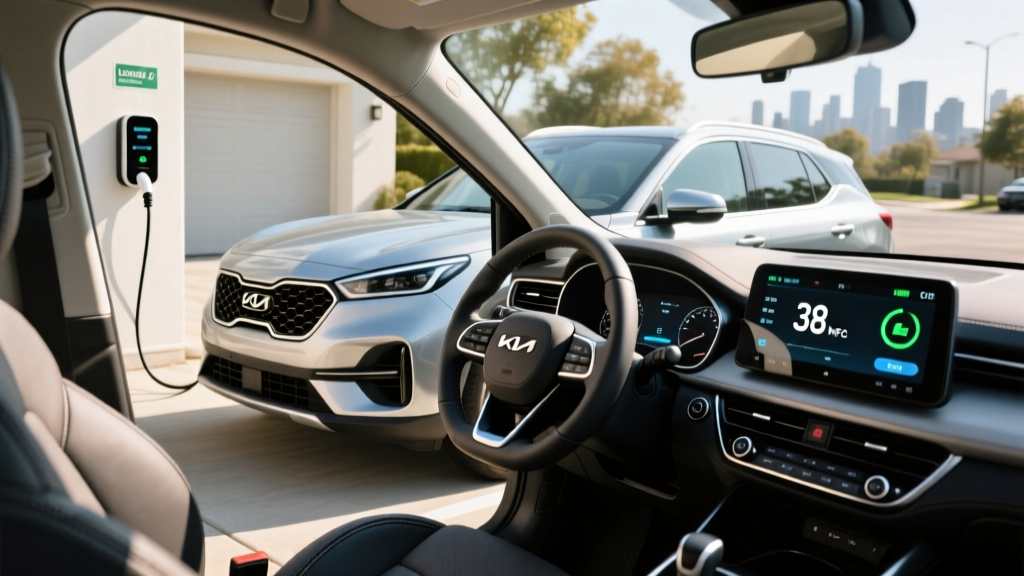
The 2023 Kia Sportage Hybrid EX occupies a practical sweet spot for compact SUV buyers who want meaningful fuel savings without plugging in, range anxiety, or a steep price premium. With an EPA-estimated 38 MPG combined, a 226-horsepower turbocharged hybrid powertrain, and a starting MSRP around $31,590, it undercuts many rivals on price while delivering competitive efficiency. As a conventional hybrid (HEV), it requires zero lifestyle change — no charging cables, no plug-in routines. You just fill up with gas and drive, while the hybrid system silently slashes fuel consumption, especially in city traffic.
This review breaks down the exact specs, real-world fuel economy expectations, battery longevity, warranty coverage, and tax-credit eligibility for the 2023 Sportage Hybrid EX so you can decide whether it's the right fit versus a PHEV, full EV, or gas-only alternative.
HEV vs PHEV: Which Sportage Hybrid Is Which?
Critical distinction before we go further: Kia sells two electrified Sportage variants, and confusing them is a common buyer mistake.
- Sportage Hybrid (HEV): A conventional, self-charging hybrid. The 1.6L turbo engine and electric motor work together, regenerative braking recovers energy, and a small battery stores it. You never plug it in. This is the model we're reviewing here.
- Sportage Plug-In Hybrid (PHEV): A different vehicle with a larger 13.8 kWh battery, about 34 miles of electric-only range, and a charge port. It qualifies for partial federal tax credits. We'll compare it below, but it's a separate purchase decision.
If you're researching the 2023 Kia Sportage Hybrid EX specifically, you're looking at the HEV. It has no plug, no electric-only driving mode of meaningful distance, and no federal tax credit eligibility. That's not a drawback — it's a feature for buyers who lack home charging access or don't want to think about plugging in.
Fuel Economy: EPA Ratings and Real-World MPG
| Driving Condition | EPA Estimate | Real-World Expectation |
|---|---|---|
| City | 38 MPG | 36–41 MPG (hybrids often exceed EPA in stop-and-go) |
| Highway | 38 MPG | 34–37 MPG (less regen benefit at steady speed) |
| Combined | 38 MPG | 35–39 MPG depending on driving mix |
The EPA rates the 2023 Kia Sportage Hybrid AWD at 38 MPG combined (38 city / 38 highway). The FWD variant is rated slightly higher at 43 city / 41 highway / 42 combined, but most EX trims are purchased with AWD.
Real-world results vary. Hybrid systems shine in city driving where regenerative braking captures energy at every stop and the electric motor handles low-speed acceleration. Owners who commute in heavy traffic frequently report exceeding the EPA city estimate by 2–3 MPG. Highway driving is less advantageous — at 70+ MPH, the turbo engine does most of the work and aerodynamic drag dominates. Expect highway-only road trips to return closer to 34–36 MPG.
Cold weather reduces efficiency by roughly 5–10%, primarily because the engine runs more often to provide cabin heat and because battery chemistry is less efficient at low temperatures. In sub-freezing conditions, plan on 34–36 MPG combined rather than 38.
Powertrain Specs: 226 HP Turbo Hybrid
| Specification | 2023 Sportage Hybrid EX |
|---|---|
| Engine | 1.6L turbocharged 4-cylinder |
| Engine Output | 178 hp / 195 lb-ft torque |
| Electric Motor | 44 kW (59 hp) permanent-magnet synchronous |
| Combined System Output | 226 hp / 258 lb-ft torque |
| Transmission | 6-speed automatic (no CVT) |
| Drivetrain | AWD standard on EX trim |
| 0–60 MPH | ~7.2 seconds (tested) |
| Hybrid Battery | ~1.49 kWh lithium-ion (self-charging, no plug) |
| Towing Capacity | 2,000 lbs |
The Sportage Hybrid's powertrain pairs a 1.6-liter turbocharged four-cylinder with a 44 kW electric motor integrated into the transmission housing. Combined output is a robust 226 horsepower — substantially more than the Toyota RAV4 Hybrid's 219 hp and the Honda CR-V Hybrid's 204 hp. The 6-speed automatic is a deliberate choice over the CVTs used by most competitors, delivering more natural shift feel and better highway passing response, though it sacrifices a fraction of low-speed efficiency.
The AWD system uses a traditional mechanical driveshaft to the rear axle (powered by the engine and motor combination), rather than a separate rear electric motor like the RAV4 Hybrid. This means AWD engagement is seamless but not independently electric at the rear.
Battery Warranty, Lifespan, and Replacement Cost
Kia Hybrid Battery Warranty: 10 years / 100,000 miles (whichever comes first) for the hybrid battery pack. This is one of the strongest hybrid battery warranties in the segment and applies to the original owner. For subsequent owners, coverage transfers as 5 years / 60,000 miles under Kia's standard powertrain warranty for second owners — verify with your dealer.
Full Hybrid System Warranty: 10 years / 100,000 miles covering the electric motor, inverter, and related hybrid components.
Hybrid battery replacement cost for the Sportage Hybrid is estimated at $2,000–$4,000 (parts and labor) if needed outside warranty. However, conventional hybrid batteries in modern vehicles from Kia, Toyota, and Honda routinely last 150,000–200,000+ miles with minimal degradation. Unlike EV batteries, which must store large amounts of energy and undergo deep charge cycles, HEV batteries operate in a narrow state-of-charge window (roughly 40–80%), which dramatically extends their cycle life.
The 1.49 kWh battery in the Sportage Hybrid is small, lightly stressed, and protected by aggressive thermal management. Catastrophic failure before 150,000 miles is uncommon. Most hybrid battery issues that do arise involve individual cell imbalance, which can sometimes be repaired by replacing modules rather than the entire pack.
For comparison, the 2023 Sportage earned strong IIHS safety ratings, and the hybrid variant shares the same structural platform and crash-test performance.
Pricing, Trims, and Tax Credit Eligibility
| Trim | MSRP (2023) | Drivetrain |
|---|---|---|
| LX | $28,590 | FWD or AWD |
| EX | $31,590 | AWD standard |
| SX-Prestige | $36,190 | AWD standard |
Federal tax credit: The 2023 Kia Sportage Hybrid (HEV) does not qualify for the federal §30D clean vehicle tax credit. That credit applies only to plug-in electric vehicles (BEVs and PHEVs) meeting battery-sourcing, MSRP, and buyer-income requirements. Conventional hybrids receive no federal purchase incentive under current IRS rules.
Some states offer rebates or reduced registration fees for hybrid vehicles, but these vary widely and change frequently. Check your state's energy office or department of environmental quality for current programs. A few states have offered modest hybrid incentives ($250–$500) in past years, though most incentive budgets now prioritize full EVs and PHEVs.
The EX trim at $31,590 includes AWD, a 12.3-inch dual-screen setup, heated front seats, smart power liftgate, wireless Apple CarPlay/Android Auto, and Kia's full suite of ADAS features (forward collision avoidance, lane keeping, blind-spot monitoring, adaptive cruise). It represents strong value against the RAV4 Hybrid XLE ($33,445) and CR-V Hybrid Sport ($35,595).
Real-World Ownership: What to Expect
Owners report the 2023 Sportage Hybrid EX delivers on its efficiency promise in daily driving. The most common praise centers on the smooth, quiet transition between electric and gas power — Kia's hybrid system is less intrusive than some competitors, with minimal engine drone under acceleration thanks to the conventional automatic transmission.
Cargo space is generous at 39.5 cubic feet behind the rear seats (expanding to 73.7 cu ft with seats folded), competitive with the RAV4 Hybrid and larger than the CR-V Hybrid. The hybrid battery is packaged under the rear seat, preserving the full cargo floor without intrusion.
Insurance costs for the Sportage Hybrid EX are typically 5–10% higher than the gas-only Sportage, reflecting the higher repair cost of hybrid components, but remain lower than full EVs. Expect annual premiums in the $1,400–$1,800 range depending on your profile and location.
Maintenance is straightforward: the turbocharged 1.6L engine follows standard Kia service intervals (oil changes every 7,500 miles with synthetic), and the hybrid system requires no routine maintenance beyond standard cooling-system checks. There's no timing belt (chain-driven), and regenerative braking extends brake pad life significantly — many hybrid owners report 60,000+ miles on original brake pads.
Sportage Hybrid vs PHEV vs EV: Which Fits You?
Sportage Hybrid (HEV) — Choose This If:
- You can't install a home charger (apartment, street parking, no garage)
- You want lower fuel costs with zero routine change
- You take frequent long road trips and don't want to plan charging stops
- You want a lower purchase price ($31,590 vs $39,090 for the PHEV)
- You drive in a region with extreme cold (hybrids lose less efficiency than EVs)
Sportage PHEV — Choose This If:
- You can charge at home (Level 2, ~3 hours for full charge)
- Your daily commute is under 34 miles (covers most errands on electric only)
- You want to reduce gas consumption dramatically while keeping gas-engine flexibility
- You may qualify for partial federal or state PHEV incentives
The Sportage PHEV offers 34 miles of electric-only range from its 13.8 kWh battery and a combined 261 hp. It starts at $39,090 for the X-Line trim — roughly $7,500 more than the Hybrid EX. If your daily driving stays under 34 miles and you charge nightly, you'll use almost no gasoline for daily commuting. But the price premium takes years to recoup through fuel savings alone, making the HEV the better financial choice for most buyers unless you specifically value electric-only commuting.
A full EV like the Kia EV6 or Hyundai Ioniq 5 eliminates gasoline entirely but requires reliable charging access, costs more upfront, and demands route planning on long trips. For a one-vehicle household without guaranteed home charging, the Sportage Hybrid HEV remains the lowest-risk electrified option.
Frequently Asked Questions
How many MPG does the 2023 Kia Sportage Hybrid EX get?
The EPA rates the AWD Sportage Hybrid EX at 38 MPG combined (38 city / 38 highway). The FWD variant achieves 42 combined. Real-world results typically range from 35–41 MPG depending on driving conditions, with city-heavy commutes often exceeding the EPA estimate thanks to regenerative braking.
Does the Sportage Hybrid need to be plugged in?
No. The Sportage Hybrid (HEV) is a conventional, self-charging hybrid. It has no plug and no charge port. The small 1.49 kWh battery charges through regenerative braking and the gasoline engine. If you want plug-in capability with electric-only range, you need the separate Sportage PHEV model.
Is the 2023 Sportage Hybrid reliable?
Kia's 1.6L turbo hybrid powertrain has been in use across multiple models (Sorento Hybrid, Tucson Hybrid via the Hyundai-Kia platform) since 2021 with generally positive reliability data. The hybrid battery carries a 10-year/100,000-mile warranty. Long-term data beyond 100,000 miles is still accumulating for this specific generation, but Kia's hybrid components have not shown systemic failure patterns.
What does a hybrid battery replacement cost?
Estimated $2,000–$4,000 for parts and labor outside warranty. However, modern HEV batteries routinely last 150,000–200,000+ miles because they operate in a narrow charge window that minimizes stress. With Kia's 10-year/100,000-mile hybrid battery warranty, most original owners will never face this cost.
Does the 2023 Kia Sportage Hybrid qualify for any tax credit?
No federal tax credit is available for conventional hybrids under current IRS §30D rules, which apply only to plug-in vehicles (BEVs and PHEVs). Some states may offer small hybrid incentives — check your state energy office. The Sportage PHEV may qualify for partial credits depending on battery sourcing, MSRP caps, and buyer income.
How does the Sportage Hybrid compare to the RAV4 Hybrid?
The Sportage Hybrid EX offers 226 hp vs the RAV4 Hybrid's 219 hp, slightly less cargo space (39.5 vs 37.6 cu ft — the Sportage actually edges ahead here), comparable EPA MPG (38 vs 39 combined for AWD), and a lower starting price ($31,590 vs $33,445). The RAV4 Hybrid uses a rear electric motor for AWD (vs the Sportage's mechanical system) and has a longer track record. Both are strong choices; the Sportage wins on price and power, the RAV4 on proven longevity data.