Quick Verdict: The 2023 Hyundai Tucson Hybrid at a Glance
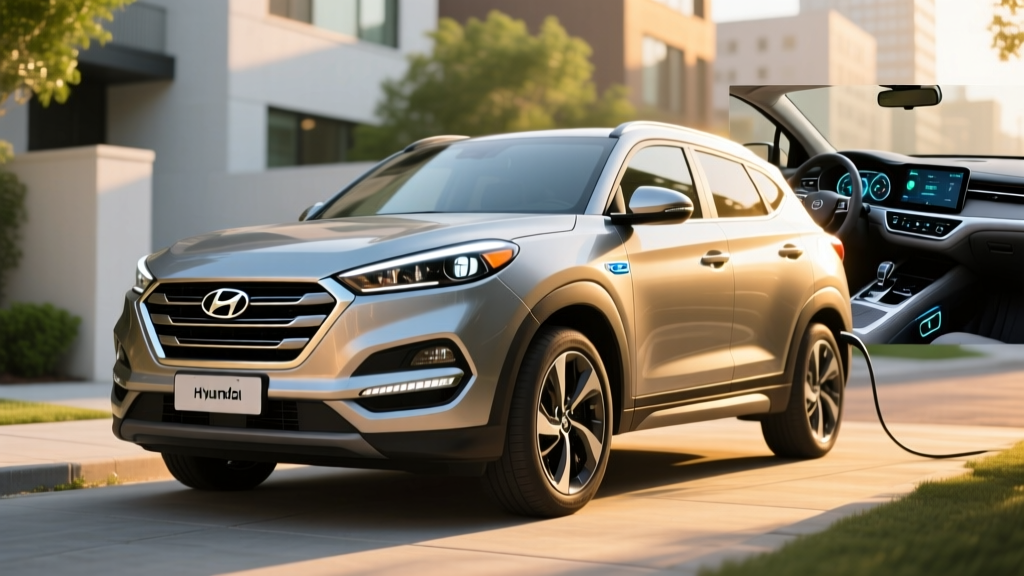
The 2023 Hyundai Tucson Hybrid occupies a pragmatic middle ground: it pairs a turbocharged gasoline engine with an electric motor for meaningful fuel savings over the standard gas model, without requiring you to plug in. With an EPA-estimated 38 MPG combined and a combined 226 horsepower, it outperforms many competitors in both efficiency and power. For buyers who want plug-in capability, Hyundai also offers the Tucson Plug-in Hybrid (PHEV) with 33 miles of electric-only range. This guide breaks down both powertrains, real-world fuel economy expectations, battery longevity, and whether the Tucson Hybrid fits your garage better than a full EV or a conventional gas SUV.
| Spec | Tucson Hybrid (HEV) | Tucson Plug-in Hybrid (PHEV) |
|---|---|---|
| Combined Horsepower | 226 hp | 261 hp |
| Engine | 1.6L Turbo I4 + electric motor | 1.6L Turbo I4 + electric motor |
| EPA Combined MPG | 38 MPG | 80 MPGe (combined gas + electric) |
| EPA City / Highway | 38 city / 38 highway | 35 MPG combined (gas-only mode) |
| Electric-Only Range | N/A | 33 miles |
| Total Range | ~440 miles | ~420 miles (gas + electric) |
| Battery Capacity | 1.49 kWh | 13.8 kWh |
| Drivetrain | AWD (standard) | AWD (standard) |
| 0–60 mph | ~7.1 sec | ~6.3 sec |
| Cargo Volume | 38.7 cu ft (rear seats up) | 38.5 cu ft (rear seats up) |
| Base MSRP (2023) | $32,885 (Blue trim) | $37,685 (SEL trim) |
| Powertrain Warranty | 10 yr / 100,000 mi | 10 yr / 100,000 mi |
Sources: EPA fueleconomy.gov, Hyundai Newsroom
HEV vs PHEV: Which Tucson Hybrid Is Right for You?
The 2023 Tucson is offered in two electrified flavors, and the distinction matters for your daily routine and budget.
Conventional Hybrid (HEV): The Tucson HEV never needs to be plugged in. It recovers energy through regenerative braking and the gasoline engine, storing it in a small 1.49 kWh battery. The electric motor assists the engine during acceleration and can drive the vehicle at low speeds for very short distances. You refuel exclusively at gas stations. Think of it as a smarter, more efficient gas car.
Plug-in Hybrid (PHEV): The Tucson PHEV carries a much larger 13.8 kWh battery that you can charge via a standard wall outlet or Level 2 charger. It delivers 33 miles of pure electric driving before the gas engine kicks in, operating as a hybrid thereafter. If your commute is under 33 miles and you charge nightly, you may use almost no gasoline on weekdays.
| Factor | HEV | PHEV |
|---|---|---|
| Plug in required? | No | Yes (to access EV range) |
| Electric-only driving | Minimal (low-speed creep) | 33 miles at full speed |
| Home charging needed | No | Recommended (Level 2 ideal) |
| Upfront cost premium | ~$2,000 over gas model | ~$7,000 over gas model |
| Federal tax credit (§30D) | Not eligible | Not eligible (see below) |
| Best for | No home charging access | Short commutes + home charging |
Fuel Economy: EPA Estimates vs Real-World MPG
The EPA rates the 2023 Tucson Hybrid (HEV) at 38 MPG city, 38 MPG highway, and 38 MPG combined. That uniform rating across city and highway is unusual — most hybrids score significantly higher in city driving due to regenerative braking at low speeds. The Tucson's balanced rating reflects its 6-speed automatic transmission (rather than a CVT) and the aerodynamic penalty of its SUV shape at highway speeds.
| Driving Scenario | EPA Estimate | Real-World Expectation |
|---|---|---|
| City (stop-and-go) | 38 MPG | 36–40 MPG (regen excels here) |
| Highway (70+ mph) | 38 MPG | 33–36 MPG (aero drag, less regen) |
| Combined mixed driving | 38 MPG | 34–38 MPG |
| Cold weather (below 32°F) | 38 MPG | 30–34 MPG (engine runs more for heat) |
Real-world note: Owners frequently report exceeding the EPA combined figure in warm-weather city driving, with some seeing 40–42 MPG on suburban routes. Highway-only road trips at 75+ mph tend to drop efficiency to the low-to-mid 30s. Cold weather hits hybrids harder than many buyers expect — the engine must run more frequently to provide cabin heat, reducing electric-motor assist time.
For the PHEV variant, the EPA rates it at 80 MPGe when operating on combined battery and gas power, and 35 MPG combined once the battery is depleted and it operates as a conventional hybrid. The 33-mile electric-only range is realistic for moderate-temperature suburban driving; expect 25–28 miles in cold weather or at sustained highway speeds.
Powertrain Deep Dive: 226 hp with Turbo Hybrid Muscle
Hyundai pairs a 1.6-liter turbocharged inline-4 engine with a 47.7 kW (64 hp) electric motor in the HEV, yielding a combined 226 horsepower and 258 lb-ft of torque. Unlike the Toyota RAV4 Hybrid, which uses a CVT, the Tucson Hybrid routes power through a conventional 6-speed automatic transmission. The result is more natural-feeling acceleration without the "rubber band" drone typical of CVTs, though it sacrifices a fraction of efficiency in stop-and-go traffic.
The PHEV steps up to a more powerful 66.9 kW (90 hp) electric motor and a larger turbo engine calibration, producing 261 hp combined. It also uses the 6-speed automatic and includes standard HTRAC all-wheel drive, where the rear axle is driven by a separate electric motor — no mechanical driveshaft connects front to rear.
Both variants deliver confident highway merging and adequate passing power. The HEV's 0–60 time of approximately 7.1 seconds won't win drag races, but it's competitive for the compact SUV hybrid segment and noticeably quicker than the base 187-hp gas Tucson.
PHEV Charging: Battery Size, Charge Times, and DC Fast-Charging Reality
The Tucson PHEV's 13.8 kWh lithium-ion battery (located under the rear seats) can be charged in several ways:
| Charging Method | Power Level | 0–100% Charge Time |
|---|---|---|
| Level 1 (120V household outlet) | ~1.4 kW | ~10 hours |
| Level 2 (240V home/public charger) | ~7.2 kW (onboard max) | ~2 hours |
| DC Fast Charging | Not supported | N/A |
Important: The Tucson PHEV does not support DC fast charging. This is standard for most PHEVs in this class — the smaller battery size makes DC charging infrastructure unnecessary for most use cases. A Level 2 home charger (240V, ~$500–$1,200 installed) will fully replenish the battery overnight and is the recommended setup for PHEV owners. If you only have access to a standard 120V outlet, the ~10-hour Level 1 charge time is still sufficient for overnight replenishment given the small battery.
Battery Warranty, Reliability, and Replacement Costs
Hyundai Hybrid/PHEV Battery Warranty:
- Coverage: 10 years / 100,000 miles (whichever comes first)
- Capacity threshold: Battery is covered if it falls below approximately 70% of original capacity
- Powertrain warranty: 10 years / 100,000 miles (engine, transmission, electric motor)
- Basic warranty: 5 years / 60,000 miles
Hyundai's hybrid battery warranty is among the longest in the industry, matching Toyota's coverage and exceeding most competitors. The lithium-ion batteries in both the HEV and PHEV are designed to last the life of the vehicle under normal use. Hybrid batteries experience far less stress than full EV batteries because they operate within a narrow state-of-charge window — the system never fully depletes or fully charges the pack, which dramatically reduces degradation.
Battery replacement cost: If your Tucson Hybrid's battery does fail outside warranty, replacement costs typically range from $2,000 to $4,000 (parts and labor) for the HEV's smaller pack, and $5,000 to $8,000 for the PHEV's larger 13.8 kWh unit. However, widespread reports of premature hybrid battery failure in modern Hyundai products are rare. Most hybrid batteries outlast 150,000+ miles with minimal capacity loss.
In terms of general reliability, the 2023 Tucson Hybrid carries average-to-above-average ratings. Hyundai's turbocharged 1.6L engine has been in production since 2021 and has shown no systemic failure patterns. The 6-speed automatic is a proven design. Common complaints center on infotainment responsiveness and minor build-quality items rather than powertrain issues. According to NHTSA, the Tucson has no major safety recalls specific to the hybrid powertrain.
Pricing, Trims, and Tax Credit Eligibility
The 2023 Tucson Hybrid (HEV) was offered in three trims:
| Trim | MSRP | Key Features |
|---|---|---|
| Blue (base) | $32,885 | AWD, 18" wheels, 10.25" touchscreen, wireless CarPlay/Android Auto |
| SEL Convenience | $35,235 | Panoramic sunroof, power liftgate, heated front seats, Smart cruise control |
| Limited | $39,285 | Leather, ventilated front seats, Bose audio, Highway Driving Assist, 19" wheels |
The 2023 Tucson Plug-in Hybrid came in two trims:
| Trim | MSRP | Key Features |
|---|---|---|
| SEL | $37,685 | AWD, 18" wheels, heated seats, 10.25" touchscreen |
| Limited | $43,585 | Leather, panoramic sunroof, Highway Driving Assist, Bose audio |
Federal tax credit status: Neither the Tucson Hybrid (HEV) nor the Tucson Plug-in Hybrid (PHEV) qualifies for the federal §30D clean vehicle tax credit of up to $7,500. The §30D credit applies only to battery electric vehicles (BEVs) and certain PHEVs with batteries of at least 7 kWh that meet critical-mineral and battery-component sourcing requirements. While the Tucson PHEV's 13.8 kWh battery meets the size threshold, Hyundai's battery sourcing does not satisfy the 2023 critical-minerals and foreign-entity-of-concern rules as defined by the IRS. Always verify current-year eligibility on irs.gov, as sourcing rules tighten annually.
State incentives: Some states offer their own rebates or HOV-lane access for PHEVs. California's CVRP program, for instance, has historically offered rebates for PHEVs — check your state's energy office for current programs.
Tucson Hybrid vs PHEV vs Full EV: Decision Framework
Choose the Tucson Hybrid (HEV) if:
- You have no access to home or workplace charging
- You want better fuel economy without changing your refueling habits
- Your budget is under $40,000 and you want AWD standard
- You take frequent long road trips and don't want to plan around chargers
Choose the Tucson Plug-in Hybrid (PHEV) if:
- You can install a Level 2 charger at home
- Your daily commute is under 30 miles round-trip
- You want electric driving most days but gas flexibility for road trips
- You value the extra 35 hp the PHEV powertrain provides
Choose a full EV (like the Hyundai Ioniq 5) if:
- You have reliable home Level 2 charging
- You want to eliminate gasoline costs entirely
- You qualify for the $7,500 federal tax credit (income and sourcing dependent)
- Your road trips are infrequent or under 250 miles between stops
The math is straightforward: if you drive 12,000 miles per year and pay $3.50/gallon, the Tucson HEV saves roughly $600–$800 annually compared to the 28-MPG gas Tucson. The PHEV, charged nightly with electricity at $0.14/kWh, can save $1,000–$1,400 annually if most of your driving falls within the 33-mile electric range. A full EV like the Ioniq 5 eliminates gasoline entirely but requires a higher upfront investment and charging infrastructure.
Pros
- 38 MPG combined with standard AWD — no plug required
- 226 hp (HEV) / 261 hp (PHEV) is genuinely quick for the segment
- 6-speed automatic avoids CVT drone
- 10-year / 100,000-mile powertrain and hybrid battery warranty
- Spacious 38.7 cu ft cargo area with rear seats up
- Strong safety scores (IIHS Top Safety Pick+ for 2023)
Cons
- No federal tax credit for either HEV or PHEV
- PHEV does not support DC fast charging
- Highway MPG drops noticeably at 75+ mph
- Cold weather significantly reduces hybrid efficiency and PHEV EV range
- Infotainment can feel sluggish vs competitors
- PHEV Limited trim pushes past $43,000
Frequently Asked Questions
How many MPG does the 2023 Hyundai Tucson Hybrid get?
The EPA rates the 2023 Tucson Hybrid at 38 MPG city, 38 MPG highway, and 38 MPG combined. Real-world results vary: expect 36–40 MPG in city driving and 33–36 MPG on sustained highway trips. Cold weather can drop combined efficiency to the low 30s.
How far can the Tucson PHEV go on electric only?
The EPA rates the Tucson Plug-in Hybrid at 33 miles of electric-only range. In real-world moderate conditions, most drivers see 28–33 miles. Cold weather, aggressive acceleration, and highway speeds reduce this to approximately 22–28 miles.
Does the 2023 Tucson Hybrid qualify for a federal tax credit?
No. The conventional Tucson Hybrid is not eligible for the §30D federal clean vehicle credit, which applies to BEVs and qualifying PHEVs only. The Tucson PHEV, despite meeting the battery-size threshold, does not meet the critical-mineral and battery-component sourcing requirements set by the IRS for 2023. Check irs.gov for the latest rules.
Is the Tucson Hybrid reliable, and what does battery replacement cost?
The Tucson Hybrid has shown average-to-above-average reliability since its 2022 launch. Hyundai's 10-year/100,000-mile hybrid battery warranty covers premature degradation. Out-of-warranty replacement runs approximately $2,000–$4,000 for the HEV battery and $5,000–$8,000 for the PHEV battery, though most hybrid batteries last well beyond 150,000 miles.
Do I need to plug in the Tucson Hybrid (HEV)?
No. The conventional Tucson Hybrid charges its battery entirely through regenerative braking and the gasoline engine. You never plug it in — you refuel at gas stations like any other car. Only the Tucson Plug-in Hybrid requires plugging in to access its 33-mile electric range.
How does the Tucson Hybrid compare to the RAV4 Hybrid?
The Toyota RAV4 Hybrid is rated at 41 MPG combined (3 MPG better) but produces 219 hp (7 hp less). The RAV4 uses a CVT, which is more efficient in city driving but less engaging on the highway. The Tucson Hybrid offers a more conventional driving feel, slightly more cargo space, and Hyundai's 10-year powertrain warranty vs Toyota's 8-year hybrid battery coverage. Both are strong choices; the RAV4 wins on efficiency, the Tucson on driving dynamics and warranty length.
Can the Tucson PHEV DC fast charge?
No. The Tucson PHEV supports Level 1 (120V, ~10 hours) and Level 2 (240V, ~2 hours) AC charging only. DC fast charging is not available, which is typical for PHEVs in this class given their smaller battery sizes.