Quick Verdict: A Top-Tier Hybrid SUV That Doesn't Need a Plug
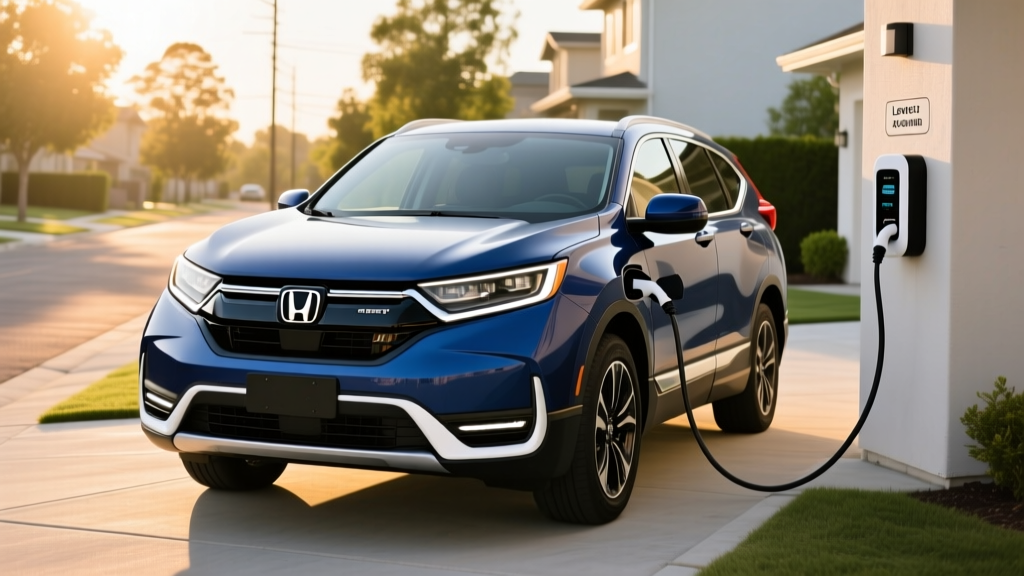
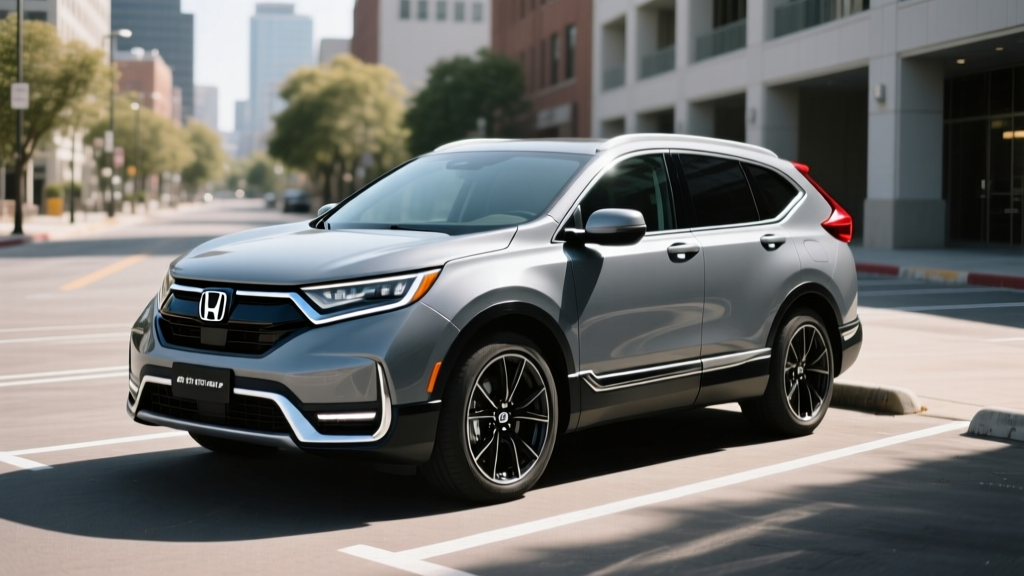
The 2023 Honda CR-V Hybrid Sport Touring sits at the top of Honda's compact hybrid SUV lineup, pairing a 2.0-liter Atkinson-cycle four-cylinder with a two-motor hybrid system for 204 combined horsepower. With EPA ratings of 40 city / 35 highway / 37 combined MPG in front-wheel-drive form (40/34/37 for the AWD Sport Touring), it delivers genuine fuel savings without the charging logistics of a plug-in hybrid or full EV. Three years into its generation, the CR-V Hybrid Sport Touring remains one of the most practical hybrid SUVs on the road — but buyers in 2026 should weigh its $38,600 MSRP (when new) against newer competitors and understand exactly what this powertrain does and doesn't offer.
This is a conventional hybrid (HEV), not a plug-in hybrid (PHEV). That distinction matters: you never plug it in, there's no electric-only range to manage, and it doesn't qualify for the federal §30D EV tax credit. Instead, it captures energy through regenerative braking and engine efficiency to deliver consistent MPG in real-world driving — often exceeding its EPA city estimate in stop-and-go traffic.
| Spec | Value |
|---|---|
| Powertrain | 2.0L Atkinson I-4 + two-motor hybrid system |
| Combined Horsepower | 204 hp |
| Combined Torque | 247 lb-ft (electric motor) |
| Transmission | e-CVT (direct drive) |
| Drivetrain (Sport Touring) | AWD standard |
| EPA MPG (AWD) | 40 city / 34 highway / 37 combined |
| Fuel Tank | 15.3 gallons |
| Total Range | ~566 miles (EPA combined) |
| 0–60 mph | ~7.6 seconds |
| Cargo Volume | 36.3 cu ft (rear seats up) / 76.5 cu ft (folded) |
| Towing Capacity | 1,000 lbs |
| Hybrid Battery Warranty | 8 years / 100,000 miles |
| Original MSRP (Sport Touring AWD) | $38,600 |
How Many MPG Does the CR-V Hybrid Sport Touring Actually Get?
The EPA rates the 2023 CR-V Hybrid AWD at 40 city / 34 highway / 37 combined MPG. The front-wheel-drive Sport and Sport Touring trims bump the highway figure slightly to 35 MPG. These numbers are competitive with the Toyota RAV4 Hybrid (41/38/39 AWD) and significantly better than the gas-only CR-V's 29/26/28 combined.
| Vehicle | City MPG | Highway MPG | Combined MPG |
|---|---|---|---|
| 2023 Honda CR-V Hybrid AWD | 40 | 34 | 37 |
| 2023 Toyota RAV4 Hybrid AWD | 41 | 38 | 39 |
| 2023 Hyundai Tucson Hybrid AWD | 38 | 38 | 38 |
| 2023 Honda CR-V (gas, AWD) | 27 | 32 | 29 |
Real-World MPG: What to Expect Beyond the Sticker
According to user-submitted data on fueleconomy.gov, many CR-V Hybrid owners report real-world combined MPG in the 35–42 range, with city driving often yielding the best results. This is characteristic of Honda's two-motor hybrid system: in low-speed urban driving, the electric motor handles most propulsion while the engine acts primarily as a generator, avoiding the inefficiency of running the gas engine at low RPMs.
Highway driving tells a different story. Above 65 mph, the engine takes over direct propulsion through a clutch-engaged gear ratio, and aerodynamic drag works against the compact SUV's boxy profile. Expect 32–34 MPG on sustained highway trips at 70+ mph. In cold weather (below 30°F), the engine runs more frequently to provide cabin heat and maintain battery temperature, which can drop observed MPG to the low-to-mid 30s until the powertrain reaches operating temperature.
Real-World Range Estimate: EPA combined range is ~566 miles on a full 15.3-gallon tank. In mixed real-world driving, plan for 480–540 miles per fill-up. Highway-heavy road trips at 75 mph may yield 450–480 miles. City-heavy commuting can push past 580 miles.
Hybrid vs PHEV vs EV: Which Powertrain Fits Your Life?
The 2023 CR-V Hybrid Sport Touring is a conventional hybrid (HEV). Honda did not offer a plug-in hybrid (PHEV) version of this generation in the US market. That means no plug, no electric-only miles, and no dependence on charging infrastructure — but also no ability to drive on grid electricity alone. Understanding the differences between HEV, PHEV, and BEV is critical before committing.
| Feature | HEV (CR-V Hybrid) | PHEV (e.g., RAV4 Prime) | BEV (e.g., Ioniq 5) |
|---|---|---|---|
| Plug-in Charging | No — self-charging | Yes — Level 1/2 | Yes — Level 1/2/DC |
| Electric-Only Range | None (EV assist only) | 25–42 miles typical | 250–350+ miles |
| Gas Engine | Yes — always available | Yes — kicks in after EV range | None |
| Battery Size | ~1.1 kWh (small) | 13–18 kWh | 58–84+ kWh |
| Federal Tax Credit (§30D) | Not eligible | Up to $7,500 (if eligible) | Up to $7,500 (if eligible) |
| Home Charging Needed | No | Recommended (Level 2) | Essential |
| Best For | No charging access; want MPG gains | Short commute + road trips | Home charging + mostly electric |
Choose the CR-V Hybrid (HEV) If:
- You live in an apartment or lack reliable home charging access
- Your daily driving is unpredictable — some days 10 miles, some days 400
- You want fuel savings without behavioral changes (no plugging in, no range planning)
- You frequently drive in extreme cold where EV range loss is significant
- You want a lower purchase price than a PHEV or BEV equivalent
Consider a PHEV or Full EV Instead If:
- You have home Level 2 charging and a commute under 40 miles (a PHEV covers most daily driving on electricity)
- You want to maximize fuel cost savings — electricity at $0.13/kWh costs roughly $0.04/mile vs $0.14/mile for gas at 37 MPG and $3.50/gallon
- You want federal tax credit eligibility (PHEVs and BEVs can qualify; HEVs cannot)
- You're ready to commit to electric-first driving with the option of gas backup (PHEV) or full electric (BEV)
Powertrain Deep Dive: How Honda's Two-Motor Hybrid Works
The 2023 CR-V Hybrid uses Honda's fourth-generation two-motor hybrid system. Here's how it operates across driving scenarios:
- EV Drive (low speed, light load): The traction motor powers the wheels using battery energy. The gas engine is off. This mode is brief — typically a mile or less — because the ~1.1 kWh battery is small and designed for assist, not sustained electric driving.
- Hybrid Drive (most city driving): The gas engine spins a generator motor that produces electricity. That electricity either powers the traction motor directly or charges the battery. The engine never mechanically drives the wheels in this mode, allowing it to run at its most efficient RPM regardless of vehicle speed.
- Engine Drive (highway cruising): Above roughly 45–50 mph under steady load, a lock-up clutch engages and the engine directly drives the front wheels through a single fixed gear ratio. This avoids the efficiency losses of converting mechanical energy to electrical and back again.
- Regenerative Braking: Lift off the accelerator or press the brake pedal, and the traction motor reverses direction, converting kinetic energy back into battery charge. Paddle shifters on the Sport Touring let you select regen intensity across four levels, though this is not true one-pedal driving — the vehicle will not come to a complete stop on regen alone.
The result is seamless power delivery with 204 combined horsepower and 247 lb-ft of torque from the electric motor. The AWD system on the Sport Touring adds a rear-mounted electric motor that provides up to 40% of torque to the rear wheels when traction demands it — there's no mechanical driveshaft connecting the front and rear axles. This keeps weight down and packaging efficient, though it means the rear motor only engages in specific conditions rather than providing full-time AWD grip.
Pricing, Tax Credits, and Ownership Costs
When new, the 2023 Honda CR-V Hybrid Sport Touring AWD carried an MSRP of $38,600 (plus destination). In the 2026 used market, well-maintained examples with 25,000–40,000 miles typically list between $31,000 and $35,000 depending on condition and region.
Federal Tax Credit Eligibility
Does the 2023 CR-V Hybrid qualify for the §30D federal tax credit? No. Under current IRS rules, the §30D Clean Vehicle Credit applies only to plug-in electric vehicles (BEVs and PHEVs) that meet battery capacity, critical mineral sourcing, and battery component requirements. Conventional hybrids like the CR-V Hybrid do not have sufficient battery capacity or plug-in capability to qualify.
If you're considering the used CR-V Hybrid in 2026, the §25E Used Clean Vehicle Credit also does not apply — it too requires a plug-in vehicle. There is no federal incentive for purchasing a conventional hybrid, new or used.
Five-Year Fuel Cost Comparison
| Vehicle | Combined MPG / MPGe | 5-Year Fuel Cost |
|---|---|---|
| 2023 CR-V Hybrid AWD | 37 MPG | ~$7,095 |
| 2023 CR-V Gas AWD | 29 MPG | ~$9,052 |
| Toyota RAV4 Prime (PHEV, 70% electric) | 94 MPGe / 38 MPG gas | ~$4,200 |
| Hyundai Ioniq 5 (BEV) | 114 MPGe | ~$3,100 |
The CR-V Hybrid saves roughly $1,950 over five years compared to the gas CR-V. That's meaningful but not transformative — the hybrid powertrain's value proposition is as much about reduced emissions and the driving experience (smoother, quieter, more responsive from a stop) as it is about pure cost savings. A PHEV or BEV with home charging saves significantly more, but requires charging infrastructure and behavioral adaptation.
Battery Reliability, Warranty, and Replacement Cost
The hybrid battery in the 2023 CR-V Sport Touring is a lithium-ion pack with approximately 1.1 kWh of total capacity (usable capacity is smaller, as the system maintains a buffer at both the top and bottom of the state-of-charge range to protect longevity). Because the battery is small and never deeply cycled — it operates in a narrow 40–80% state-of-charge window most of the time — degradation is minimal in practice.
Honda Hybrid Battery Warranty
- Coverage: 8 years / 100,000 miles (10 years / 150,000 miles in CARB states including California, New York, Massachusetts, and others that follow California emissions standards)
- What's covered: Battery capacity loss below a defined threshold, cell failure, and hybrid system components including the power control unit and electric motors
- Threshold: Honda does not publish an exact capacity-retention percentage, but warranty replacement is typically triggered when the battery can no longer hold sufficient charge to support normal hybrid operation
How Long Will the Hybrid Battery Last?
Based on data from earlier Honda hybrid systems (the Insight, Accord Hybrid, and previous CR-V generations), the lithium-ion hybrid battery in the 2023 CR-V should last 150,000–200,000+ miles before significant degradation. Honda's two-motor system is less thermally stressed than some competitors because the battery is small and the system avoids deep discharge cycles. According to Honda's official specifications, the hybrid system is designed for the life of the vehicle.
Battery Replacement Cost
If the hybrid battery does fail outside of warranty, replacement costs typically range from $2,000 to $4,000 for parts and labor at a Honda dealership. This is substantially less than a full EV battery replacement ($8,000–$20,000+) because the hybrid pack is small. Independent hybrid specialists can sometimes source refurbished packs for $1,500–$2,500. Given the battery's track record and the 8-year/100,000-mile warranty, replacement cost should be a low-probability concern for most buyers.
Sport Touring Trim: What You Get at the Top
The Sport Touring is the most expensive hybrid trim, and it justifies the premium with features that matter for daily usability:
- AWD standard — the rear electric motor provides torque-vectoring traction in rain and light snow
- 9-inch touchscreen with wireless Apple CarPlay and Android Auto
- Bose 12-speaker audio system
- Wireless phone charging pad
- Heated front seats and heated steering wheel
- Power liftgate with hands-free operation
- Honda Sensing suite: adaptive cruise control, lane-keeping assist, collision mitigation braking, traffic sign recognition, and blind-spot monitoring
- 19-inch alloy wheels (slight MPG penalty vs the 18-inch wheels on lower trims)
The Honda Sensing suite operates at SAE Level 2 — meaning it can manage steering, acceleration, and braking simultaneously on well-marked highways, but the driver must remain fully engaged with hands on the wheel and eyes on the road. This is not autonomous driving. The adaptive cruise and lane-centering are competent for highway commuting but will disengage on faded lane markings or sharp curves without warning.
Pros, Cons, and the Decision Framework
Pros
- 40 MPG city is excellent for an AWD compact SUV
- No plug required — no charging infrastructure or behavior changes needed
- Smooth, responsive acceleration from the electric motor off the line
- Top-trim features (Bose, wireless CarPlay, heated seats) at a reasonable price
- Strong reliability reputation; hybrid battery rarely needs replacement
- 566-mile total range eliminates range anxiety entirely
Cons
- 34 MPG highway trails the RAV4 Hybrid's 38 MPG highway
- No federal tax credit eligibility (HEV, not PHEV)
- 1,000-lb towing capacity is the lowest in the segment
- Engine drone under hard acceleration (e-CVT characteristic)
- 19-inch wheels on Sport Touring slightly hurt ride quality and MPG
- No plug-in hybrid option if you later want electric-only commuting
Decision Framework: Should You Buy This Vehicle?
Buy the 2023 CR-V Hybrid Sport Touring if: You want a fully loaded compact SUV with genuine 37+ MPG, you can't charge at home, and you value Honda's reliability record and Honda Sensing safety suite.
Look at the Toyota RAV4 Hybrid instead if: Highway MPG is your priority (38 vs 34 highway), or you want the RAV4 Prime PHEV option for 42 miles of electric-only range.
Consider a full EV (Ioniq 5, Tesla Model Y) if: You have reliable Level 2 home charging, your daily drive is under 60 miles round-trip, and you want the lowest per-mile fuel cost and zero tailpipe emissions.
Frequently Asked Questions
How many MPG does the 2023 Honda CR-V Hybrid Sport Touring get?
The AWD Sport Touring is EPA-rated at 40 city / 34 highway / 37 combined MPG. Real-world results typically fall in the 35–42 combined range, with city driving often exceeding the EPA estimate and sustained highway driving falling slightly below.
Does the CR-V Hybrid need to be plugged in?
No. The 2023 CR-V Hybrid is a conventional hybrid (HEV), not a plug-in hybrid. It charges its small battery through regenerative braking and the gas engine. You simply fill it with gas and drive — no plug, no charging cable, no behavior changes.
Does the 2023 CR-V Hybrid qualify for any tax credit?
No. The federal §30D Clean Vehicle Credit and the §25E Used Clean Vehicle Credit both require plug-in electric vehicles (BEVs or PHEVs). As a conventional hybrid, the CR-V Hybrid does not qualify for any federal purchase incentive. Check your state's energy office for any local hybrid incentives, as these vary by jurisdiction.
How reliable is the CR-V Hybrid battery and what does replacement cost?
The hybrid battery is covered by an 8-year/100,000-mile warranty (10 years/150,000 miles in CARB states). Based on Honda's track record with prior hybrid systems, the battery should last 150,000–200,000+ miles. Out-of-warranty replacement runs $2,000–$4,000, which is far less than a full EV battery replacement.
Can the CR-V Hybrid Sport Touring tow?
Yes, but with a 1,000-pound maximum towing capacity, it's limited to a small utility trailer or a pair of dirt bikes. If you need to tow a camper or boat, look at the gas CR-V (1,500 lbs) or a body-on-frame SUV.
Is the CR-V Hybrid AWD system full-time?
No. The AWD system uses an electric rear motor that engages only when the front wheels lose traction or during hard acceleration. Under normal dry-road cruising, the CR-V Hybrid operates as a front-wheel-drive vehicle to maximize fuel efficiency.
Hybrid vs PHEV vs EV — which should I choose?
Choose a hybrid (HEV) like the CR-V Hybrid if you have no charging access and want maximum simplicity. Choose a PHEV like the RAV4 Prime if you can charge at home and want 30–40 electric-only miles for commuting plus gas flexibility for road trips. Choose a full EV (BEV) if you have reliable home charging, drive under 250 miles daily, and want the lowest operating cost and zero tailpipe emissions. According to IIHS crash testing, the CR-V earns top safety marks regardless of powertrain choice.