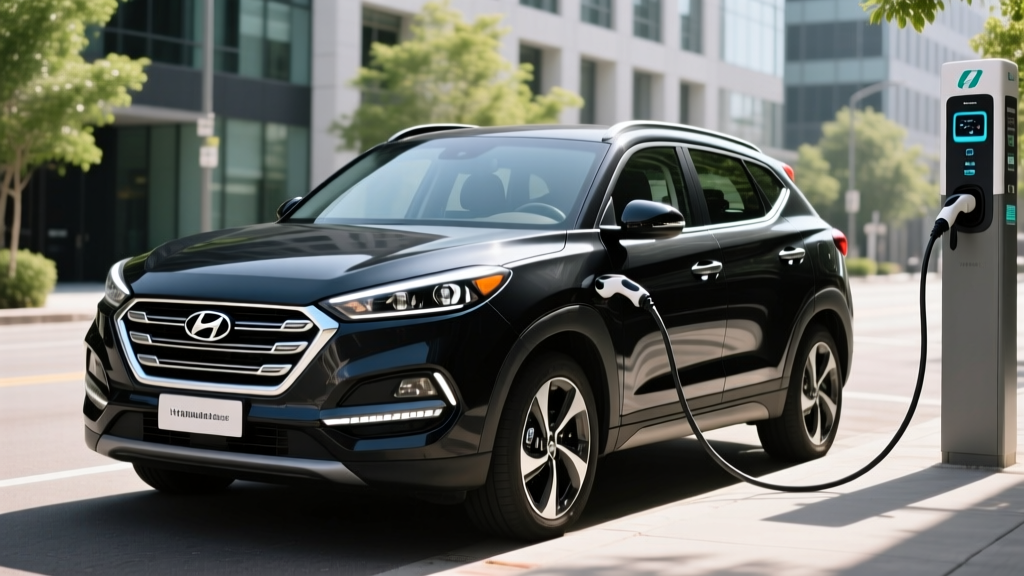
The Hyundai Tucson Hybrid landed for the 2022 model year as part of a full redesign, offering compact-SUV buyers two distinct electrified flavors: a conventional hybrid (HEV) that never needs a plug, and a plug-in hybrid (PHEV) with genuine electric-only commuting range. Now several years into its lifecycle, the 2022 Tucson Hybrid has accumulated enough real-world ownership data to evaluate honestly — from actual fuel economy to battery longevity concerns. Here's everything you need to know before buying one new-old-stock, certified pre-owned, or on the used market in 2026.
HEV vs PHEV: Which 2022 Tucson Hybrid Are We Talking About?
Hyundai sold the 2022 Tucson in two electrified variants, and confusing them is the most common mistake shoppers make. The difference matters enormously for your daily routine and wallet.
| Attribute | Tucson Hybrid (HEV) | Tucson Plug-In Hybrid (PHEV) |
|---|---|---|
| Needs to be plugged in? | No — regenerative braking and engine charge the battery | Yes — for electric-only range and best efficiency |
| Battery capacity | 1.49 kWh (lithium-ion polymer) | 13.8 kWh (lithium-ion polymer) |
| EPA electric-only range | N/A (electric assist only) | 33 miles |
| EPA combined MPG / MPGe | 37 MPG combined | 80 MPGe (electric) / 35 MPG (gas-only) |
| Total range | ~420 miles | ~400 miles (gas) + 33 miles (electric) |
| Combined horsepower | 226 hp / 258 lb-ft torque | 261 hp / 258 lb-ft torque |
| DC fast charging | N/A | No — Level 2 AC only (7.2 kW onboard charger) |
| Drivetrain | AWD (standard) | AWD (standard) |
The HEV is a "gas it and forget it" proposition — you drive normally, and the hybrid system recovers energy during braking and deceleration to assist the engine. The PHEV rewards you with 33 miles of pure electric driving if you plug in overnight, then seamlessly transitions to hybrid operation once the battery depletes. If you can charge at home and your commute is under 30 miles round-trip, the PHEV effectively becomes a daily EV with zero range anxiety for road trips.
Fuel Economy: EPA Numbers vs Real-World MPG
The EPA rates the 2022 Tucson Hybrid (HEV) at 37 MPG combined, breaking down as 37 city / 36 highway per fueleconomy.gov. The PHEV version earns 80 MPGe when operating on electricity and 35 MPG combined (33 city / 36 highway) once the battery is depleted and the gasoline engine takes over.
| Trim | City MPG | Highway MPG | Combined MPG | MPGe (PHEV only) |
|---|---|---|---|---|
| HEV Blue | 38 | 38 | 38 | N/A |
| HEV SEL Premium / Limited | 37 | 36 | 37 | N/A |
| PHEV (all trims, gas mode) | 33 | 36 | 35 | 80 MPGe |
Real-world note: Hyundai's hybrid system, like Toyota's, tends to exceed EPA city estimates in stop-and-go traffic because regenerative braking recovers more energy at lower speeds. Owners consistently report 39-42 MPG in city driving with the HEV. Highway driving at 75+ MPH typically yields 33-35 MPG, as aerodynamic drag reduces the hybrid advantage. In cold weather (below 30°F), expect a 3-5 MPG dip as the engine runs more frequently for cabin heat and battery conditioning. The PHEV's real-world electric range hovers around 28-35 miles depending on temperature and driving style — 33 miles is achievable in mild conditions at moderate speeds.
Powertrain and Performance Specs
Both variants share a 1.6-liter turbocharged four-cylinder engine paired with an electric motor and a 6-speed automatic transmission — a notable choice over the CVT found in most competitors. This gives the Tucson Hybrid a more natural, responsive driving feel with distinct gear shifts.
| Specification | HEV | PHEV |
|---|---|---|
| Engine | 1.6L turbo I4 | 1.6L turbo I4 |
| Engine output | 178 hp / 195 lb-ft | 178 hp / 195 lb-ft |
| Electric motor output | 44 kW (59 hp) / 195 lb-ft | 66.9 kW (90 hp) / 195 lb-ft |
| Combined system output | 226 hp / 258 lb-ft | 261 hp / 258 lb-ft |
| Transmission | 6-speed automatic | 6-speed automatic |
| 0-60 mph (est.) | ~7.1 seconds | ~6.5 seconds |
| Drivetrain | HTRAC AWD | HTRAC AWD |
| Towing capacity | 2,000 lbs | 2,000 lbs |
The PHEV's larger electric motor gives it noticeably stronger acceleration from a stop and more confident highway merging. Both versions feel quicker than their EPA fuel economy would suggest — the electric torque fill eliminates the turbo lag typical of small displacement engines.
PHEV Charging: What You Need to Know
The 2022 Tucson PHEV uses a standard J1772 connector for AC charging. Its onboard charger is rated at 7.2 kW, meaning:
- Level 1 (120V household outlet, ~1.4 kW): Full charge in approximately 10-11 hours. Usable for overnight top-ups if you start with some charge remaining.
- Level 2 (240V, 7.2 kW): Full charge in roughly 2 hours. This is the practical home-charging solution — install a Level 2 wallbox and your Tucson PHEV charges fully while you eat dinner.
The Tucson PHEV does not support DC fast charging. This is common for PHEVs — the 13.8 kWh battery is small enough that Level 2 speeds are adequate, and adding DC fast-charge hardware would increase cost and weight for minimal benefit. For a 33-mile electric commute, two hours on a Level 2 charger is all you need.
Battery and Powertrain Warranty
Hyundai covers the 2022 Tucson Hybrid and PHEV battery systems with one of the best warranties in the industry:
- Hybrid/EV battery: 10 years / 100,000 miles (original owner)
- Hybrid system components: 10 years / 100,000 miles
- Powertrain warranty: 10 years / 100,000 miles
- New-vehicle warranty: 5 years / 60,000 miles
Important caveat: The 10-year/100,000-mile powertrain and battery warranty applies to the original owner. For second owners, Hyundai reduces this to 5 years / 60,000 miles. If you're buying a used 2022 Tucson Hybrid as a second owner in 2026, verify the remaining warranty transfer terms with a Hyundai dealer.
Pricing, Tax Credits, and Value in 2026
When new, the 2022 Tucson Hybrid started at $32,900 MSRP for the Blue trim and climbed to approximately $38,750 for the Limited. The PHEV started at $35,990 (SEL) and topped out near $40,850 (Limited), before destination charges.
Federal tax credit eligibility: The 2022 Tucson PHEV qualified for up to $7,500 under the pre-Inflation Reduction Act §30D rules (which applied to vehicles delivered before January 1, 2023). The conventional HEV never qualified for a federal plug-in credit. Under current 2026 IRS rules, the §30D credit applies only to new vehicle purchases and has stringent battery-sourcing, critical-mineral, MSRP cap ($80,000 SUVs), and buyer income limits ($300,000 joint / $150,000 single). Since the 2022 model year is no longer sold new, no federal credit applies to any purchase today.
For used purchases, the Used Clean Vehicle Credit (§25E) may apply: up to $4,000 or 30% of the sale price (whichever is less) if you buy from a dealer, the vehicle is under $25,000, and your income falls below $150,000 (joint) or $75,000 (single). Given typical 2026 used pricing of $20,000-$28,000 for a 2022 Tucson Hybrid, some buyers will qualify. Confirm eligibility with a tax professional before relying on this credit.
Reliability and Battery Replacement Cost
The 2022 Tucson Hybrid has proven reliable in aggregate. Hyundai's turbocharged 1.6L engine and hybrid transaxle have been in service across multiple models since 2020 without widespread failure patterns. The IIHS awarded the 2022 Tucson the Top Safety Pick+ rating, reflecting strong crashworthiness.
Regarding the hybrid battery: lithium-ion polymer packs in Hyundai/Kia hybrids have shown degradation rates of approximately 8-12% over the first five years based on fleet data — meaning a Tucson Hybrid owner in 2026 should still see 88-92% of original battery capacity. Complete battery replacement, should it become necessary out of warranty, typically costs $2,500-$4,000 for the HEV pack and $5,000-$8,000 for the larger PHEV pack, including labor. These figures have remained relatively stable as Hyundai's parts supply has matured.
Common owner-reported issues for the 2022 model year are minor: occasional infotainment screen lag, wireless Apple CarPlay/Android Auto connectivity drops, and some wind noise from the side mirrors at highway speed. None are powertrain-related. Hyundai addressed several of these through software updates during the 2023 model year refresh.
Tucson Hybrid vs PHEV vs Full EV: Which Fits You?
Choose the HEV If:
- You have no access to home or workplace charging
- You want maximum MPG with zero behavior change
- Your budget is tighter (lower purchase price, no charger install)
- You drive mostly city miles where the hybrid system shines
Choose the PHEV If:
- You can install a Level 2 charger at home
- Your daily commute is under 33 miles round-trip
- You want EV-like daily driving with gas-engine road-trip freedom
- You want the most powerful Tucson variant (261 hp)
Consider a full EV instead if: you have reliable home charging, drive under 250 miles daily, and want to eliminate oil changes, spark plugs, and transmission fluid entirely. Vehicles like the Hyundai Ioniq 5 or Kia EV6 offer 300+ miles of range, DC fast charging, and lower operating costs — but at a higher purchase price and with the commitment of planning longer road trips around charging infrastructure.
Bottom line: The 2022 Tucson HEV is the pragmatic choice for apartment dwellers and drivers who simply want better fuel economy without lifestyle changes. The PHEV is the sweet spot for homeowners with a garage who want to taste the EV experience without committing fully. A full BEV makes sense only when charging access is guaranteed and your budget allows the premium.
Frequently Asked Questions
How many MPG does the 2022 Tucson Hybrid actually get?
The EPA rates the HEV at 37 MPG combined (38 for the Blue trim). Real-world city driving often yields 39-42 MPG thanks to regenerative braking. Highway driving at 75+ MPH typically returns 33-35 MPG. The PHEV gets 35 MPG combined in gas-only mode and 80 MPGe when using its electric charge.
How far can the Tucson PHEV go on electric only?
The EPA rates the 2022 Tucson PHEV at 33 miles of electric-only range. In real-world conditions, expect 28-35 miles depending on temperature, terrain, and driving speed. Cold weather (below freezing) can reduce this to 25-28 miles as the battery is less efficient and cabin heating draws additional power.
Is the 2022 Tucson Hybrid reliable, and what does battery replacement cost?
Yes, the 2022 Tucson Hybrid has proven reliable with no widespread powertrain issues. Hyundai's hybrid battery is covered for 10 years/100,000 miles for the original owner. Out-of-warranty replacement runs $2,500-$4,000 for the HEV and $5,000-$8,000 for the PHEV. Battery degradation after 4+ years has been modest (8-12% capacity loss).
Does the 2022 Tucson Hybrid qualify for any tax credit?
Not as a new vehicle — it's no longer sold new. However, if you purchase one used from a dealer for under $25,000 and meet income limits ($150,000 joint / $75,000 single), you may qualify for the federal Used Clean Vehicle Credit (§25E) of up to $4,000. The original PHEV qualified for $7,500 when new under pre-IRA rules. Consult a tax professional to confirm your eligibility.
Does the Tucson Hybrid need to be plugged in?
The conventional HEV does not — it charges its small battery through regenerative braking and the gasoline engine. The PHEV version benefits enormously from being plugged in (that's where its 33 miles of electric range comes from), but it will still operate as a regular hybrid if you never plug it in — you just won't access its electric-only efficiency advantage.
What's the difference between the Tucson Hybrid Blue and other trims?
The Blue trim uses lower-rolling-resistance tires and slightly different aerodynamic tuning to achieve 38 MPG combined vs 37 MPG for SEL Premium and Limited trims. The trade-off is marginally less grip and a firmer ride. For most buyers, the 1 MPG difference is imperceptible in daily driving.