Quick Verdict: The 2022 Toyota Highlander Hybrid at a Glance
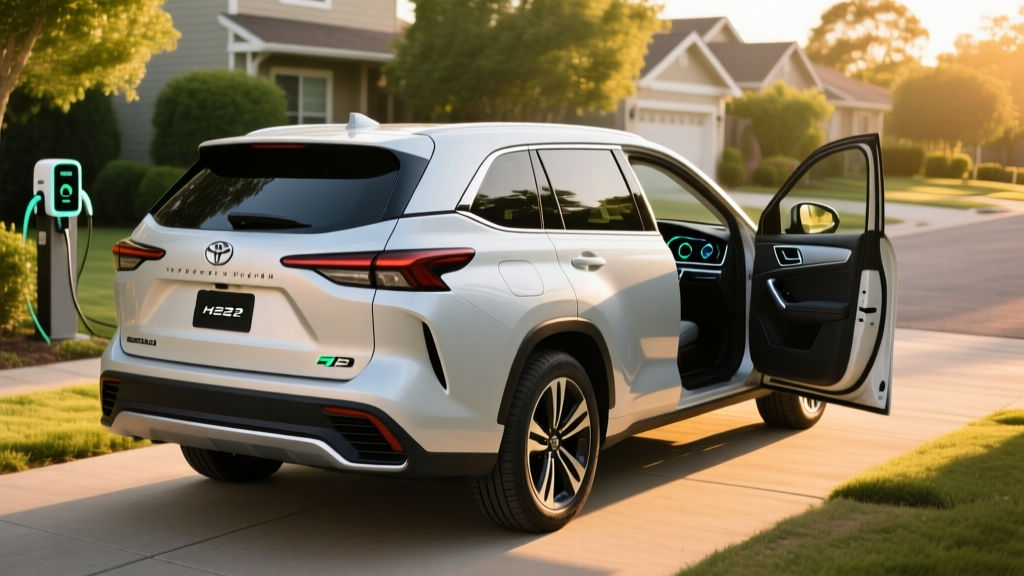
The 2022 Toyota Highlander Hybrid remains one of the most practical three-row SUVs for families who want meaningful fuel savings without plugging in. With an EPA-estimated 35 MPG combined, standard electronic all-wheel drive, and Toyota's proven hybrid synergy drive, it delivers real-world efficiency that frequently exceeds its sticker numbers in city driving. For buyers weighing a conventional hybrid against a plug-in hybrid or full EV, the Highlander Hybrid occupies a compelling middle ground: no charging infrastructure required, lower upfront cost, and a powertrain with a track record spanning two decades.
But how does it actually perform once you leave the dealership lot? Below, we break down exact fuel economy figures, powertrain specs, battery longevity data, ownership costs, and whether this three-row hybrid still makes sense as we move through 2026.
EPA Fuel Economy and Real-World MPG
The 2022 Highlander Hybrid uses Toyota's fourth-generation hybrid system paired with a 2.5-liter inline-four engine. All trims come with electronic AWD (eAWD), which uses a rear-mounted electric motor rather than a mechanical driveshaft — meaning there is no FWD-only variant and no fuel economy penalty for having all-wheel drive.
| Metric | EPA Estimate |
|---|---|
| City MPG | 35 MPG |
| Highway MPG | 35 MPG |
| Combined MPG | 35 MPG |
| Fuel Tank Capacity | 17.1 gallons |
| Total Driving Range | ~598 miles |
Source: fueleconomy.gov
Powertrain: 243 HP Hybrid Synergy Drive
The Highlander Hybrid combines a 2.5-liter Atkinson-cycle four-cylinder gasoline engine with three electric motor-generators — two at the front axle and one at the rear for eAWD. The system net output is 243 horsepower.
| Component | Specification |
|---|---|
| Engine | 2.5L inline-4, Atkinson cycle |
| Engine Horsepower | 186 HP @ 6,000 RPM |
| Front Electric Motors | Two motor-generators (MG1, MG2) |
| Rear Electric Motor | 54 HP (eAWD) |
| Combined System Output | 243 HP |
| Transmission | eCVT (electronically controlled) |
| Drivetrain | Electronic AWD (standard all trims) |
| 0–60 MPH | ~7.8 seconds |
| Towing Capacity | 3,500 lbs |
The eCVT is not a traditional belt-and-pulley CVT. It uses a planetary gearset to blend engine and motor power seamlessly, which eliminates the "rubber-band" feel associated with older CVTs. Acceleration is adequate for merging and passing, though the Highlander Hybrid prioritizes efficiency over performance — if you want more urgency, the non-hybrid 2.4L turbo variant (265 HP) is quicker but drops to 24 MPG combined.
HEV vs. PHEV vs. EV: Which Powertrain Fits Your Family?
The 2022 Highlander Hybrid is a conventional hybrid (HEV) — it does not plug in. Toyota does not offer a plug-in hybrid (PHEV) version of the Highlander. If you want a three-row Toyota PHEV, you would need to look at the Toyota Grand Highlander Hybrid (introduced for 2024, with a Hybrid MAX variant) or consider competitors like the Kia Sorento PHEV. Here is how the three powertrain types compare for a family SUV buyer:
HEV (This Vehicle)
- No plug-in required
- 35 MPG combined
- Lower purchase price
- No range anxiety
- No federal tax credit
PHEV (e.g., Sorento PHEV)
- ~32 miles electric-only
- Plug in for daily commute
- Gas engine for long trips
- Higher purchase price
- May qualify for tax credit
BEV (e.g., Rivian R1S)
- Zero tailpipe emissions
- ~300+ mile range
- Home charging required
- Highest purchase price
- Up to $7,500 tax credit
The Highlander Hybrid is right for you if: you want a three-row SUV with strong fuel economy, you lack reliable home charging access for a PHEV or EV, and you prefer the lowest upfront cost with no behavioral changes required.
Consider a PHEV instead if: your daily commute is under 35 miles round-trip, you have access to a Level 2 home charger, and you want electric-only driving for most weekday trips while retaining gas flexibility for road trips.
Consider a full EV if: you have home Level 2 charging, your daily driving is predictable, you want to eliminate gas entirely, and you qualify for the federal clean vehicle credit under current IRS §30D rules (income caps, MSRP caps, and battery sourcing requirements apply).
Battery Warranty, Lifespan, and Replacement Cost
Hybrid battery longevity is consistently the top concern among first-time hybrid buyers. Toyota addresses this with robust warranty coverage and a proven track record of battery durability.
- Hybrid Battery Warranty: 10 years / 150,000 miles (whichever comes first)
- Hybrid System Components: 8 years / 100,000 miles
- Powertrain Warranty: 5 years / 60,000 miles
- Basic Warranty: 3 years / 36,000 miles
The 2022 Highlander Hybrid uses a nickel-metal hydride (NiMH) battery pack located under the second-row seats. Unlike the lithium-ion packs in EVs and PHEVs, NiMH batteries in Toyota's conventional hybrids are relatively small (approximately 1.6 kWh usable) and experience shallow charge-discharge cycles, which dramatically extends their lifespan.
Based on data from Toyota's hybrid fleet (Prius, Camry Hybrid, RAV4 Hybrid), the vast majority of hybrid batteries last well beyond 150,000 miles before requiring replacement. Toyota dealerships report replacement rates under 5% within the warranty period for modern hybrid systems.
Out-of-warranty replacement cost: A new OEM hybrid battery pack for the Highlander Hybrid typically runs $3,000–$4,500 installed at a Toyota dealer. Independent hybrid specialists often offer refurbished or reconditioned packs for $1,500–$2,500. Given the 10-year/150,000-mile warranty, most owners will never face this expense.
Pricing, Trims, and Tax Credit Eligibility
The 2022 Toyota Highlander Hybrid was offered in five trims, all with standard eAWD. While 2022 models are no longer sold new, these MSRP figures remain relevant for used-car valuation and comparison with current model years.
| Trim | MSRP (with destination) |
|---|---|
| LE | $39,070 |
| XLE | $41,270 |
| XSE | $42,470 |
| Limited | $46,470 |
| Platinum | $49,070 |
For buyers purchasing a used 2022 Highlander Hybrid in 2026, the used clean vehicle credit (up to $4,000 or 30% of sale price, whichever is less) also does not apply, as it requires the vehicle to be a plug-in electric vehicle. However, the Highlander Hybrid's lower fuel costs still deliver meaningful savings versus the non-hybrid variant.
Ownership Cost: 5-Year Fuel Savings Breakdown
Let's compare the Highlander Hybrid's fuel costs against the non-hybrid 2022 Highlander (2.4L turbo, 24 MPG combined) to quantify the real savings over five years.
| Metric | Highlander Hybrid (35 MPG) | Highlander Gas (24 MPG) |
|---|---|---|
| Annual Fuel Cost | $1,500 | $2,188 |
| 5-Year Fuel Cost | $7,500 | $10,938 |
| 5-Year Savings | $3,438 saved with Hybrid | |
At current fuel prices, the hybrid powertrain saves approximately $688 per year in fuel. Over a typical ownership period, that offsets a significant portion of the hybrid's price premium over the gas model. Factor in potentially lower maintenance costs (regenerative braking extends brake pad life; no traditional starter motor or alternator to replace) and the total cost of ownership advantage widens further.
Insurance premiums for the Highlander Hybrid tend to run 3–7% higher than the gas variant due to the higher replacement cost of hybrid components, though this varies significantly by carrier and state.
Pros and Cons
Pros
- 35 MPG combined — best-in-class for a 3-row SUV
- Standard eAWD on every trim
- 10-year/150,000-mile hybrid battery warranty
- No plug-in charging required
- Proven Toyota reliability and resale value
- 3,500-lb towing capacity
Cons
- No electric-only driving mode
- No federal tax credit eligibility
- Third row is tight for adults
- Modest 243 HP — not the quickest in class
- Infotainment feels dated vs. rivals (2022 model year)
- NiMH battery (not lithium-ion) — heavier, lower energy density
Frequently Asked Questions
How many MPG does the 2022 Toyota Highlander Hybrid get?
The EPA rates it at 35 MPG city, 35 MPG highway, and 35 MPG combined. In real-world city driving with frequent stops, many owners report 37–39 MPG thanks to regenerative braking. Highway-only driving at 75+ MPH typically yields 31–33 MPG.
Does the Highlander Hybrid need to be plugged in?
No. The 2022 Highlander Hybrid is a conventional hybrid (HEV). Its battery recharges through regenerative braking and the gasoline engine. There is no plug, no charging cable, and no electric-only range. If you want plug-in capability, you would need to look at a PHEV like the Kia Sorento Plug-In Hybrid or the Toyota RAV4 Prime (smaller, two-row).
Is the hybrid battery reliable and what does replacement cost?
Toyota's hybrid batteries have an excellent longevity record. The 2022 Highlander Hybrid's NiMH pack is covered by a 10-year/150,000-mile warranty. Out-of-warranty replacement runs $3,000–$4,500 at a dealer, or $1,500–$2,500 through independent hybrid specialists. Most batteries last well beyond 150,000 miles.
Does the 2022 Highlander Hybrid qualify for any tax credit?
No federal tax credit applies — the IRS §30D Clean Vehicle Credit is limited to plug-in vehicles (BEVs and PHEVs). Some states may offer hybrid-specific rebates or HOV lane access; check the Alternative Fuels Data Center for your state's current programs.
How does the Highlander Hybrid compare to a full EV three-row SUV?
A full EV like the Rivian R1S or Kia EV9 offers zero tailpipe emissions, lower per-mile energy costs, and stronger acceleration, but requires home charging infrastructure, carries a significantly higher purchase price ($55,000–$80,000+), and may present charging challenges on long road trips. The Highlander Hybrid makes sense for buyers who want efficiency without altering their refueling habits or investing in a Level 2 home charger.
Is the 2022 Highlander Hybrid still a smart buy in 2026?
Yes, particularly on the used market. Toyota's hybrid system is among the most proven in the industry, the 35 MPG combined remains competitive with newer three-row hybrids, and the 10-year battery warranty means a 2022 model still has substantial hybrid battery coverage remaining. Depreciation has been favorable — Highlander Hybrids hold their value well due to strong demand and limited supply of efficient three-row SUVs.