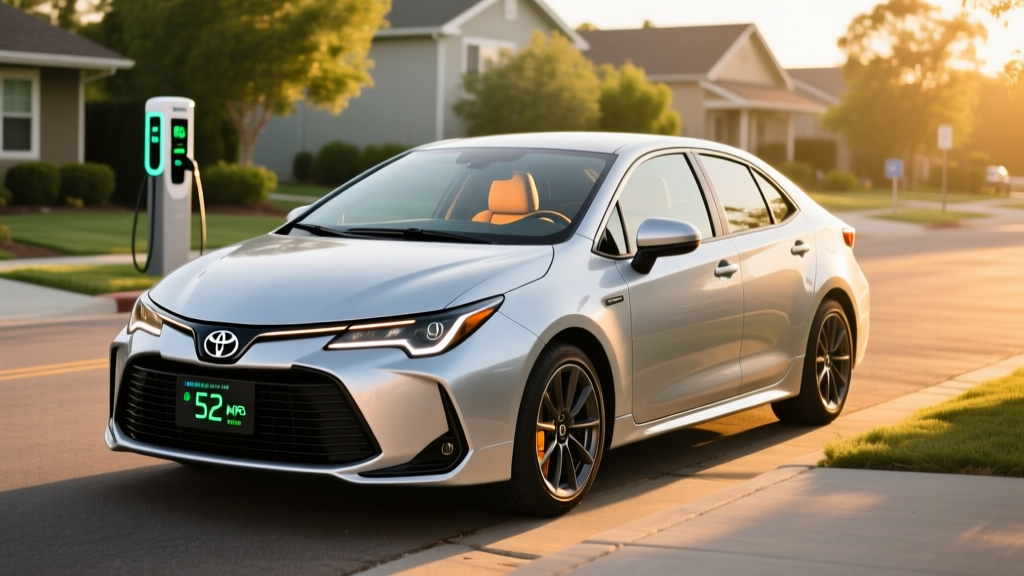
The 2021 Toyota Corolla Hybrid occupies a narrow but compelling lane: it's one of the most fuel-efficient sedans you can buy without plugging in anything. Built on Toyota's fourth-generation hybrid system and sharing its powertrain architecture with the Prius, the Corolla Hybrid delivers an EPA-estimated 52 MPG combined in a conventional compact sedan body. For buyers who want maximum fuel savings without the range planning of a full EV or the plug-in routine of a PHEV, this car makes a strong case — especially on the used market in 2026, where examples are priced well below new electrified alternatives.
This review covers the 2021 model year specifically, examining real-world fuel economy, the hybrid powertrain, battery longevity, and how the Corolla Hybrid stacks up against both plug-in hybrids and full battery-electric vehicles for different driving lifestyles.
HEV vs. PHEV vs. EV: Where the Corolla Hybrid Fits
Before diving into specs, it's critical to understand what the 2021 Corolla Hybrid is — and what it isn't. This is a conventional hybrid electric vehicle (HEV), sometimes called a "self-charging hybrid." It has no plug, no electric-only range to speak of, and no external charging capability. The small battery recharges exclusively through regenerative braking and the gasoline engine.
Quick Reference: Hybrid Types
| Feature | HEV (Corolla Hybrid) | PHEV (e.g., Prius Prime) | BEV (e.g., Tesla Model 3) |
|---|---|---|---|
| Plug-in charging? | No | Yes (Level 1/2) | Yes (Level 1/2/DC) |
| Electric-only range | ~1 mi at low speed | 25–44 mi (model dependent) | 250–360+ mi |
| Gas engine? | Yes | Yes | No |
| Home charging needed? | No | Recommended | Essential |
| Federal tax credit (§30D)? | No | Varies by model/year | Up to $7,500 (eligibility rules apply) |
| Best for | High-mileage drivers without home charging | Short commutes + road trips | Home-charging access + daily driving |
The Corolla Hybrid is purpose-built for drivers who want set-it-and-forget-it efficiency. You fill it with gas, drive it normally, and the hybrid system handles the rest. If you have home charging access and a short commute, a PHEV like the Toyota Prius Prime might save more fuel on daily trips. If you can charge at home and rarely drive beyond 250 miles in a day, a full BEV eliminates gas entirely. But for apartment dwellers, street parkers, or high-mileage drivers who don't want to think about charging, the HEV format remains the lowest-friction path to 50+ MPG.
Fuel Economy: EPA Ratings and Real-World MPG
The headline number is what draws buyers to this car. According to fueleconomy.gov, the 2021 Toyota Corolla Hybrid carries the following EPA estimates:
| Driving Cycle | EPA Estimate |
|---|---|
| City | 53 MPG |
| Highway | 52 MPG |
| Combined | 52 MPG |
That 52 MPG combined figure puts the Corolla Hybrid among the most efficient non-plug-in vehicles sold in the United States. The near-identical city and highway numbers reflect how Toyota's hybrid synergy drive system recaptures energy during stop-and-go driving — the scenario where conventional gas cars are least efficient.
Real-World MPG: What Owners Actually See
Hybrids tend to match or even exceed their EPA ratings in city driving, where regenerative braking is most active. On the highway at sustained 70–80 mph speeds, expect a slight drop. Based on owner-reported data from Fuelly and Edmunds long-term testing, real-world combined fuel economy for the 2021 Corolla Hybrid clusters around 48–54 MPG depending on conditions:
- City / suburban mixed driving: 52–56 MPG (often exceeds EPA)
- Highway at 65–70 mph: 48–52 MPG
- Highway at 75–80 mph: 44–48 MPG (aerodynamic drag increases significantly)
- Cold weather (below 30°F): 44–48 MPG (engine runs more often for cabin heat)
The Corolla Hybrid's fuel tank holds 11.4 gallons, giving a theoretical maximum range of roughly 590 miles per tank at the EPA combined rate. In practice, most owners report refueling between 480 and 540 miles, which still represents exceptional distance between fill-ups.
Real-World Range Expectation: EPA combined is 52 MPG with an 11.4-gallon tank (~593 mi theoretical). Expect 480–540 miles between fill-ups in mixed driving, dropping to ~420–460 miles in sustained cold weather or high-speed highway use.
Powertrain: 121 HP and Electronic AWD
The 2021 Corolla Hybrid pairs a 1.8-liter four-cylinder Atkinson-cycle gasoline engine with two motor-generators and a nickel-metal hydride (NiMH) traction battery. Combined system output is 121 horsepower. A third motor-generator on the rear axle provides electronic all-wheel drive (AWD-e), engaging automatically when the system detects front-wheel slip.
| Specification | 2021 Corolla Hybrid |
|---|---|
| Engine | 1.8L 4-cyl Atkinson cycle |
| Combined system horsepower | 121 hp |
| Electric motor (front) | Motor-generator 1 (starter/generator) + MG2 (drive motor) |
| Electric motor (rear) | AWD-e motor-generator |
| Transmission | Continuously variable (eCVT — planetary gearset, not belt-driven) |
| Traction battery | NiMH, ~1.3 kWh (usable) |
| Drivetrain | Electronic AWD (AWD-e) |
| 0–60 mph | ~9.5 seconds (est.) |
| Top speed | 112 mph |
| Curb weight | ~3,050 lbs |
The 121-hp output means this is not a performance-oriented car. The 0–60 time of roughly 9.5 seconds is adequate for merging and passing but noticeably slower than the gas-only Corolla's available 2.0L engine (169 hp). The tradeoff is deliberate: Toyota tuned this powertrain for efficiency, and the result is a car that sips fuel at a rate that makes the acceleration compromise worthwhile for most commuters.
The AWD-e system deserves mention. Unlike mechanical AWD, there's no driveshaft connecting front and rear axles. The rear motor engages only when needed — typically from a stop on wet or snowy pavement or during low-traction cornering — then disengages to avoid parasitic losses. This keeps the hybrid's fuel economy nearly identical to a front-wheel-drive configuration.
Battery Longevity, Warranty, and Replacement Cost
Battery lifespan is the single most common concern among hybrid buyers, and for good reason — the traction battery is the most expensive component unique to the hybrid system. Toyota addresses this with robust warranty coverage and a proven track record.
2021 Corolla Hybrid Battery Warranty
- Hybrid battery warranty: 10 years / 150,000 miles (whichever comes first) — transferable to subsequent owners
- Hybrid system components warranty: 8 years / 100,000 miles
- Basic vehicle warranty: 3 years / 36,000 miles
- Powertrain warranty: 5 years / 60,000 miles
Starting with the 2020 model year, Toyota extended hybrid battery coverage to 10 years/150,000 miles across all hybrid models, up from the prior 8-year/100,000-mile term. This is among the best hybrid battery warranties in the industry, and it transfers to second owners, which supports resale value on the used market.
Real-World Battery Degradation
The Corolla Hybrid uses a nickel-metal hydride (NiMH) battery pack — a chemistry Toyota has refined over two decades of Prius production. NiMH is less energy-dense than the lithium-ion packs in modern EVs but is extremely durable and tolerant of the shallow charge-discharge cycles that hybrids use. The hybrid system keeps the battery in a narrow state-of-charge window (roughly 40–80%), which dramatically reduces degradation compared to an EV that regularly cycles from 10% to 90%.
Based on long-term fleet data from Prius vehicles using similar NiMH architecture, hybrid battery packs routinely last 150,000–200,000+ miles before capacity loss becomes noticeable. "Noticeable" in a hybrid context means slightly reduced electric-assist contribution — the car still drives, but fuel economy may drop 2–4 MPG. Complete failure before 150,000 miles is uncommon.
Battery Replacement Cost
If the hybrid battery does require replacement outside of warranty:
- New OEM battery from Toyota: $2,000–$3,500 (part + labor at dealer)
- Refurbished/remanufactured battery: $1,000–$2,000 (independent hybrid specialist)
- Individual cell/module replacement: $500–$1,200 (specialist shops can replace only failed modules within the pack)
For a 2021 model, the 10-year/150,000-mile battery warranty remains in effect through at least 2031, meaning most original purchasers are still well within coverage. This substantially de-risks ownership.
Pricing, Tax Credits, and Ownership Economics
The 2021 Toyota Corolla Hybrid was sold in a single trim — LE — with an original MSRP of approximately $23,600 (including destination). On the used market in early 2026, examples with 40,000–70,000 miles typically list between $17,000 and $21,000 depending on condition, mileage, and region.
Federal Tax Credit Eligibility
The 2021 Corolla Hybrid does not qualify for the federal §30D clean vehicle tax credit. That credit applies only to plug-in electric vehicles (PHEVs and BEVs) with sufficient battery capacity and compliant battery sourcing. Conventional hybrids like the Corolla Hybrid are excluded under current IRS rules.
Some states offer their own incentives for hybrid purchases, but these vary widely by jurisdiction and have largely shifted toward PHEV and BEV incentives. Check your state's energy or environmental agency website for current programs.
Total Cost of Ownership: 5-Year Estimate
| Cost Category | Corolla Hybrid (52 MPG) | Gas Corolla LE (33 MPG) | Estimated Savings |
|---|---|---|---|
| Fuel (75,000 mi at $3.40/gal avg) | $4,904 | $7,727 | $2,823 |
| Insurance (avg) | ~$7,200 | ~$6,900 | –$300 |
| Maintenance (5 yr) | ~$2,100 | ~$2,300 | $200 |
| Estimated 5-yr total (fuel + ins. + maint.) | ~$14,204 | ~$16,927 | ~$2,723 |
The Corolla Hybrid's fuel savings add up meaningfully over time. At 75,000 miles of driving and a national average gas price of $3.40/gallon, the hybrid saves roughly $2,800 in fuel alone compared to the gas-only Corolla — enough to offset any used-market price premium over the gas version. Maintenance costs tend to be slightly lower as well, since regenerative braking reduces wear on the friction brake pads (many hybrid owners report original brake pads lasting 80,000+ miles).
Who Should Choose the Corolla Hybrid?
Choose the 2021 Corolla Hybrid If:
- You drive 15,000+ miles per year and want to minimize fuel cost
- You lack access to home or workplace charging (apartment, street parking)
- You want maximum simplicity — no plug, no range planning, no charging apps
- You live in a region with cold winters where EV range loss is a concern
- You value Toyota's reliability reputation and long hybrid battery warranty
Consider a PHEV Instead If:
- You have home charging and a commute under 30 miles (a PHEV can cover most trips on electricity)
- You want to reduce gasoline consumption to near-zero for daily driving
- You want eligibility for federal or state plug-in tax credits
Consider a Full EV Instead If:
- You have reliable Level 2 home charging
- Your daily driving is under 200 miles and you take road trips infrequently
- You want zero tailpipe emissions and the lowest per-mile energy cost
- You want access to HOV lane privileges (state-dependent)
Pros
- 52 MPG combined EPA — among the best of any non-plug-in vehicle
- No plug required — zero behavior change from a gas car
- Electronic AWD standard (AWD-e) for all-weather traction
- 10-year / 150,000-mile hybrid battery warranty
- Proven Toyota reliability and strong resale value
- Regenerative braking extends brake pad life significantly
Cons
- 121 hp — noticeably slow for highway merging and passing
- Only one trim level (LE) for 2021 — no premium options
- No federal tax credit eligibility
- NiMH battery is older chemistry (durable but less energy-dense than Li-ion)
- Rear seat and trunk space slightly reduced vs. gas Corolla due to battery placement
- Infotainment system is dated compared to competitors (no wireless CarPlay for 2021)
Safety Ratings and Driver-Assist Features
The 2021 Corolla Hybrid comes standard with Toyota Safety Sense 2.0 (TSS 2.0), which includes:
- Pre-Collision System with Pedestrian Detection
- Full-Speed Range Dynamic Radar Cruise Control
- Lane Departure Alert with Steering Assist
- Lane Tracing Assist (SAE Level 2 lane centering — requires hands on wheel)
- Automatic High Beams
- Road Sign Assist
The IIHS named the 2021 Corolla (including the Hybrid) a Top Safety Pick when equipped with specific headlights. The NHTSA awarded it a 5-star overall safety rating. Toyota's Lane Tracing Assist is a Level 2 driver-assist system — it provides steering and acceleration support but requires continuous driver supervision and does not make the car autonomous.
Frequently Asked Questions
How many MPG does the 2021 Toyota Corolla Hybrid get?
The EPA rates the 2021 Corolla Hybrid at 53 MPG city, 52 MPG highway, and 52 MPG combined. In real-world driving, owners typically see 48–56 MPG depending on conditions, with city driving often exceeding the EPA estimate thanks to regenerative braking.
Does the 2021 Corolla Hybrid need to be plugged in?
No. The Corolla Hybrid is a conventional hybrid (HEV) with no plug. The battery recharges through regenerative braking and the gasoline engine. You simply fill it with gas and drive.
How far can the Corolla Hybrid drive on electric power alone?
Effectively zero miles in any practical sense. The small NiMH battery can propel the car at very low speeds (under ~25 mph) for brief distances — roughly a quarter to half a mile — but the gasoline engine engages almost immediately under any meaningful acceleration or speed. This is normal for conventional hybrids; electric-only driving is a PHEV feature.
Is the 2021 Corolla Hybrid reliable?
Yes. Toyota's hybrid system is one of the most proven in the industry, with over two decades of refinement since the original Prius. The 2021 Corolla Hybrid carries a 10-year/150,000-mile hybrid battery warranty. Consumer Reports and J.D. Power consistently rate Toyota hybrids among the most reliable vehicles in their segments.
What does it cost to replace the hybrid battery?
A new OEM replacement battery from a Toyota dealer runs approximately $2,000–$3,500 including labor. Refurbished batteries from independent hybrid specialists cost $1,000–$2,000. However, the 10-year/150,000-mile warranty (valid through at least 2031 for a 2021 model) covers battery failure, and real-world data shows these NiMH packs commonly last 150,000–200,000+ miles.
Does the 2021 Corolla Hybrid qualify for a federal tax credit?
No. The federal §30D clean vehicle credit applies only to plug-in electric vehicles (PHEVs and BEVs). Conventional hybrids like the Corolla Hybrid are not eligible. Some states may offer separate incentives, but these vary by jurisdiction — check your state's official energy agency for current programs.
How does the Corolla Hybrid compare to the Prius?
The 2021 Corolla Hybrid and 2021 Prius share the same 1.8L hybrid powertrain and both achieve 52 MPG combined. The Prius offers more cargo space (hatchback design), slightly more tech features, and available Eco/Power driving modes. The Corolla Hybrid offers a more conventional sedan design, standard AWD-e (the 2021 Prius AWD-e was also available), and a lower starting price. If you prefer a traditional trunk and sedan styling, the Corolla Hybrid is the pick; if you want hatchback versatility, the Prius wins.
Is AWD standard on the 2021 Corolla Hybrid?
Yes. All 2021 Corolla Hybrid models come with Toyota's AWD-e electronic all-wheel drive system as standard equipment. A small rear-axle motor-generator engages automatically when front-wheel slip is detected, providing additional traction in rain and snow without the fuel-economy penalty of mechanical AWD.