Quick Verdict: The 2021 Highlander Hybrid at a Glance
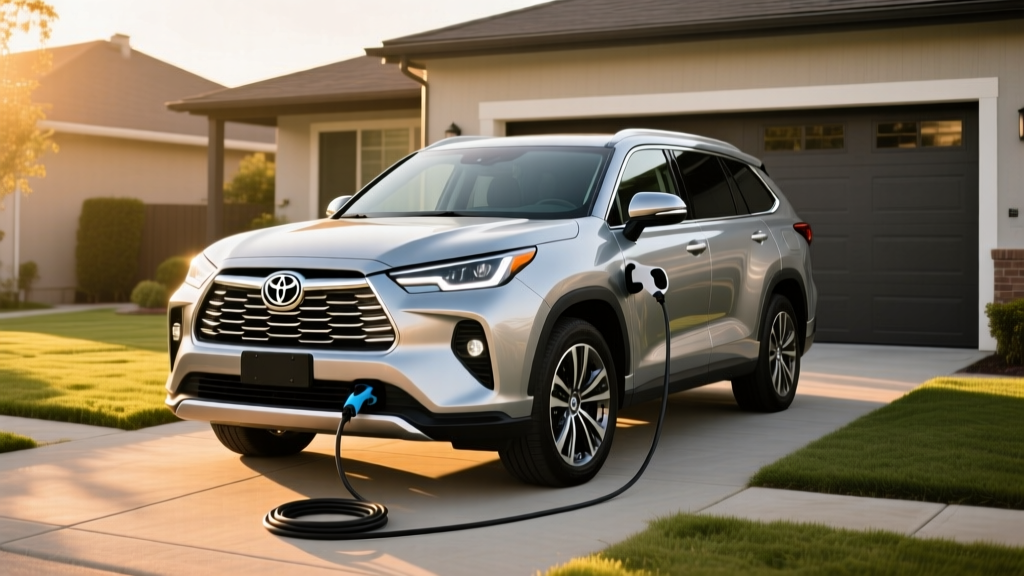
The 2021 Toyota Highlander Hybrid remains one of the most compelling three-row family haulers on the used market in 2026. It is a conventional hybrid electric vehicle (HEV) — not a plug-in hybrid (PHEV) — which means it never needs to be plugged in. The gasoline engine and regenerative braking system recharge its small battery automatically. If you want three-row seating, all-wheel-drive capability, and fuel economy that embarrasses many compact sedans, the Highlander Hybrid delivers with minimal lifestyle compromise.
On the used market in 2026, well-maintained examples typically trade between $26,000 and $38,000 depending on trim, mileage, and condition. With Toyota's hybrid warranty coverage still active on many 2021 models, it's a lower-risk proposition than most used vehicles in this segment.
EPA Fuel Economy and Real-World MPG
| Configuration | City | Highway | Combined |
|---|---|---|---|
| FWD (all trims) | 36 MPG | 35 MPG | 36 MPG |
| AWD (all trims) | 35 MPG | 35 MPG | 35 MPG |
| Gas-only Highlander AWD (baseline) | 20 MPG | 27 MPG | 23 MPG |
Source: EPA fueleconomy.gov
Real-World MPG vs. EPA Sticker
The 2021 Highlander Hybrid is one of those rare vehicles where real-world results frequently meet or exceed the EPA estimate — particularly in city driving. Toyota's hybrid system excels in stop-and-go conditions where the electric motor handles low-speed propulsion and regenerative braking recaptures energy constantly.
In mixed suburban and city driving, owners regularly report 35–38 MPG. On long highway trips at 70–75 mph, expect the number to dip to roughly 30–33 MPG. Hybrids lose their city advantage at sustained highway speeds because the gasoline engine does most of the work. In cold weather (below 30°F), expect a 3–5 MPG reduction as the engine runs more frequently to maintain cabin heat and battery temperature.
With a 17.1-gallon fuel tank, the real-world total range sits between 510 and 620 miles depending on driving conditions — enough for most families to visit just one gas station per week.
Powertrain: Engine, Motors, and Combined Output
| Specification | Detail |
|---|---|
| Engine | 2.5L 4-cylinder Atkinson-cycle |
| Engine Output | 186 HP / 175 lb-ft torque |
| Front Electric Motor | 134 kW (180 HP) / 199 lb-ft |
| Rear Electric Motor (AWD only) | 40 kW (54 HP) / 89 lb-ft |
| Combined Net System Output | 243 HP |
| Transmission | Electronically controlled CVT (eCVT) |
| 0–60 mph (est.) | ~7.8 seconds |
| Towing Capacity | 3,500 lbs |
The 2.5-liter four-cylinder may sound undersized for a three-row SUV, but Toyota's hybrid synergy drive system fills in the torque gaps with electric motor assist. The result is smooth, linear acceleration that feels more capable than the 243 HP figure suggests. The eCVT is a power-split device — not a belt-driven CVT — so it avoids the rubber-band droning associated with conventional CVTs.
The AWD system is worth noting: there is no mechanical driveshaft to the rear wheels. Instead, an independent rear electric motor engages when traction is needed, providing torque to the rear axle on demand. This electronic AWD system is effective in rain and light snow but is not designed for serious off-road use.
HEV vs. PHEV vs. EV: Where Does the Highlander Hybrid Fit?
| Factor | Highlander Hybrid (HEV) | Plug-in Hybrid (PHEV) | Battery EV (BEV) |
|---|---|---|---|
| Plug-in Required? | No | Yes (for EV range) | Yes |
| Electric-Only Range | None (EV assists at low speed) | 20–45 mi typical | 200–400+ mi |
| Total Range | ~510–620 mi | ~400–550 mi | 200–400+ mi |
| Fuel Cost (per mile) | ~$0.09–$0.12 | ~$0.04–$0.10 | ~$0.03–$0.06 |
| Home Charging Needed? | No | Recommended | Essential |
| Federal Tax Credit (§30D) | Not eligible | Up to $7,500 (if eligible) | Up to $7,500 (if eligible) |
The 2021 Highlander Hybrid exists as an HEV only — Toyota did not offer a Highlander PHEV (called the Highlander Prime in some markets) in the United States for the 2021 model year. If you want a three-row Toyota with plug-in capability, the closest option is the 2026 Toyota Grand Highlander Hybrid, though it also remains an HEV in the US market.
Choose the Highlander Hybrid (HEV) If:
- You lack access to home or workplace charging
- You want maximum range without range anxiety
- You frequently take long road trips where charging infrastructure is sparse
- You want the simplicity of a gas-station-only refueling routine with significantly better MPG
Choose a PHEV or BEV Instead If:
- You have reliable home Level 2 charging and a short commute (PHEV covers it on electricity alone)
- You want to minimize gasoline consumption and per-mile fuel cost
- You qualify for the federal §30D tax credit, which can offset the higher purchase price of a PHEV or BEV
- You prioritize zero tailpipe emissions during daily driving
Battery, Warranty, and Long-Term Reliability
Hybrid Battery Warranty — 2021 Highlander Hybrid
Coverage: 10 years / 150,000 miles (whichever comes first) from the date of first use.
What's covered: Hybrid battery pack, hybrid control module, and related hybrid system components.
Applies in: All 50 states (Toyota extended the 150,000-mile coverage nationwide starting with the 2020 model year).
The 2021 Highlander Hybrid uses a 1.6 kWh nickel-metal hydride (NiMH) traction battery. This is a small, purpose-built pack designed for frequent shallow charge/discharge cycles rather than deep cycling. NiMH chemistry has a proven track record in Toyota hybrids — the same basic technology has powered millions of Prius, Camry Hybrid, and Highlander Hybrid vehicles over two decades.
Battery Degradation and Replacement Cost
Toyota hybrid batteries are engineered to last the life of the vehicle under normal use. Real-world data from fleet operators and long-term owners shows that most Toyota NiMH hybrid packs retain functional capacity well past 150,000 miles. Complete failure before 200,000 miles is uncommon.
If replacement is needed outside warranty, a new OEM hybrid battery pack for the 2021 Highlander Hybrid costs approximately $3,000–$4,500 including labor at a Toyota dealership. Refurbished or reconditioned packs are available from third-party suppliers for $1,500–$2,500 installed. Individual module replacement (the pack contains multiple modules) can bring costs down further if only a single module has degraded.
Overall Reliability
Toyota's hybrid powertrain is widely regarded as one of the most reliable in the industry. The eCVT power-split device has fewer moving parts than a conventional automatic transmission — no clutch packs, no torque converter, no shift solenoids. The four-cylinder Atkinson-cycle engine operates under less thermal stress than a turbocharged engine. According to IIHS, the 2021 Highlander earned Top Safety Pick+ status when equipped with specific headlights, reflecting strong crash performance.
Common complaints among 2021 Highlander Hybrid owners are minor: some report wind noise at highway speeds, and the infotainment system feels dated compared to competitors. The hybrid system itself generates very few mechanical issues.
Pricing, Trims, and Tax Credit Eligibility
| Trim (2021) | Original MSRP (FWD) | Original MSRP (AWD) | Est. Used Price (2026) |
|---|---|---|---|
| LE | $38,410 | $39,810 | $26,000–$30,000 |
| XLE | $40,610 | $42,010 | $29,000–$33,000 |
| Limited | $45,010 | $46,410 | $32,000–$36,000 |
| Platinum | $48,010 | $49,410 | $34,000–$38,000 |
Federal Tax Credit Status
The 2021 Highlander Hybrid does not qualify for the federal §30D Clean Vehicle tax credit. That credit applies only to plug-in electric vehicles (BEVs and PHEVs) that meet battery capacity, critical mineral sourcing, MSRP cap, and buyer income requirements as defined by the IRS. Conventional hybrids like the Highlander Hybrid are excluded by statute.
Some states offer modest incentives for hybrid purchases, but these vary widely and change frequently. Check your state's energy office or department of environmental quality for current programs.
Five-Year Ownership Cost Snapshot
Here's how the 2021 Highlander Hybrid AWD stacks up against the gas-only Highlander AWD for a driver covering 15,000 miles per year at $3.50/gallon:
| Cost Factor (5 yr / 75,000 mi) | Highlander Hybrid AWD (35 MPG) | Highlander Gas AWD (23 MPG) |
|---|---|---|
| Total Fuel Cost | ~$7,500 | ~$11,413 |
| Fuel Savings (Hybrid) | ~$3,913 saved over 5 years | |
| Estimated Maintenance | ~$2,800 | ~$3,200 |
| Insurance (avg.) | ~$8,500 | ~$8,200 |
The hybrid typically saves $3,500–$4,500 in fuel over five years of average driving, which largely offsets any used-market price premium over the gas-only model. Maintenance costs tend to be slightly lower on the hybrid because regenerative braking reduces brake pad wear, and the Atkinson-cycle engine operates under less stress.
Pros and Cons
Pros
- 35–36 MPG combined EPA — exceptional for a three-row AWD SUV
- No plug-in charging required; operates like a normal gas car
- 10-year / 150,000-mile hybrid battery warranty
- Proven Toyota reliability with strong resale value
- Smooth, linear power delivery from hybrid synergy drive
- 3,500-lb towing capacity
- Standard Toyota Safety Sense 2.0 (adaptive cruise, lane keep, auto emergency braking)
Cons
- Third row is tight for adults — best for children
- Infotainment system feels dated; no wireless CarPlay on most trims
- No plug-in hybrid option for electric-only commuting
- Not eligible for federal §30D tax credit
- AWD system is electronic only — not for serious off-road use
- Cargo space behind third row is limited (16.1 cu ft)
- Engine noise is noticeable under hard acceleration
Frequently Asked Questions
How many MPG does the 2021 Highlander Hybrid actually get?
The EPA rates it at 36 MPG combined (FWD) or 35 MPG combined (AWD). In real-world mixed driving, most owners report 33–38 MPG. City driving tends to yield higher numbers than highway driving in this hybrid, the opposite of a conventional gas vehicle.
Does the 2021 Highlander Hybrid need to be plugged in?
No. It is a conventional hybrid (HEV), not a plug-in hybrid (PHEV). The battery recharges through regenerative braking and the gasoline engine. You fuel it exclusively at gas stations, just like a regular car.
Is the hybrid battery expensive to replace?
A new OEM replacement pack costs roughly $3,000–$4,500 installed at a dealer. Refurbished packs run $1,500–$2,500. However, Toyota's hybrid battery warranty covers 10 years/150,000 miles, and many 2021 models will still be under warranty through 2031. Actual battery failures before 200,000 miles are uncommon in Toyota's NiMH packs.
Can I get a tax credit for buying a used 2021 Highlander Hybrid?
No. The federal §30D Clean Vehicle credit applies only to plug-in vehicles (BEVs and PHEVs) that meet sourcing, MSRP, and income requirements. Conventional hybrids do not qualify. Check your state for any local hybrid incentives, which vary by jurisdiction.
How does the Highlander Hybrid compare to a three-row EV like the Kia EV9?
The Kia EV9 offers a fully electric three-row experience with up to 304 miles of EPA range, but starts above $54,000 new and requires home charging infrastructure. The Highlander Hybrid costs less on the used market, never needs plugging in, and offers 500+ miles of total range. If you have reliable home charging and mostly drive under 300 miles between stops, the EV9 eliminates gasoline entirely. If you road-trip frequently or lack charging access, the Highlander Hybrid is the more practical choice in 2026.
Is the 2021 Highlander Hybrid good in snow?
The electronic AWD system provides competent traction in light to moderate snow and ice. The rear electric motor engages automatically when front-wheel slip is detected. For severe winter conditions, dedicated winter tires make a significant improvement. The hybrid system does not reduce cold-weather capability, though MPG may drop 3–5 MPG in freezing temperatures.
What is the difference between the Highlander Hybrid and the Grand Highlander?
Toyota introduced the Grand Highlander for the 2024 model year as a larger, more spacious three-row alternative. The Grand Highlander offers a usable adult-sized third row and more cargo space. Both use similar hybrid powertrains, but the Grand Highlander is larger, heavier, and more expensive. If third-row comfort is a priority, the Grand Highlander is the better pick; if budget and compact footprint matter more, the standard Highlander Hybrid remains excellent.