Quick Verdict: The Toyota RAV4 Hybrid Limited at a Glance
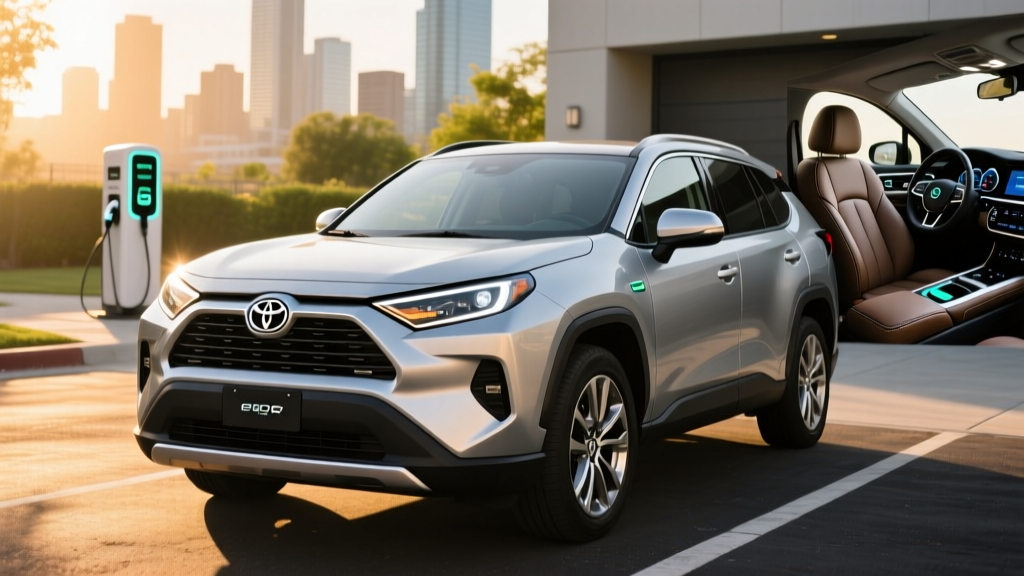
The 2026 Toyota RAV4 Hybrid Limited sits at the top of the conventional hybrid (HEV) lineup for Toyota's best-selling SUV. It delivers 39 MPG combined from a 219-horsepower all-wheel-drive powertrain, premium interior touches, and Toyota's proven hybrid reliability — all without ever needing to plug in. At a starting MSRP of approximately $42,575, it targets buyers who want electrified efficiency with zero lifestyle change: no charging cables, no range anxiety, no dependency on public infrastructure.
But the RAV4 Hybrid isn't the only electrified RAV4 Toyota sells. The RAV4 Prime (a plug-in hybrid, or PHEV) offers 42 miles of electric-only range, and Toyota's expanding BEV lineup presents yet another path. This guide breaks down exactly what the RAV4 Hybrid Limited delivers, how it compares to the PHEV and full-electric alternatives, and whether it's the right choice for your next vehicle.
HEV vs PHEV: Which RAV4 Is Which?
Toyota sells two electrified RAV4 variants, and confusing them is the most common buyer mistake. Here's the fundamental difference:
| Attribute | RAV4 Hybrid (HEV) | RAV4 Prime (PHEV) |
|---|---|---|
| Plug-in charging required? | No — self-charging via engine + regen | Yes — plugs into Level 1 or Level 2 |
| Electric-only range | None (EV mode is very short, low-speed) | 42 miles (EPA) |
| Battery capacity | ~1.6 kWh (small buffer) | 18.1 kWh usable |
| Combined horsepower | 219 hp | 302 hp |
| EPA combined MPG / MPGe | 39 MPG | 94 MPGe (electric) / 38 MPG (gas-only) |
| Federal tax credit (§30D) | Not eligible | May qualify — subject to sourcing rules |
| Starting MSRP (2026 est.) | ~$33,975 (LE) / $42,575 (Limited) | ~$44,990 (SE) / $48,990 (XSE) |
The RAV4 Hybrid (HEV) generates all its electricity internally. A 2.5-liter four-cylinder engine and regenerative braking charge a small nickel-metal hydride (NiMH) battery pack, which then assists the engine during acceleration and enables brief low-speed electric driving. You simply fill up with gas and drive. The RAV4 Prime (PHEV) has a much larger lithium-ion battery that you charge externally, enabling genuine electric-only commuting before the gasoline engine engages.
Fuel Economy: EPA Ratings and Real-World MPG
| Driving Cycle | EPA Rating | Real-World Expectation |
|---|---|---|
| City | 41 MPG | 38–44 MPG |
| Highway | 38 MPG | 34–38 MPG |
| Combined | 39 MPG | 36–41 MPG |
Source: EPA Fuel Economy Guide
Toyota's hybrid system excels in city driving, where frequent stops allow regenerative braking to recapture energy and the electric motor handles low-speed propulsion. Many owners report exceeding the EPA city estimate — 42 to 44 MPG is common in stop-and-go traffic with moderate climate-control use. Highway driving tells a slightly different story: at sustained 70-80 mph speeds, the gasoline engine carries most of the load, and real-world figures tend to settle around 35-37 MPG, particularly in cold weather or with roof cargo.
For the Limited trim specifically, the larger 19-inch alloy wheels and slightly heavier equipment load can shave 0.5-1 MPG versus the lighter LE or XLE trims. Expect an honest 37-40 MPG combined in mixed daily driving — a significant improvement over the gas-only RAV4's 30 MPG combined.
Powertrain and Performance Specs
| Specification | 2026 RAV4 Hybrid Limited |
|---|---|
| Engine | 2.5L Dynamic Force 4-cylinder |
| Engine output | 176 hp / 163 lb-ft torque |
| Electric motors | Front (88 kW) + Rear (40 kW) |
| Combined system horsepower | 219 hp |
| 0-60 mph | 7.4 seconds |
| Drivetrain | Electronic On-Demand AWD (eAWD) |
| Transmission | ECVT (planetary gearset) |
| Hybrid battery | NiMH, ~1.6 kWh (sealed) |
| Towing capacity | 1,750 lbs |
| Fuel tank | 14.5 gallons |
| Total driving range | ~565 miles |
The eAWD system uses a dedicated rear electric motor rather than a mechanical driveshaft, providing instant torque to the rear axle when slip is detected. This setup is lighter and more efficient than traditional AWD, and it contributes to the hybrid's strong city MPG by enabling brief electric-only movement from stops. The 7.4-second 0-60 time is adequate for highway merging and passing, though the RAV4 Prime's 302 hp drops that to 5.7 seconds if performance matters to you.
Pricing, Trims, and Tax Credit Eligibility
The 2026 RAV4 Hybrid is offered in LE, XLE, XLE Premium, SE, Woodland Edition, and Limited trims. Here's the pricing ladder:
- LE: ~$33,975 MSRP
- XLE: ~$35,475 MSRP
- XLE Premium: ~$37,275 MSRP
- SE: ~$38,275 MSRP
- Woodland Edition: ~$37,775 MSRP
- Limited: ~$42,575 MSRP
Federal tax credit: The conventional RAV4 Hybrid (HEV) does not qualify for the IRS §30D Clean Vehicle Credit. That credit is reserved for plug-in vehicles (BEVs and PHEVs) with qualifying battery sourcing. If federal incentives are a priority, the RAV4 Prime PHEV may be eligible depending on current-year battery component and critical mineral sourcing requirements — check the latest rules at IRS.gov or consult a tax professional.
State incentives: Some states offer rebates for conventional hybrids, though these are less common than EV or PHEV incentives. Check your state's energy or environmental agency for current programs.
The Limited trim commands a significant premium but adds SofTex-trimmed heated and ventilated front seats, a 10.5-inch Toyota Audio Multimedia touchscreen with navigation, a 12.3-inch digital instrument cluster, a panoramic moonroof, a JBL 11-speaker premium audio system, and a hands-free power liftgate. Whether those features justify the ~$8,600 gap over the LE depends on your priorities — the powertrain, MPG, and AWD system are identical across all trims.
What the Limited Trim Gets You
As the top-of-line hybrid trim, the Limited differentiates itself with premium comfort and technology:
- SofTex synthetic leather upholstery with heated and ventilated front seats
- Heated steering wheel
- 10.5-inch touchscreen with wireless Apple CarPlay and Android Auto
- 12.3-inch fully digital gauge cluster
- JBL premium audio (11 speakers)
- Panoramic glass moonroof
- Hands-free power liftgate
- 360-degree camera system with curb-view monitoring
- Front and rear parking assist with automatic braking
- Toyota Safety Sense 2.5+ suite (standard across all trims)
Toyota Safety Sense 2.5+ includes full-speed-range adaptive cruise control, lane tracing assist, pre-collision system with pedestrian detection, automatic high beams, and road sign assist. This is an SAE Level 2 driver-assistance system — it supports steering and speed management but requires the driver to remain fully engaged at all times. It is not autonomous driving.
Battery Warranty, Reliability, and Replacement Cost
Toyota Hybrid Battery Warranty
Coverage: 10 years / 150,000 miles (whichever comes first) for the hybrid battery and all hybrid-system components, including the inverter and electric motors.
Capacity retention guarantee: Toyota does not publish a specific capacity-retention percentage threshold for HEV batteries the way BEV manufacturers do, because the NiMH pack is small and managed within a narrow state-of-charge window to maximize longevity.
Transferability: The hybrid battery warranty is fully transferable to subsequent owners at no cost.
Toyota's hybrid reliability track record is among the strongest in the industry. The company has been refining its Hybrid Synergy Drive system since the 1997 Prius, and real-world data shows hybrid battery packs routinely lasting 150,000-200,000+ miles before significant degradation. The NiMH chemistry used in the RAV4 Hybrid is less energy-dense than lithium-ion but extremely tolerant of the shallow charge-discharge cycles that define HEV operation.
If replacement is eventually needed out of warranty, a new OEM hybrid battery for the RAV4 Hybrid typically costs between $2,500 and $4,000 including labor at a Toyota dealer. Independent hybrid specialists and refurbished battery options can reduce that to $1,500-$2,500. For context, this is a fraction of a BEV traction battery replacement and comparable to a major engine repair on a conventional vehicle.
Hybrid vs PHEV vs EV: Which RAV4 Fits You?
Decision Framework
Choose the RAV4 Hybrid (HEV) if:
- You lack access to home or workplace charging (apartment, street parking, no garage)
- You want maximum efficiency with zero behavior change
- Your budget is under $40,000 (lower trims)
- You drive a mix of city and highway and want consistent MPG
Choose the RAV4 Prime (PHEV) if:
- You can install a Level 2 home charger and have a commute under 40 miles
- You want electric-only daily driving with gas-engine flexibility for road trips
- You want the 302 hp performance advantage
- You may qualify for a federal or state PHEV tax credit
Choose a full BEV (like the Toyota bZ4X or a competitor) if:
- You have reliable home Level 2 charging
- Your daily driving is under 250 miles and you road-trip infrequently
- You want the lowest per-mile fuel cost and zero tailpipe emissions
- You qualify for the full $7,500 federal EV tax credit
The RAV4 Hybrid's core advantage is universality. It works for every living situation, every climate, and every trip length without infrastructure dependency. The trade-off is that you'll always burn gasoline — even short city trips use the engine for heat and battery management in cold weather. If you can charge at home and your commute is predictable, the PHEV or BEV path delivers lower operating costs and a quieter, smoother electric driving experience for daily miles.
Pros and Cons
Pros
- 39 MPG combined with no plug-in requirement
- Standard eAWD across all hybrid trims
- 10-year / 150,000-mile hybrid battery warranty
- Strong reliability history and high resale value
- Spacious cargo area (37.5 cu ft behind rear seats)
- Limited trim offers genuine luxury features at mainstream pricing
Cons
- No federal tax credit eligibility (HEV)
- Limited trim MSRP approaches PHEV territory
- Engine drone under hard acceleration (ECVT effect)
- Towing limited to 1,750 lbs
- Highway MPG drops in cold weather and at 80+ mph
- Infotainment learning curve for first-time Toyota users
Frequently Asked Questions
How many MPG does the Toyota RAV4 Hybrid Limited get?
The EPA rates the RAV4 Hybrid at 41 MPG city, 38 MPG highway, and 39 MPG combined. Real-world experience shows the Limited trim typically achieves 37-40 MPG combined, with city driving often exceeding the EPA estimate and sustained highway driving falling slightly below it.
Does the RAV4 Hybrid need to be plugged in?
No. The RAV4 Hybrid is a conventional hybrid (HEV). It charges its own battery through the gasoline engine and regenerative braking. You never plug it in — you simply refuel with gasoline as you would any other car.
Does the RAV4 Hybrid qualify for a federal tax credit?
No. The IRS §30D Clean Vehicle Credit applies only to plug-in electric vehicles (BEVs and PHEVs) that meet battery sourcing and MSRP/income requirements. The conventional RAV4 Hybrid does not qualify. The RAV4 Prime PHEV may qualify depending on current-year rules — verify at IRS.gov.
How long does the RAV4 Hybrid battery last, and what does replacement cost?
Toyota warranties the hybrid battery for 10 years or 150,000 miles. In practice, Toyota's NiMH hybrid batteries frequently last 150,000-200,000+ miles. If replacement is needed out of warranty, expect $2,500-$4,000 at a dealer or $1,500-$2,500 through an independent hybrid specialist using refurbished cells.
Is the RAV4 Hybrid Limited worth the premium over the XLE?
The ~$7,100 premium adds SofTex ventilated seats, the panoramic moonroof, JBL audio, 360-degree camera, and the larger 10.5-inch navigation screen. If these comfort and technology features matter to you, the Limited delivers a near-luxury experience. If you prioritize value, the XLE offers the same powertrain and MPG with fewer premium features at a significantly lower price.
How does the RAV4 Hybrid compare to the RAV4 Prime PHEV?
The Prime offers 42 miles of electric-only range, 302 combined horsepower, and potential tax credit eligibility — but starts around $44,990 and requires access to plug-in charging to realize its benefits. The Hybrid starts ~$11,000 lower (LE trim), needs no charging infrastructure, and delivers 39 MPG everywhere. For buyers without home charging, the HEV is the practical choice; for those with charging and short commutes, the Prime delivers lower daily energy costs.