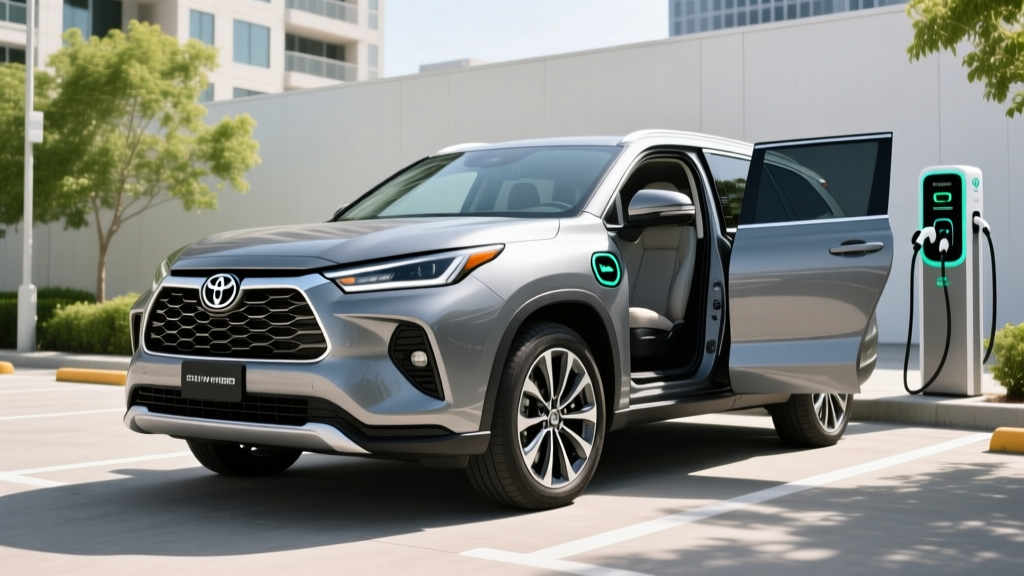
The 2020 Toyota Highlander Hybrid arrived as a complete redesign, moving to Toyota's TNGA-K platform and pairing a 2.5-liter four-cylinder engine with Toyota's fourth-generation hybrid system. For buyers in 2026 evaluating used three-row SUVs, it remains one of the most compelling hybrid options on the market — delivering class-leading fuel economy without requiring a plug. This guide breaks down exactly what you get, what it costs to own, and whether it's the right choice versus a plug-in hybrid or full EV.
2020 Highlander Hybrid: Powertrain and Performance Specs
Toyota replaced the previous generation's 3.5L V6 hybrid with a more efficient 2.5L inline-four paired with two electric motor-generators through an electronically controlled continuously variable transmission (eCVT). The result is a system that prioritizes efficiency while delivering adequate power for a 4,500-pound family hauler.
| Specification | 2020 Highlander Hybrid |
|---|---|
| Engine | 2.5L 4-cylinder Atkinson cycle |
| Combined System Horsepower | 243 hp |
| Engine Output | 186 hp @ 6,000 rpm / 175 lb-ft torque |
| Front Electric Motor | 134 kW (180 hp) |
| Rear Electric Motor (AWD models) | 40 kW (54 hp) |
| Transmission | eCVT |
| Drivetrain | FWD or electronic AWD (AWD-i) |
| 0–60 mph | ~7.8 seconds (AWD) |
| Towing Capacity | 3,500 lbs |
| Hybrid Battery | 1.6 kWh NiMH (sealed, self-charging) |
| Seating | 7 or 8 passengers |
| Cargo (behind 3rd row) | 16.1 cu ft |
The AWD-i system uses a dedicated rear electric motor rather than a mechanical driveshaft, which means rear-wheel engagement is instantaneous and purely electric. This is a hallmark of Toyota's modern hybrid AWD — lighter, more efficient, and with fewer moving parts than traditional systems.
EPA Fuel Economy: City, Highway, and Combined MPG
The headline number for the 2020 Highlander Hybrid is its EPA-rated efficiency, which was best-in-class at launch and remains highly competitive among three-row SUVs in 2026.
| Drivetrain | City MPG | Highway MPG | Combined MPG |
|---|---|---|---|
| FWD (LE trim) | 36 | 35 | 36 |
| AWD (LE trim) | 35 | 35 | 35 |
| AWD (XLE, Limited, Platinum) | 35 | 34 | 35 |
Source: EPA Fuel Economy Guide
Unlike pure EVs, which often fall short of EPA range in highway and cold-weather driving, conventional hybrids like the Highlander Hybrid frequently exceed their EPA city ratings. In mixed suburban and city driving, owners consistently report 36–38 MPG in warm weather. Highway-only trips at 75+ mph tend to drop to 30–32 MPG, as the engine runs more frequently at sustained high speeds. In winter conditions (below freezing), expect a 2–4 MPG reduction due to cabin heating demands and reduced regenerative braking efficiency. A realistic year-round combined average for most owners: 33–36 MPG.
For context, the non-hybrid 2020 Highlander with the 3.5L V6 and 8-speed automatic achieves 21 city / 29 highway / 24 combined (FWD). That's an 11–12 MPG combined advantage for the hybrid — translating to roughly 150–180 fewer gallons per year for a driver covering 15,000 miles annually.
HEV vs. PHEV vs. EV: Which Powertrain Fits You?
A common point of confusion is the difference between the Highlander Hybrid (a conventional HEV) and a plug-in hybrid (PHEV). The 2020 Highlander Hybrid is not a plug-in — it charges its small 1.6 kWh battery entirely through regenerative braking and engine power. You never plug it in.
| Factor | HEV (Highlander Hybrid) | PHEV (e.g., RAV4 Prime) | BEV (e.g., Tesla Model X) |
|---|---|---|---|
| Plug-in required? | No — self-charging | Yes — plug for EV range | Yes — sole energy source |
| Electric-only range | ~1 mile (low speed) | 35–42 miles typical | 250–350+ miles |
| Home charging needed? | No | Recommended (Level 2) | Essential |
| Fuel/energy cost per mile | ~$0.09–0.11 | ~$0.04 EV / ~$0.10 gas | ~$0.03–0.05 |
| Federal tax credit (§30D) | Not eligible | Up to $7,500 (if eligible) | Up to $7,500 (if eligible) |
| Best for | No home charging access, simplicity | Short commute + road trips | Home charging + lower running costs |
| Upfront cost premium | Low (~$1,500 over gas) | Moderate ($5,000–$8,000) | High ($10,000+) |
The Highlander Hybrid is ideal for buyers who want dramatically better fuel economy without changing their habits. No charging infrastructure, no range planning, no app management — just fill up at any gas station and go. If you have a garage, a short commute, and want to drive on electricity most days, a PHEV like the RAV4 Prime may save more. If you have reliable home charging and want the lowest per-mile cost, a full EV makes sense for shorter-trip families.
Reliability, Battery Lifespan, and Warranty Coverage
Toyota's hybrid system is among the most proven in the automotive industry, with over two decades of real-world data from the Prius, Camry Hybrid, and Highlander Hybrid lineages. The 2020 model benefits from the fourth-generation Hybrid Synergy Drive, which eliminated several failure-prone components from earlier designs.
- Hybrid Battery Warranty: 10 years / 150,000 miles (whichever comes first) — covers capacity loss and failure
- Hybrid System Components: 8 years / 100,000 miles (inverter, motor-generators, control module)
- Powertrain Warranty: 5 years / 60,000 miles (engine, transmission)
- Basic Bumper-to-Bumper: 3 years / 36,000 miles
Note: For the original owner, the hybrid battery warranty in states adopting California emissions standards (including CA, NY, MA, and others) extends to 10 years / 150,000 miles. In non-CARB states, the original warranty was 8 years / 100,000 miles, though Toyota later extended hybrid battery coverage to 10/150k for all 2020+ models.
Hybrid Battery Replacement Cost
Based on long-term data from earlier Highlander Hybrids and Prius models, Toyota's NiMH hybrid batteries routinely last 150,000–200,000+ miles before significant degradation. If replacement is needed out of warranty, a new OEM hybrid battery for the 2020 Highlander Hybrid costs approximately $3,000–$4,500 installed at a dealership. Refurbished or aftermarket units are available for $1,500–$2,500. Individual cell module replacement (if only one or two cells fail) can cost as little as $500–$800 at a hybrid-specialist shop.
For a 2020 model purchased in 2026, the hybrid battery warranty is still active for most examples — the 10-year/150k-mile clock started at the original in-service date. Always verify the remaining warranty with a Toyota dealer using the VIN before purchasing used.
Overall Reliability Track Record
The 2020 Highlander Hybrid earned strong reliability marks. Consumer Reports rated it above average for the model year, and the Highlander nameplate consistently ranks near the top of J.D. Power dependability studies for large SUVs. The eCVT transmission, which has no traditional gears or clutch packs, is notably more durable than conventional automatics and has very low failure rates across Toyota's hybrid fleet.
Pricing in 2026: Used Market Values and Tax Credit Status
The 2020 Highlander Hybrid was offered in four trims: LE, XLE, Limited, and Platinum. Original MSRPs ranged from approximately $38,200 (LE FWD) to $50,200 (Platinum AWD). In the 2026 used market, well-maintained examples with 50,000–80,000 miles typically sell for:
| Trim | Original MSRP (2020) | Typical Used Price (2026, 60k mi) |
|---|---|---|
| LE FWD | $38,200 | $27,000–$30,000 |
| LE AWD | $39,600 | $28,500–$31,500 |
| XLE AWD | $41,200 | $30,000–$33,500 |
| Limited AWD | $46,650 | $33,000–$37,000 |
| Platinum AWD | $50,200 | $36,000–$40,000 |
Federal Tax Credit Eligibility
The 2020 Highlander Hybrid is a conventional hybrid (HEV), not a plug-in. It does not qualify for the federal §30D Clean Vehicle Credit, which applies only to plug-in electric vehicles (PHEVs and BEVs) with batteries of at least 7 kWh. There is no federal tax credit for conventional hybrids.
Some states and localities offer modest rebates or HOV lane access for hybrids, but these vary by jurisdiction and change frequently. Check your state's energy office or department of environmental quality for current programs. The Alternative Fuels Data Center maintains a state incentive database.
5-Year Total Cost of Ownership Estimate
For a 2020 Highlander Hybrid AWD (XLE) driven 15,000 miles/year with gas at $3.50/gallon:
| Cost Category | 5-Year Total | Notes |
|---|---|---|
| Purchase Price (used) | $32,000 | XLE AWD, ~60k miles |
| Fuel | $7,500 | 35 MPG combined, $3.50/gal |
| Insurance | $8,500 | ~$1,700/year average |
| Maintenance | $2,800 | Oil, tires, brakes (regen extends pad life) |
| Depreciation | $9,000 | ~$23k residual value at year 5 |
| Total 5-Year Cost | $59,800 |
Compared to a gas-only 2020 Highlander V6 AWD (24 MPG combined), the hybrid saves approximately $3,200 in fuel costs over five years — enough to offset most of the original hybrid premium and then some.
Pros, Cons, and the Verdict
- Best-in-class 35–36 MPG combined for a three-row SUV
- No plug-in required — works for apartment dwellers and street parkers
- Proven Toyota hybrid reliability with 10-year battery warranty
- Electronic AWD with no mechanical complexity
- Strong resale value; slow depreciation curve
- Lower maintenance costs (regen braking saves pads; no alternator or starter motor)
- 243 hp feels modest for a 4,500-lb SUV when fully loaded
- eCVT drone under hard acceleration (common to Toyota hybrids)
- Third row is tight for adults; cargo space behind 3rd row is just 16.1 cu ft
- No federal tax credit (HEV, not PHEV)
- Infotainment system feels dated by 2026 standards (no wireless CarPlay on most trims)
- Higher initial used price vs. gas-only Highlander
Who Should Buy the 2020 Highlander Hybrid?
- You need three rows but want to minimize fuel costs
- You don't have access to home or workplace charging (rules out PHEV/BEV)
- You want a proven, low-risk ownership experience with strong reliability data
- You regularly drive in stop-and-go traffic where hybrid efficiency shines
- You plan to keep the vehicle 8+ years (warranty coverage and Toyota longevity)
- You have a garage and a short commute — a PHEV like the Chrysler Pacifica Hybrid (32 mi EV range) or a BEV like the Kia EV9 could eliminate most gas use
- You want the latest tech, ADAS features, and over-the-air updates
- You qualify for the full $7,500 §30D federal credit on a new PHEV/BEV, which can offset the higher purchase price
- You rarely need three rows and could downsize to a RAV4 Prime or similar
Frequently Asked Questions
How many MPG does the 2020 Highlander Hybrid get in real-world driving?
The EPA rates it at 35–36 MPG combined depending on trim and drivetrain. In real-world mixed driving, most owners see 33–38 MPG. City driving often exceeds the EPA rating thanks to regenerative braking, while sustained highway speeds above 70 mph and cold weather reduce efficiency to 30–33 MPG.
Does the 2020 Highlander Hybrid need to be plugged in?
No. It is a conventional self-charging hybrid (HEV). The 1.6 kWh battery charges through regenerative braking and the gasoline engine. You fuel it exactly like a regular gas car — just at the pump less often.
How long will the hybrid battery last, and what does replacement cost?
Toyota's NiMH hybrid batteries are engineered for the life of the vehicle. Real-world data from Prius and Highlander Hybrid fleets shows most batteries last 150,000–200,000+ miles. The battery is covered by a 10-year/150,000-mile warranty. Out-of-warranty replacement costs $3,000–$4,500 for a new OEM unit, or $1,500–$2,500 for refurbished options.
Does the 2020 Highlander Hybrid qualify for a federal tax credit?
No. The federal §30D Clean Vehicle Credit applies only to plug-in electric vehicles (PHEVs and BEVs) with battery capacity of at least 7 kWh. The Highlander Hybrid's 1.6 kWh battery does not meet this threshold. Check your state's incentive database at the Alternative Fuels Data Center for any local hybrid rebates.
Is the 2020 Highlander Hybrid reliable?
Yes. Toyota's hybrid system has over 25 years of production history with very low failure rates. The eCVT transmission is simpler and more durable than a conventional automatic. Consumer Reports and J.D. Power both rate the Highlander Hybrid above average for reliability. The most common maintenance items are standard (brakes, tires, oil changes) — the hybrid-specific components rarely require attention within the first 150,000 miles.
How does the Highlander Hybrid compare to the 2026 model?
The 2026 Highlander Hybrid uses the same basic powertrain architecture but has received incremental updates including Toyota Safety Sense 3.0, an updated infotainment system with standard wireless Apple CarPlay, and minor efficiency improvements. The 2020 model remains mechanically sound and represents strong value on the used market, typically $10,000–$15,000 less than a new 2026 equivalent.
Can the Highlander Hybrid tow, and does towing affect MPG?
Yes, it's rated to tow up to 3,500 pounds — adequate for a small boat, utility trailer, or light camper. When towing, expect fuel economy to drop to approximately 20–25 MPG depending on trailer weight and terrain. The hybrid system's electric torque fill helps with low-speed trailer maneuvering.
Bottom Line: A Smart Used Hybrid Buy in 2026
The 2020 Toyota Highlander Hybrid occupies a practical sweet spot: three-row utility, proven hybrid efficiency, and Toyota's industry-leading reliability — all without requiring any change to your fueling habits. At $27,000–$40,000 on the 2026 used market depending on trim and mileage, it delivers a total cost of ownership that undercuts most gas-only competitors while avoiding the charging infrastructure requirements of PHEVs and BEVs. If your priority is straightforward, dependable family transportation with minimal fuel expense, the 2020 Highlander Hybrid remains one of the strongest choices in its class.