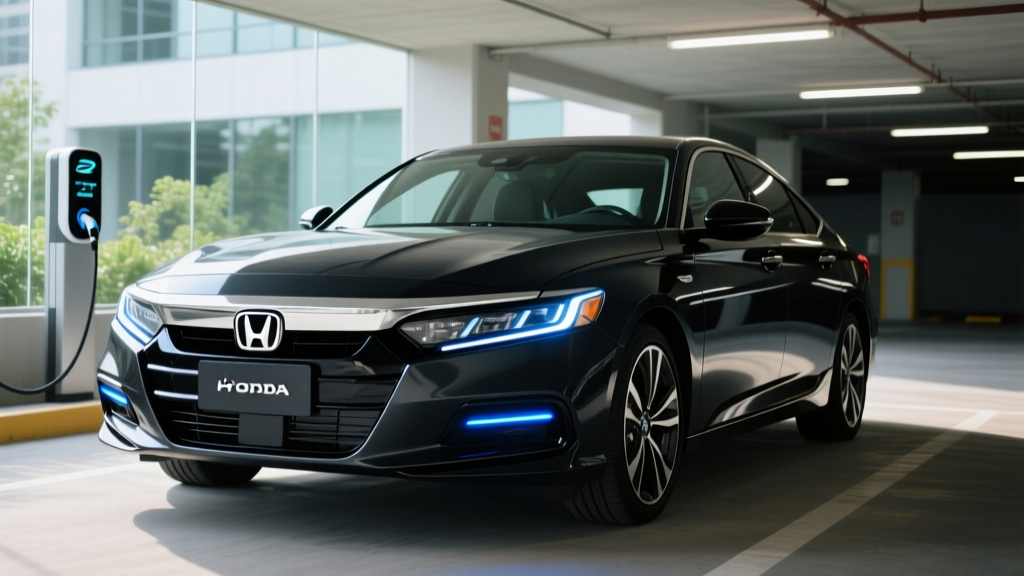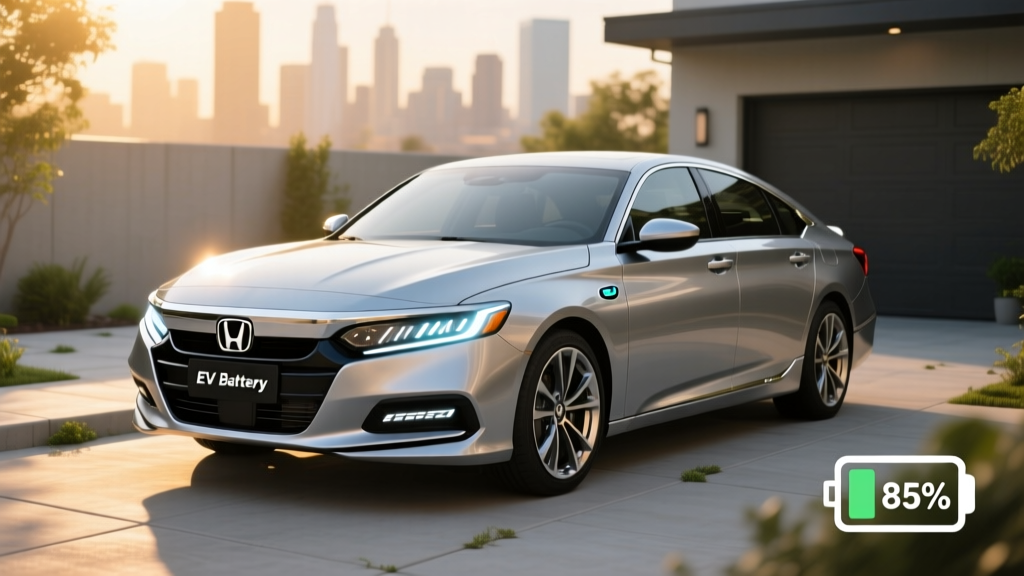
The 2019 Honda Accord Hybrid EX-L sits in a fascinating spot in 2026's used-car market. As a conventional hybrid (HEV) — not a plug-in — it requires zero lifestyle changes: no charging cables, no range planning, no home electrical upgrades. You just fill it with gas and drive. Yet its two-motor hybrid system delivers fuel economy that embarrasses many modern electrified vehicles. For buyers weighing a used hybrid against a new PHEV or full EV, the EX-L trim specifically adds leather, a premium audio system, and Honda's full suite of driver-assistance features at a price that's depreciated sharply since its MSRP.
This guide breaks down every number that matters: EPA and real-world MPG, the hybrid battery's longevity and warranty status in 2026, powertrain specs, ownership economics, and how the Accord Hybrid stacks up against plug-in alternatives.
HEV vs PHEV: Where the Accord Hybrid Fits
Before diving into specs, it's essential to classify what the 2019 Accord Hybrid is — and isn't. Honda never offered a plug-in variant of the 10th-generation Accord (2018–2022). The Accord Hybrid is a conventional hybrid electric vehicle (HEV), meaning its 1.3 kWh lithium-ion battery pack recharges exclusively through regenerative braking and the gasoline engine. There is no plug, no charging port, and no electric-only driving range beyond very low-speed, short-distance creeping (roughly 1 mile at under 20 mph under ideal conditions).
HEV vs PHEV vs BEV at a Glance
| Feature | HEV (Accord Hybrid) | PHEV (e.g., Toyota Prius Prime) | BEV (e.g., Tesla Model 3) |
|---|---|---|---|
| Plug-in Charging | No | Yes (Level 1/2) | Yes (Level 1/2/DC) |
| Battery Size | ~1.3 kWh | 13.6–18.1 kWh | 50–82 kWh |
| Electric-Only Range | ~1 mi (low speed) | 25–44 mi | 250–360 mi |
| Total Range | ~590 mi | ~580–640 mi | 250–360 mi |
| Fuel/Energy Cost per Mile | ~$0.09 | ~$0.04 (EV mode) / ~$0.09 (hybrid) | ~$0.04 |
| Federal Tax Credit (§30D) | Not eligible | Up to $7,500 (new only, subject to rules) | Up to $7,500 (new); up to $4,000 (used) |
The Accord Hybrid's value proposition is simplicity. If you can't charge at home (apartment living, street parking, no garage outlet), a PHEV's electric range goes mostly unused, and a BEV becomes impractical. The HEV format eliminates that problem entirely.
Fuel Economy: EPA Ratings and Real-World MPG
The 2019 Honda Accord Hybrid carries identical EPA ratings across all trims, including the EX-L:
| Driving Cycle | EPA Rating |
|---|---|
| City | 48 MPG |
| Highway | 47 MPG |
| Combined | 48 MPG |
Source: fueleconomy.gov
Real-World MPG: What Owners Actually See
The Accord Hybrid is one of the rare vehicles where real-world fuel economy frequently meets or exceeds EPA estimates in mixed driving. The two-motor i-MMD system operates primarily in series-hybrid mode at city speeds, where the gasoline engine acts as a generator while the electric motor drives the wheels. This is where hybrids shine.
Based on aggregated owner reports and long-term testing data:
- City / suburban driving: 47–52 MPG. Short trips with frequent stops maximize regenerative braking. Many owners report exceeding 50 MPG in warm-weather city commuting.
- Highway cruising (70–80 mph): 42–46 MPG. At sustained highway speeds, the engine engages directly via a lockup clutch, but aerodynamic drag and the 2.0L engine's efficiency curve reduce economy versus the EPA highway estimate.
- Cold weather (below 35°F): 38–43 MPG combined. The engine runs more frequently to generate cabin heat (no heat pump in this generation), and the battery's charge/discharge efficiency drops in low temperatures.
- Overall mixed average: 45–49 MPG for most owners, aligning closely with the 48 MPG combined EPA figure.
With a 12.8-gallon fuel tank, real-world total range typically falls between 550 and 620 miles — enough for most drivers to visit a gas station once every two weeks.
Powertrain Specs: The i-MMD Two-Motor System
The 2019 Accord Hybrid uses Honda's Intelligent Multi-Mode Drive (i-MMD) system, which is mechanically distinct from the planetary-gear setups used by Toyota and Ford. Instead of a traditional transmission, it uses two electric motors and a lockup clutch.
| Specification | Value |
|---|---|
| Engine | 2.0L Atkinson-cycle inline-4 |
| Engine Power | 143 hp @ 6,200 rpm / 129 lb-ft torque |
| Drive Motor | 181 hp / 232 lb-ft torque |
| Combined System Output | 212 hp |
| Battery | 1.3 kWh lithium-ion (under rear seat) |
| Transmission | Electric CVT (e-CVT, no belt/pulleys) |
| 0–60 mph | ~7.1 seconds |
| Drivetrain | Front-wheel drive |
| Curb Weight (EX-L) | ~3,314 lbs |
The i-MMD system has three operating modes:
- EV Drive: Battery powers the drive motor alone (very limited range, low speeds only).
- Hybrid Drive: Engine spins the generator motor, which feeds electricity to the drive motor. This is the primary mode for city and suburban driving.
- Engine Drive: At highway speeds, a lockup clutch mechanically connects the engine to the wheels for direct propulsion — the most efficient mode for sustained cruising.
The result is seamless, shift-free acceleration with strong low-end torque from the 232 lb-ft electric motor. The 0–60 time of ~7.1 seconds is brisk for a midsize sedan and noticeably quicker than the Toyota Camry Hybrid (~7.6 seconds).
EX-L Trim: What You Get
The EX-L sits one rung below the Touring in the 2019 Accord Hybrid lineup. Here's what distinguishes it:
- Leather-trimmed seats (heated front, driver 12-way power with memory)
- Heated rear outboard seats
- 10-speaker premium audio system
- Auto-dimming rearview mirror with HomeLink
- Leather-wrapped steering wheel
- Honda Sensing suite (adaptive cruise control, lane-keeping assist, collision mitigation braking, road departure mitigation)
- 8-inch touchscreen with Apple CarPlay and Android Auto
- Remote engine start
- Power moonroof
Compared to the EX trim, the EX-L adds roughly $2,500–$3,000 in features at original MSRP. Compared to the Touring, it forgoes navigation, wireless phone charging, heated rear seats (wait — EX-L does have heated rear seats; Touring adds ventilated front seats and low-speed braking control).
Original MSRP for the 2019 Accord Hybrid EX-L was $32,830 (plus $930 destination, totaling $33,760). In 2026's used market, well-maintained examples with 60,000–90,000 miles typically sell for $18,000–$23,000 depending on condition, mileage, and region.
Battery Longevity, Warranty, and Replacement Cost
The hybrid battery is the single biggest concern for used hybrid buyers. Here's the reality for a 2019 model in 2026:
Honda Hybrid Battery Warranty
Coverage: 8 years / 100,000 miles (10 years / 150,000 miles in CARB states including CA, NY, MA, and others)
Capacity threshold: Honda does not publish a specific degradation percentage trigger, but the warranty covers defects and abnormal capacity loss that affects vehicle operation.
2026 status for a 2019 model: The standard 8-year/100,000-mile warranty has expired for most vehicles (7 years old in 2026, but many exceed 100K miles). However, CARB-state vehicles retain coverage through 2029 or 150,000 miles.
Real-World Battery Degradation
Honda's 1.3 kWh lithium-ion pack is small and conservatively managed — the system never uses the full charge/discharge window, which dramatically extends cycle life. Based on long-term fleet data and owner reports for 10th-generation Accord Hybrids:
- At 100,000 miles: Most batteries show minimal measurable degradation. MPG remains within 1–2 MPG of original figures.
- At 150,000+ miles: Some owners report 2–4 MPG decline, typically attributable to normal cell aging. The pack still functions normally.
- Full battery failure before 200,000 miles is rare but not unheard of. Honda's i-MMD system is generally regarded as more reliable than early-generation hybrid systems from other manufacturers.
Battery Replacement Cost
If the hybrid battery does fail outside warranty:
- Dealer replacement (new OEM): $3,000–$4,500 including labor
- Independent shop (refurbished/remanufactured): $1,500–$2,500
- Individual cell module replacement: $500–$1,200 (if only specific modules have degraded — requires specialized diagnostics)
For context, the 12V auxiliary battery (a separate, standard car battery that powers electronics) typically needs replacement every 4–5 years at a cost of $150–$250. This is unrelated to the hybrid traction battery.
Tax Credits and Incentives
This is where conventional hybrids differ sharply from PHEVs and BEVs:
- Federal §30D New EV Credit: Not applicable. The Accord Hybrid is not a plug-in vehicle and has never qualified for the federal EV tax credit. (The original Honda Accord Plug-In Hybrid, sold only in 2014–2015, did qualify.)
- Used EV Credit (§25E): Not applicable. Only plug-in EVs and fuel cell vehicles with ≥4 kWh battery capacity qualify for the up-to-$4,000 used-EV credit.
- State incentives: A small number of states offer hybrid-specific rebates or HOV lane access, but most state incentive programs now focus exclusively on plug-in vehicles. Check your state's energy office for current programs.
The Accord Hybrid's economic case rests entirely on fuel savings and lower maintenance — not government incentives. At 48 MPG combined versus a comparable gas-only Accord (33 MPG combined), the hybrid saves roughly $550–$750 per year in fuel costs at 15,000 miles/year and $3.50/gallon gas (2026 average).
Source: IRS §30D Clean Vehicle Credit rules
Reliability and Safety Ratings
The 2019 Accord Hybrid earned strong marks from both major safety agencies:
- NHTSA: 5-Star Overall Safety Rating (nhtsa.gov)
- IIHS: Top Safety Pick+ (highest honor, with Good ratings in all crashworthiness tests and Superior front crash prevention)
On reliability, the 10th-generation Accord Hybrid has a strong track record. The i-MMD system has fewer wear components than a conventional automatic transmission (no torque converter, no gear shifts under load, no friction bands). Honda's hybrid components carry a solid reputation from two decades of Insight, Civic Hybrid, and Accord Hybrid production. Common maintenance items are straightforward: oil changes every 7,500–10,000 miles, brake pad life extended significantly by regenerative braking (many owners report 80,000+ miles on original pads).
Who Should Buy the 2019 Accord Hybrid EX-L in 2026?
Choose the Accord Hybrid EX-L If:
- You cannot charge at home (apartment, street parking, no garage)
- You drive 15,000+ miles/year and want maximum fuel savings without plugging in
- You want a proven, low-risk hybrid with strong safety ratings
- You prefer a midsize sedan with a large trunk (16.7 cu ft) and spacious rear seat
- You're buying used and want to avoid first-year depreciation on a new vehicle
Consider a PHEV or BEV Instead If:
- You have home Level 2 charging and a short commute (a PHEV covers most trips on electricity)
- You want to maximize federal/state tax credits (only plug-in vehicles qualify)
- You want to eliminate gasoline entirely (BEV)
- You prioritize the lowest per-mile energy cost (electricity at ~$0.04/mi vs hybrid gas at ~$0.09/mi)
- You drive mostly in stop-and-go traffic and want EV-mode silence and zero tailpipe emissions on daily commutes
Frequently Asked Questions
How many MPG does the 2019 Honda Accord Hybrid EX-L get?
The EPA rates it at 48 city / 47 highway / 48 combined MPG. Real-world mixed driving typically yields 45–49 MPG, with city-heavy routes often exceeding 50 MPG and cold-weather highway driving dropping to 38–43 MPG.
Does the 2019 Accord Hybrid need to be plugged in?
No. The Accord Hybrid is a conventional hybrid (HEV). Its small 1.3 kWh battery recharges through regenerative braking and the gasoline engine. There is no charging port and no plug-in capability.
How far can the Accord Hybrid drive on electric power alone?
Effectively about 1 mile at speeds under 20 mph in ideal conditions. This is not a meaningful electric-only range — the system uses brief EV mode for low-speed maneuvering and stop-and-go traffic, not for sustained driving. For real electric-only range (25–44 miles), you'd need a PHEV like the Toyota Prius Prime or Hyundai Tucson PHEV.
Is the 2019 Accord Hybrid reliable, and what does battery replacement cost?
Yes, the 10th-generation Accord Hybrid has strong reliability data. The i-MMD system is mechanically simpler than a traditional automatic transmission. Honda's hybrid battery warranty was 8 years/100,000 miles (10 years/150,000 in CARB states), and most batteries last well beyond 150,000 miles. If replacement is needed outside warranty, expect $3,000–$4,500 at a dealer or $1,500–$2,500 at an independent shop for a refurbished unit.
Does the 2019 Honda Accord Hybrid qualify for any tax credit?
No. As a conventional hybrid without a plug, it does not qualify for the federal §30D Clean Vehicle Credit or the §25E Used Clean Vehicle Credit. These credits are reserved for plug-in electric vehicles (PHEVs and BEVs) meeting specific battery capacity, sourcing, MSRP, and income requirements. The Accord Hybrid's cost advantage comes from fuel savings alone.
How does the Accord Hybrid compare to the Camry Hybrid?
The 2019 Toyota Camry Hybrid LE is rated at 52 MPG combined (vs. the Accord's 48), but the Accord Hybrid has more horsepower (212 vs. 208), a larger trunk (16.7 vs. 15.1 cu ft), and a more engaging driving feel. The Camry Hybrid's planetary-gear e-CVT is equally proven but delivers slightly less acceleration. Both are excellent choices; the Accord wins on power and space, the Camry on peak MPG.
What's the total cost of ownership over 5 years?
At 15,000 miles/year, $3.50/gallon gas, and a purchase price of ~$20,000 (2026 used market), estimated 5-year costs break down roughly as follows: fuel (~$5,600), insurance (~$6,500), maintenance (~$2,200), depreciation (~$6,000), totaling approximately $20,300 over 5 years, or about $4,060/year. A comparable gas-only Accord (33 MPG) would cost roughly $2,800 more in fuel alone over the same period.
The 2019 Honda Accord Hybrid EX-L remains one of the smartest used-car buys in 2026 for drivers who want exceptional fuel economy without the complexity, cost, or infrastructure requirements of plug-in vehicles. Its 48 MPG combined rating holds up in real-world driving, the hybrid battery is proven to last well past 150,000 miles, and the EX-L trim delivers genuine premium features without the Touring's price premium. If your lifestyle doesn't support home charging, this is the efficiency ceiling you can reach — and it's a high one.