Quick Verdict: The Original Plug-In Minivan Still Delivers
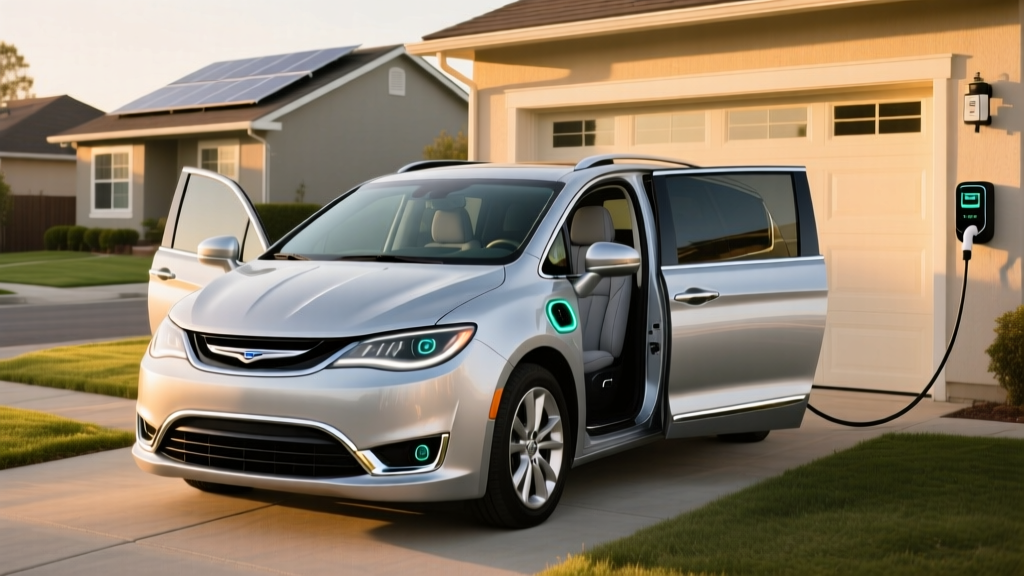
When Chrysler launched the 2018 Pacifica Hybrid, it was the first plug-in hybrid minivan on the market. Nearly a decade later, it remains a compelling used-family-hauler for buyers who want electric commuting without range anxiety on road trips. With an EPA-rated 33 miles of electric-only range and 32 MPG combined once the battery depletes, the 2018 Pacifica Hybrid bridges the gap between a full EV and a conventional minivan — if you can charge at home.
As a used purchase in 2026, expect to pay between $18,000 and $26,000 depending on mileage and condition. The federal §30D tax credit does not apply to this model year (the original credit expired for FCA/Stellantis vehicles, and current used-EV credit rules under §25E cap eligibility at $25,000 sale price with income limits). More on that below.
HEV vs PHEV: What the 2018 Pacifica Hybrid Actually Is
Before diving into specs, let's clarify a common confusion. The 2018 Pacifica Hybrid is a plug-in hybrid electric vehicle (PHEV), not a conventional hybrid (HEV). Here's the difference:
| Feature | Conventional Hybrid (HEV) | Plug-In Hybrid (PHEV) |
|---|---|---|
| Plug-in charging? | No — regenerates via braking/engine | Yes — plug in to charge battery |
| Electric-only range | 1-2 miles at low speed | 20-40+ miles (model dependent) |
| Battery size | 1-2 kWh | 8-20+ kWh |
| Gas engine | Yes — primary power source | Yes — kicks in after battery depletes |
| Example | Toyota Sienna Hybrid | 2018 Chrysler Pacifica Hybrid |
The Pacifica Hybrid has a 16 kWh lithium-ion battery pack (approximately 13 kWh usable) and a 3.6-liter V6 engine. You can drive up to 33 miles on electricity alone before the engine starts, then it operates as a conventional hybrid. If you never plug it in, you'll still get 32 MPG combined — but you're leaving the best part of the PHEV on the table.
Range, MPG, and Efficiency: EPA vs Real World
| Metric | EPA Rating | Real-World Expectation |
|---|---|---|
| Electric-only range | 33 miles | 25-30 mi (highway/cold); 33-36 mi (city/warm) |
| MPGe (electric mode) | 84 MPGe | Varies with driving style and climate |
| Combined MPG (gas) | 32 MPG | 28-30 MPG highway; 34-38 MPG city |
| City MPG (gas) | 29 MPG | Often exceeds EPA in stop-and-go regen |
| Highway MPG (gas) | 30 MPG | 28-30 MPG at 70+ mph |
| Total range (EV + gas) | 566 miles | ~500-540 mi real-world combined |
The EPA rates the 2018 Pacifica Hybrid at 33 miles electric-only and 32 MPG combined once the battery is depleted. In real-world driving, the electric range is highly sensitive to temperature and speed. In warm city driving under 45 mph, owners regularly report 34-36 miles. On a cold winter highway at 70 mph, expect the electric range to drop to 22-26 miles — lithium-ion batteries lose efficiency below 40°F, and cabin heating draws significant energy.
One advantage of PHEVs over full EVs: the hybrid system actually exceeds EPA city MPG in stop-and-go traffic because regenerative braking recaptures energy that would otherwise be lost. Highway driving is less efficient since there's less braking to regenerate and aerodynamic drag dominates.
Battery, Charging, and Powertrain Specs
| Specification | Detail |
|---|---|
| Battery capacity | 16 kWh total (~13 kWh usable) |
| Battery chemistry | Lithium-ion (NMC) |
| Electric-only range | 33 miles (EPA) |
| Combined horsepower | 260 hp (engine + 2 electric motors) |
| Engine | 3.6L V6 Atkinson-cycle, 236 lb-ft torque |
| Electric motors | Two motor-generators integrated in transaxle |
| Transmission | Single-speed electrically variable (eCVT) |
| Level 1 charging (120V) | ~14 hours (0-100%) |
| Level 2 charging (240V) | ~2 hours (0-100%) at 6.6 kW |
| DC fast charging | Not supported |
| Charge port | J1772 (Level 1/2 only) |
| 0-60 mph | ~7.1 seconds |
The Pacifica Hybrid's 6.6 kW onboard charger is adequate for overnight Level 2 charging — a full charge takes about two hours on a 240V home charger. This means even if you forget to plug in at night, a midday top-up during a work-from-home lunch break can recover meaningful range. However, the lack of DC fast charging is a notable limitation. On road trips, you cannot use public DC fast chargers to replenish the battery quickly — you'll simply drive in hybrid mode once the initial 33 miles of EV range are used.
Charging Cost Breakdown
At the national average residential electricity rate of ~$0.16/kWh (EIA 2025 data), a full charge costs roughly $2.08 (13 kWh usable × $0.16). That's approximately $0.06 per electric mile — compared to about $0.13/mile on gasoline at $3.50/gallon and 32 MPG. If your daily commute is under 30 miles and you charge nightly, you'll rarely visit a gas station except for road trips.
Reliability, Battery Longevity, and Warranty
For a 2018 model in 2026, the original 8-year/100,000-mile battery warranty is expiring or has expired for most vehicles — unless the car was sold new in a CARB-adopted state, where the 10-year/150,000-mile warranty may still have coverage through 2028.
The Pacifica Hybrid's battery pack has proven reasonably durable. Owner forums and reliability surveys indicate most 2018 models retain 85-92% of original battery capacity at 80,000-100,000 miles. However, some early-build 2017-2018 models experienced a recall related to potential battery cell fires — verify that recall R07 (NHTSA recall 20V-355) has been performed on any used example you're considering. Check the VIN at NHTSA.gov/recalls.
Battery Replacement Cost
If the battery fails outside warranty, a replacement 16 kWh pack for the Pacifica Hybrid costs approximately $7,000-$9,500 including labor at a dealership. Independent EV battery shops may offer refurbished packs for $4,500-$6,000. Given the vehicle's used value of $18,000-$26,000, an out-of-warranty battery failure is a significant financial consideration — factor this into your purchase decision and try to buy a CARB-state car with remaining warranty.
Pricing, Trims, and Tax Credit Eligibility
The 2018 Pacifica Hybrid was offered in three trims when new:
| Trim | Original MSRP (2018) | Used Price Range (2026) |
|---|---|---|
| Hybrid Premium | $42,590 | $18,000 - $21,000 |
| Hybrid Premium Plus | $45,590 | $20,000 - $24,000 |
| Hybrid Limited | $48,590 | $23,000 - $26,000 |
Federal Tax Credit Status
The 2018 Pacifica Hybrid does not qualify for the current federal §30D new-vehicle tax credit (it's a used purchase). Under the §25E used-EV credit, you could potentially receive up to $4,000 (30% of sale price, capped at $4,000) if all of the following are met:
- Sale price is $25,000 or less
- Buyer's modified AGI is ≤ $75,000 (single) / $112,500 (head of household) / $150,000 (joint)
- Vehicle is purchased from a licensed dealer who reports the sale to the IRS
- Vehicle is at least 2 model years old (2018 qualifies in 2026)
- Buyer has not claimed a used-EV credit in the prior 3 years
At typical used prices, a Pacifica Hybrid Premium or Premium Plus selling under $25,000 may qualify. Verify current rules at IRS.gov and consult a tax professional before relying on this credit. State incentives vary — check your local DMV or energy office for additional rebates.
Who Should Buy the 2018 Pacifica Hybrid?
- You have home Level 2 charging and a commute under 30 miles round-trip
- You need minivan space (7 passengers, Stow 'n Go seating) but want to minimize fuel costs
- You take road trips where EV charging infrastructure is sparse
- You want to reduce emissions without committing to a full EV
Consider a full EV (e.g., Tesla Model Y, Kia EV9) if:
- Your daily driving exceeds 33 miles and you want zero gas use
- You want DC fast charging for road trips
- You prefer lower maintenance (no oil changes, no engine)
Consider a conventional hybrid (e.g., Toyota Sienna Hybrid) if:
- You cannot charge at home (apartment, no garage outlet)
- You want simpler ownership with no plug-in routine
- You want proven long-term reliability with Toyota's hybrid track record
The Pacifica Hybrid's biggest advantage over the Toyota Sienna Hybrid (which is a conventional HEV, not a PHEV) is the 33-mile electric-only range. If you can charge nightly, most daily driving uses zero gasoline. The Sienna Hybrid, however, doesn't need to be plugged in and delivers a consistent 36 MPG combined regardless of charging access — a better fit for apartment dwellers or those without a dedicated parking spot near an outlet.
Pros, Cons, and Ownership Costs
- 33 miles electric-only — covers most commutes
- True minivan utility: 7 seats, Stow 'n Go cargo
- 32 MPG hybrid mode is solid for a 4,700-lb vehicle
- Smooth, quiet electric driving around town
- 6.6 kW Level 2 charging is quick for a PHEV
- Available AWD was not offered, but FWD is efficient
- No DC fast charging — road trips are gas-only
- Battery recall (fire risk) on early builds — must verify
- Battery warranty expiring on 2018 models
- Replacement battery cost: $7,000-$9,500
- Electric range drops significantly in cold weather
- Stow 'n Go second-row seats don't fold flat (battery underneath)
- Fuel door and charge port on opposite sides (confusing at first)
5-Year Estimated Cost of Ownership
| Category | Estimated Cost (2026-2031) |
|---|---|
| Purchase price (Premium Plus, avg) | $22,000 |
| Electricity (12,000 mi/yr, 60% on EV) | $2,300 |
| Gasoline (12,000 mi/yr, 40% on gas) | $3,200 |
| Insurance (5 years) | $8,500 |
| Maintenance (oil, brakes, tires) | $3,500 |
| Estimated depreciation | $8,000 |
| Total 5-year cost | ~$47,500 |
For comparison, a gas-only 2018 Pacifica would cost approximately $5,500 more in fuel over the same period at $3.50/gallon and 22 MPG combined.
Frequently Asked Questions
How many MPG does the 2018 Pacifica Hybrid get?
The EPA rates it at 32 MPG combined (29 city / 30 highway) once the battery is depleted. In real-world driving, city MPG often exceeds the EPA rating thanks to regenerative braking — owners report 34-38 MPG in stop-and-go traffic. Highway driving at 70+ mph typically yields 28-30 MPG. Combined with the 33-mile electric range, overall fuel consumption depends heavily on how often you charge.
How far can the 2018 Pacifica Hybrid go on electric only?
The EPA rates the electric-only range at 33 miles. Real-world results vary from about 22 miles in cold highway driving to 36 miles in warm city conditions. The 16 kWh battery pack (13 kWh usable) provides enough range for most daily commutes if you charge at home overnight. Total combined range (electric + full 14.5-gallon gas tank) is approximately 520-566 miles.
Is the 2018 Pacifica Hybrid reliable?
Overall reliability is average for the segment. The hybrid powertrain itself has been trouble-free for most owners, but there are two concerns: (1) a battery-related fire recall (NHTSA 20V-355) that required a software update and, in some cases, battery replacement — verify this was performed; (2) the 8-year battery warranty is expiring on 2018 models, meaning out-of-pocket risk increases. The conventional V6 and transmission are proven components shared with other Stellantis vehicles.
What does a replacement battery cost?
A new OEM 16 kWh battery pack costs approximately $7,000-$9,500 installed at a Chrysler dealership. Refurbished or aftermarket packs may be available for $4,500-$6,000 through independent hybrid battery specialists. Given the vehicle's current used value, a battery replacement represents 25-50% of the car's worth — prioritize examples with remaining warranty coverage.
Does the 2018 Pacifica Hybrid qualify for any tax credit?
Not the $7,500 new-vehicle §30D credit. However, under the §25E used clean vehicle credit, you may qualify for up to $4,000 if the sale price is $25,000 or less, your income falls below IRS thresholds ($75K single / $150K joint), and you purchase through a licensed dealer. Rules change frequently — check IRS.gov and consult a tax professional.
Can I charge the Pacifica Hybrid at a public fast charger?
No. The 2018 Pacifica Hybrid only supports Level 1 (120V) and Level 2 (240V) AC charging via a J1772 connector. It has no DC fast-charge capability. At public locations, you can use Level 2 destination chargers (hotels, shopping centers) but not DC fast chargers like Electrify America or Tesla Superchargers. A full Level 2 charge takes about 2 hours.
Hybrid vs PHEV vs EV — which is right for me?
PHEV (like this Pacifica): Best if you can charge at home, commute under 33 miles, but need gas flexibility for road trips. HEV (like Toyota Sienna Hybrid): Best if you can't plug in at home and want consistent MPG without behavioral changes. Full EV: Best if you want zero gas, lower maintenance, and have reliable home + public charging access for your driving patterns.