Quick Verdict: A Luxury PHEV Pioneer Showing Its Age
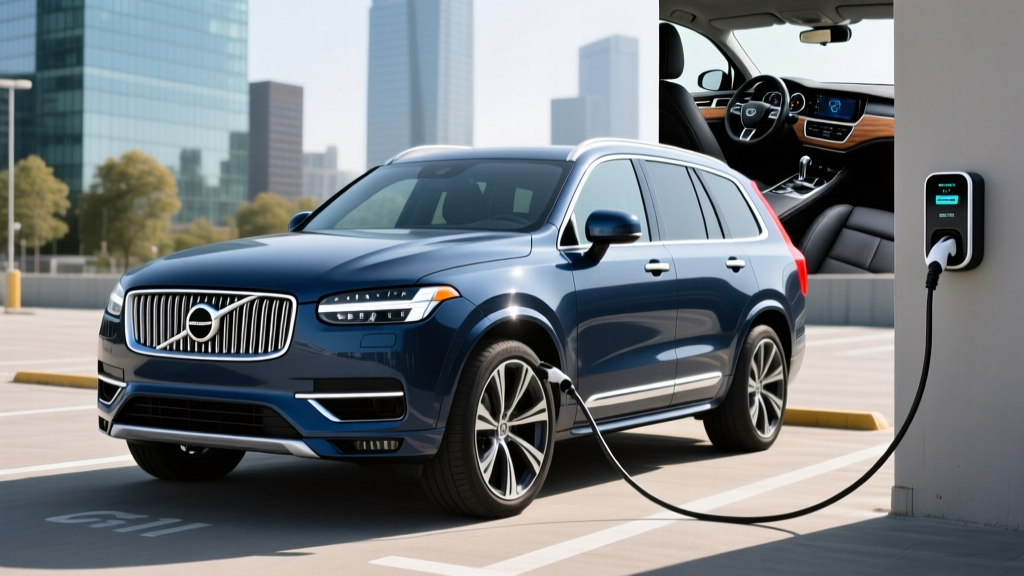
The 2017 Volvo XC90 T8 Twin Engine was one of the first luxury three-row plug-in hybrids to market, pairing a supercharged and turbocharged 2.0-liter four-cylinder with an electric motor for a combined 400 horsepower. As a used PHEV in 2026, it offers genuine electric-only commuting capability and strong performance, but its small 10.4 kWh battery (delivering just 14 miles of EPA-rated electric range) and aging tech mean it faces stiff competition from newer, longer-range plug-in hybrids and full EVs.
If you're evaluating a used 2017 XC90 Hybrid today, this guide breaks down the real-world fuel economy, battery health concerns, charging practicality, and ownership economics you need to make an informed decision.
HEV vs PHEV: Where the XC90 T8 Fits
Conventional Hybrid (HEV): A standard hybrid like the Toyota Highlander Hybrid uses a small battery charged entirely by regenerative braking and the gas engine. You never plug it in. The XC90 T8 is not a conventional hybrid.
Plug-in Hybrid (PHEV): The 2017 Volvo XC90 T8 is a PHEV. It has a larger battery pack (10.4 kWh usable) that you charge by plugging into a wall outlet or Level 2 charger. This gives it a limited electric-only driving range before the gas engine kicks in, operating as a hybrid afterward.
Full EV (BEV): A battery electric vehicle like the Tesla Model X has no gas engine at all. It runs entirely on its large battery pack (typically 75–100+ kWh).
The XC90 T8 sits in the middle: electric for short commutes, hybrid for longer trips. The key trade-off is that its 14-mile electric range covers only the shortest errands — most modern PHEVs now offer 30–45 miles of electric range.
Powertrain Specs and Performance
| Specification | 2017 Volvo XC90 T8 |
|---|---|
| Powertrain Type | Plug-in Hybrid (PHEV) |
| Gas Engine | 2.0L I-4 Supercharged + Turbocharged |
| Engine Output | 316 HP / 295 lb-ft torque |
| Electric Motor | 87 HP / 177 lb-ft (rear axle) |
| Combined System Output | 400 HP / 472 lb-ft torque |
| Battery Capacity | 10.4 kWh usable (NMC chemistry) |
| Transmission | 8-speed automatic |
| Drivetrain | AWD (engine drives front, motor drives rear) |
| 0–60 mph | 5.3 seconds |
| Towing Capacity | 5,000 lbs |
The T8's powertrain is clever: the gas engine powers the front wheels while the electric motor drives the rear axle, giving it all-wheel drive without a mechanical connection between front and rear. In Pure mode, the XC90 runs on electric power alone at speeds up to roughly 75 mph. In Power mode, both systems combine for the full 400 HP, making this one of the quickest three-row SUVs of its era.
Fuel Economy and Electric Range: EPA vs Real World
| Metric | EPA Rating | Real-World Expectation |
|---|---|---|
| Electric-Only Range | 14 miles | 10–13 miles (highway/cold weather) |
| MPGe (electric + gas) | 62 MPGe | Depends heavily on charging frequency |
| Gas-Only City MPG | 26 MPG | 24–27 MPG |
| Gas-Only Highway MPG | 28 MPG | 25–28 MPG |
| Gas-Only Combined MPG | 27 MPG | 25–27 MPG |
| Total Combined Range | ~330 miles | ~300–320 miles |
The EPA rates the 2017 XC90 T8 at 14 miles of electric-only range and 27 MPG combined once the battery is depleted. The MPGe figure of 62 is only meaningful if you charge regularly and drive within that short electric window.
Real-world reality: Expect 10–13 miles of electric range in practice, especially in cold weather (below 40°F) or at sustained highway speeds where battery energy depletes faster. Once the battery is exhausted, the 27 MPG combined figure is respectable for a 5,000-pound luxury SUV — comparable to a four-cylinder midsize sedan of that era.
Charging discipline matters enormously. If you plug in nightly and commute under 14 miles round-trip, you may use almost no gasoline for daily driving. If you never plug in, you're carrying 400+ pounds of dead battery weight and getting 27 MPG — worse than some conventional hybrids.
Charging: What to Expect at Home and On the Go
| Charging Level | Power | Time (0–100%) | Notes |
|---|---|---|---|
| Level 1 (120V household) | ~1.4 kW | ~7–8 hours | |
| Level 2 (240V) | ~3.5 kW (max) | ~2.5–3 hours | |
| DC Fast Charging | Not supported | N/A |
The 2017 XC90 T8 uses a standard J1772 connector for AC charging. It does not support DC fast charging — a limitation shared with most PHEVs of this era. The onboard charger maxes out at roughly 3.5 kW, meaning even a powerful Level 2 home charger won't fill the battery faster than about 2.5 hours.
For context, a standard 120V household outlet (Level 1) adds roughly 4–5 miles of range per hour of charging. A Level 2 home charger fills the 10.4 kWh battery fully overnight or during a workday. Given the small battery, Level 1 charging is actually viable for daily top-ups if your commute is short.
kW vs kWh reminder: The battery stores 10.4 kWh of energy. The charger delivers power measured in kW. At 3.5 kW, it takes roughly 3 hours to deliver 10.4 kWh (10.4 ÷ 3.5 ≈ 3 hours).
Used Pricing, Tax Credits, and Ownership Costs
The 2017 Volvo XC90 T8 originally started at approximately $68,100 (MSRP) for the Inscription trim, climbing past $80,000 for the Excellence package. In the 2026 used market, expect to pay:
- $22,000–$28,000 for a T8 with 80,000–120,000 miles
- $28,000–$35,000 for a well-maintained example under 70,000 miles
- $35,000+ for low-mileage Excellence or Inscription models
Federal Tax Credit Status (Used PHEV — IRS §25E):
- The original $5,002 federal tax credit for new XC90 T8 purchases expired long ago.
- As a used vehicle in 2026, the XC90 T8 may qualify for the IRS §25E used clean vehicle credit of up to $4,000 (30% of sale price, capped at $4,000).
- Requirements: sale price must be $25,000 or less; buyer income must be under $75,000 (single) or $150,000 (joint); vehicle must be at least 2 model years old; purchased from a licensed dealer.
- The XC90 T8's used price often exceeds the $25,000 cap, limiting eligibility. Verify with a tax professional.
Insurance: Expect $1,800–$2,400 annually for a used XC90 T8, higher than non-hybrid competitors due to repair costs for the complex powertrain.
Battery Health, Warranty, and Reliability
Original Hybrid Battery Warranty: 8 years / 100,000 miles (whichever comes first), covering defects and capacity loss below a defined threshold (typically ~70% of original capacity).
For a 2017 model in 2026: Most examples are at or past the 8-year mark. If the vehicle has under 100,000 miles and the battery was manufactured in 2017, some residual warranty coverage may remain — verify with a Volvo dealer using the VIN.
Battery Replacement Cost: A high-voltage battery replacement for the XC90 T8 runs approximately $8,000–$14,000 at a Volvo dealer, including parts and labor. Third-party hybrid battery rebuilders may offer repairs for $3,000–$6,000 by replacing individual failed modules.
The 2.0-liter supercharged/turbocharged engine in the T8 is more complex than a naturally aspirated V6, with both forced-induction systems plus the electric motor and power electronics adding failure points. Common issues reported by owners include:
- Electric motor and inverter cooling system leaks
- Supercharger clutch wear at higher mileages
- 12V auxiliary battery drain from the vehicle's always-on electronics
- Infotainment system (Sensus) sluggishness and occasional freezes
The NMC (nickel manganese cobalt) battery chemistry in the T8 has proven reasonably durable. Real-world degradation data from owner forums and fleet studies suggests these batteries retain approximately 80–88% of original capacity after 8 years, provided they weren't routinely charged to 100% and left sitting in extreme heat. The small battery size means daily full charges are common, which accelerates degradation slightly compared to larger PHEV packs.
For a thorough pre-purchase assessment, request a State of Health (SoH) report from a Volvo dealer — this diagnostic reads the battery's actual remaining capacity versus its original 10.4 kWh specification.
Pros and Cons in 2026
Pros
- 400 HP makes it genuinely quick (5.3 sec 0–60)
- Three-row seating in a PHEV — rare in the used market
- Strong build quality and premium interior materials
- Excellent safety ratings (IIHS Top Safety Pick+)
- 5,000-lb towing capacity with hybrid efficiency
- Electric-only mode for silent neighborhood driving
Cons
- Only 14 miles EPA electric range (10–13 real-world)
- No DC fast charging capability
- Small 10.4 kWh battery means frequent charging needed
- Complex powertrain = higher repair risk out of warranty
- Battery replacement cost of $8,000–$14,000
- Sensus infotainment feels dated vs. 2026 systems
- Limited used-EV tax credit eligibility due to price cap
Who Should Buy This vs a Full EV or Gas SUV
Choose the 2017 XC90 T8 PHEV if:
- Your daily commute is under 15 miles round-trip and you can charge at home every night
- You need three rows but want some electric driving for local errands
- You take regular road trips where a full EV's charging infrastructure would be inconvenient
- You value the luxury interior and safety credentials at a depreciated used price
Choose a full EV (e.g., used Tesla Model X, Rivian R1S) if:
- You have reliable home charging and want zero gasoline expenses
- Your daily driving exceeds 14 miles and you're tired of gas station stops
- You want lower maintenance costs (no engine oil, spark plugs, or supercharger)
Choose a conventional hybrid (e.g., Toyota Highlander Hybrid) if:
- You cannot charge at home or work
- You want simpler mechanics with lower long-term repair risk
- You prefer consistent 35+ MPG without managing plug-in routines
Choose a gas SUV if:
- Your budget is under $20,000 and you want maximum simplicity
- You drive very low annual miles where fuel savings don't offset complexity
Frequently Asked Questions
How many MPG does the 2017 Volvo XC90 Hybrid get?
The EPA rates it at 27 MPG combined (26 city / 28 highway) once the battery is depleted. With regular charging and short trips, effective fuel consumption can be far lower — some owners report using only a few gallons per month for commuting.
How far can the 2017 XC90 T8 go on electric only?
The EPA rates it at 14 miles of electric-only range. In real-world driving, expect 10–13 miles depending on temperature, speed, and terrain. Highway driving at 70+ mph and cold weather below 40°F reduce this further.
Is the 2017 XC90 Hybrid reliable, and what does a battery replacement cost?
Reliability is mixed. The powertrain is complex with both forced induction and hybrid components. The high-voltage battery replacement costs $8,000–$14,000 at a dealer, though third-party module repairs can reduce this to $3,000–$6,000. Pre-purchase battery health checks are strongly recommended.
Does the 2017 XC90 T8 qualify for any tax credit in 2026?
The original new-vehicle credit is gone. As a used PHEV, it may qualify for the IRS §25E used clean vehicle credit of up to $4,000, but only if the sale price is $25,000 or less and buyer income falls under the cap. Many XC90 T8 examples on the used market exceed this price threshold. Consult a tax professional and review IRS guidelines.
Can the 2017 XC90 T8 charge at DC fast chargers?
No. The 2017 XC90 T8 supports only AC charging via a J1772 connector at up to 3.5 kW (Level 2). A full charge takes approximately 2.5–3 hours on Level 2 or 7–8 hours on a standard 120V outlet.
Should I buy a used XC90 T8 or a newer PHEV?
Newer PHEVs like the 2024+ Volvo XC90 T8 (now called Recharge) offer a larger 18.8 kWh battery and 35+ miles of electric range. If your budget allows $45,000+, a newer model is significantly more practical. The 2017 model makes sense only if you need a three-row PHEV under $30,000 and accept the range and reliability trade-offs.