Quick Verdict: The 2016 Prius Remains a Hybrid Benchmark
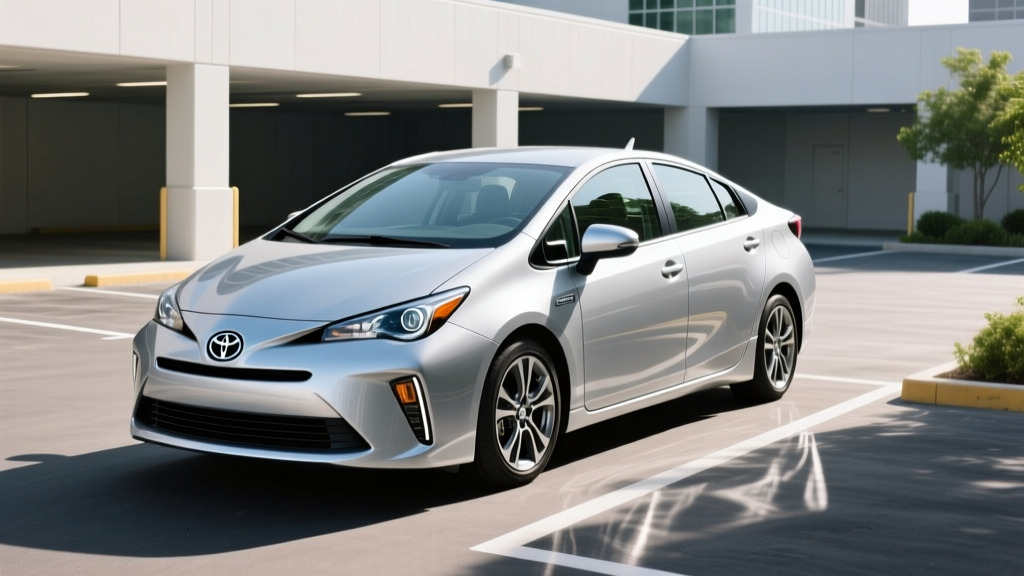
The 2016 Toyota Prius launched the fourth generation of Toyota's hybrid icon on the TNGA (Toyota New Global Architecture) platform, bringing sharper styling, a lower center of gravity, and a meaningful efficiency bump over its predecessor. Nearly a decade later, the 2016 hybrid Toyota Prius remains one of the most compelling used hybrid purchases available — combining EPA-estimated 52–56 MPG combined with Toyota's proven hybrid synergy drive reliability and low total cost of ownership.
This is a conventional hybrid electric vehicle (HEV), not a plug-in. It charges its battery entirely through regenerative braking and the gasoline engine. No plug, no charging station visits, no range anxiety — just fill up with regular unleaded and drive.
HEV vs PHEV: Understanding the 2016 Prius Lineup
The 2016 model year offered the Prius exclusively as a conventional hybrid in the US market. Toyota did not sell a Prius Plug-in Hybrid for the 2016 model year — the outgoing Prius Plug-in ended after 2015, and the successor Prius Prime (PHEV) debuted as a 2017 model. If you're shopping for a 2016 Prius, every example is a self-charging HEV.
HEV vs PHEV at a Glance
| Feature | 2016 Prius (HEV) | 2017+ Prius Prime (PHEV) |
|---|---|---|
| Plug-in charging | No — self-charging | Yes — Level 1/Level 2 |
| Electric-only range | ~1 mile at low speed | 25 miles (2017 EPA) |
| Battery capacity | 0.75 kWh (NiMH) / 1.31 kWh (Li-ion, Eco) | 8.8 kWh (Li-ion) |
| Federal tax credit (new) | None | $4,502 (expired) |
| EPA combined MPG | 52–56 MPG | 54 MPG (hybrid mode) / 133 MPGe |
Fuel Economy: EPA Ratings and Real-World MPG
The 2016 Prius comes in two efficiency tiers depending on trim. The Eco trim (Two Eco) uses lighter lithium-ion battery cells and low-rolling-resistance tires to squeeze out extra efficiency.
| Trim | City | Highway | Combined | Fuel Tank | Total Range |
|---|---|---|---|---|---|
| Two / Three / Four / Four Touring | 54 MPG | 50 MPG | 52 MPG | 11.4 gal | ~593 miles |
| Two Eco | 58 MPG | 53 MPG | 56 MPG | 11.4 gal | ~638 miles |
Source: EPA / fueleconomy.gov
Real-World MPG: Hybrids Often Beat the Sticker in the City
Unlike gasoline cars, hybrids thrive in stop-and-go traffic where regenerative braking recaptures kinetic energy and the electric motor handles low-speed driving. Owners on fueleconomy.gov's My MPG tracker and Fuelly report real-world averages between 48 and 58 MPG combined, with many city-heavy drivers exceeding the EPA city estimate of 54–58 MPG.
Highway driving at sustained 70–80 MPH speeds yields lower results — typically 44–48 MPG — because the gasoline engine carries the full load without regenerative braking assistance. Cold weather reduces fuel economy by 5–10% as the engine runs longer to heat the cabin and reach optimal operating temperature. In sub-freezing conditions, expect combined figures closer to 46–50 MPG for non-Eco trims.
Powertrain: 1.8L Atkinson-Cycle Hybrid Synergy Drive
The 2016 Prius uses Toyota's fourth-generation Hybrid Synergy Drive, pairing a 1.8-liter four-cylinder Atkinson-cycle engine with two motor-generators and a planetary gearset that functions as a continuously variable transmission.
| Specification | 2016 Toyota Prius |
|---|---|
| Engine | 1.8L 4-cyl Atkinson-cycle (95 hp / 105 lb-ft) |
| Electric motor (MG2) | 71 hp / 120 lb-ft |
| Net combined system output | 121 hp |
| Transmission | eCVT (planetary gearset) |
| Drivetrain | Front-wheel drive |
| Battery (standard) | 0.75 kWh Nickel-Metal Hydride (NiMH) |
| Battery (Two Eco trim) | 1.31 kWh Lithium-ion |
| 0–60 MPH | ~9.7 seconds |
| Curb weight | 3,042–3,086 lbs |
The net system output of 121 hp is modest by modern standards, but the electric motor's instant torque delivery makes the Prius feel responsive around town. Highway passing power is adequate but not brisk — the 9.7-second 0–60 time reflects a vehicle optimized for efficiency, not acceleration.
Hybrid Battery Warranty, Lifespan, and Replacement Cost
Hybrid battery longevity is the single most common concern among used Prius buyers. Here's the data:
Battery Warranty & Lifespan
- Original factory warranty: 8 years / 100,000 miles (10 years / 150,000 miles in California and CARB-adopting states)
- Real-world lifespan: Most 2016 Prius hybrid batteries last 150,000–200,000+ miles with no issues. Third- and fourth-generation Prius packs have proven significantly more durable than early second-generation units.
- Replacement cost (2026): $2,000–$2,800 for a new OEM battery at a Toyota dealer; $1,200–$1,800 for a refurbished/reconditioned pack from independent hybrid specialists
- Individual cell replacement: Some hybrid specialists replace only failed modules for $300–$600, though this is a short-term fix
The fourth-generation Prius battery (both NiMH and Li-ion variants) benefits from improved thermal management and a shallower state-of-charge operating window — Toyota's battery management system never fully charges or fully depletes the pack, which significantly reduces degradation. Failures before 150,000 miles are uncommon on this generation.
For a 2016 model in 2026, original battery warranty coverage has expired for most vehicles (the 8-year window closed in 2024). Budget $2,000–$2,800 as a contingency if buying a high-mileage example without documented battery replacement.
Pricing and Tax Credit Eligibility in 2026
The 2016 Prius is available exclusively on the used market. Pricing varies by mileage, condition, and trim:
- Two Eco / Two (80k–120k miles): $12,000–$16,000
- Three / Four (60k–100k miles): $14,000–$18,000
- Four Touring (under 80k miles): $16,000–$20,000
Does the 2016 Prius Qualify for Any Tax Credit?
No. As a conventional hybrid (HEV), the 2016 Prius does not qualify for the federal IRS §30D Clean Vehicle Credit. The §30D credit applies only to plug-in electric vehicles (BEVs and PHEVs) that meet battery capacity, critical mineral sourcing, MSRP, and buyer income requirements.
However, the Used Clean Vehicle Credit (also under §30D, up to $4,000 or 30% of sale price) similarly requires the vehicle to be a plug-in — so a used 2016 Prius HEV does not qualify for this either. The Prius Prime (PHEV, 2017+) may qualify for the used credit depending on model year, sale price (must be under $25,000), buyer income limits, and dealer registration. Consult a tax professional for your specific situation.
Some states and local utilities offer rebates for hybrid purchases, but these are jurisdiction-specific and often target new vehicles. Check your state energy office or utility provider for current programs.
Who Should Buy the 2016 Prius — and Who Shouldn't
Pros
- Outstanding fuel economy: 52–56 MPG EPA combined, often better in real-world city driving
- Proven reliability with low maintenance costs (no plug-in system, no turbo, simple eCVT)
- Low total cost of ownership — minimal fuel spend, long tire life, affordable insurance
- Excellent cargo versatility with hatchback design (21.6 cu ft behind rear seats)
- Strong resale value retention even at 10 years old
Cons
- Modest acceleration (9.7 sec 0–60) — not for performance-oriented drivers
- No plug-in capability — cannot drive on electric-only for meaningful distances
- Infotainment system dated by 2026 standards (no standard Apple CarPlay/Android Auto on 2016)
- Rear visibility somewhat compromised by split rear window design
- No federal tax credit eligibility as an HEV
Hybrid vs PHEV vs EV — Which Fits You?
Choose the 2016 Prius HEV if: You want maximum fuel savings with zero charging infrastructure requirements. You live in an apartment or lack home charging access. Your daily commute involves heavy stop-and-go traffic where hybrids excel. You want the lowest possible used-vehicle entry price with proven long-term reliability.
Choose a PHEV (like a 2017+ Prius Prime or RAV4 Prime) if: You have home charging access (even a standard 120V outlet works). Your daily commute is under 25–40 miles and you want electric-only driving for most trips while retaining a gas engine for road trips. You may qualify for the used EV tax credit on a qualifying PHEV.
Choose a full BEV (like a used Chevrolet Bolt EV or Tesla Model 3) if: You have reliable home Level 2 charging. You want zero tailpipe emissions and minimal drivetrain maintenance. Your daily driving is under 200 miles and you're comfortable planning DC fast charging stops for road trips.
Frequently Asked Questions
How many MPG does the 2016 Toyota Prius get?
The EPA rates the standard 2016 Prius at 54 city / 50 highway / 52 combined MPG. The Two Eco trim achieves 58 city / 53 highway / 56 combined. In real-world driving, city-heavy commuters often exceed the EPA city estimate, while sustained highway driving at 75+ MPH typically yields 44–48 MPG.
Does the 2016 Prius need to be plugged in?
No. The 2016 Prius is a conventional hybrid (HEV). Its battery charges entirely through regenerative braking and the gasoline engine. There is no plug, no charging port, and no electric-only driving range beyond about one mile at very low speeds. If you want plug-in capability, look at the 2017+ Prius Prime (PHEV).
How long does the 2016 Prius hybrid battery last?
Fourth-generation Prius hybrid batteries typically last 150,000–200,000+ miles. The original warranty was 8 years/100,000 miles (10 years/150,000 miles in CARB states), but most packs outlast the warranty period. Replacement costs $2,000–$2,800 for a new OEM unit if needed.
Is the 2016 Prius reliable?
Yes. The 2016 Prius scores well in long-term reliability data. The Hybrid Synergy Drive eCVT has no traditional transmission bands, clutches, or torque converter to wear out. There's no alternator, starter motor, or accessory belt — all eliminated by the hybrid system. Brake pads often last 80,000–100,000+ miles thanks to regenerative braking handling most deceleration. NHTSA gave the 2016 Prius a 5-star overall safety rating.
Does the 2016 Prius qualify for a tax credit?
No. The 2016 Prius is a conventional hybrid (HEV) and does not qualify for the federal IRS §30D Clean Vehicle Credit, which is reserved for plug-in electric vehicles (BEVs and PHEVs). The used clean vehicle credit (up to $4,000) also requires a plug-in powertrain. Some state-level incentives may apply — check your state energy office.
What's the difference between the 2016 Prius and the Prius Prime?
The 2016 Prius is a self-charging hybrid (HEV) with no plug. The Prius Prime is a plug-in hybrid (PHEV) that debuted for 2017 with an 8.8 kWh battery, approximately 25 miles of electric-only range, and Level 1/Level 2 charging capability. The Prime can operate as a pure EV for short commutes and as a hybrid for longer trips, achieving 133 MPGe in electric mode and 54 MPG in hybrid mode.