Quick Verdict: The 2015 Sonata Hybrid Limited as a Used Buy
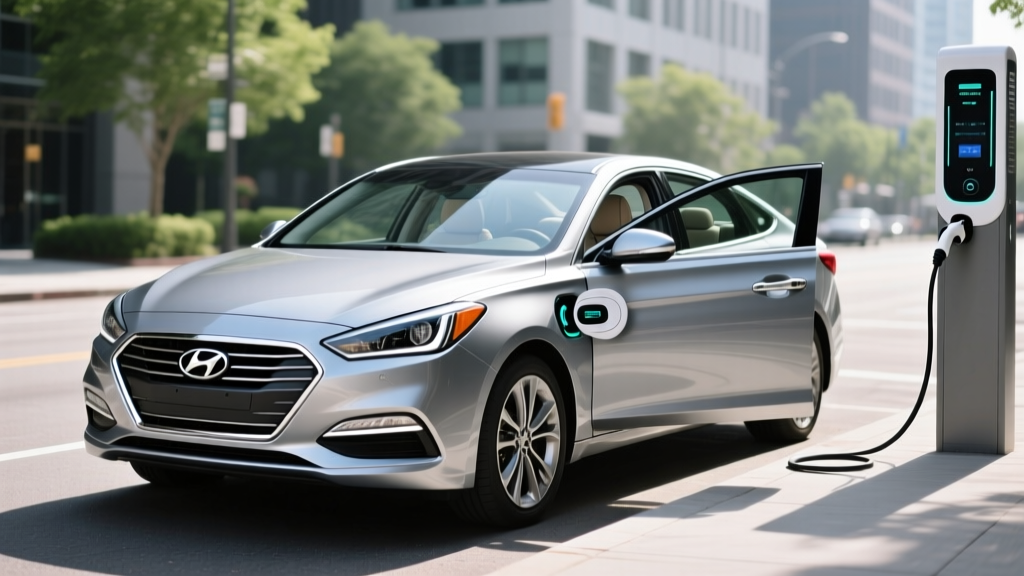
The 2015 Hyundai Sonata Hybrid Limited represents the final model year of Hyundai's second-generation hybrid midsize sedan before the nameplate received a full redesign. Built on the YF platform, it pairs a 2.4-liter Atkinson-cycle four-cylinder with a 35 kW electric motor for a combined 199 horsepower. The EPA rates it at 36 MPG combined (35 city / 40 highway), and the Limited trim loaded it with premium features rarely found on hybrid sedans of that era — ventilated front seats, a panoramic sunroof, leather upholstery, and an 8-inch navigation display.
In 2026, the used market positions this car as a budget-conscious commuter option. Expect to pay between $7,000 and $12,000 depending on mileage and condition. It does not qualify for any federal tax credit on the used market under current IRS §25E rules (the $4,000 used-EV credit applies only to plug-in electric vehicles, not conventional hybrids). But for buyers who want hybrid efficiency without plug-in infrastructure, it remains a compelling value play.
HEV vs PHEV: What the Sonata Hybrid Actually Is
Important distinction: The 2015 Hyundai Sonata Hybrid is a conventional hybrid electric vehicle (HEV). It does not plug in. It recovers energy through regenerative braking and its gasoline engine to charge a small 1.4 kWh lithium-polymer battery pack. You simply fuel it at any gas station and drive — no charging cable, no outlet, no range anxiety.
Hyundai did not offer a plug-in hybrid (PHEV) variant of the 2015 Sonata in the U.S. market. The Sonata Plug-in Hybrid arrived later with the 2016 redesign (LF platform), offering 27 miles of electric-only range and a 9.8 kWh battery. If you need plug-in capability, that 2016+ PHEV is a different vehicle entirely.
| Feature | 2015 Sonata Hybrid (HEV) | Typical PHEV (e.g., 2016+ Sonata PHEV) |
|---|---|---|
| Plugs in to charge? | No | Yes (Level 1/Level 2) |
| Electric-only range | 0 miles (EV assist only) | 20–30 miles typical |
| Battery capacity | 1.4 kWh | 9.8 kWh (Sonata PHEV) |
| Fueling | Gas station only | Gas station + electrical outlet |
| Federal tax credit (new) | None | Up to $4,543 (when new, now expired) |
| Used federal tax credit (§25E) | Not eligible | Not eligible (discontinued) |
Fuel Economy: EPA Ratings and Real-World MPG
The EPA publishes official fuel-economy figures for the 2015 Sonata Hybrid at fueleconomy.gov. Here is the complete breakdown:
| Driving Condition | EPA MPG |
|---|---|
| City | 35 MPG |
| Highway | 40 MPG |
| Combined | 36 MPG |
| Fuel tank capacity | 18.5 gallons |
| Total range (EPA) | ~666 miles |
Real-World MPG: What Owners Actually See
Conventional hybrids often exceed their EPA city rating in stop-and-go traffic because regenerative braking recovers more energy at lower speeds. Highway driving at 75+ MPH tends to fall below the EPA highway number due to aerodynamic drag.
Based on owner-reported data aggregated by Fuelly and EPA user submissions, real-world combined MPG for the 2015 Sonata Hybrid clusters between 34 and 39 MPG. Drivers who do mostly city commuting at moderate speeds frequently report 38–42 MPG. Sustained interstate driving at 75 MPH drops to roughly 32–35 MPG. Cold-weather operation (below 30°F) reduces efficiency by 10–15% due to extended engine warm-up cycles and cabin heating demands — expect 30–33 MPG combined in winter conditions.
Real-World Fuel Economy Expectation: EPA combined 36 MPG. Expect 34–39 MPG in mixed driving, 38–42 MPG city-dominant commutes, 32–35 MPG highway-dominant, and 30–33 MPG in cold weather.
Powertrain Specs: Engine, Motor, and Combined Output
| Specification | Value |
|---|---|
| Engine | 2.4L Atkinson-cycle inline-4 (Theta II) |
| Engine horsepower | 169 HP @ 6,000 RPM |
| Engine torque | 156 lb-ft @ 4,500 RPM |
| Electric motor | 35 kW (47 HP) permanent-magnet synchronous |
| Motor torque | 151 lb-ft |
| Combined net output | 199 HP |
| Transmission | 6-speed automatic (conventional torque converter) |
| Battery type | Lithium-polymer (LiPoly) |
| Battery capacity | 1.4 kWh (usable ~1.0 kWh) |
| Drivetrain | Front-wheel drive |
| 0–60 MPH (est.) | ~8.5 seconds |
| Curb weight | ~3,496 lbs |
The 2015 Sonata Hybrid uses a conventional 6-speed automatic rather than the e-CVT (planetary gearset) found in Toyota and Ford hybrids. This gives it a more traditional driving feel with perceptible gear shifts, though it sacrifices some of the seamless efficiency that CVTs provide at low speeds. The Theta II 2.4L engine is well-documented — it was the subject of a major Hyundai recall campaign for connecting-rod bearing wear. Verify that any used example has had the knock-sensor detection system software update (recall 162) completed, or better yet, that the engine was replaced under the extended warranty program.
Hybrid Battery Warranty, Lifespan, and Replacement Cost
Original Hybrid Battery Warranty: Hyundai covered the 2015 Sonata Hybrid battery for 10 years / 100,000 miles (whichever comes first) for the original owner in most states. In California Air Resources Board (CARB) states, emissions-related hybrid components carried a 10 years / 150,000 miles warranty. By 2025, most original warranties have expired unless the vehicle was purchased late in the model year with low accumulated mileage.
How Long Does the Battery Actually Last?
The 1.4 kWh lithium-polymer pack in the 2015 Sonata Hybrid is small by modern standards, which works in its favor — shallow charge/discharge cycles (the battery typically operates between 40% and 80% state of charge) reduce stress on the cells. Owner forums and repair databases suggest most packs retain sufficient capacity through 150,000–200,000 miles. Failures before 120,000 miles are uncommon but not unheard of, particularly in hot-climate states (Arizona, Texas, Nevada) where sustained high temperatures accelerate cell degradation.
Battery Replacement Cost
If the hybrid battery fails outside warranty, here is what to expect:
- OEM replacement battery (dealer): $2,500–$3,500 for the pack, plus $500–$800 in labor
- Refurbished/remanufactured pack: $1,200–$2,000 installed
- Individual cell module replacement: $300–$600 if only one or two modules have failed (requires a shop with hybrid battery diagnostic capability)
Before purchasing a used 2015 Sonata Hybrid, ask the seller for a hybrid battery state-of-health (SoH) readout from a Hyundai dealer or hybrid specialist. A pack retaining above 85% of original capacity is in good shape; below 70% suggests replacement within 1–2 years.
Used Market Pricing and Tax Credit Eligibility
As of early 2026, the 2015 Hyundai Sonata Hybrid Limited trades on the used market in this range:
- 80,000–100,000 miles, clean title: $8,500–$12,000
- 100,000–140,000 miles: $6,500–$9,000
- 140,000+ miles: $5,000–$7,500
Federal Tax Credits: Does It Qualify?
No. The 2015 Sonata Hybrid is a conventional HEV and does not qualify for any current federal tax credit:
- §30D New Clean Vehicle Credit: Applies only to new battery-electric (BEV) and plug-in hybrid (PHEV) vehicles with battery sourcing and MSRP requirements. The Sonata HEV was never eligible, even when new.
- §25E Used Clean Vehicle Credit: Provides up to $4,000 for qualifying used BEVs and PHEVs purchased from a dealer. Conventional hybrids are explicitly excluded under current IRS rules.
Some states offer hybrid-specific rebates or HOV lane access that may still apply to used purchases. Check your state's energy office or DMV for current programs, as these vary significantly by jurisdiction.
Who Should Buy This Hybrid vs. a Full EV or Gas Car
Choose the 2015 Sonata Hybrid Limited if:
- You commute 20–60 miles daily in mixed city/highway driving and want to minimize fuel costs without changing your refueling habits
- You lack access to home or workplace charging (apartment, street parking, no 240V outlet)
- You want a loaded midsize sedan (ventilated seats, panoramic roof, leather) under $10,000
- You drive in a region with extreme cold where EV range loss is a serious concern
Choose a used full EV (e.g., 2018+ Chevrolet Bolt, 2017+ Tesla Model 3) if:
- You have reliable home Level 2 charging and mostly drive under 200 miles per day
- You want to eliminate gasoline costs entirely and reduce maintenance (no oil changes, fewer brake replacements)
- You qualify for the §25E used-EV tax credit (up to $4,000 on vehicles under $25,000 from a dealer)
Choose a conventional gas car if:
- Your annual mileage is below 8,000 miles — the hybrid fuel savings won't offset a price premium over a comparable gas Sonata
- You prioritize low purchase price above all else and can find a clean gas Sonata SE for $5,000–$7,000
Pros and Cons: 2015 Sonata Hybrid Limited at a Glance
Pros
- 36 MPG combined EPA — strong for a midsize sedan, real-world city driving often exceeds 38 MPG
- Limited trim is feature-rich: ventilated seats, panoramic sunroof, Infinity audio, 8" nav
- Conventional 6-speed automatic feels natural — no CVT drone
- 666-mile total range means fewer fill-ups on road trips
- No plug-in infrastructure needed — ideal for apartment dwellers
- Hyundai's hybrid system is relatively simple — fewer failure points than more complex e-CVT designs
Cons
- Theta II 2.4L engine has documented connecting-rod bearing issues — verify recall completion
- Hybrid battery warranty likely expired on most examples by 2026
- No EV-only driving mode — the electric motor assists but cannot propel the car alone at meaningful speeds
- Trunk space reduced by battery pack (10.7 cu ft vs. 16.4 cu ft in gas Sonata)
- Not eligible for any federal tax credit, new or used
- Regenerative braking feel is less aggressive than modern hybrids — one-pedal driving is not available
Frequently Asked Questions
How many MPG does the 2015 Hyundai Sonata Hybrid get?
The EPA rates it at 35 MPG city, 40 MPG highway, and 36 MPG combined. Real-world owner reports cluster between 34 and 39 MPG combined, with city-dominant driving sometimes reaching 42 MPG. Cold weather and sustained high-speed highway driving reduce these figures.
Does the 2015 Sonata Hybrid need to be plugged in?
No. It is a conventional hybrid (HEV), not a plug-in hybrid (PHEV). The battery charges exclusively through regenerative braking and the gasoline engine. You fuel it like any other car at a gas station.
How far can it go on electric only?
Effectively zero miles. The 35 kW electric motor assists the gasoline engine during acceleration and can propel the car at very low speeds (under ~25 MPH) for brief distances, but it is not designed for electric-only commuting. There is no EV mode button and no meaningful electric-only range.
Is the 2015 Sonata Hybrid reliable?
The hybrid system itself (battery, motor, inverter) has proven durable, with most packs lasting 150,000+ miles. The primary reliability concern is the Theta II 2.4L engine's connecting-rod bearing, which led to a major recall and class-action settlement. Verify that recall 162 (knock-sensor software update) was performed, and check whether the engine was replaced under Hyundai's extended warranty. The NHTSA recall lookup lets you check by VIN.
What does a replacement hybrid battery cost?
An OEM replacement runs $3,000–$4,300 installed at a dealer. Refurbished packs cost $1,200–$2,000 installed at independent hybrid shops. Individual cell module replacement is possible for $300–$600 if only partial failure is diagnosed.
Does the 2015 Sonata Hybrid qualify for any tax credit?
No. As a conventional hybrid, it is ineligible for the federal §30D new vehicle credit or the §25E used vehicle credit. Both programs require plug-in capability (BEV or PHEV). Some state-level incentives for hybrids may exist — check your state energy office.
Hybrid vs. PHEV vs. EV — which is right for me?
A conventional hybrid like this Sonata is best if you cannot charge at home and want fuel savings with zero behavior change. A PHEV suits drivers with home charging and short commutes (under 30 miles) who still want gas flexibility for road trips. A full EV maximizes fuel and maintenance savings but requires reliable charging access and acceptance of range planning for longer trips.