Quick Verdict: A Frugal Commuter From a Bygone Hybrid Era
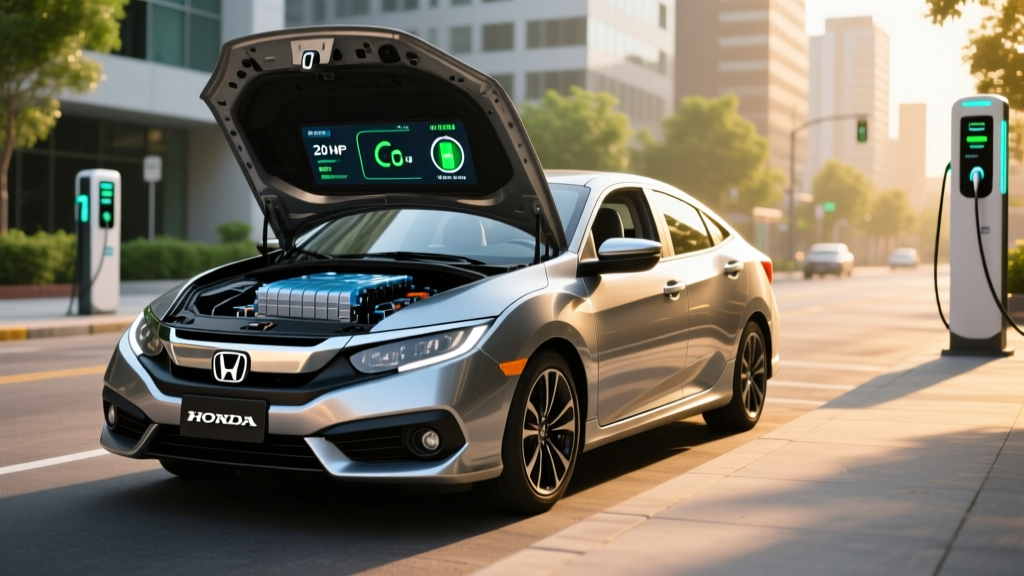
The 2015 Honda Civic Hybrid arrived during Honda's Integrated Motor Assist (IMA) era — a mild-hybrid system that sandwiched a thin electric motor between the gasoline engine and transmission rather than offering full electric-only propulsion. With an EPA-rated 45 MPG combined, it delivered strong city fuel economy and the reliability Honda is known for. Now in 2026, with these cars trading for $6,000–$10,000 on the used market, the Civic Hybrid represents a low-risk entry point for budget-minded commuters who want hybrid efficiency without plug-in complexity.
But before you sign the paperwork, there are critical details about the IMA battery's age, replacement cost, and how this car stacks up against modern hybrids and EVs that will determine whether it's a smart buy or a money pit.
Fuel Economy: EPA Ratings and Real-World MPG
| Metric | Value |
|---|---|
| City MPG | 44 MPG |
| Highway MPG | 47 MPG |
| Combined MPG | 45 MPG |
| Fuel Tank Capacity | 13.2 gallons |
| Total Driving Range | ~594 miles |
Source: EPA Fuel Economy Guide — 2015 Honda Civic Hybrid
Real-World MPG: What Owners Actually See
The Civic Hybrid's IMA system provides electric assist during acceleration and enables regenerative braking, but the electric motor alone cannot propel the car. This means real-world results track closely with EPA estimates — unlike full hybrids (such as the Toyota Prius) that can exceed EPA city ratings significantly thanks to extended electric-only operation at low speeds.
Expect 42–46 MPG combined in typical mixed driving. Highway-heavy commutes at steady 65–70 mph speeds can yield 47–50 MPG thanks to the lean-burn capability of the 1.5L i-VTEC engine. In heavy stop-and-go city traffic, the hybrid assist shines, and 44+ MPG is achievable. However, cold weather (below freezing) typically drops efficiency by 3–5 MPG as the engine runs richer and the battery's charge acceptance decreases.
Powertrain and Performance Specs
| Specification | Value |
|---|---|
| Engine | 1.5L inline-4 i-VTEC (LEA2) |
| Gas Engine Output | 110 hp @ 5,500 rpm / 103 lb-ft torque |
| Electric Motor | IMA (Integrated Motor Assist) — 20 hp / 58 lb-ft |
| Combined System Output | 110 hp (net) |
| Transmission | CVT (Continuously Variable Transmission) |
| Drivetrain | Front-wheel drive |
| 0–60 mph | ~9.8 seconds |
| Hybrid Battery | Nickel-Metal Hydride (NiMH), ~0.5 kWh |
| Curb Weight | ~2,853 lbs |
The IMA system is best understood as an electric turbocharger rather than a parallel hybrid system like Toyota's Hybrid Synergy Drive. The electric motor fills in torque gaps during acceleration and enables engine-off coasting and idle stop, but it never drives the wheels independently. The result is smooth, adequate acceleration that prioritizes efficiency over urgency. Merging onto highways requires planning — this is a car that rewards a relaxed driving style.
Hybrid Battery Health: The #1 Used-Buyer Concern
Battery Degradation and Failure Signs
The NiMH IMA battery in the 2015 Civic Hybrid is a compact, air-cooled pack located behind the rear seat. NiMH chemistry is robust and well-understood, but after 10+ years and 100,000+ miles, cell imbalance and capacity loss are expected. Common warning signs of a degrading IMA battery include:
- Frequent recalibration cycles (the battery gauge drops to zero and recharges repeatedly)
- IMA warning light on the dashboard
- Noticeable drop in fuel economy (5+ MPG below normal)
- Reduced regenerative braking and electric assist
- The engine running more frequently at stops (idle stop disabled)
Battery Replacement Cost
If the IMA battery fails, here's what 2026 replacement looks like:
| Option | Cost Range | Notes |
|---|---|---|
| OEM Honda Remanufactured | $2,000–$2,800 | Dealer-installed, includes labor; best reliability |
| Aftermarket Remanufactured | $1,200–$1,800 | Third-party suppliers (Bumblebee, Dorman); variable quality |
| Individual Cell Replacement (DIY) | $200–$500 | Requires technical skill; replaces only bad sub-cells |
| Grid Charger / Reconditioning | $150–$350 | May extend life 1–3 years on mildly degraded packs |
Many owners of 11-year-old Civic Hybrids opt for an aftermarket remanufactured pack or even a grid charger to squeeze additional life from the original battery. Given the car's current market value of $6,000–$10,000, a $2,500+ OEM replacement can represent 25–40% of the vehicle's worth — a calculation every prospective buyer must weigh carefully.
Pre-Purchase Battery Inspection
Before buying any 2015 Civic Hybrid in 2026, insist on a hybrid battery health check. A qualified technician can read the IMA battery's State of Health (SoH) via OBD-II diagnostics, checking for cell voltage imbalance and total capacity remaining. Look for a pack with less than 15% capacity loss and no history of IMA warning codes. Some sellers may have already replaced the battery — always ask for receipts.
HEV vs. PHEV vs. EV: Where Does the Civic Hybrid Fit?
Conventional Hybrid (HEV)
Example: 2015 Honda Civic Hybrid
Battery: ~0.5 kWh NiMH
Plug in? No — charges via regen and engine
Electric-only range: None (motor assist only)
Best for: Drivers without home charging access who want better MPG with zero behavior change
Plug-in Hybrid (PHEV)
Example: 2026 Toyota Prius Prime
Battery: ~13.6 kWh lithium-ion
Plug in? Yes — Level 1 or Level 2
Electric-only range: ~44 miles EPA
Best for: Drivers with home charging who want electric commuting with gas-engine backup for road trips
Battery Electric (BEV)
Example: 2026 Chevrolet Equinox EV
Battery: ~85 kWh lithium-ion
Plug in? Yes — Level 1, 2, or DC fast
Electric-only range: ~315 miles EPA
Best for: Drivers with reliable home/work charging who want zero tailpipe emissions and lowest fuel cost per mile
Decision Framework: Which Is Right for You?
Choose the 2015 Civic Hybrid (HEV) if:
- You cannot charge at home or work (apartment, street parking)
- Your budget is under $10,000
- You want a simple, proven car with minimal technology risk
- Your commute is under 40 miles round-trip with mixed city/highway
Choose a modern PHEV if:
- You have access to Level 1 or Level 2 charging at home
- Your daily commute is under 40 miles (coverable on electric-only)
- You want EV-like operating costs for daily driving with road-trip flexibility
Choose a full EV if:
- You have reliable Level 2 home charging
- You want the lowest per-mile fuel cost and near-zero drivetrain maintenance
- Your typical daily driving is under 250 miles, or you're willing to plan DC fast-charging stops for longer trips
Pricing, Tax Credits, and 2026 Used Market Value
The 2015 Honda Civic Hybrid was originally priced at approximately $24,775 MSRP (single, well-equipped trim). In 2026, used examples trade in the following ranges:
| Condition | Mileage Range | Price Range |
|---|---|---|
| Excellent (battery replaced, low miles) | 60,000–90,000 | $9,000–$11,000 |
| Good (original battery, healthy) | 90,000–130,000 | $7,000–$9,000 |
| Fair (battery showing age) | 130,000–170,000 | $5,500–$7,000 |
| Project (IMA issues, high miles) | 170,000+ | $3,500–$5,500 |
Tax Credit Eligibility
As a used vehicle purchase in 2026, the 2015 Civic Hybrid may qualify for the IRS §25E Previously Owned Clean Vehicle Credit, which offers up to $4,000 or 30% of the sale price (whichever is lower). However, eligibility requires meeting several conditions:
- Income caps: Modified AGI must not exceed $75,000 (single), $112,500 (head of household), or $150,000 (joint)
- Sale price cap: The vehicle must sell for $25,000 or less (easily met for this car)
- Model eligibility: The vehicle must be on the IRS qualified used clean vehicle list — verify at irs.gov before purchase
- Purchase from a dealer: Private-party sales do not qualify
- First transfer since August 16, 2022: The vehicle can only claim this credit once after that date
Given typical 2015 Civic Hybrid pricing of $6,000–$10,000, the maximum credit would be 30% of the sale price — so a $8,000 purchase could yield a $2,400 credit. This is a point-of-sale transfer under current IRS rules, meaning the dealer applies it directly to the purchase price. Always confirm eligibility with a tax professional before relying on this credit. This credit applies to the hybrid because it has a qualifying battery capacity, but IRS model lists change — verify before committing.
Note: The §30D New Clean Vehicle Credit (up to $7,500) does not apply to used purchases. That credit is reserved for new vehicles and has its own MSRP caps, battery sourcing rules, and income limits detailed at irs.gov.
Ownership Costs: Fuel, Maintenance, and the Bottom Line
Here's what annual ownership looks like for a 2015 Civic Hybrid driven 12,000 miles per year in 2026, using a national average gas price of $3.20/gallon:
| Expense | 2015 Civic Hybrid (45 MPG) | 2015 Civic Gas (33 MPG) | 2026 Compact EV (3.5 mi/kWh) |
|---|---|---|---|
| Annual Fuel/Energy | ~$853 | ~$1,164 | ~$480 (home charging) |
| Oil Changes | ~$180 (2×/yr) | ~$180 (2×/yr) | $0 |
| Annual Savings vs. Gas Civic | ~$311/year | Baseline | ~$684/year |
The hybrid saves roughly $300/year in fuel compared to the gas-only Civic. Over a 5-year ownership horizon, that's approximately $1,550 in fuel savings — meaningful, but not enough to offset a potential $2,000+ battery replacement if the IMA pack fails. The economic case for this car rests on finding a low-mileage example with a healthy battery or one that has already had the battery replaced.
Pros, Cons, and Final Recommendation
Pros
- 45 MPG combined — strong efficiency, especially on highway commutes
- Proven Honda reliability for engine, transmission, and chassis
- Low purchase price ($6K–$10K) in 2026 used market
- No charging infrastructure needed — just drive and refuel
- Potential $2,400 used-EV tax credit (§25E) on dealer purchases
- Comfortable ride quality and good visibility
- Strong resale parts availability and aftermarket support
Cons
- IMA battery is 11+ years old — replacement is likely imminent or overdue
- Mild hybrid only — no electric-only driving, limited regen capability
- Modest 110 hp combined; slow acceleration (9.8s to 60 mph)
- NiMH battery chemistry is outdated vs. modern lithium-ion packs
- Single trim level with limited feature customization
- All factory battery warranties expired — full financial risk on buyer
- Outclassed in efficiency by modern hybrids (2026 Prius: 57 MPG)
Frequently Asked Questions
How many MPG does the 2015 Honda Civic Hybrid get?
The EPA rates the 2015 Civic Hybrid at 44 city / 47 highway / 45 combined MPG. Real-world owners typically see 42–46 MPG combined, with highway driving sometimes exceeding 48 MPG under steady-speed conditions. Cold weather and aggressive driving can drop this to 38–40 MPG.
Does the 2015 Civic Hybrid need to be plugged in?
No. The 2015 Civic Hybrid is a conventional hybrid (HEV), not a plug-in hybrid. Its small NiMH battery charges exclusively through regenerative braking and the gasoline engine. You never plug it in — you simply fill the gas tank and drive.
How far can the 2015 Civic Hybrid drive on electric power alone?
It cannot. The IMA system provides electric motor assist to the gasoline engine but never propels the car on electricity alone. The engine may shut off at stops (idle stop) and the motor assists during acceleration, but there is zero electric-only driving range. If electric-only miles are a priority, look at a PHEV like the Toyota Prius Prime (44 miles electric) or a full EV.
Is the 2015 Civic Hybrid reliable?
The gasoline engine, CVT transmission, and chassis are Honda-reliable and routinely reach 200,000+ miles with basic maintenance. The primary reliability concern is the aging IMA NiMH battery, which is now 11+ years old and likely near end-of-life if it hasn't been replaced. The IMA system itself is simpler than full hybrid systems (fewer components), but battery replacement is the key cost risk. According to NHTSA records, the 2015 Civic Hybrid has relatively few complaints for its age.
What does it cost to replace the hybrid battery?
OEM Honda remanufactured IMA battery replacement runs $2,000–$2,800 installed at a dealer. Aftermarket remanufactured packs cost $1,200–$1,800. Some owners extend battery life with a $150–$350 grid charger/reconditioning kit, though this is a stopgap, not a permanent fix. Given the car's $6,000–$10,000 market value, battery replacement represents a significant percentage of the vehicle's worth.
Does the 2015 Civic Hybrid qualify for any tax credit?
It may qualify for the federal §25E Previously Owned Clean Vehicle Credit when purchased from a dealer — up to $4,000 or 30% of the sale price (whichever is less), subject to buyer income caps ($75K single / $150K joint). A $8,000 purchase could yield roughly $2,400. Verify the model is on the current IRS qualified list at irs.gov and consult a tax professional. The new-vehicle §30D credit does not apply to used purchases.
How does the 2015 Civic Hybrid compare to a modern hybrid?
Modern hybrids have moved well past the Civic's IMA system. The 2026 Toyota Prius delivers 57 MPG combined (12 MPG better) with a full parallel hybrid system that enables electric-only low-speed driving. The 2026 Honda Accord Hybrid achieves 48 MPG with a more powerful 204-hp powertrain. However, these modern vehicles cost $28,000–$35,000 new — roughly 3–5× the price of a used 2015 Civic Hybrid. If budget is the primary constraint, the Civic Hybrid still delivers strong efficiency at a fraction of the cost, provided the battery is healthy.