Quick Verdict: A Proven Hybrid Family Hauler, Now a Used-Car Bargain
The 2014 Toyota Highlander Limited Hybrid sits at an interesting crossroads in 2026. It's a 12-year-old three-row SUV with Toyota's second-generation hybrid system, commanding roughly $10,000–$14,000 on the used market. For buyers who need three rows, all-wheel drive, and don't want to plug in, it remains one of the most rational used-hybrid purchases available. But how does its real-world fuel economy stack up over a decade later, and what does battery health look like at this age?
This guide breaks down the 2014 Highlander Hybrid Limited's powertrain, real-world MPG, battery longevity, and whether it still makes sense compared to a modern PHEV or a full EV like the Kia EV9 or Hyundai Ioniq 9.
2014 Highlander Hybrid Limited: Core Specs at a Glance
| Spec | Value |
|---|---|
| Powertrain | 3.5L V6 (2GR-FXE) + 2 electric motors (front/rear e-AWD) |
| Combined Horsepower | 280 hp net system output |
| Transmission | eCVT (planetary gearset, no traditional belts) |
| Hybrid Battery | ~1.9 kWh NiMH (nickel-metal hydride), sealed |
| Drivetrain | Electronic on-demand AWD (rear motor-driven) |
| EPA MPG (City / Hwy / Combined) | 27 / 28 / 28 |
| 0–60 mph | ~7.8 seconds |
| Towing Capacity | 3,500 lbs |
| Cargo (behind 3rd / 2nd / 1st row) | 13.8 / 42.3 / 83.2 cu ft |
| Curb Weight | ~4,830 lbs |
| Original MSRP (Limited Hybrid) | $47,770 |
| 2026 Used Price Range | $10,000–$14,500 (depending on mileage/condition) |
EPA MPG vs. Real-World Fuel Economy
The EPA rates the 2014 Highlander Hybrid at 27 city / 28 highway / 28 combined MPG. These numbers were competitive for a three-row AWD SUV in 2014 and still hold up against many non-hybrid competitors today. But what does that mean on actual roads in 2026?
City / suburban driving: 26–30 MPG — the hybrid system recovers energy during stop-and-go, often exceeding the EPA city figure.
Highway (70+ mph, flat terrain): 25–27 MPG — aerodynamic drag on this 4,830-lb box limits highway efficiency.
Combined mixed driving: 26–28 MPG — consistent with the EPA sticker for most owners.
Cold weather (below 30°F): 22–25 MPG — the engine runs more to heat the cabin and keep the NiMH battery warm.
Mountain / heavy-load driving: 20–24 MPG — towing or sustained climbs will drop economy significantly.
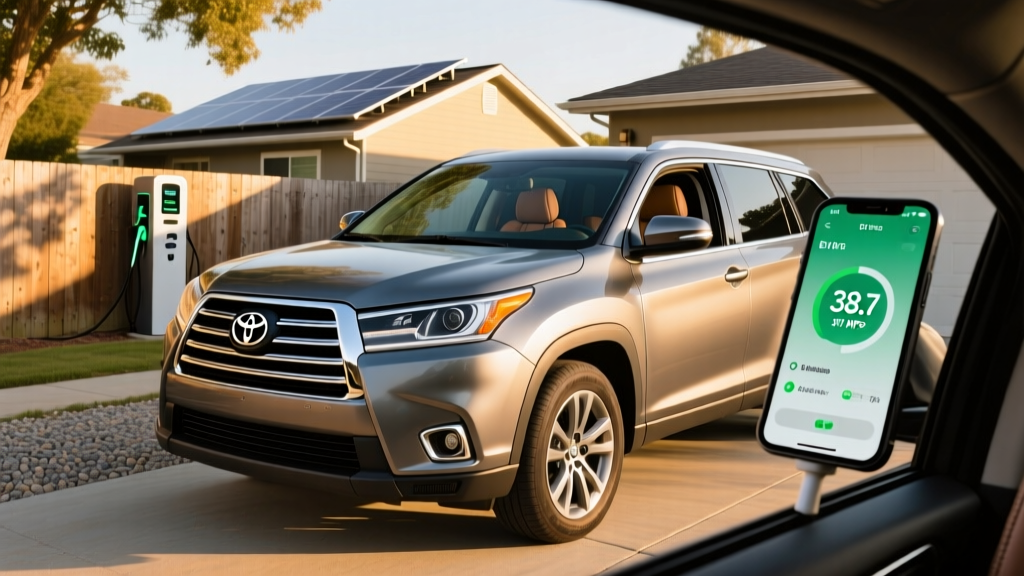
Owner-reported data on fueleconomy.gov's "My MPG" tracker shows most 2014 Highlander Hybrid drivers averaging between 25 and 29 MPG in mixed driving. The system works exactly as designed: city-heavy commutes reward you, while sustained highway speeds don't offer as much hybrid advantage.
Cost context: At 27 MPG combined and $3.20/gallon (2026 national average for regular unleaded), you're spending roughly $0.119 per mile on fuel. A comparable non-hybrid 2014 Highlander V6 AWD (18/24/20 MPG combined) costs about $0.160/mile — a difference of ~$410 per year at 10,000 miles.
How the Hybrid Powertrain Works (HEV, Not PHEV)
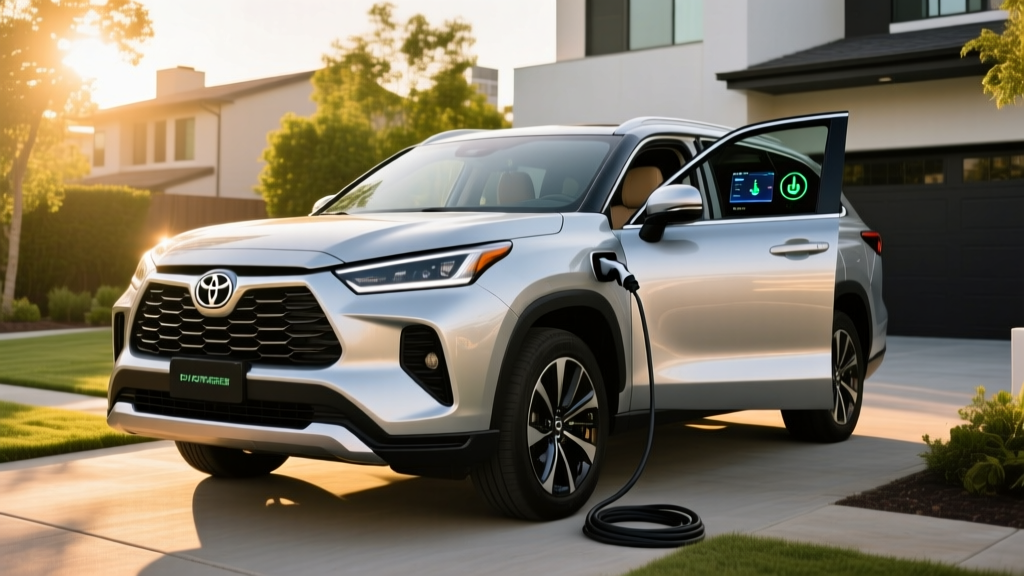
It's critical to understand what this vehicle is — and what it isn't. The 2014 Highlander Hybrid is a conventional hybrid (HEV), not a plug-in hybrid (PHEV). You never plug it in. The 1.9 kWh NiMH battery charges exclusively through regenerative braking and the gasoline engine. There is no electric-only driving mode of any meaningful distance — the battery assists the engine during acceleration and enables brief low-speed electric-only movement (typically under 1 mile at very low speeds), but this is incidental, not a feature you rely on.
| Feature | HEV (This Highlander) | PHEV (e.g., RAV4 Prime) |
|---|---|---|
| Plug-in charging | No — self-charging | Yes — plug into Level 1 or 2 |
| Battery size | ~1.9 kWh (NiMH) | ~18 kWh (lithium-ion) |
| Electric-only range | <1 mile (incidental) | 25–42 miles |
| Federal tax credit | None | Up to $7,500 (§30D, new only) |
| Fuel economy (gas mode) | 28 MPG combined | ~35–38 MPG combined |
If you want plug-in electric range in a Toyota three-row SUV, the 2026 Toyota Grand Highlander does not currently offer a PHEV variant. Your closest Toyota PHEV is the RAV4 Prime (42 miles electric-only, 94 MPGe), but it only seats five. For a true three-row PHEV, you'd be looking at the Kia Sorento PHEV (32 miles electric, ~$52,000 new) or the Mazda CX-90 PHEV (26 miles electric, ~$51,000 new).
Battery Health, Warranty & Replacement Costs at 12 Years Old
This is the question every used-hybrid buyer asks, and it's the right one. The 2014 Highlander Hybrid uses a nickel-metal hydride (NiMH) battery pack — proven, durable chemistry that Toyota has used since the original Prius. Unlike the lithium-ion packs in modern EVs and PHEVs, NiMH degrades more gradually and is less sensitive to charge/discharge cycles.
Original warranty: 8 years / 100,000 miles (10 years / 150,000 miles in CARB states: CA, CT, ME, MA, NJ, NY, OR, RI, VT, WA, CO, MD, NM, NV)
Expected battery lifespan: 150,000–200,000+ miles with normal use
Replacement cost (2026): $2,000–$3,500 for a new OEM pack from Toyota; $1,000–$1,800 for a refurbished/reconditioned pack from third-party suppliers
Individual cell module replacement: $300–$600 if only a few cells have failed (common repair at independent hybrid shops)
Real-world battery data: Many 2014 Highlander Hybrids are now at 120,000–180,000 miles. Reports of complete battery failure before 150,000 miles are uncommon. When degradation does occur, you'll notice reduced fuel economy (dropping to 22–24 MPG), more frequent engine cycling, and a hybrid system warning light. A scan tool can read the battery's state of health (SoH) and individual module voltages — any reputable hybrid-experienced mechanic can perform this check before purchase.
Pre-purchase tip: Ask for a hybrid battery health report showing module voltage spread. If all modules read within 0.2V of each other, the pack is healthy. A spread greater than 0.5V suggests one or more failing modules.
Ownership Costs in 2026: Fuel, Insurance, Maintenance
Buying a 12-year-old hybrid SUV means balancing low purchase price against the realities of an aging vehicle. Here's a realistic 5-year ownership projection assuming 10,000 miles/year and a $12,000 purchase price:
| Category | Annual Cost | 5-Year Total |
|---|---|---|
| Purchase price | — | $12,000 |
| Fuel (10k mi/yr, 27 MPG, $3.20/gal) | $1,185 | $5,925 |
| Insurance (avg, varies by state/driver) | $1,100 | $5,500 |
| Maintenance (oil, brakes, tires, fluids) | $800 | $4,000 |
| Estimated repairs (aging vehicle reserve) | $500 | $2,500 |
| Hybrid battery replacement (if needed, one-time) | — | $2,500 |
| Total estimated 5-year cost | ~$32,425 |
For comparison, a new 2026 Toyota Highlander Hybrid XLE ($43,970 MSRP, ~35 MPG combined) would cost roughly $50,000+ over 5 years including depreciation, but comes with a full warranty and the latest safety tech. A new three-row EV like the Kia EV9 (EPA range ~300 miles, $54,900 MSRP) has far lower fuel costs but a significantly higher purchase price.
Tax Credits: What This Used Hybrid Does and Doesn't Qualify For
The 2014 Toyota Highlander Limited Hybrid does not qualify for any federal tax credit. The IRS §30D Clean Vehicle Credit applies only to new EVs and PHEVs meeting battery-sourcing, MSRP, and buyer income requirements — conventional hybrids have never been eligible.
For the used clean vehicle credit (IRS §25E, up to $4,000 or 30% of sale price, whichever is less), the vehicle must be a qualifying EV or PHEV with a battery capacity of at least 7 kWh. Since the 2014 Highlander Hybrid's NiMH pack is approximately 1.9 kWh and it's an HEV, it does not qualify for the used-vehicle credit either.
Check current rules at IRS.gov's clean vehicle credits page. State incentives vary — some states offer rebates for used hybrids, but these are uncommon and change frequently. Consult your state's energy or environmental agency for current programs.
Driving Impressions & Limited Trim Features
The Limited trim was the top-of-the-line 2014 Highlander Hybrid, and it shows. Standard equipment includes leather seating, heated and ventilated front seats, a JBL audio system, navigation, power liftgate, blind-spot monitoring with rear cross-traffic alert, and a panoramic sunroof. The interior materials and sound insulation were a step above the segment at the time.
On the road: The 280-hp combined output moves the 4,830-lb SUV with adequate authority. The 0–60 mph time of ~7.8 seconds is brisk enough for highway merging. The eCVT is smooth and largely unobtrusive — there's no gear hunting or rubber-band sensation that plagued older CVTs. The electronic AWD system engages the rear motor automatically when slip is detected, providing confident traction in rain and light snow without the mechanical complexity of a traditional AWD system.
Limitations: The 2014 model year predates Toyota Safety Sense (TSS), so there's no automatic emergency braking, lane-keeping assist, or adaptive cruise control. If these features are priorities, look at the 2016+ Highlander which added TSS-P as standard. The infotainment system is dated by 2026 standards — no Apple CarPlay or Android Auto, though aftermarket head-unit replacements are available for $400–$800 installed.
Who Should Buy This Hybrid (And Who Shouldn't)
- You need three rows and AWD on a budget under $15,000
- Your driving is mostly city/suburban where the hybrid system shines (26–30 MPG)
- You don't have access to home or workplace charging (no plug needed)
- You value Toyota's long-term reliability and want low maintenance costs
- You tow occasionally (3,500-lb rating beats most crossovers in this price range)
Look elsewhere if:
- You want electric-only driving or plug-in capability — consider a used RAV4 Prime or Sorento PHEV
- Modern safety features (AEB, lane-keep) are non-negotiable — look at 2016+ Highlanders or a newer vehicle
- You drive mostly highway miles — the hybrid advantage is smaller at 70+ mph, and a diesel or efficient gas SUV may be comparable
- You want to minimize fossil fuel use entirely — a used EV like the Tesla Model X or a new Kia EV9 eliminates tailpipe emissions
- You plan to keep the vehicle 10+ more years — at 12 years old, general wear items (suspension, A/C, electronics) will need attention
Frequently Asked Questions
How many MPG does the 2014 Toyota Highlander Hybrid get?
The EPA rates it at 27 city / 28 highway / 28 combined MPG. Real-world owners report 25–29 MPG in mixed driving, with city-heavy commutes often exceeding 28 MPG and sustained highway driving dropping to 25–27 MPG. Cold weather can reduce economy to 22–25 MPG.
Is the 2014 Highlander Hybrid a plug-in?
No. It is a conventional self-charging hybrid (HEV). You never plug it in. The battery charges through regenerative braking and the gasoline engine. There is no meaningful electric-only range.
How much does a hybrid battery replacement cost?
A new OEM NiMH battery from Toyota costs $2,000–$3,500 installed. Refurbished packs from third-party suppliers run $1,000–$1,800. Individual module repairs (if only a few cells fail) cost $300–$600. Many packs last 150,000–200,000+ miles.
Is the 2014 Highlander Hybrid reliable?
Yes. The 2GR-FXE V6 engine and Toyota's hybrid synergy drive are among the most proven powertrains in the industry. The eCVT has no belts or friction clutches to wear out. Main concerns at this age are standard wear items: suspension bushings, A/C components, and potential hybrid battery degradation. According to NHTSA records, there were no major safety recalls specific to the hybrid system.
Does it qualify for any tax credit in 2026?
No. The 2014 Highlander Hybrid is a conventional HEV and does not qualify for the federal §30D new-vehicle credit or the §25E used-vehicle credit (which requires a battery of at least 7 kWh in an EV or PHEV). No state offers a hybrid-specific purchase incentive for a 2014 model.
How does it compare to a modern hybrid or EV?
A 2026 Toyota Highlander Hybrid achieves ~35 MPG combined (a 25% improvement) and includes Toyota Safety Sense 2.5+. A new three-row EV like the Kia EV9 offers ~300 miles of range and near-zero running costs but starts at $54,900. The 2014 model's advantage is pure value: three-row AWD hybrid capability for under $15,000.
What should I check before buying a used 2014 Highlander Hybrid?
Prioritize: (1) hybrid battery health scan showing module voltage spread under 0.3V, (2) complete service history with regular oil changes, (3) brake actuator function (the regenerative braking system uses an electro-hydraulic actuator that can fail expensively — ~$1,500 to replace), and (4) inverter coolant pump operation. A pre-purchase inspection at a Toyota dealer or hybrid specialist is strongly recommended.