The 2013 Lincoln MKZ Hybrid at a Glance
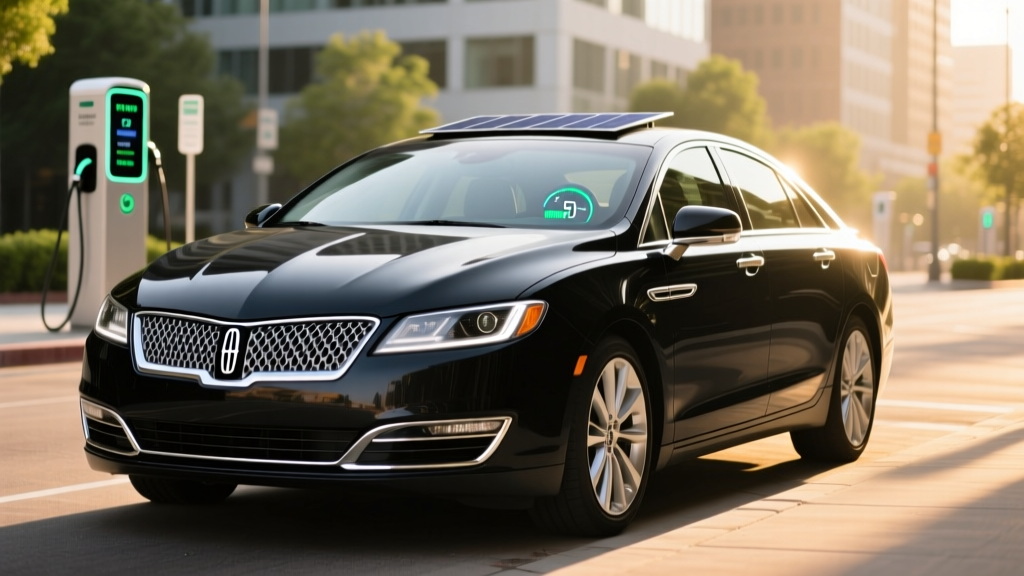
The 2013 Lincoln MKZ Hybrid occupies a specific niche in the used luxury-hybrid market: a midsize sedan that prioritizes fuel efficiency and quiet comfort over sportiness, wrapped in Lincoln's early-2010s premium styling. Built on Ford's CD4 platform and sharing its hybrid powertrain with the Ford Fusion Hybrid, the MKZ Hybrid delivers an EPA-estimated 45 MPG combined — a figure that still holds up against many modern hybrids in 2026.
If you're shopping for a budget-friendly luxury hybrid and have come across the 2013 MKZ Hybrid, this guide covers everything you need to know: real-world fuel economy, battery lifespan and replacement costs, powertrain specs, reliability data, and whether this decade-old hybrid still makes financial sense compared to newer options.
The 2013 Lincoln MKZ Hybrid is a conventional hybrid (HEV), not a plug-in hybrid (PHEV). It charges its small battery through regenerative braking and the gasoline engine — you never plug it in. There was no PHEV variant of the MKZ in 2013. If you want plug-in electric range, you'd need to look at vehicles like the 2013 Ford Fusion Energi (its corporate cousin) or a modern PHEV.
| Spec | Value |
|---|---|
| EPA MPG (City / Hwy / Combined) | 45 / 45 / 45 |
| Powertrain | 2.0L Atkinson-cycle I4 + electric motor |
| Combined Horsepower | 188 hp (net system) |
| Engine Output | 141 hp @ 6,000 rpm / 129 lb-ft torque |
| Electric Motor Output | 88 kW (118 hp) |
| Transmission | eCVT (planetary gearset) |
| Hybrid Battery | 1.4 kWh lithium-ion (air-cooled) |
| 0-60 mph | ~8.1 seconds |
| Drivetrain | Front-wheel drive |
| Fuel Tank | 13.5 gallons |
| Total Range (est.) | ~607 miles |
| Original MSRP (2013) | $36,920 |
| Used Price Range (2026) | $6,000 – $11,000 |
| Hybrid Battery Warranty (original) | 8 years / 100,000 miles |
How Many MPG Does the 2013 MKZ Hybrid Get?
The EPA rates the 2013 Lincoln MKZ Hybrid at an identical 45 MPG city, 45 MPG highway, and 45 MPG combined — a rare flat rating that reflects the efficiency of Ford's second-generation hybrid system. You can verify this on fueleconomy.gov.
| Driving Condition | EPA Rating | Real-World Expectation |
|---|---|---|
| City | 45 MPG | 43–48 MPG (hybrids often beat EPA in stop-and-go) |
| Highway | 45 MPG | 40–44 MPG (sustained 70+ mph reduces regen benefit) |
| Combined | 45 MPG | 41–46 MPG |
Real-world nuance: Like all conventional hybrids, the MKZ Hybrid benefits from regenerative braking in city traffic, where the electric motor handles low-speed propulsion and the engine shuts off at stops. Owners who drive predominantly in urban conditions frequently report 46-48 MPG. Highway-heavy drivers at 75+ MPH should expect closer to 40-42 MPG, as aerodynamic drag overwhelms the small electric motor's contribution and the Atkinson-cycle engine runs more frequently.
Cold weather also impacts fuel economy. In sub-30°F conditions, expect a 5-10% reduction as the engine runs longer to warm the cabin and the battery's charge/discharge efficiency drops. This is far less dramatic than the 20-30% range loss a full EV experiences, because the MKZ Hybrid's gasoline engine provides cabin heat essentially for free once warmed up.
Hybrid Powertrain: 2.0L Engine Meets Electric Motor
The 2013 MKZ Hybrid uses Ford's second-generation hybrid system, which pairs a 2.0-liter Atkinson-cycle four-cylinder engine with an 88 kW (118 hp) permanent-magnet electric motor through an electronically controlled continuously variable transmission (eCVT). This is not a belt-and-cone CVT like those found in some competitors — it's a planetary gearset that blends power from both sources seamlessly, similar to Toyota's Hybrid Synergy Drive.
The combined system output is 188 net horsepower. The gasoline engine alone produces 141 hp and 129 lb-ft of torque, while the electric motor can contribute up to 118 hp. These don't simply add together because peak engine and peak motor output occur at different RPMs.
The 1.4 kWh lithium-ion battery pack is mounted behind the rear seats, which does reduce trunk space slightly compared to the non-hybrid MKZ (11.1 cu ft vs 15.4 cu ft). The battery is air-cooled and operates in a narrow state-of-charge window — the hybrid system never fully charges or fully depletes it, which is key to its longevity.
Acceleration is adequate rather than exciting. The 0-60 mph time of approximately 8.1 seconds puts it in the same territory as a four-cylinder Camry. The eCVT eliminates shift shock, and the transition between electric-only and engine-assisted driving is among the smoothest in its class. At low speeds (under ~25 mph in light-throttle conditions), the MKZ Hybrid can operate on electric power alone for short distances — typically less than a mile — but this is not a meaningful "electric range" the way a PHEV offers.
HEV vs PHEV vs EV: Which Fits Your Driving Pattern?
If you're cross-shopping the 2013 MKZ Hybrid, you may also be considering plug-in hybrids or full electric vehicles. Here's how they compare for different use cases:
| Factor | HEV (like MKZ Hybrid) | PHEV | Full EV (BEV) |
|---|---|---|---|
| Plug in required? | No | Yes (for EV range) | Yes |
| Electric-only range | ~0.5 mi at low speed | 20–50 mi typical | 200–400 mi |
| Home charging needed | No | Recommended (120V ok) | Yes (240V ideal) |
| Fuel cost per mile | ~$0.07 (at 45 MPG) | ~$0.04 electric / $0.08 gas | ~$0.03–$0.05 |
| Road trip convenience | Gas station, 3 min | Gas station (no charging needed) | DC fast charging, 20-40 min |
| Maintenance | Standard ICE + less brake wear | Standard ICE + less brake wear | Minimal (no oil, filters) |
Choose the MKZ Hybrid (HEV) if: You don't have access to home charging, you want a simple ownership experience with no plug-in routine, and you drive a mix of city and highway miles. The 45 MPG combined delivers genuine fuel savings without any behavioral change.
Choose a PHEV if: You have home charging and a short commute (under 30 miles) but also take regular road trips. A PHEV lets you commute on electricity while keeping a gas engine for longer drives.
Choose a full EV if: You have reliable home Level 2 charging, your daily driving is under 200 miles, and you want to eliminate gasoline entirely. Modern EVs like the Hyundai Ioniq 6 or Tesla Model 3 offer 300+ miles of range with dramatically lower per-mile fuel costs.
Battery Reliability, Lifespan, and Replacement Cost
Lincoln covered the 2013 MKZ Hybrid's battery pack for 8 years or 100,000 miles (whichever came first), with a capacity retention threshold of approximately 60%. In states following California Air Resources Board (CARB) rules, coverage extended to 10 years / 150,000 miles. As of 2026, most 2013 MKZ Hybrids have exceeded both time and mileage warranty limits unless they were low-mileage CARB-state vehicles.
The 1.4 kWh lithium-ion pack in the MKZ Hybrid is remarkably durable in practice. Because the hybrid system keeps the battery in a narrow state-of-charge window (roughly 40-60% SoC), it avoids the deep cycles and high SoC stress that degrade batteries in full EVs. NHTSA data and owner forums show that Ford/Lincoln hybrid battery packs from this generation commonly reach 150,000-200,000+ miles before significant capacity loss.
When degradation does occur, it typically manifests as slightly reduced fuel economy (the engine runs more often to compensate for a weaker battery buffer) and more frequent engine start/stop cycling. The car remains drivable — it simply becomes less efficient.
Battery replacement cost: A new OEM hybrid battery pack from Lincoln/Ford costs approximately $2,500-$4,000 including installation at a dealership. Aftermarket and refurbished packs are available from independent hybrid specialists for $1,500-$2,500 installed. Individual cell or module replacement (if only a portion of the pack has failed) can cost as little as $500-$1,200 at a specialist shop.
For context, this is a fraction of full-EV battery replacement costs, which can exceed $10,000-$15,000 for larger packs. The MKZ Hybrid's small battery is one of the least expensive hybrid batteries to replace on the market.
Is the 2013 MKZ Hybrid Reliable?
The 2013 model year was the first year of the second-generation MKZ (and the redesigned Fusion platform), which means it carries some first-year-production risk. Here's what the data shows:
- Powertrain: Ford's hybrid system is among the most proven in the industry, with millions of miles accumulated across Fusion, Escape, and C-Max hybrids by 2013. The eCVT planetary gearset has no belts, chains, or friction clutches to wear out — it's mechanically robust.
- Electronics and infotainment: The 2013 MKZ's MyLincoln Touch system (based on Microsoft SYNC) was a known pain point. Slow response times, phantom touches, and Bluetooth connectivity issues were widely reported. Ford issued multiple software updates, but the system remains dated by 2026 standards.
- Brakes: Regenerative braking handles most deceleration, so the friction brakes last significantly longer than on conventional cars. Front brake pads often reach 80,000-100,000 miles before replacement.
- Suspension: Standard for a 13-year-old luxury sedan — expect to have replaced struts, bushings, and possibly control arms by 120,000 miles. Nothing hybrid-specific here.
- 12V battery: Like all hybrids, the MKZ has a standard 12V auxiliary battery for accessories and ECU boot-up. These fail every 3-5 years like any car and are inexpensive to replace.
Check IIHS safety ratings for crash-test performance. The 2013 MKZ received top marks in most categories, which adds confidence for used buyers.
Pricing and Tax Credit Eligibility
As of 2026, the 2013 Lincoln MKZ Hybrid trades in the used market between roughly $6,000 and $11,000, depending on mileage, condition, and trim. Well-maintained examples under 80,000 miles command the upper end; higher-mileage units or those needing cosmetic work sit at the lower end.
Federal tax credit: The 2013 MKZ Hybrid does not qualify for the federal §30D Clean Vehicle Credit. That credit applies only to new plug-in vehicles (BEVs and PHEVs meeting battery-sourcing and MSRP requirements). Conventional hybrids like the MKZ Hybrid have never qualified for §30D.
Used EV credit (§25E): The up-to-$4,000 used clean vehicle credit also does not apply — it covers only used BEVs and PHEVs, not conventional HEVs. Per IRS guidelines on the used clean vehicle credit, the vehicle must have a battery capacity of at least 7 kWh and be a plug-in vehicle.
The MKZ Hybrid's value proposition is purely its low fuel cost, not tax incentives. At 45 MPG combined and $3.10/gallon gasoline (a 2026 national average), you'd spend roughly $0.069 per mile on fuel. Compare that to a non-hybrid luxury sedan averaging 25 MPG, which costs $0.124 per mile. Over 15,000 annual miles, the MKZ Hybrid saves approximately $825 per year in fuel costs.
- 45 MPG combined — excellent for a luxury sedan
- Smooth, quiet ride with good highway manners
- Hybrid battery replacement is affordable ($1,500-$4,000)
- Long brake life thanks to regen
- No plug-in charging required
- Strong safety ratings
- Modest 188 hp — acceleration is leisurely
- MyLincoln Touch infotainment is slow and dated
- Trunk space reduced to 11.1 cu ft by battery
- First-year-of-generation reliability concerns (electronics)
- No tax credit eligibility
- FWD only — no AWD option
Who Should Buy the 2013 MKZ Hybrid in 2026?
Buy it if: You want a comfortable, fuel-efficient luxury sedan on a tight budget ($7K-$10K), you lack home charging access, and you prioritize low running costs over performance or modern tech. It's ideal for a commuter who drives 30-60 miles daily in mixed city/highway conditions.
Pass on it if: You want brisk acceleration, modern infotainment (Apple CarPlay/Android Auto), AWD for snowy climates, or any electric-only driving range. If you have home charging, a modern PHEV like the Toyota RAV4 Prime or a used EV will deliver lower per-mile costs and a more contemporary experience.
Consider instead: A 2017+ Toyota Camry Hybrid (46 MPG, more modern, similar used price), a 2017+ Ford Fusion Hybrid (same powertrain, newer platform), or a 2018+ Honda Accord Hybrid (48 MPG, more trunk space).
Frequently Asked Questions
How many MPG does the 2013 Lincoln MKZ Hybrid get in real-world driving?
The EPA rates it at 45 MPG city/highway/combined. In real-world use, city-heavy drivers often see 46-48 MPG thanks to regenerative braking. Highway-heavy drivers at 75+ MPH should expect 40-42 MPG. Cold weather reduces efficiency by 5-10%. Overall, most owners report 41-46 MPG combined — close to the EPA sticker.
Does the 2013 MKZ Hybrid need to be plugged in?
No. The 2013 MKZ Hybrid is a conventional hybrid (HEV). Its 1.4 kWh battery charges through regenerative braking and the gasoline engine. You fuel it like any other car — with gasoline at a gas station. There is no plug, no charging cable, and no electric-only range to manage.
How far can the 2013 MKZ Hybrid drive on electric power alone?
Under very light throttle at low speeds (under ~25 mph), the MKZ Hybrid can travel roughly half a mile on electric power before the engine engages. This is not a usable "electric range" — it's a brief efficiency assist during parking-lot maneuvers and stoplight-to-stoplight city driving. If you want meaningful electric-only range (20-50 miles), you need a plug-in hybrid (PHEV).
What does it cost to replace the hybrid battery in a 2013 MKZ?
A new OEM battery pack costs approximately $2,500-$4,000 installed at a dealership. Refurbished or aftermarket packs run $1,500-$2,500 installed. Individual module replacement (if only part of the pack has failed) can cost $500-$1,200 at a hybrid specialist. The original 8-year/100,000-mile warranty has expired for nearly all 2013 examples as of 2026.
Is the 2013 MKZ Hybrid reliable at high mileage?
The hybrid powertrain itself — the eCVT, motor, and battery — is quite durable, with many examples reaching 150,000-200,000+ miles. The main concerns are the MyLincoln Touch infotainment system (slow, glitchy) and typical aging-sedan maintenance (suspension, seals, 12V battery). As a first-year model on a new platform, some early-production quirks exist. A pre-purchase inspection focusing on hybrid battery health (via an OBD-II scan tool showing battery voltage delta) is strongly recommended.
Does the 2013 MKZ Hybrid qualify for any tax credit?
No. Federal tax credits under §30D (new clean vehicles) and §25E (used clean vehicles) apply only to plug-in vehicles — BEVs and PHEVs. The MKZ Hybrid is a conventional hybrid and has never qualified for federal purchase incentives. Some states offered hybrid incentives in 2013, but these have long since expired. Check your state's current incentive programs for any applicable used-car rebates.