Quick Verdict: A Proven Hybrid Sedan for High-Mileage Drivers
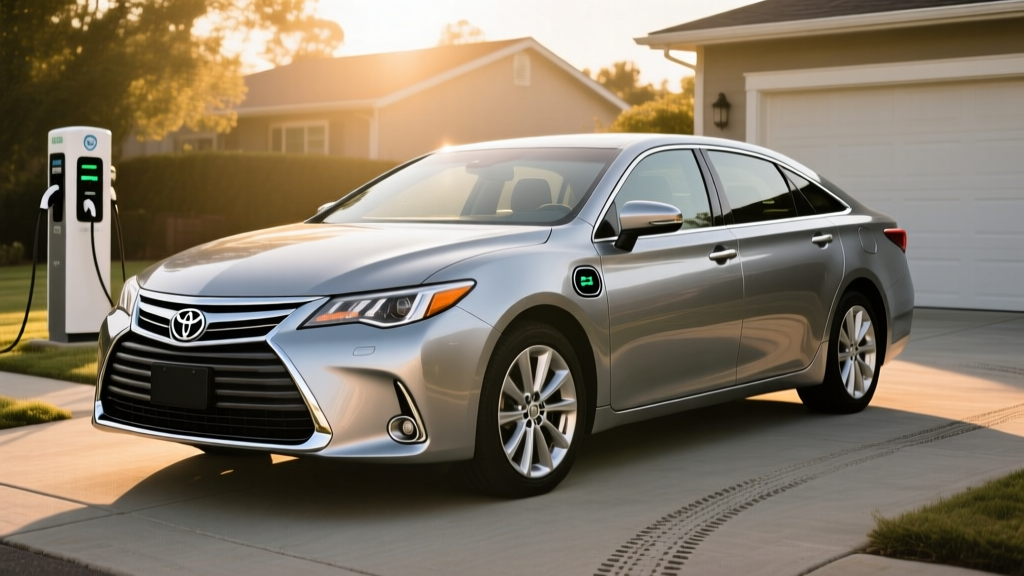
The 2013 Toyota Avalon Hybrid Limited remains one of the most efficient full-size sedans ever built. With an EPA rating of 40 MPG combined and Toyota's legendary hybrid reliability, it's a compelling used-car option in 2026 for drivers who want maximum fuel savings without plug-in infrastructure. As a conventional hybrid (HEV), it requires no charging — just fill up with regular unleaded and drive.
This isn't a plug-in hybrid (PHEV) or a battery-electric vehicle (BEV). The Avalon Hybrid uses a small nickel-metal hydride (NiMH) battery that recharges through regenerative braking and the gasoline engine. You'll never search for a charger, but you'll also never drive on electric-only power for more than a mile or two at low speeds.
2013 Avalon Hybrid Limited: Key Specifications
| Specification | Value |
|---|---|
| Powertrain | 2.5L 4-cyl Atkinson-cycle + electric motor (HEV) |
| Combined Horsepower | 200 hp (net system) |
| Engine Output | 156 hp @ 5,700 rpm / 156 lb-ft torque |
| Electric Motor Output | 105 kW (141 hp) |
| Transmission | eCVT (planetary gearset) |
| EPA City MPG | 40 MPG |
| EPA Highway MPG | 39 MPG |
| EPA Combined MPG | 40 MPG |
| Fuel Tank Capacity | 17.0 gallons |
| Total Range | ~680 miles (EPA est.) |
| 0–60 mph | ~8.0 seconds |
| Hybrid Battery Type | NiMH (nickel-metal hydride), ~1.6 kWh |
| Drivetrain | Front-wheel drive |
| Original MSRP (Limited) | $38,950 |
| 2026 Used Price Range | $10,000–$16,000 (depending on mileage/condition) |
Source: fueleconomy.gov — 2013 Toyota Avalon Hybrid
Fuel Economy: EPA vs. Real-World MPG
| Driving Scenario | EPA Rating | Real-World Expectation |
|---|---|---|
| City (stop-and-go) | 40 MPG | 41–44 MPG (hybrids excel here) |
| Highway (70 mph cruise) | 39 MPG | 35–38 MPG (aerodynamic drag, less regen benefit) |
| Combined (mixed driving) | 40 MPG | 38–42 MPG |
| Cold Weather (below 32°F) | N/A | 33–37 MPG (engine runs more for cabin heat) |
The 2013 Avalon Hybrid's Atkinson-cycle engine and regenerative braking system are optimized for urban driving. In city traffic, the electric motor handles frequent low-speed acceleration, and the engine shuts off at stops. Many owners report exceeding the 40 MPG city EPA estimate by 2–4 MPG on warm-weather commutes.
Highway driving tells a different story. At sustained 70+ mph speeds, the gasoline engine does nearly all the work. The hybrid system's advantage diminishes, and you'll see fuel economy drop to the mid-to-high 30s. Cold weather further reduces efficiency because the engine must run continuously to provide cabin heat — the Avalon Hybrid does not use a heat pump (that technology is reserved for modern BEVs and some newer PHEVs).
HEV vs. PHEV vs. EV: Where Does the Avalon Hybrid Fit?
| Factor | 2013 Avalon Hybrid (HEV) | Modern PHEV (e.g., RAV4 Prime) | Modern BEV (e.g., Tesla Model 3) |
|---|---|---|---|
| Plug-in Required? | No | Yes (for EV range) | Yes (always) |
| Electric-Only Range | ~1 mi at low speed | 35–42 mi | 250–360 mi |
| Fuel/Charging Cost per Mile | ~$0.10–$0.13 | ~$0.04 (EV mode) / ~$0.12 (gas) | ~$0.03–$0.06 |
| Home Charging Needed? | No | Recommended (Level 2) | Essential (Level 2) |
| Tailpipe Emissions | Yes (low) | Yes (when engine runs) | None at tailpipe |
| Federal Tax Credit (New) | None | Up to $7,500 (§30D) | Up to $7,500 (§30D) |
Hybrid Powertrain: How It Works
The 2013 Avalon Hybrid uses Toyota's Hybrid Synergy Drive, pairing a 2.5-liter four-cylinder Atkinson-cycle engine with a 105 kW permanent-magnet electric motor. The system's net output is 200 horsepower — adequate for confident highway merging and passing, though not sporty.
The eCVT (electronically controlled continuously variable transmission) isn't a traditional belt-and-pulley CVT. It uses a planetary gearset to seamlessly blend power from the engine and electric motor. This design is exceptionally durable — there are no belts, clutches, or conventional gear shifts to wear out. Many Avalon Hybrids have exceeded 200,000 miles with no powertrain issues beyond routine maintenance.
The ~1.6 kWh NiMH battery pack is small by modern standards. It cannot propel the car on electric power alone for meaningful distances. Instead, it serves as a buffer — capturing energy from regenerative braking and redeploying it for acceleration assist. This is the fundamental difference between a conventional hybrid and a plug-in hybrid: the Avalon Hybrid's battery is a power-assist device, not a primary energy source.
Battery Longevity, Warranty & Replacement Cost
Hybrid Battery Warranty & Lifespan
- Original Warranty: 8 years / 100,000 miles (10 years / 150,000 miles in CARB states: CA, CT, ME, MD, MA, NJ, NY, OR, RI, VT, WA)
- Expected Lifespan: 10–15 years / 150,000–200,000+ miles (NiMH chemistry is highly durable)
- 2026 Status: Original warranty has expired on all 2013 models; check if extended coverage was purchased
- Replacement Cost (OEM new): $2,500–$4,000 (dealer installed)
- Replacement Cost (remanufactured): $1,000–$2,000 (independent hybrid shops)
- Individual Cell Replacement: $200–$500 (specialist shops can replace failed modules only)
Toyota's NiMH hybrid batteries have an outstanding longevity track record. Unlike the lithium-ion packs in modern EVs, NiMH chemistry degrades slowly and predictably. The 2013 Avalon Hybrid's battery is now 13 years old, and many original packs are still functioning with only moderate capacity loss (typically 10–20% degradation over this period).
Signs of hybrid battery failure include: reduced fuel economy (dropping below 35 MPG), the battery charge indicator fluctuating rapidly, the check engine light with codes P0A80 or P0A7F, and reduced acceleration assist. If you're buying a used 2013 Avalon Hybrid, request a hybrid battery health check — any Toyota dealer can run a diagnostic that shows battery internal resistance and voltage delta across modules.
The good news: even if the battery needs replacement, the cost is manageable. Remanufactured NiMH packs from reputable suppliers like Green Bean Battery or Dorman come with 3–5 year warranties and cost a fraction of OEM new. This is far less expensive than replacing a lithium-ion pack in a modern BEV ($5,000–$20,000+).
Pricing, Tax Credits & Ownership Economics
The 2013 Avalon Hybrid Limited originally retailed for $38,950. In 2026's used market, well-maintained examples with 100,000–140,000 miles typically sell for $10,000–$16,000 depending on condition, location, and service history.
Federal Tax Credit Status
The 2013 Avalon Hybrid does not qualify for the federal §30D clean vehicle tax credit. Under current IRS rules, only new plug-in electric vehicles (BEVs and PHEVs with at least 7 kWh of battery capacity) are eligible. Conventional hybrids like the Avalon Hybrid have never qualified for §30D, and the used-EV credit (up to $4,000 under §25E) also excludes non-plug-in hybrids.
Some states previously offered hybrid purchase incentives, but most have expired or shifted focus to plug-in vehicles. Check your state's energy office for any remaining programs.
Annual Fuel Cost Estimate
| Annual Miles | Avg. Gas Price ($3.50/gal) | Annual Fuel Cost (40 MPG) | vs. 25 MPG Gas Sedan |
|---|---|---|---|
| 12,000 | $3.50 | $1,050 | Saves $630/year |
| 15,000 | $3.50 | $1,313 | Saves $787/year |
| 20,000 | $3.50 | $1,750 | Saves $1,050/year |
For a driver covering 15,000 miles per year, the Avalon Hybrid saves roughly $700–$800 annually compared to a typical 25 MPG midsize gasoline sedan. Over five years, that's $3,500–$4,000 in fuel savings — enough to offset a significant portion of the purchase price or cover a future hybrid battery replacement.
Reliability, Safety & What Owners Report
The 2013 Avalon Hybrid benefits from Toyota's strongest reliability reputation. The hybrid powertrain has fewer wear items than a conventional gasoline car: no traditional transmission clutches, no starter motor, no alternator (the hybrid motor/generator handles both functions), and regenerative braking extends brake pad life significantly (many owners report 80,000+ miles on original brake pads).
The NHTSA gave the 2013 Avalon a 5-star overall safety rating. The IIHS rated it "Good" in all crash-test categories. Standard safety equipment includes 10 airbags, stability control, and a rearview camera. The Limited trim adds blind-spot monitoring and rear cross-traffic alert.
Common owner-reported issues (non-hybrid-specific):
- Dashboard cracking in hot climates (cosmetic, not safety-related)
- Water pump seepage around 100,000–130,000 miles ($300–$500 repair)
- Brake actuator assembly wear (rare, but $1,200–$1,800 if it fails — listen for unusual brake pedal feel or buzzing from the brake accumulator)
Who Should Choose the 2013 Avalon Hybrid Limited?
Choose the Avalon Hybrid If:
- You drive 15,000+ miles per year and want to minimize fuel costs
- You have no access to home or workplace charging (no plug needed)
- You want a full-size, comfortable sedan with a smooth ride
- You prioritize proven reliability and low maintenance costs
- Your budget is $10,000–$16,000 for a used vehicle
- You take mostly city/suburban trips where the hybrid system shines
Consider a PHEV or BEV Instead If:
- You can install a Level 2 home charger and want electric-only commuting
- You want to eliminate tailpipe emissions entirely (BEV)
- You qualify for the §30D tax credit on a new EV (income + MSRP rules apply)
- You want modern infotainment, Apple CarPlay/Android Auto, or ADAS features
- Your daily commute is under 40 miles round-trip (a PHEV covers it on electricity)
Decision Framework: 2013 Avalon Hybrid vs. Alternatives
- No charging access + high miles + tight budget → 2013 Avalon Hybrid (best value per mile)
- Home charging available + short commute + want EV benefits → Used PHEV (Prius Prime, Clarity PHEV) or new PHEV
- Home charging + longer budget + want lowest operating cost → Used BEV (Model 3, Bolt, Leaf) — factor in battery health
- Low annual miles (<8,000) → Fuel savings may not justify hybrid premium; a conventional gas Avalon (21/31 MPG) costs less upfront
Frequently Asked Questions
How many MPG does the 2013 Avalon Hybrid get?
The EPA rates it at 40 MPG city, 39 MPG highway, and 40 MPG combined. In real-world driving, expect 41–44 MPG in city conditions, 35–38 MPG on the highway, and 38–42 MPG combined. Cold weather can drop these figures by 10–15%.
Is the 2013 Avalon Hybrid a plug-in hybrid?
No. The 2013 Avalon Hybrid is a conventional hybrid (HEV). It cannot be plugged in and does not have meaningful electric-only range. The battery recharges through regenerative braking and the gasoline engine. Toyota never offered a plug-in version of the Avalon.
How long does the hybrid battery last?
Toyota's NiMH hybrid batteries typically last 10–15 years and 150,000–200,000+ miles. Many 2013 Avalon Hybrids are still running on their original battery packs in 2026. If replacement is needed, expect $1,000–$2,000 for a remanufactured pack or $2,500–$4,000 for a new OEM unit.
Does the 2013 Avalon Hybrid qualify for any tax credit?
No. Federal §30D and §25E tax credits apply only to plug-in electric vehicles (BEVs and qualifying PHEVs). Conventional hybrids do not qualify for any federal purchase incentive. Some state-level programs previously offered hybrid incentives, but most have ended.
Is it expensive to maintain a 13-year-old hybrid?
Not necessarily. The hybrid system itself is low-maintenance — there are no hybrid-specific service items beyond monitoring battery health. Routine maintenance (oil changes every 10,000 miles, coolant, cabin air filter) costs the same as any 4-cylinder sedan. The biggest potential expense is hybrid battery replacement, but at $1,000–$2,000 for a remanufactured unit, it's manageable and typically lasts another 8–10 years.
How does the Avalon Hybrid compare to a Prius?
The Prius (2013: 50 MPG combined) is more fuel-efficient but significantly smaller, less powerful, and less refined. The Avalon Hybrid trades 10 MPG for a full-size cabin, 200 hp, a quieter ride, and premium features. If you need rear-seat space for adults and a large trunk (14.0 cu ft), the Avalon is the better choice. If maximum MPG is your priority, the Prius wins.
Final Assessment: Still a Smart Buy in 2026
The 2013 Toyota Avalon Hybrid Limited occupies a specific and valuable niche: maximum fuel efficiency for drivers who cannot or prefer not to plug in. At $10,000–$16,000 on the used market, with 40 MPG real-world economy and Toyota's hybrid reliability record, its total cost of ownership rivals much newer gasoline sedans.
It won't deliver the silent, instant-torque experience of a modern EV, and its 2013-era infotainment and driver-assistance features feel dated. But as a dependable, efficient daily driver that asks nothing more than occasional fill-ups with regular gas, the Avalon Hybrid Limited remains a rational, data-backed choice for cost-conscious buyers in 2026.