Quick Verdict: A Luxury Hybrid That Still Holds Up
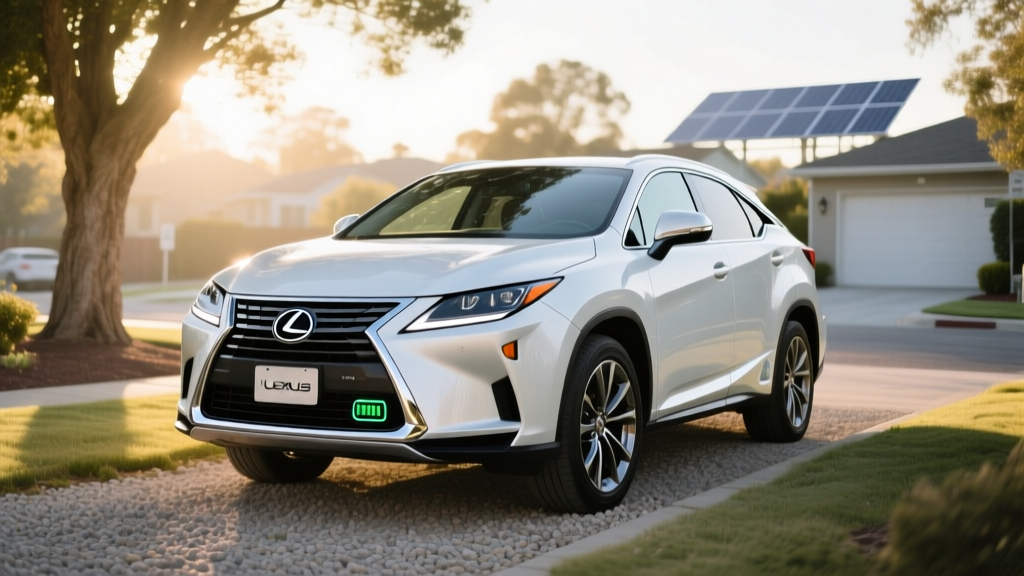
The 2011 Lexus RX 450h occupies a specific niche in the used luxury-SUV market: a midsize crossover that delivers genuine fuel savings over its gas-only RX 350 sibling without requiring any change in driving or fueling habits. This is a conventional hybrid (HEV), not a plug-in hybrid (PHEV) — you never plug it in, and the battery recharges through regenerative braking and the gasoline engine.
For buyers in 2026 weighing a used 2011 RX 450h against newer electrified options, the calculus comes down to three questions: Does the real-world fuel economy justify the hybrid premium on the used market? What will a 15-year-old hybrid battery replacement cost? And how does this HEV compare to modern PHEVs and full EVs? This guide answers each with exact numbers.
HEV vs PHEV: Understanding the 2011 RX 450h's Hybrid System
Conventional Hybrid (HEV) — like the 2011 RX 450h: The gasoline engine and electric motor(s) work together to move the vehicle. A small battery (roughly 1.9 kWh gross, sealed nickel-metal hydride) captures energy from braking and engine excess. You fuel it exclusively at gas stations. No plug, no charging cable, no electric-only range to manage.
Plug-in Hybrid (PHEV) — like the current Lexus RX 500h+ or Toyota RAV4 Prime: A larger battery (typically 18-22 kWh) can be charged from a wall outlet or public charger, delivering 30-40 miles of electric-only driving before the gas engine activates. PHEVs require plug-in access to realize their efficiency advantage.
The 2011 RX 450h is strictly an HEV. Lexus did not offer a plug-in RX variant until the 2026 model year RX 500h+. If you see listings advertising "electric range" for a 2011 RX hybrid, that's incorrect — this vehicle has zero plug-in capability and zero electric-only miles.
Fuel Economy: EPA Ratings and Real-World MPG
The EPA rated the 2011 Lexus RX 450h as follows, per fueleconomy.gov:
| Driving Cycle | EPA Rating | Real-World Expectation |
|---|---|---|
| City | 32 MPG | 29-33 MPG (hybrids often match or beat EPA city) |
| Highway | 28 MPG | 25-28 MPG (highway reduces regen advantage) |
| Combined | 30 MPG | 27-31 MPG depending on driving mix |
How many MPG does this hybrid get in practice? Most owners report combined figures in the 27-30 MPG range, which tracks closely with the EPA estimate. The hybrid system's greatest advantage appears in stop-and-go city driving, where regenerative braking recaptures kinetic energy that a conventional vehicle wastes as heat. Highway-heavy commuters will see the gap between the RX 450h and the gas RX 350 (EPA 20 MPG combined) narrow to roughly 7-8 MPG rather than the 10 MPG combined advantage the EPA sticker suggests.
For context, the 2011 RX 350 AWD is EPA-rated at 18 city / 24 highway / 20 combined. The RX 450h's 30 MPG combined represents a 50% improvement in city driving — substantial for a 4,600-pound luxury SUV.
Powertrain Specs: What Moves the RX 450h
| Specification | 2011 Lexus RX 450h |
|---|---|
| Engine | 3.5L V6 (2GR-FXE Atkinson cycle) |
| Engine Output | 245 HP @ 6,000 RPM |
| Electric Motors | Front motor (167 HP) + Rear motor (67 HP, AWD models) |
| Net System Horsepower | 295 HP combined |
| Transmission | Electronically controlled CVT (eCVT) |
| Drivetrain | AWD (rear motor-driven, no mechanical driveshaft) |
| Battery Type | Nickel-Metal Hydride (NiMH), ~1.9 kWh gross |
| 0-60 MPH | ~7.8 seconds |
| Curb Weight | ~4,630 lbs |
| Towing Capacity | 3,500 lbs |
The Atkinson-cycle V6 sacrifices low-RPM torque for thermal efficiency, and the electric motors fill that torque gap instantly. The result is a powertrain that feels responsive from a stop despite the engine's efficiency-first tuning. The eCVT is a power-split device — not a belt-driven CVT — and it's among the most durable transmissions Toyota/Lexus has ever built.
The AWD system on the RX 450h is worth noting: the rear axle is driven entirely by the rear electric motor with no mechanical connection to the engine. This means AWD engagement is instantaneous and doesn't add the parasitic drivetrain losses of a conventional AWD system.
Battery Reliability, Warranty, and Replacement Cost
Original Warranty (when new): Lexus covered the hybrid battery for 8 years / 100,000 miles (10 years / 150,000 miles in California and states adopting CARB emissions standards).
Current Status (2026): A 2011 model is now 15 years old. The original hybrid battery warranty has expired for all examples regardless of mileage. Any battery failure is an out-of-pocket expense for the current owner.
Is this hybrid reliable, and what does battery replacement cost? The 2011 RX 450h is one of the most reliable luxury SUVs of its era. The Toyota Hybrid Synergy Drive system has accumulated billions of real-world miles across the Lexus and Toyota lineups, and the NiMH battery chemistry — while less energy-dense than modern lithium-ion — is known for gradual, predictable degradation rather than sudden failure.
Many 2011 RX 450h examples have surpassed 150,000-200,000 miles on the original hybrid battery. When failure does occur, replacement costs break down as follows:
- Dealer OEM replacement: $4,000 - $6,500 (new Lexus battery pack + labor)
- Refurbished/remanufactured pack: $2,000 - $3,500 (reconditioned NiMH modules, installed by hybrid specialist shops)
- Individual module replacement: $800 - $1,500 (only failed modules replaced — viable if just 1-2 of the battery's modules have degraded)
According to NHTSA records, the 2011 RX 450h has no major safety recalls specific to the hybrid battery system. The eCVT power-split device rarely requires service, and the regenerative braking system extends conventional brake pad life significantly — many owners report 80,000+ miles on original brake pads.
Hybrid vs PHEV vs EV: Which Fits Your Driving Pattern?
| Factor | 2011 RX 450h (HEV) | Modern PHEV (e.g., RX 500h+) | Full EV (e.g., Tesla Model X) |
|---|---|---|---|
| Plug-in Required? | No | Yes (for EV range benefit) | Yes (always) |
| Electric-Only Range | 0 miles | ~35-40 miles | 300-350 miles |
| Fuel Cost (per mile) | ~$0.13 (at $3.90/gal, 30 MPG) | ~$0.04 electric / $0.13 gas | ~$0.04-$0.06 |
| Home Charging Needed? | No | Recommended (Level 2) | Required (Level 2) |
| Used Price Range (2026) | $8,000 - $15,000 | $50,000+ (new/near-new) | $25,000 - $60,000 |
| Federal Tax Credit | None | Up to $7,500 (if eligible) | Up to $7,500 (if eligible) |
| Maintenance Cost | Low (proven platform) | Moderate (complex system) | Low (fewer moving parts) |
Choose the 2011 RX 450h (HEV) if: You want a luxury SUV under $15,000 with strong reliability, no charging infrastructure needs, 30 MPG combined, and you drive 12,000 miles/year or less. You lack home charging access or live in an apartment.
Choose a modern PHEV if: You have home Level 2 charging, your daily commute is under 40 miles (covered on electric), and you want a new-vehicle warranty with current safety tech and the §30D federal tax credit.
Choose a full EV if: You have reliable home charging, want the lowest per-mile fuel cost, drive in a region with robust DC fast-charging infrastructure, and are ready for a higher upfront investment offset by long-term savings.
Pricing, Tax Credits, and Used-Buyer Economics
Original MSRP (2011): The RX 450h started at approximately $45,650, a $5,000-$6,000 premium over the gas RX 350.
Current Used Market (2026): Expect to pay $8,000-$12,000 for a well-maintained example with 100,000-150,000 miles, and $12,000-$15,000 for lower-mileage examples under 80,000 miles with documented service history.
Does the 2011 RX 450h qualify for any tax credit? No. The federal §30D new clean vehicle credit applies only to new vehicle purchases meeting current battery-sourcing, MSRP cap, and buyer income requirements per IRS guidelines. The used EV credit (§25E) covers pre-owned battery-electric and plug-in hybrid vehicles — but conventional hybrids like the RX 450h are excluded from both programs. No state-level hybrid credits currently apply to a 2011 model year purchase.
Fuel cost payback analysis: At 30 MPG combined and $3.90/gallon, the RX 450h costs roughly $1,560/year in fuel for 12,000 miles of driving. A comparable gas RX 350 at 20 MPG combined costs $2,340/year — a $780 annual savings for the hybrid. Over 5 years, that's $3,900 in fuel savings, which largely offsets the used-market hybrid premium.
What to Inspect Before Buying a 2011 RX 450h
At 15 years old, the hybrid system itself is typically the least of your concerns. Focus your pre-purchase inspection on these areas:
- Hybrid battery health check: Any Toyota/Lexus dealer can run a hybrid battery diagnostic that shows individual module voltage delta. A healthy pack shows less than 0.2V variance between modules. Budget $200-$300 for this check — it's the single most important pre-purchase step.
- Inverter coolant pump: The hybrid system has a dedicated electric coolant pump. Listen for its operation (a faint hum when the vehicle is ON but the engine is off). Failure is uncommon but costly ($1,500-$2,500).
- Brake actuator assembly: The electro-hydraulic brake system on this generation RX can develop accumulator issues above 120,000 miles. Symptoms include a firm brake pedal and dashboard warnings. Replacement runs $1,200-$2,000.
- Standard wear items: Suspension bushings, struts, and the conventional 12V auxiliary battery are age-sensitive regardless of hybrid status.
Pros and Cons
Pros
- 30 MPG combined in a luxury midsize SUV — 50% better city MPG than the gas RX 350
- Exceptional long-term reliability (proven Toyota hybrid system, eCVT durability)
- No plug-in charging required — no infrastructure dependency
- AWD via electric rear motor (instant engagement, no drivetrain losses)
- Strong resale value retention even at 15 years old
- Quiet cabin, smooth ride quality typical of Lexus
Cons
- Original hybrid battery warranty expired — replacement is out-of-pocket ($2,000-$6,500)
- Dated infotainment (no Apple CarPlay/Android Auto, small screen)
- No federal or state tax credit eligibility
- NiMH battery less efficient in extreme cold (10-15% MPG drop in sub-freezing weather)
- Heavier than gas RX 350 (~350 lbs penalty from hybrid components)
- Outdated driver-assistance features by 2026 standards (no automatic emergency braking standard)
Frequently Asked Questions
How many MPG does the 2011 Lexus RX 450h get?
The EPA rates it at 32 city / 28 highway / 30 combined MPG. Real-world owners typically see 27-31 MPG combined, with city-heavy drivers often matching or exceeding the 32 MPG city rating thanks to regenerative braking.
How far can the 2011 RX 450h go on electric only?
Zero miles. This is a conventional hybrid (HEV), not a plug-in hybrid. The small NiMH battery assists the gasoline engine and captures braking energy, but it cannot propel the vehicle on electricity alone for any meaningful distance. You will never plug this vehicle in.
Is the 2011 RX 450h hybrid reliable?
Yes. The Toyota/Lexus hybrid system is among the most proven electrified powertrains in automotive history. The NiMH battery, eCVT, and power electronics regularly exceed 150,000-200,000 miles. The primary risk on a 2011 model is age-related battery degradation, which is gradual and detectable via dealer diagnostics.
What does a hybrid battery replacement cost?
Expect $4,000-$6,500 for a new OEM battery at a Lexus dealer, or $2,000-$3,500 for a refurbished pack from a hybrid specialist. Individual module replacement is possible for $800-$1,500 if only partial degradation is detected.
Does the 2011 RX 450h qualify for any tax credit?
No. The federal §30D credit applies only to qualifying new vehicles. The §25E used clean vehicle credit covers only battery-electric and plug-in hybrid vehicles — conventional hybrids are excluded. Check IRS.gov for current credit rules.
Hybrid vs PHEV vs EV — which should I choose?
Choose the 2011 RX 450h if you want a budget-friendly luxury SUV under $15,000 with no charging needs and proven reliability. Choose a PHEV if you have home charging and want 30-40 miles of electric commuting with gas backup. Choose a full EV if you want the lowest operating cost and have reliable charging access.