Quick Verdict: The 2010 Lexus HS 250h Hybrid at a Glance
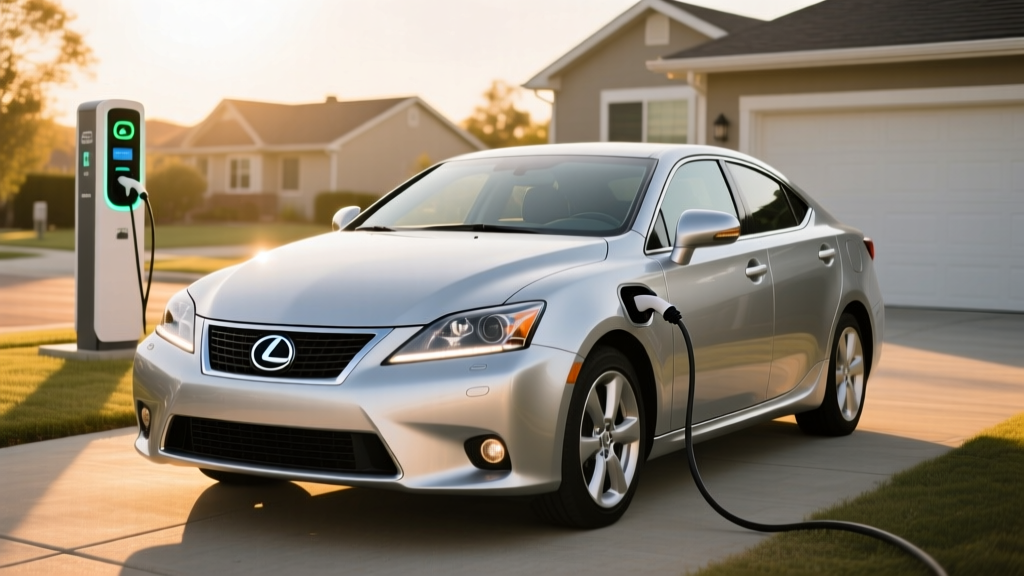
The 2010 Lexus HS 250h was Lexus's first dedicated hybrid sedan, built on the Toyota MC platform and sharing its core Hybrid Synergy Drive powertrain with the third-generation Prius. It was sold in the U.S. for only three model years (2010–2012) before being discontinued due to slow sales. Today, it exists exclusively on the used market, where it offers a compelling mix of luxury, reliability, and proven hybrid efficiency — but buyers need to understand exactly what they're getting into with a 15-year-old hybrid battery.
This is a conventional hybrid (HEV), not a plug-in hybrid. You never plug it in. The gasoline engine and regenerative braking recharge the small nickel-metal hydride (NiMH) battery automatically. If you're looking for electric-only driving range or a plug, this isn't the car — and that distinction matters as you evaluate it against modern PHEVs and BEVs.
| Spec | Value |
|---|---|
| Powertrain | 2.4L inline-4 + electric motor (HEV) |
| Combined Horsepower | 187 HP (net system output) |
| Gasoline Engine | 147 HP @ 6,000 rpm / 138 lb-ft @ 4,400 rpm |
| Electric Motor | 105 kW (141 HP) AC synchronous |
| Transmission | eCVT (planetary gearset) |
| Battery Chemistry | Nickel-Metal Hydride (NiMH) |
| Battery Capacity | 1.6 kWh (nominal) |
| EPA MPG (City / Hwy / Combined) | 35 / 34 / 35 |
| Fuel Tank | 13.2 gallons |
| Total Range | ~462 miles |
| 0–60 mph | 8.4 seconds |
| Drivetrain | Front-wheel drive |
| Original MSRP (Base) | $37,030 |
HEV vs. PHEV: Where the HS 250h Fits
Conventional Hybrid (HEV) — This car: The HS 250h uses a small 1.6 kWh NiMH battery charged entirely by the gasoline engine and regenerative braking. There is no plug, no charging port, and no electric-only driving range to speak of (the car can creep at very low speeds on electric power for roughly a quarter mile, but this is not usable EV range). The electric motor assists the gas engine during acceleration and enables engine-off coasting and stop-start, which is how it achieves 35 MPG combined despite a 3,700-lb curb weight.
Plug-In Hybrid (PHEV) — Not this car: Modern PHEVs like the Toyota RAV4 Prime or Lexus NX 450h+ carry much larger batteries (18–22 kWh), offer 30–45 miles of electric-only range, and require plugging in to realize their efficiency advantage. If you want EV commuting with gas-engine backup, you need a PHEV or a full BEV — the HS 250h cannot do this.
Battery Electric Vehicle (BEV): Fully electric, zero tailpipe emissions, requires home or public charging infrastructure. If you have reliable Level 2 home charging and a commute under 250 miles, a modern BEV will cost far less per mile to operate than any HEV.
Fuel Economy: EPA vs. Real-World MPG
The EPA rates the 2010 Lexus HS 250h at 35 MPG city, 34 MPG highway, and 35 MPG combined, per fueleconomy.gov. These numbers were competitive in 2010 but are middling by today's standards — the current Toyota Prius achieves 57 MPG combined, and the Toyota Camry Hybrid returns 52 MPG combined.
| Driving Condition | MPG |
|---|---|
| EPA City | 35 MPG |
| EPA Highway | 34 MPG |
| EPA Combined | 35 MPG |
| Real-World City (owner-reported) | 36–39 MPG |
| Real-World Highway (70+ mph) | 30–33 MPG |
| Real-World Combined (typical owner) | 33–36 MPG |
| Cold-Weather Combined (below 32°F) | 28–32 MPG |
Real-world note: Like most Toyota/Lexus hybrids, the HS 250h tends to slightly exceed its EPA city rating in stop-and-go traffic, where regenerative braking and electric assist do the most work. Highway efficiency drops more noticeably because the 2.4L Atkinson-cycle engine must sustain higher loads at speed, and the car's 3,700-lb weight and conventional aerodynamics work against it. In cold weather, expect a 10–15% fuel economy penalty as the engine runs more frequently to provide cabin heat and maintain battery temperature.
At current national average gas prices (~$3.15/gallon in early 2026), the HS 250h costs approximately $0.09 per mile to fuel at 35 MPG combined. For comparison, a modern BEV charged at home at $0.14/kWh averages roughly $0.04–0.05 per mile.
Powertrain Deep Dive: 187 HP Hybrid Synergy Drive
The HS 250h pairs a 2.4-liter 2AZ-FXE inline-four gasoline engine (147 HP, 138 lb-ft) with a 105 kW (141 HP) AC synchronous electric motor, routed through Toyota's eCVT — technically a planetary gearset that blends power from both sources seamlessly. Net system output is 187 HP.
This is the same architecture as the third-generation Prius but tuned for more power and refinement. The eCVT is bulletproof — there are no belts, bands, or friction clutches to wear out, and this transmission design has proven to be one of the most reliable in automotive history. Acceleration to 60 mph takes 8.4 seconds, which is adequate for merging and passing but not quick by modern standards.
Drive modes include Normal, Eco, Power, and EV. The EV mode is largely symbolic — it allows electric-only driving at very low speeds (under 25 mph) for about a quarter mile, useful for creeping through a parking garage but not for meaningful zero-emission driving.
Battery Health, Lifespan, and Replacement Costs
Original Battery Warranty: Lexus covered the hybrid battery for 8 years / 100,000 miles (10 years / 150,000 miles in CARB states including California, New York, Massachusetts, and others adopting California emissions standards). For a 2010 model, this warranty expired no later than 2020 in most states or 2022 in CARB states.
Battery Chemistry: Nickel-Metal Hydride (NiMH) — a mature, well-understood chemistry that degrades more predictably than early lithium-ion packs but is heavier and less energy-dense.
Expected Lifespan: Toyota/Lexus NiMH hybrid batteries typically last 150,000–200,000 miles before significant capacity loss, though many exceed this. At 15+ years old, age-related degradation is a real concern regardless of mileage.
Battery replacement cost: A new OEM hybrid battery from Lexus runs approximately $2,500–$3,500 installed at a dealer. Independent hybrid specialists often offer refurbished or reconditioned NiMH packs for $1,200–$2,000 installed. Some shops replace individual failed modules within the pack for $500–$900, which can extend battery life at lower cost but is a temporary fix if other modules are also aging.
Signs of hybrid battery degradation to watch for when buying:
- Noticeably reduced fuel economy (below 30 MPG combined in normal driving)
- The gasoline engine running more frequently at stops or low speeds
- Dashboard warning lights: "Check Hybrid System" or red triangle master warning
- Rapid state-of-charge swings on the energy monitor display
- Reduced regenerative braking strength
Before purchasing any 2010 HS 250h, have the hybrid battery health checked using a Toyota Techstream scan tool (or equivalent) to read the battery's internal resistance, voltage delta between modules, and state-of-health metrics. A pre-purchase inspection by a hybrid-experienced technician is non-negotiable for a car of this age.
Reliability and Common Issues
The 2010 HS 250h benefits from Toyota's hybrid powertrain expertise, and the eCVT and hybrid system are among the most reliable components in the automotive industry. However, the HS 250h has some model-specific trouble spots documented on NHTSA and owner forums:
- Hybrid battery failure: The primary concern at this age. Budget $1,500–$3,500 for eventual replacement if the original battery is still in the car.
- Brake actuator recall: NHTSA recall 10V017000 addressed the ABS/VSC/traction control system. Verify this recall was performed.
- Steering intermediate shaft: Some owners report clunking from the steering column — a known issue with the intermediate shaft coupling.
- Water pump: The gasoline engine water pump can fail around 100,000–130,000 miles (~$300–$500 repair).
- 12V auxiliary battery: Located in the trunk, this standard lead-accent battery typically lasts 3–5 years and is a common cause of no-start issues if neglected.
Overall, the HS 250h is a reliable vehicle if the hybrid battery is healthy. The 2AZ-FXE engine is proven, the eCVT is nearly indestructible, and Lexus build quality holds up well. The risk is concentrated in the hybrid battery, which is a known-cost item rather than an unknown.
Pricing, Value, and Tax Credit Eligibility
The 2010 Lexus HS 250h is available only on the used market. As of early 2026, typical pricing ranges from:
- $4,000–$6,000 for high-mileage examples (140,000+ miles) or cars needing battery replacement
- $6,000–$9,000 for average-condition examples with 90,000–140,000 miles
- $9,000–$12,000 for low-mileage, well-maintained examples with documented battery health or recent replacement
Federal tax credit status: The HS 250h does not qualify for the federal §30D new clean vehicle credit — that credit applies only to new vehicles purchased from a dealer. For used EVs and plug-in hybrids, the Used Clean Vehicle Credit (§25E) offers up to $4,000 or 30% of the sale price (whichever is less), but it applies only to plug-in electric vehicles with a battery capacity of at least 7 kWh. Because the HS 250h is a conventional HEV with a 1.6 kWh NiMH battery and no plug, it does not qualify for any federal EV tax credit. See IRS guidelines on the used clean vehicle credit for eligibility details.
Some states offer incentives for used hybrid purchases, but these vary widely and change frequently. Check your state's energy office or DMV for current programs.
Who Should Buy the 2010 HS 250h — and Who Shouldn't
Pros
- Proven, reliable Toyota hybrid powertrain
- 35 MPG combined — no plug required
- Lexus luxury and refinement at budget pricing
- eCVT transmission is virtually maintenance-free
- Strong parts availability via Toyota/Lexus network
- Quiet cabin with solid ride quality
Cons
- Hybrid battery replacement likely needed ($1,500–$3,500)
- Outdated infotainment and no modern driver-assist features
- MPG lags far behind current hybrids (Prius: 57 MPG)
- No EV-only range; not a PHEV
- Discontinued model — limited resale demand
- Only available used, with age-related wear concerns
Choose the 2010 HS 250h if: You want a cheap, comfortable, fuel-efficient daily driver with Lexus quality, you don't have access to home charging (ruling out PHEVs and BEVs), and you can budget for a potential hybrid battery replacement. It's a strong value play in the $5,000–$8,000 range.
Look elsewhere if: You want maximum fuel efficiency (the current Prius or Camry Hybrid crushes it at 50+ MPG), you want electric-only commuting (get a PHEV), you want modern safety tech like automatic emergency braking and lane-keeping (standard on anything post-2018), or you want to minimize maintenance risk on a 15-year-old vehicle.
Frequently Asked Questions
How many MPG does the 2010 Lexus HS 250h hybrid get?
The EPA rates it at 35 MPG city, 34 MPG highway, and 35 MPG combined. Real-world owners typically see 33–39 MPG depending on driving style and conditions, with city driving often exceeding the EPA estimate thanks to regenerative braking.
Does the 2010 HS 250h need to be plugged in?
No. This is a conventional hybrid (HEV), not a plug-in hybrid. The battery charges automatically through the gasoline engine and regenerative braking. There is no charging port.
How far can the HS 250h drive on electric power alone?
Effectively zero practical electric-only range. The EV mode allows very low-speed creeping (under 25 mph) for roughly a quarter mile — useful in a parking garage but not for real driving. This car cannot function as an electric vehicle.
Is the 2010 Lexus HS 250h reliable?
The powertrain is highly reliable — the eCVT and hybrid system are among the most durable in the industry. The main risk is the NiMH hybrid battery, which at 15+ years old may need replacement at a cost of $1,500–$3,500. With a healthy battery, these cars routinely reach 200,000+ miles.
What does a hybrid battery replacement cost?
A new OEM battery from Lexus costs approximately $2,500–$3,500 installed. Refurbished packs from independent hybrid specialists run $1,200–$2,000 installed. Individual module replacement is possible for $500–$900 but may be a temporary fix.
Does the 2010 HS 250h qualify for any tax credits?
No. As a conventional hybrid with a small NiMH battery and no plug, it does not qualify for the federal §30D new vehicle credit or the §25E used clean vehicle credit. Those credits require plug-in capability and minimum battery capacity thresholds that the HS 250h does not meet.
Hybrid vs. PHEV vs. EV — which should I choose?
Choose a conventional hybrid (HEV) like the HS 250h if you can't charge at home and want better MPG without changing your habits. Choose a PHEV if you have home charging and want 30–45 miles of electric commuting with gas backup for road trips. Choose a full EV (BEV) if you have reliable home charging, your daily driving is under 250 miles, and you want the lowest per-mile operating cost and zero tailpipe emissions.