Quick Verdict: The Silverado Hybrid Was Ahead of Its Time — But Is It Still Worth It?
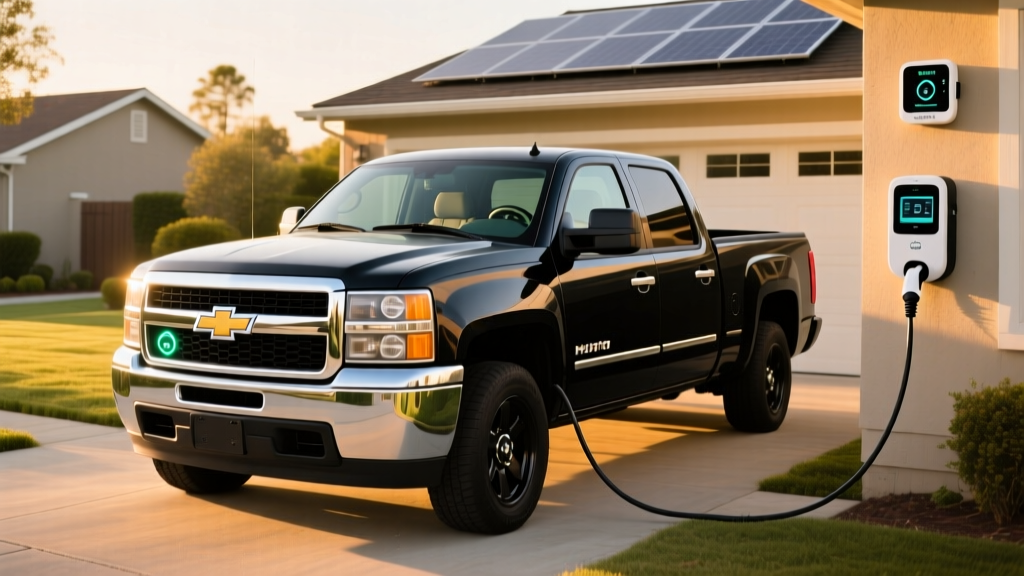
The 2010 Chevrolet Silverado 1500 Hybrid was GM's bold experiment: a full-size pickup with a two-mode hybrid powertrain that promised V6 fuel economy with V8 capability. Sixteen years later, it remains a curiosity on the used market — a truck that delivers a legitimate MPG bump over its gas-only sibling without requiring you to plug in. But with aging nickel-metal hydride batteries and limited parts support, buying one in 2026 requires careful eyes and realistic expectations.
This guide breaks down everything you need to know: EPA and real-world fuel economy, the hybrid powertrain specs, battery longevity and replacement cost, and how this discontinued HEV stacks up against modern hybrids, PHEVs, and full EVs on the truck market today.
HEV vs PHEV vs EV: Where Does the Silverado Hybrid Fit?
Before we dig into specs, it's essential to understand what the 2010 Silverado 1500 Hybrid actually is — because confusion between hybrid types leads to bad purchase decisions.
| Feature | HEV (This Truck) | PHEV (e.g., F-150 PowerBoost w/ future PHEV) | BEV (e.g., F-150 Lightning, Silverado EV) |
|---|---|---|---|
| Plug-in charging? | No — regenerative braking only | Yes — Level 1 or Level 2 | Yes — Level 2 or DC fast charge |
| Electric-only range | ~1 mile at low speed | 20–40 mi typical | 230–400+ mi |
| Gas engine | Yes (primary power) | Yes (backup + combined) | No |
| Fuel type | Gasoline | Gasoline + electricity | Electricity only |
| Battery size | ~1.8 kWh (NiMH) | 12–20 kWh (NMC) | 85–200+ kWh (NMC/LFP) |
| Federal tax credit (new) | None | Up to $7,500 (§30D, if eligible) | Up to $7,500 (§30D, if eligible) |
The 2010 Silverado 1500 Hybrid is a conventional hybrid (HEV). It cannot be plugged in. Its battery recharges exclusively through regenerative braking and the gasoline engine. If you're looking for electric-only commuting range or federal tax credit eligibility, this truck offers neither. What it does offer is a meaningful improvement in city fuel economy over the gas-only V8 Silverado of the same era — without any change in how you fuel or drive.
Powertrain Specs: The Two-Mode Hybrid System
GM's two-mode hybrid system was co-developed with BMW, Chrysler, and Mercedes-Benz (the "Global Hybrid Cooperation"). It pairs a 6.0-liter Vortec V8 with two electric motors integrated into the 4-speed automatic transmission. Here's the full breakdown:
| Specification | 2010 Silverado 1500 Hybrid |
|---|---|
| Engine | 6.0L Vortec V8 (VVT, Active Fuel Management) |
| Engine horsepower | 332 HP @ 5,100 RPM |
| Electric motors | Two AC synchronous motors (60 kW each) |
| Combined system output | 379 HP |
| Transmission | Electronically variable (EVT), two-mode |
| Battery type | Nickel-Metal Hydride (NiMH) |
| Battery capacity | ~1.8 kWh (estimated, 300V pack) |
| Drivetrain | RWD or 4WD |
| Towing capacity | Up to 6,100 lbs (RWD), 5,900 lbs (4WD) |
| Payload capacity | ~1,400 lbs |
| 0–60 mph | ~7.8 seconds (estimated) |
| Drive type | HEV — no plug-in capability |
The two-mode system operates differently depending on driving conditions. In city driving at low speeds, the truck can move on electric power alone for very short distances (under 1 mile, typically under 30 mph). At highway speeds, the system primarily relies on the V8 but uses cylinder deactivation (Active Fuel Management) to shut down four cylinders under light load. The electric motors assist during acceleration and capture energy during braking.
Fuel Economy: EPA Numbers and Real-World MPG
This is the main reason anyone considers the Silverado 1500 Hybrid. According to fueleconomy.gov, here are the official EPA ratings:
| Drivetrain | City MPG | Highway MPG | Combined MPG |
|---|---|---|---|
| 2WD Hybrid | 21 | 22 | 21 |
| 4WD Hybrid | 20 | 21 | 20 |
| 2WD Gas V8 (5.3L, 2010) | 15 | 21 | 17 |
| 4WD Gas V8 (5.3L, 2010) | 15 | 21 | 17 |
The hybrid's advantage is overwhelmingly in city driving — a 40% improvement in city MPG (21 vs 15). On the highway, the gap narrows to just 1 MPG. This is characteristic of conventional hybrids: regenerative braking and electric assist shine in stop-and-go traffic, while steady-state highway cruising relies mostly on the gas engine.
Owners consistently report 19–22 MPG combined in mixed driving. City-heavy commuters often see 21–23 MPG — occasionally beating the EPA estimate, which is common for hybrids. Highway-only trips at 75+ mph typically return 18–20 MPG. If the hybrid battery has degraded significantly, expect a 2–4 MPG drop, as the system loses regenerative efficiency and electric assist capability.
Battery Longevity, Reliability, and Replacement Cost
This is the make-or-break question for a 16-year-old hybrid. The 2010 Silverado's NiMH battery pack was originally covered under GM's hybrid-specific warranty: 8 years / 100,000 miles (10 years / 150,000 miles in CARB states). That factory warranty has long expired for every example on the road today.
How Long Do These Batteries Last?
NiMH batteries degrade more gracefully than early lithium-ion packs — they lose capacity gradually rather than failing catastrophically. Many 2010 Silverado Hybrids still have their original battery packs at 150,000+ miles, though with reduced effectiveness. Common symptoms of a degraded pack include:
- Reduced city MPG (dropping to 16–18 MPG)
- More frequent engine cycling on and off
- Reduced regenerative braking feel
- "Service Hybrid System" warning on the dash
Battery Replacement Cost
As of 2026, replacement options are limited and expensive:
- OEM-equivalent new pack: $3,500–$5,500 (parts + labor), though new-old-stock availability is dwindling
- Remanufactured pack: $2,000–$3,500 from specialty hybrid shops
- Used/salvage pack: $800–$1,800, but carries unknown remaining life
- Individual cell/module replacement: $500–$1,500 if only a few modules have failed (requires a knowledgeable hybrid technician)
The two-mode hybrid transmission itself is generally robust, but its electric motor components and power electronics (inverter) can also fail on high-mileage examples. Budget $1,500–$3,000 for potential hybrid-system repairs in the first two years of ownership.
Who Should Buy This Truck — and Who Shouldn't?
Pros
- 40% city MPG improvement over gas V8 Silverado
- Full V8 capability: 379 HP, 6,100-lb towing
- No plug-in required — fuel like a normal truck
- Proven, robust two-mode hybrid architecture
- Low used prices: $5,000–$10,000 depending on condition
Cons
- Minimal highway MPG gain (only +1 over gas V8)
- Aging NiMH battery — replacement is costly and parts are scarce
- No federal or state tax credits (used or new)
- Discontinued after 2013 — limited dealer support
- Heavier than gas Silverado (~300 lbs from hybrid system
- 4-speed transmission feels dated vs modern 8/10-speeds
Buy It If:
- You do a lot of city/suburban driving in a full-size truck and want lower fuel bills without changing your fueling habits
- You find a well-maintained example with a recent battery replacement or strong hybrid-system diagnostics
- You need V8 towing but want to save at the pump around town
Skip It If:
- You mostly drive highway miles — the MPG advantage almost disappears
- The hybrid battery hasn't been tested or replaced — budget $2,000–$5,000 for a potential swap
- You want electric-only driving range, plug-in capability, or tax incentives
- You want modern tech: the 2010 interior, infotainment, and safety features are firmly dated
How It Compares: 2010 Silverado Hybrid vs Modern Alternatives
If you're shopping for a fuel-efficient truck in 2026, here's how the 2010 Silverado Hybrid stacks up against current options:
| Truck | Type | Combined MPG / MPGe | City MPG | Hwy MPG | Towing | Starting Price (2026) |
|---|---|---|---|---|---|---|
| 2010 Silverado 1500 Hybrid | HEV | 20–21 MPG | 20–21 | 21–22 | 6,100 lbs | $5K–$10K (used) |
| 2026 Ford F-150 PowerBoost | HEV | 24 MPG | 25 | 24 | 12,700 lbs | ~$60,000 |
| 2026 Toyota Tundra i-FORCE MAX | HEV | 21 MPG | 22 | 20 | 12,000 lbs | ~$58,000 |
| 2026 Ford F-150 Lightning | BEV | 70–78 MPGe | — | — | 10,000 lbs | ~$55,000 |
| 2026 Chevy Silverado EV | BEV | 72–82 MPGe | — | — | 10,000 lbs | ~$57,000 |
The 2026 F-150 PowerBoost hybrid offers substantially better fuel economy, far more towing capacity, modern safety tech, and a full factory warranty — but at 6–10x the price. The Silverado Hybrid's only real advantage in 2026 is its rock-bottom used price.
Tax Credits and Incentives
The 2010 Chevrolet Silverado 1500 Hybrid does not qualify for any federal tax credit — not when it was new, and not today. The IRS §30D clean vehicle credit applies only to new plug-in electric vehicles (PHEVs and BEVs) that meet battery sourcing, MSRP cap, and buyer income requirements. Conventional hybrids (HEVs) have never been eligible for the §30D credit.
When new, the Silverado Hybrid did qualify for a now-expired alternative motor vehicle credit (IRC §30B), which provided up to $2,200 for qualifying hybrid vehicles purchased before December 31, 2010. That credit is long gone.
On the used market, the Used Clean Vehicle Credit (§25E) provides up to $4,000 (or 30% of the sale price, whichever is lower) — but only for used BEVs and PHEVs, not conventional hybrids. The Silverado 1500 Hybrid is excluded.
Bottom line: there are no federal incentives available for purchasing this truck in 2026. Check your state's DMV or energy office for any local programs, but most state incentives also target plug-in vehicles.
Buying Checklist: What to Inspect Before You Buy
If you're seriously considering a 2010 Silverado 1500 Hybrid, here's a practical pre-purchase checklist:
- Hybrid battery state of health: Have a hybrid-qualified technician run a diagnostic scan on the battery pack. Look for voltage imbalance between modules and overall capacity percentage.
- Hybrid system warning lights: Any "Check Hybrid System" or "Service Hybrid System" messages are a red flag — walk away or negotiate $3,000+ off the price.
- Transmission behavior: The two-mode EVT should shift smoothly. Harsh engagement, shuddering, or unusual whining from the electric motors warrants further inspection.
- Active Fuel Management: The V8 should seamlessly drop to 4 cylinders under light load. Listen for rough transitions or misfire codes — AFM lifter failures are a known issue on GM V8s of this era.
- Maintenance records: Hybrid system coolant should have been changed at recommended intervals. Brake life should be extended (regenerative braking reduces wear), so if the rotors/pads have been replaced multiple times, the regen system may be underperforming.
- Rust and frame condition: As with any 16-year-old truck, inspect the frame, rocker panels, and wheel arches for corrosion, especially in salt-belt states.
Frequently Asked Questions
How many MPG does the 2010 Chevrolet Silverado 1500 Hybrid get?
The EPA rates the 2WD model at 21 city / 22 highway / 21 combined MPG, and the 4WD model at 20 city / 21 highway / 20 combined. Real-world owners report 19–23 MPG combined depending on driving mix, with city-heavy routes yielding the best results. A degraded hybrid battery can drop fuel economy by 2–4 MPG.
Can I plug in the 2010 Silverado Hybrid to charge?
No. This is a conventional hybrid (HEV), not a plug-in hybrid (PHEV). The battery charges exclusively through regenerative braking and the gasoline engine. There is no charge port, no plug, and no electric-only driving range beyond brief low-speed maneuvering.
How long does the hybrid battery last, and what does replacement cost?
The original NiMH battery pack was warranted for 8 years/100,000 miles (10 years/150,000 miles in CARB states). Many original packs have lasted 150,000+ miles with gradual degradation. Replacement costs range from $800 (used salvage) to $5,500 (new OEM-equivalent), with remanufactured packs typically running $2,000–$3,500.
Is the 2010 Silverado Hybrid reliable?
The two-mode hybrid system itself proved durable, but the 6.0L V8's Active Fuel Management system is a known weak point — AFM lifter failures can cause costly engine repairs. The hybrid battery is the primary concern at this vehicle's age. Overall reliability depends heavily on maintenance history and whether the hybrid system has been serviced. According to NHTSA records, there were relatively few hybrid-specific recalls.
Does the 2010 Silverado Hybrid qualify for any tax credit?
No. It does not qualify for the federal §30D new clean vehicle credit (HEVs are excluded) or the §25E used clean vehicle credit (also limited to PHEVs and BEVs). The original IRC §30B alternative motor vehicle credit expired in 2010. No federal tax incentives are available for this vehicle in 2026.
Hybrid vs PHEV vs EV truck — which should I choose?
Choose a conventional hybrid (HEV) like the Silverado Hybrid or F-150 PowerBoost if you want better fuel economy without changing your fueling routine and don't have reliable access to charging. Choose a plug-in hybrid (PHEV) if you want 20–40 miles of electric commuting with a gas engine for longer trips (though no full-size PHEV truck is widely available as of 2026). Choose a full EV (BEV) like the F-150 Lightning or Silverado EV if you can charge at home, want the lowest per-mile fuel cost, and your typical trips fall within the 230–400 mile range.
What's the towing capacity of the Silverado 1500 Hybrid?
The 2WD model is rated for up to 6,100 lbs, and the 4WD model for up to 5,900 lbs. That's adequate for a small boat or utility trailer but significantly less than modern full-size hybrids (the 2026 F-150 PowerBoost tows up to 12,700 lbs). Towing also eliminates most of the hybrid's fuel economy advantage.