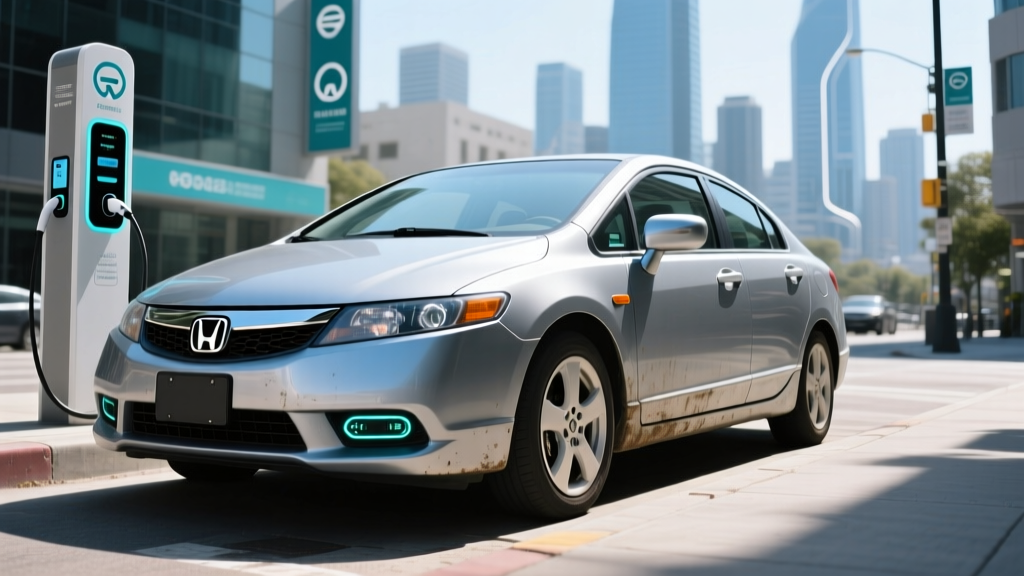
The 2009 Honda Civic Hybrid was one of the most fuel-efficient cars you could buy in the late 2000s, and in 2026 it remains a fixture on the used-car market for budget-conscious commuters. But a 17-year-old hybrid raises urgent questions: How does the EPA MPG hold up today? What happens when the IMA (Integrated Motor Assist) battery fails? And does this conventional hybrid still make financial sense compared to a modern EV, PHEV, or even a late-model gas Civic?
This guide breaks down the real numbers — fuel economy, battery replacement economics, powertrain specs, and ownership reality — so you can decide whether the 2009 Civic Hybrid is a smart used buy or a ticking time bomb.
2009 Civic Hybrid: Powertrain and Efficiency Specs
The 2009 Civic Hybrid uses Honda's first-generation IMA system — a conventional hybrid (HEV), not a plug-in. It pairs a 1.3-liter i-VTEC inline-four with a thin electric motor sandwiched between the engine and CVT transmission. You never plug it in; the battery recharges through regenerative braking and engine power.
| Spec | Value |
|---|---|
| Powertrain | 1.3L i-VTEC I-4 + IMA electric motor |
| Combined Horsepower | 110 hp @ 6,000 rpm |
| Combined Torque | 123 lb-ft @ 1,000–2,500 rpm |
| Transmission | CVT (Continuously Variable) |
| Drivetrain | FWD |
| Hybrid Battery | NiMH (Nickel-Metal Hydride), ~0.8 kWh |
| EPA City MPG | 40 MPG |
| EPA Highway MPG | 45 MPG |
| EPA Combined MPG | 42 MPG |
| Fuel Tank | 13.2 gallons |
| Total Range (est.) | ~554 miles |
| 0–60 mph | ~11.5 seconds |
| Curb Weight | ~2,857 lbs |
Source: EPA Fuel Economy — 2009 Honda Civic Hybrid
How Many MPG Does the 2009 Civic Hybrid Actually Get?
The EPA rates the 2009 Civic Hybrid at 40 city / 45 highway / 42 combined MPG. Honda's IMA system is unusual among early hybrids: it leans heavily on the electric motor at low speeds and during acceleration assist, which is why the highway number actually exceeds the city number — the opposite of Toyota's Hybrid Synergy Drive in the Prius.
Real-World MPG vs. EPA Sticker
Owner-reported data on Fuelly and EPA user submissions consistently show the 2009 Civic Hybrid averaging between 38 and 44 MPG combined in real-world driving. Several factors influence where you'll land:
- City-heavy commuting: Expect 36–40 MPG. The IMA system is less dominant in stop-and-go than Toyota's full-hybrid system, so city MPG often falls short of the 40 EPA rating.
- Highway cruising at 65–70 mph: Many owners report 44–48 MPG on flat terrain. The lean-burn capability of the 1.3L engine helps here.
- Cold weather (below 40°F): Expect a 5–10% drop. The engine runs richer during warm-up and the NiMH battery is less efficient at low temperatures.
- Aggressive driving: Heavy acceleration defeats the IMA assist strategy, pushing consumption toward 34–36 MPG.
| Driving Scenario | City | Highway | Combined |
|---|---|---|---|
| EPA Sticker | 40 | 45 | 42 |
| Real-World (Owner Avg.) | 36–39 | 43–47 | 38–44 |
| Cold Weather (est.) | 33–36 | 39–42 | 35–39 |
Compared to a 2009 gas-only Civic (EPA 25/36/29 combined), the hybrid saves roughly 1.5 gallons per 100 miles — about $500–$700 per year in fuel at 2026 gas prices of ~$3.20/gallon and 12,000 annual miles.
HEV vs. PHEV vs. EV: Where Does This Civic Fit?
The 2009 Civic Hybrid is a conventional hybrid (HEV). It has no plug, no electric-only range, and no ability to drive on battery power alone. The electric motor only assists the gasoline engine. Here's how that compares to the other electrified vehicle categories available in 2026:
| Feature | HEV (e.g., 2009 Civic Hybrid) | PHEV (e.g., 2026 Toyota Prius Prime) | BEV (e.g., 2026 Tesla Model 3) |
|---|---|---|---|
| Plug-in Charging | No | Yes (Level 1/2) | Yes (Level 1/2/DC) |
| Electric-Only Range | 0 miles | ~44 miles | 250–360 miles |
| Total Range | ~554 miles | ~600+ miles | 250–360 miles |
| Fuel / Energy Cost (per mile) | ~$0.076 | ~$0.04–$0.08 | ~$0.03–$0.06 |
| Federal Tax Credit | None | Up to $7,500 (§30D) | Up to $7,500 (§30D) |
| Used Price (2026) | $3,500–$6,000 | $28,000–$36,000 | $22,000–$45,000 |
The 2009 Civic Hybrid makes sense only if you need the lowest possible upfront cost, have no home charging access, and drive a moderate commute. If you can charge at home and have a higher budget, a used BEV (like a 2019–2021 Nissan Leaf or Chevy Bolt) or a new PHEV will deliver lower per-mile costs and a fundamentally better driving experience.
Hybrid Battery Lifespan, Warranty, and Replacement Cost
This is the single biggest ownership risk for any 17-year-old hybrid. The 2009 Civic Hybrid uses a NiMH (Nickel-Metal Hydride) battery pack rated at roughly 0.8 kWh — tiny by modern standards, but sufficient for the IMA assist function.
Original Battery Warranty
Honda originally warranted the IMA battery for 10 years / 150,000 miles in CARB states (California, New York, Massachusetts, and others) and 8 years / 80,000 miles in non-CARB states. In 2026, every 2009 Civic Hybrid is well past both warranty thresholds. Any battery failure is an out-of-pocket expense.
Battery Replacement Cost in 2026
Here's what owners actually pay when the IMA battery fails:
- OEM Honda replacement (dealer): $2,500–$3,500 (parts + labor). Often not cost-effective for a car worth $4,000–$6,000.
- Aftermarket refurbished NiMH pack: $1,200–$1,800 installed at an independent hybrid specialist.
- DIY refurbished pack: $800–$1,200 for the cells, plus 3–5 hours of labor if you're mechanically inclined.
- Individual cell replacement (reconditioning): $200–$500 if only a few cells are weak — but this is a temporary fix on a 17-year-old pack.
Signs the IMA Battery Is Failing
- The IMA warning light illuminates on the dash.
- Fuel economy drops noticeably (below 32–34 MPG).
- The battery-charge gauge fluctuates erratically or never reaches full.
- The car fails a state emissions inspection due to IMA system codes (e.g., P0A7F, P0A80).
Many owners report the original NiMH pack lasting 120,000–160,000 miles. If the battery has already been replaced once (check service records), a quality refurb should last another 80,000–100,000 miles.
Is the 2009 Civic Hybrid Reliable?
The 2009 Civic Hybrid has a mixed reliability record. The conventional Civic platform (engine, transmission, suspension) is famously durable — many gas Civis from this era exceed 250,000 miles with basic maintenance. However, the hybrid variant carries specific risk areas:
- IMA battery degradation: Near-certain on an original pack. Budget for replacement.
- CVT transmission: Honda's CVTs from this era have a higher failure rate than their conventional automatics. Listen for whining, shuddering, or hesitation. Fluid changes every 30,000 miles help.
- Motor mount wear: The hybrid's engine mounts wear faster than gas models due to the auto-stop/start cycling.
- 12V battery drain: The auxiliary 12V battery can drain if the car sits for extended periods, as the IMA system draws from it.
According to NHTSA records, the 2009 Civic Hybrid had relatively few safety recalls — primarily related to the driver's airbag inflator (Takata). Verify that the Takata recall was performed before purchasing.
Pricing, Tax Credits, and Ownership Economics in 2026
The 2009 Civic Hybrid originally started at an MSRP of approximately $23,550. In the 2026 used market, expect to pay:
- $3,500–$4,500: Higher mileage (140,000+), possible cosmetic issues, original battery likely needs replacement.
- $4,500–$6,000: Lower mileage (90,000–130,000), well-maintained, possibly with a replaced battery.
- $6,000–$7,500: Exceptionally low mileage, dealer-certified, recent battery replacement with documentation.
Does It Qualify for Any Tax Credit?
No. The 2009 Civic Hybrid does not qualify for any current federal tax credit. The IRS §30D Clean Vehicle Credit applies only to new plug-in electric vehicles (BEVs and PHEVs) meeting battery-sourcing, MSRP, and buyer-income requirements. Conventional hybrids (HEVs) have never qualified for §30D. The older Hybrid Tax Credit that applied to the Civic Hybrid when new expired for Honda vehicles in 2008 due to the manufacturer sales cap.
There is also no federal used-EV credit (§25E) for conventional hybrids — that credit applies only to used BEVs and PHEVs priced under $25,000.
5-Year Cost of Ownership Estimate
| Category | Estimated Cost |
|---|---|
| Purchase Price | $5,000 |
| Fuel (42 MPG avg., $3.20/gal) | $4,570 |
| IMA Battery Replacement (if needed) | $1,500 |
| Insurance (avg.) | $4,200 |
| Maintenance & Repairs | $2,500 |
| Registration & Taxes | $750 |
| Total (5 years) | ~$18,520 |
| Cost per mile | ~$0.31 |
For comparison, a 2026 Toyota Corolla Hybrid (EPA 50 combined, ~$24,000 new) would cost roughly $0.42/mile over five years including depreciation — but comes with a full warranty and modern safety tech. A used 2020 Chevy Bolt EV (~$12,000) would cost roughly $0.28/mile if you can charge at home.
Who Should Buy the 2009 Civic Hybrid?
Pros
- Very low purchase price ($3,500–$6,000)
- Strong fuel economy (42 MPG combined)
- No plug-in charging required — works for apartment dwellers
- Honda Civic platform durability (engine, body, suspension)
- Low insurance costs
Cons
- IMA battery replacement likely ($1,200–$3,500)
- No EV mode, no electric-only driving
- CVT transmission is a known weak point
- Outdated safety tech (no AEB, lane-keep, blind-spot monitoring)
- No tax credits or incentives available
- Slow acceleration (11.5 sec 0–60)
Choose the 2009 Civic Hybrid If:
- Your total car budget is under $6,000.
- You cannot charge a plug-in vehicle at home or work.
- Your commute is 20–50 miles round trip on mixed roads.
- You're comfortable budgeting $1,500+ for an eventual battery replacement.
Choose Something Else If:
- You can spend $12,000+ and have home charging → consider a used BEV (Bolt, Leaf).
- You want warranty coverage and modern safety → consider a new Corolla Hybrid or Prius.
- You drive mostly short city trips and can plug in → a PHEV like the Prius Prime gives you 44 miles electric-only.
Frequently Asked Questions
How many MPG does the 2009 Civic Hybrid get?
The EPA rates it at 40 city / 45 highway / 42 combined. Real-world owners report 38–44 combined depending on driving style, terrain, and climate. Highway cruising tends to exceed the EPA estimate; city driving in cold weather often falls 3–5 MPG short.
Is the 2009 Civic Hybrid a plug-in?
No. It is a conventional hybrid (HEV). The NiMH battery charges only through regenerative braking and the gasoline engine. There is no charging port and no electric-only driving mode.
How much does it cost to replace the hybrid battery?
A dealer-installed OEM battery costs $2,500–$3,500. A refurbished aftermarket pack installed at a hybrid specialist runs $1,200–$1,800. DIY refurbished packs are available for $800–$1,200.
Does the 2009 Civic Hybrid qualify for any tax credit in 2026?
No. The federal §30D credit applies only to new plug-in vehicles (BEVs and PHEVs). The older hybrid credit that once applied to this model expired for Honda in 2008. No federal used-vehicle credit covers conventional hybrids.
How long does the IMA battery last?
Original NiMH packs typically last 120,000–160,000 miles (roughly 10–14 years). Replacement refurbished packs typically last 80,000–100,000 miles. At 17 years old, any 2009 Civic Hybrid on its original battery is living on borrowed time.
Is the CVT transmission reliable?
Honda's CVT from this generation has a higher failure rate than conventional automatics. Common symptoms include whining, shuddering under acceleration, and eventual slipping. Regular CVT fluid changes (every 30,000 miles) extend its life, but budget $2,000–$3,500 for a potential replacement at higher mileage.
How does it compare to a Toyota Prius of the same era?
The 2009 Prius (EPA 46 combined) is slightly more efficient and uses Toyota's full-hybrid system, which allows electric-only driving at low speeds. The Prius also has a more robust hybrid battery track record. However, the Civic Hybrid offers a more conventional driving feel and a larger trunk. Both face battery-replacement costs at this age.
Sources: EPA Fuel Economy, NHTSA Vehicle Data, IRS §30D Clean Vehicle Credit.