Quick Verdict: The 2009 Tahoe Hybrid in 2026
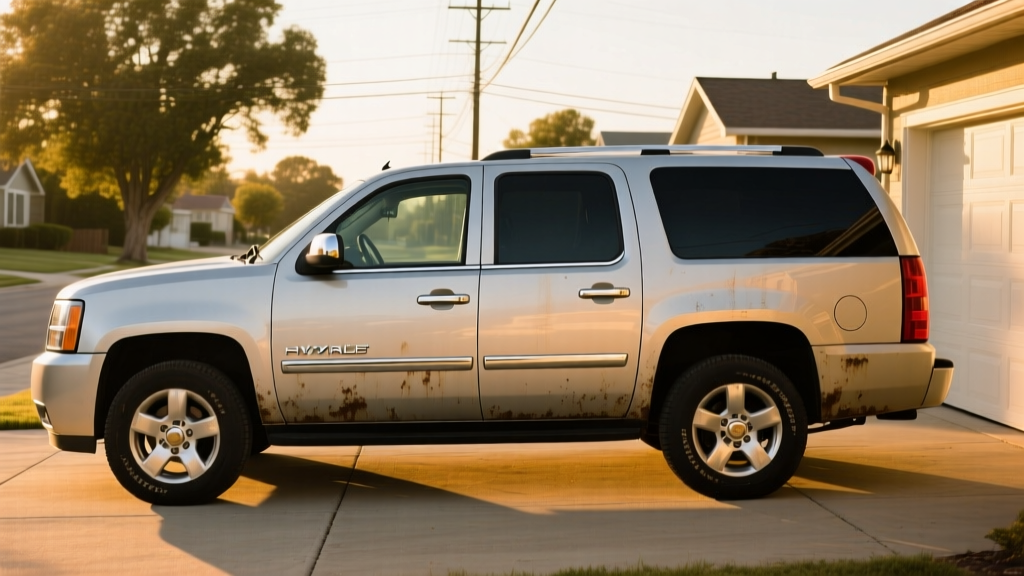
The 2009 Chevrolet Tahoe Hybrid was a landmark vehicle — the first full-size, body-on-frame SUV to pair a V8 with a two-mode hybrid system. In 2026, it exists exclusively on the used market, and its appeal is narrow but real: buyers who need three-row seating, towing capability, and marginally better fuel economy than a gas-only Tahoe of the same era. With an EPA rating of 21 MPG combined, it improves on the gas Tahoe's 14–15 MPG combined by roughly 40%. But at 17 years old, the hybrid battery, age-related maintenance, and parts scarcity demand careful evaluation before purchase.
This guide covers the 2009 Tahoe Hybrid's powertrain specs, real-world fuel economy, hybrid battery longevity, and whether it still makes sense versus a modern hybrid SUV or a full EV in 2026.
2009 Tahoe Hybrid Powertrain: How GM's Two-Mode System Works
The 2009 Tahoe Hybrid uses GM's Two-Mode Hybrid system — a fundamentally different approach from the simpler hybrid setups found in a Toyota Prius or RAV4 Hybrid. This is a conventional hybrid (HEV), not a plug-in hybrid (PHEV). It never plugs in; the battery recharges through regenerative braking and the gasoline engine.
| Specification | 2009 Tahoe Hybrid |
|---|---|
| Engine | 6.0L V8 (Vortec) with Active Fuel Management (cylinder deactivation) |
| Electric Motors | Two 60-kW motors integrated into the transmission |
| Combined Horsepower | 332 hp (net system output) — some sources cite 295 hp at the wheels |
| Transmission | Electrically Variable Transmission (EVT) — two-mode, four fixed gears |
| Drivetrain | Rear-wheel drive standard; 4WD available (reduces MPG slightly) |
| Hybrid Battery | ~1.8 kWh Nickel-Metal Hydride (NiMH), 300V pack |
| Towing Capacity | Up to 6,000 lbs (2WD); 5,800 lbs (4WD) |
| 0–60 mph | ~7.8 seconds |
The two-mode system operates in two distinct regimes. Mode 1 handles low-speed, city driving — the electric motors can propel the Tahoe at low speeds (up to ~25 mph) for brief distances on electric power alone, and the V8 shuts off entirely at stops. Mode 2 engages at highway speeds, where the system blends engine and motor power through fixed gear ratios for efficient cruising. The V8 also deactivates four of its eight cylinders under light load via GM's Active Fuel Management.
This is a key distinction: unlike a PHEV (plug-in hybrid), the 2009 Tahoe Hybrid has no electric-only range to speak of in practical terms. The small 1.8 kWh NiMH battery enables low-speed electric assist, not sustained electric driving. If you need meaningful electric-only miles, you need a PHEV with a larger battery and a plug — or a full BEV.
Fuel Economy: EPA Ratings vs. Real-World MPG
The 2009 Tahoe Hybrid's headline number was always its fuel economy improvement over the gas V8 Tahoe. Here's the EPA breakdown:
| Configuration | City MPG | Highway MPG | Combined MPG |
|---|---|---|---|
| 2009 Tahoe Hybrid (2WD) | 21 | 22 | 21 |
| 2009 Tahoe Hybrid (4WD) | 20 | 20 | 20 |
| 2009 Tahoe Gas 5.3L V8 (2WD) | 14 | 20 | 16 |
| 2009 Tahoe Gas 6.2L V8 (2WD) | 12 | 18 | 14 |
Source: EPA Fuel Economy
The hybrid's advantage is most pronounced in city driving, where the two-mode system's electric assist, regenerative braking, and engine shut-off at stops yield a dramatic 21 vs. 14 MPG improvement — a 50% gain. On the highway, the advantage shrinks considerably (22 vs. 20 MPG) because the V8 is doing most of the work at sustained speeds.
Real-World MPG: What Owners Actually Report
Based on owner-reported data from Fuelly and enthusiast forums, real-world combined MPG for the 2009 Tahoe Hybrid clusters around 18–21 MPG, depending heavily on driving mix:
- City-heavy driving: 20–22 MPG — the hybrid system shines here, with frequent stops enabling regen and electric assist.
- Highway-heavy driving: 18–20 MPG — the heavy 5,800-lb curb weight and boxy aerodynamics work against it.
- Towing: 12–15 MPG — hybrid advantage largely disappears under heavy load.
- Cold weather: Expect a 1–2 MPG reduction. The NiMH battery is less efficient when cold, and the engine runs longer to warm the cabin.
Hybrids typically exceed their EPA city rating in real-world stop-and-go traffic, and the Tahoe Hybrid is no exception — careful drivers report touching 23 MPG in dense urban driving. But highway-heavy commutes will land you below the EPA combined number.
HEV vs. PHEV vs. Full EV: Which Fits Your Needs?
The 2009 Tahoe Hybrid is a conventional HEV. In 2026, the electrified SUV landscape has expanded enormously. Here's how the categories compare for a three-row SUV buyer:
| Factor | 2009 Tahoe Hybrid (HEV) | Modern PHEV SUV (e.g., Jeep Grand Cherokee 4xe) | Full EV SUV (e.g., Kia EV9, Rivian R1S) |
|---|---|---|---|
| Plugs in? | No | Yes | Yes |
| Electric-only range | ~0 miles (brief low-speed assist only) | 25–45 miles | 270–400+ miles |
| Combined MPG / MPGe | 20–21 MPG | 25–56 MPGe (varies by electric vs gas mode) | 85–100+ MPGe |
| Home charging needed? | No | Recommended for PHEV benefit | Essential |
| Federal tax credit (new) | N/A (discontinued) | Up to $7,500 (§30D, subject to eligibility) | Up to $7,500 (§30D, subject to eligibility) |
| Towing capacity | 5,800–6,000 lbs | 5,000–6,200 lbs | 5,000–7,700 lbs (R1S max) |
| Used price range (2026) | $4,000–$9,000 | $25,000–$45,000 (recent models) | $35,000–$80,000+ |
The 2009 Tahoe Hybrid occupies a very specific niche: low-budget, three-row SUV buyers who cannot charge at home and need towing capability. If you have home charging access and a higher budget, a modern PHEV or BEV delivers dramatically lower operating costs and a better driving experience. But at $4,000–$9,000 on the used market, the Tahoe Hybrid's entry price is unmatched.
Hybrid Battery Longevity, Warranty & Replacement Cost
Original warranty: GM warranted the 2009 Tahoe Hybrid's battery and hybrid-specific components for 8 years / 100,000 miles (10 years / 150,000 miles in CARB states including California, New York, Massachusetts, and others that adopted California emissions standards).
Status in 2026: All original factory hybrid warranties have expired. The youngest 2009 Tahoe Hybrid is now 17 years old.
NiMH Battery Degradation and Lifespan
The 2009 Tahoe Hybrid uses a Nickel-Metal Hydride (NiMH) battery pack — the same chemistry used in the Toyota Prius of that era. NiMH packs are known for durability but are not immune to age-related degradation. Key considerations:
- Typical lifespan: 10–15 years is common for NiMH packs in GM two-mode hybrids, though some have lasted longer with moderate use.
- Failure signs: Reduced fuel economy (the system can't provide electric assist), a "Service Hybrid System" dashboard warning, or the battery fan running constantly.
- Heat sensitivity: NiMH degrades faster in hot climates. Tahoe Hybrids in Arizona, Texas, and the Southeast may see earlier battery issues than those in cooler regions.
- Capacity loss: Even without outright failure, a 17-year-old NiMH pack has likely lost 20–40% of its original capacity, reducing the electric-assist benefit and lowering real-world MPG toward the gas-only Tahoe baseline.
Battery Replacement Cost
Replacement options for the 2009 Tahoe Hybrid battery in 2026:
- New OEM battery (if available): $2,500–$3,500 for the pack alone. Availability is increasingly limited as GM phases out support for this generation.
- Remanufactured/reconditioned pack: $1,200–$2,200. Several hybrid battery specialists (e.g., Green Bean Battery, Exclusively Hybrid) offer reconditioned NiMH packs with 1–3 year warranties.
- Used/salvage pack: $500–$1,000 from a junkyard or eBay. High risk — you're inheriting someone else's degradation curve.
- DIY re-cell: Some enthusiasts replace individual NiMH modules within the pack for $200–$400 in parts, but this requires technical skill and carries safety risks with a 300V system.
At $1,500–$3,500 for a replacement, the battery cost can represent 25–75% of the vehicle's total value — a critical factor in the buy/don't-buy decision.
Reliability, Common Issues & Maintenance Costs
The 2009 Tahoe Hybrid shares its GMT900 platform with the standard Tahoe, Yukon, and Escalade. The underlying truck is robust, but the hybrid system adds complexity. Common issues reported by owners and mechanics:
- Hybrid battery failure: As discussed, age is the primary enemy. Budget $1,500–$3,000 for a replacement within your ownership period.
- Active Fuel Management (AFM) lifter failure: The 6.0L V8's cylinder-deactivation system is notorious for collapsed lifters, leading to misfires and expensive engine repairs ($2,000–$4,000). Many owners install an AFM disabler module (~$250) to prevent this.
- Transmission/EVT issues: The two-mode EVT is complex. Fluid changes are critical — many were neglected. Whining noises or harsh shifts warrant immediate inspection.
- Electric power steering: The Tahoe Hybrid uses electric power steering (EPS), which can fail and require a $800–$1,200 replacement.
- Brake actuator: The regenerative braking system uses an electric brake actuator that can fail ($600–$1,000 replacement). Brake pedal feeling "different" or a brake warning light are indicators.
- Standard GMT900 issues: Rust on frames (in salt-belt states), interior trim degradation, HVAC actuator failures, and wheel bearing wear are common to all Tahoes of this era.
On the positive side, the hybrid system's regenerative braking significantly extends brake pad life — many owners report 80,000+ miles on original pads. The 6.0L V8 (LFA/LZ1 engine code) is mechanically stout when the AFM system is addressed.
Pricing in 2026: What You'll Pay
The 2009 Tahoe Hybrid is exclusively a used-market purchase. Pricing varies heavily by mileage, condition, battery health, and region:
- High-mileage / project condition (150,000+ miles): $3,000–$5,000
- Average condition (100,000–150,000 miles): $5,000–$7,500
- Clean, lower-mileage examples (under 100,000 miles): $7,500–$10,000
Original MSRP in 2009 was approximately $51,000–$55,000 (loaded), meaning these have depreciated 85–92% from new. That's steep depreciation — good for used buyers, devastating for original owners.
Tax Credit Eligibility
The 2009 Tahoe Hybrid does not qualify for any current federal tax credit. The IRS §30D clean vehicle credit applies only to new qualifying plug-in electric vehicles (BEVs and PHEVs) and, under the used-vehicle provision (§25E), to used BEVs and PHEVs purchased from a dealer for $25,000 or less. Because the Tahoe Hybrid is a conventional HEV — not a plug-in — it is ineligible for both credits. Some states may offer minimal incentives for hybrid purchases, but these are rare and vary by jurisdiction. Consult IRS.gov for current credit rules.
Who Should Buy the 2009 Tahoe Hybrid?
Pros
- 40% fuel economy improvement over gas Tahoe in city driving
- Three-row seating for up to 8 passengers
- Genuine 6,000-lb towing capability
- Low entry price ($4,000–$9,000)
- Extended brake pad life from regenerative braking
- No plug-in charging required — works like a normal gas car
Cons
- 17-year-old hybrid battery is a ticking time bomb ($1,500–$3,500 replacement)
- AFM lifter failure risk on the 6.0L V8
- Highway MPG barely better than gas Tahoe
- Increasingly scarce hybrid-specific parts and knowledgeable mechanics
- No modern safety tech (no automatic emergency braking, no lane-keeping)
- No tax credit eligibility
- Dated interior and infotainment
Buy It If:
- You need a cheap three-row SUV with towing and can't charge at home
- Your driving is predominantly city/stop-and-go where the hybrid advantage is maximized
- You're mechanically inclined or have access to a hybrid-experienced mechanic
- You budget $2,000–$3,000 upfront for a battery replacement or inspection
Skip It If:
- You drive mostly highway miles — the hybrid advantage is minimal
- You want modern safety features, infotainment, or warranty coverage
- You can afford a newer hybrid SUV (Toyota Highlander Hybrid, Kia Sorento Hybrid) with a warranty
- You have home charging access — a PHEV or BEV will save far more on fuel
Frequently Asked Questions
How many MPG does the 2009 Tahoe Hybrid get?
The EPA rates the 2WD model at 21 city / 22 highway / 21 combined MPG, and the 4WD at 20/20/20. Real-world driving typically yields 18–21 MPG combined, with city-heavy driving producing the best results (up to 23 MPG) and highway or towing driving the worst (12–19 MPG).
Does the 2009 Tahoe Hybrid need to be plugged in?
No. The 2009 Tahoe Hybrid is a conventional hybrid (HEV), not a plug-in hybrid. It charges its small NiMH battery through regenerative braking and the gasoline engine. You fuel it like a normal vehicle — no charging cable, no plug, no home charger required.
Can the 2009 Tahoe Hybrid drive on electric power only?
Only at very low speeds (under ~25 mph) and for very short distances (a few hundred yards). The 1.8 kWh battery is far too small for meaningful electric-only driving. This is fundamentally different from a PHEV, which can travel 25–50 miles on electricity alone.
Is the 2009 Tahoe Hybrid reliable?
The underlying GMT900 truck platform is durable, but the hybrid system adds failure points that are now 17 years old. The NiMH battery, EVT transmission, brake actuator, and electric power steering are all potential expensive repairs. The 6.0L V8's Active Fuel Management system is a known reliability concern. Reliability in 2026 depends heavily on maintenance history and whether the hybrid battery has been replaced.
What does it cost to replace the hybrid battery?
A reconditioned NiMH pack runs $1,200–$2,200; a new OEM pack (if available) costs $2,500–$3,500. Used/salvage packs are $500–$1,000 but carry significant risk. Given the vehicle's value of $4,000–$9,000, a battery replacement represents a major percentage of the vehicle's worth.
Does the 2009 Tahoe Hybrid qualify for any tax credit?
No. Federal clean vehicle tax credits under IRS §30D (new) and §25E (used) apply only to plug-in electric vehicles — BEVs and PHEVs. The Tahoe Hybrid is a conventional HEV and is not eligible for any federal purchase credit. Check your state's incentive programs for any local hybrid incentives, though these are uncommon in 2026.
Should I buy a 2009 Tahoe Hybrid or a newer hybrid SUV?
If your budget is under $10,000 and you need three rows plus towing, the Tahoe Hybrid is one of the few options. But if you can spend $20,000–$35,000, a 2018+ Toyota Highlander Hybrid (35–36 MPG combined) or a 2021+ Kia Sorento Hybrid offers dramatically better fuel economy, modern safety features, remaining warranty coverage, and lower maintenance risk. The math favors newer if you plan to keep the vehicle more than 2–3 years.
How does the 2009 Tahoe Hybrid compare to a full EV SUV?
They serve different buyers. A 2026 EV SUV like the Kia EV9 (EPA range ~280–310 miles, 85+ MPGe) costs $55,000+ new and requires home charging infrastructure, but delivers drastically lower per-mile energy costs (~$0.04–$0.06/mile vs. ~$0.15–$0.18/mile for the Tahoe Hybrid at $3.20/gallon). The Tahoe Hybrid wins on upfront cost and towing; the EV wins on operating cost, performance, and technology. They're not direct competitors — they're different budget tiers.