Quick Verdict: The Original Hybrid Benchmark Still Runs
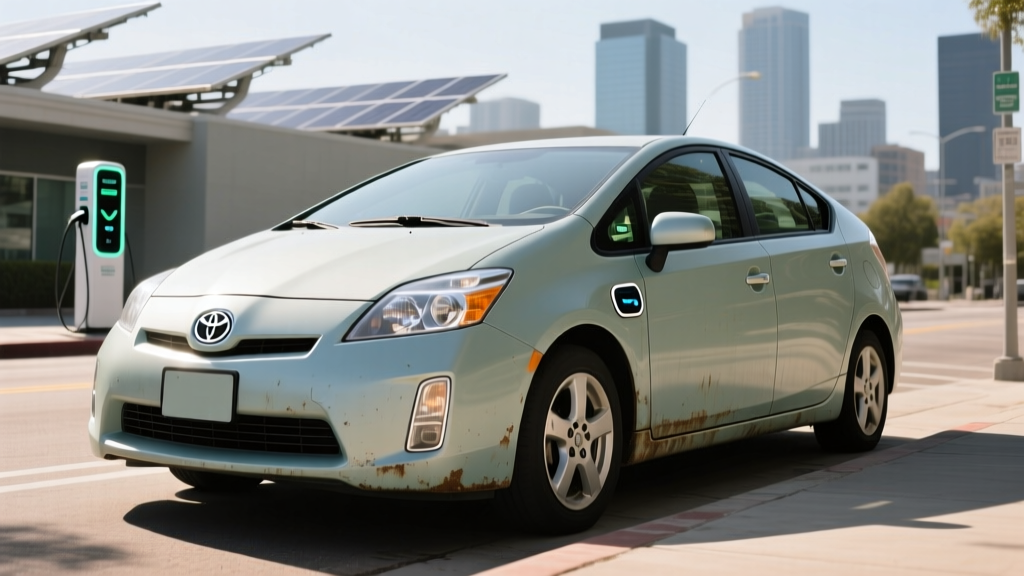
The 2007 Toyota Prius hybrid remains one of the most recognizable nameplates in automotive history. Nearly two decades after it rolled off the assembly line, this second-generation (XW20) HEV still populates used-car lots and driveways across the US. Its appeal is straightforward: proven reliability, exceptional fuel economy for its era, and a hybrid battery system that—when properly maintained—can outlast the car itself.
But buying a 19-year-old hybrid in 2026 requires clear-eyed assessment. The nickel-metal hydride (NiMH) battery has aged, parts availability is shifting, and modern hybrids and EVs have eclipsed its efficiency numbers. This guide gives you exact specs, real-world data, and a practical ownership framework.
2007 Prius Powertrain: How Toyota's HEV System Works
The 2007 Prius is a conventional hybrid (HEV), not a plug-in hybrid (PHEV). This distinction is critical: you never plug it in. The car recovers energy through regenerative braking and uses its gasoline engine to recharge the battery. Toyota's Hybrid Synergy Drive (HSD) pairs a 1.5-liter inline-4 Atkinson-cycle engine with two electric motor-generators (MG1 and MG2) through a planetary gearset that functions as a continuously variable transmission.
| Component | Specification |
|---|---|
| Gasoline Engine | 1.5L I4 Atkinson-cycle, 76 hp @ 5,000 rpm, 82 lb-ft torque |
| Electric Motor (MG2) | 67 hp (50 kW), 295 lb-ft torque |
| Combined System Output | 110 hp (net) |
| Transmission | Planetary eCVT (no fixed gears) |
| Hybrid Battery | 1.3 kWh (nominal), NiMH, 201.6V, air-cooled |
| Drivetrain | Front-wheel drive |
| 0–60 mph | ~9.8 seconds |
| Curb Weight | ~2,932 lbs |
The 1.3 kWh battery is tiny by modern standards—a 2026 Prius Prime PHEV carries a 13.6 kWh pack. But the 2007 system doesn't need a large battery. It uses frequent shallow charge-discharge cycles, typically operating between 40% and 80% state of charge, which reduces stress on the NiMH cells and contributes to longevity.
Fuel Economy: EPA Ratings vs. Real-World MPG
The EPA rated the 2007 Prius at 60 MPG city / 51 MPG highway / 55 MPG combined under the pre-2008 testing methodology. When the EPA revised its testing procedures in 2008 to include more aggressive driving cycles, air conditioning use, and cold-start conditions, the 2007 Prius was retroactively re-rated to 48 city / 45 highway / 46 combined MPG per fueleconomy.gov.
| Driving Condition | EPA MPG (Revised) | Real-World Expectation |
|---|---|---|
| City | 48 MPG | 46–52 MPG (hybrids often exceed EPA in stop-and-go) |
| Highway | 45 MPG | 40–44 MPG (aerodynamic drag at 70+ mph hurts efficiency) |
| Combined | 46 MPG | 42–48 MPG |
| Cold Weather (below 32°F) | N/A | 35–40 MPG (engine runs more for cabin heat) |
Hybrids like the 2007 Prius tend to exceed their EPA city rating in real-world stop-and-go driving because regenerative braking recovers kinetic energy that a gas car wastes as heat. Conversely, sustained highway speeds above 65 mph reduce the hybrid advantage—the gasoline engine does most of the work, and the Prius's tall, narrow body creates more aerodynamic drag than a sleek sedan.
For a 12,000-mile/year driver averaging 45 MPG, annual fuel consumption is roughly 267 gallons. At $3.50/gallon, that's about $935/year—still competitive with many 2026 non-hybrid compacts, though modern hybrids like the current-gen Prius achieve 57 MPG combined.
HEV vs. PHEV vs. EV: Where the 2007 Prius Fits
Understanding the difference between conventional hybrids, plug-in hybrids, and battery-electric vehicles helps clarify whether a used 2007 Prius is the right choice in 2026.
HEV vs. PHEV vs. BEV — Key Differences
- HEV (2007 Prius): No plug. Gasoline engine + small battery. Battery recharged by regen braking and engine. ~46 MPG combined. No electric-only range. Lowest upfront cost, zero charging infrastructure needed.
- PHEV (e.g., 2026 Prius Prime): Plugs in. Larger battery (13.6 kWh). ~44 miles electric-only, then operates as a hybrid. Best for drivers who can charge at home and have short commutes but need gas flexibility for road trips.
- BEV (e.g., Tesla Model 3, Chevy Equinox EV): Plugs in. No gasoline engine. 250–350+ miles of range. Lowest per-mile energy cost, but requires reliable charging access. Highest upfront cost, eligible for up to $7,500 federal tax credit on new purchases.
The 2007 Prius HEV makes sense if you want maximum simplicity: no charging setup, no range planning, no electrical work. You fuel it like any gas car and get better economy. The trade-off is that you're locked into gasoline dependence and miss out on the per-mile savings of grid electricity.
Hybrid Battery Lifespan, Warranty, and Replacement Cost
The 2007 Prius uses a Panasonic-manufactured NiMH battery pack rated at 1.3 kWh nominal capacity. When new, Toyota warranted this battery for 8 years / 100,000 miles (10 years / 150,000 miles in California Air Resources Board states). That factory warranty expired long ago for any 2007 model, meaning battery health is now entirely the buyer's responsibility.
Battery Warranty & Replacement Cost Summary
- Original warranty: 8 yr / 100,000 mi (10 yr / 150,000 mi in CARB states) — expired
- Typical battery lifespan: 150,000–200,000+ miles with proper care; many original packs still functioning at 18+ years
- New OEM replacement battery: ~$2,200–$2,800 (part) + ~$500–$800 labor = $2,700–$3,600 total
- Refurbished/remanufactured battery: ~$1,000–$1,800 installed
- Individual module replacement: ~$300–$600 at a hybrid specialist (replaces only failed cells)
NiMH batteries degrade differently than the lithium-ion packs in modern EVs. Rather than a steady capacity decline, NiMH cells tend to work well until one or more modules fail, causing a sudden drop in performance and triggering a dashboard warning. A hybrid specialist can test individual modules and replace only the weak ones, extending the pack's life at a fraction of a full replacement.
Before purchasing any 2007 Prius, request a hybrid battery health check from a Toyota dealer or hybrid specialist. This test reads the battery's internal resistance, voltage delta between modules, and state-of-charge behavior under load. A healthy pack shows less than 0.3V difference between the highest and lowest modules.
Reliability and Known Issues at 19 Years Old
The second-generation Prius earned a reputation as one of the most reliable vehicles Toyota has ever built. The HSD powertrain has no traditional transmission to fail, no starter motor, no alternator, and no accessory belts—all replaced by the electric motor-generators. According to NHTSA records, major recalls were limited to specific issues like the steering intermediate shaft and hybrid brake actuator.
At 19 years old, however, age-related wear items demand attention:
- Hybrid battery cooling fan: Located behind the rear seat. Dust buildup causes overheating and accelerated battery degradation. Clean or replace the filter regularly.
- Inverter coolant pump: Can fail silently, leading to inverter overheating. Check for turbulent flow in the inverter coolant reservoir with the car in READY mode.
- Brake actuator assembly: The electro-hydraulic brake system is expensive (~$1,500–$2,200) if it fails. Listen for unusual pump cycling or a spongy pedal feel.
- 12V auxiliary battery: Located in the trunk (not under the hood). A failing 12V battery can prevent the hybrid system from booting, even if the main HV battery is healthy.
- Catalytic converter: Theft target due to precious metal content. Consider a catalytic converter shield (~$200–$350 installed).
Despite these age-related concerns, a well-maintained 2007 Prius routinely reaches 250,000+ miles. The powertrain's mechanical simplicity—no conventional transmission, fewer moving parts than a gas-only car—is a key reason for this durability.
Pricing and Tax Credit Eligibility in 2026
The 2007 Prius originally started at approximately $22,175 MSRP. In 2026, used examples typically sell for $3,500–$6,500 depending on mileage, condition, and battery health, based on current market listings.
Tax credit eligibility for a used 2007 Prius is straightforward: it qualifies for the IRS §25E Used Clean Vehicle Credit, which provides 30% of the sale price, up to a maximum of $4,000. However, several conditions apply:
- The vehicle must be purchased from a licensed dealer (private-party sales don't qualify)
- The sale price must be $25,000 or less (easily met at current 2007 Prius prices)
- The buyer's adjusted gross income must not exceed $75,000 (single) / $112,500 (head of household) / $150,000 (joint)
- The vehicle must be at least two model years old (met)
- The credit can only be claimed once per vehicle (verify the specific VIN hasn't been previously claimed under §25E)
- The credit is non-refundable—you must have federal tax liability to benefit
For a $5,000 purchase, the 30% credit would be $1,500—reducing effective cost to $3,500. Always verify current-year rules at irs.gov and consult a tax professional, as incentive structures can change.
The 2007 Prius does not qualify for the §30D New Clean Vehicle Credit (up to $7,500) since that applies only to new vehicle purchases. Toyota's original hybrid tax credits for the Prius phased out in 2007 after Toyota reached the 200,000-unit manufacturer cap.
Who Should Buy the 2007 Prius (and Who Shouldn't)
✓ Choose the 2007 Prius If:
- You want a cheap, ultra-efficient daily driver under $6,000
- You have no home charging access and don't want to install a Level 2 charger
- You drive primarily in city/stop-and-go traffic where hybrid efficiency peaks
- You want a proven, well-documented platform with abundant aftermarket and DIY support
- You need a second car for commuting with minimal operating costs
- You value mechanical simplicity over infotainment and modern tech
✗ Look Elsewhere If:
- You want modern safety features (AEB, lane-keeping, blind-spot monitoring)
- You need highway passing power (110 hp combined is leisurely at speed)
- You want to eliminate gasoline entirely (consider a used BEV like a 2018+ Leaf or Bolt)
- You regularly drive in extreme cold (NiMH performance drops, cabin heat kills MPG)
- You want Apple CarPlay, Android Auto, or modern connectivity
- You're concerned about finding a healthy hybrid battery without expensive reconditioning
Frequently Asked Questions
How many MPG does the 2007 Toyota Prius hybrid get?
The EPA re-rated the 2007 Prius at 48 city / 45 highway / 46 combined MPG under revised testing procedures. Real-world drivers typically see 42–48 MPG combined, with city driving often yielding higher numbers than highway due to regenerative braking. Cold weather and sustained 70+ mph speeds can drop efficiency to 35–40 MPG.
Does the 2007 Prius need to be plugged in?
No. The 2007 Prius is a conventional hybrid (HEV), not a plug-in hybrid (PHEV). The battery recharges through regenerative braking and the gasoline engine. You fuel it exclusively at gas stations, just like a traditional car.
How much does it cost to replace the hybrid battery in a 2007 Prius?
A new OEM Toyota battery pack costs approximately $2,700–$3,600 installed. Refurbished packs run $1,000–$1,800 installed. Individual module replacement at a hybrid specialist costs $300–$600. Many original batteries have lasted 200,000+ miles with proper cooling system maintenance.
Is the 2007 Prius reliable at its age?
The second-generation Prius is among Toyota's most reliable vehicles ever built. The hybrid powertrain has fewer moving parts than a conventional car—no traditional transmission, starter, alternator, or accessory belts. The main concerns at 19 years old are hybrid battery health, inverter coolant pump condition, brake actuator wear, and catalytic converter theft.
Does the 2007 Prius qualify for any tax credit in 2026?
Yes, it can qualify for the IRS §25E Used Clean Vehicle Credit: 30% of the sale price up to $4,000, subject to income limits ($75K single / $150K joint) and a $25,000 maximum sale price. The vehicle must be purchased from a licensed dealer. It does not qualify for the §30D new vehicle credit. Always verify current rules at irs.gov.
How does the 2007 Prius compare to a modern hybrid or EV?
The current-generation Toyota Prius achieves 57 MPG combined—24% more efficient than the 2007 model—while producing 194 hp (vs. 110 hp). A used EV like a 2019 Nissan Leaf offers 150 miles of range with zero gasoline but requires charging infrastructure. The 2007 Prius occupies a specific niche: rock-bottom acquisition cost with strong fuel economy and zero charging requirements.
What should I check before buying a used 2007 Prius?
Request a hybrid battery health report showing module voltage delta (should be under 0.3V), verify the inverter coolant pump is circulating fluid, check the 12V auxiliary battery age and voltage, inspect the brake actuator for unusual pump cycling, confirm the catalytic converter is present and intact, and review maintenance records for transaxle fluid and inverter coolant changes.