Quick Verdict: The OG Hybrid Sedan Still Has Legs
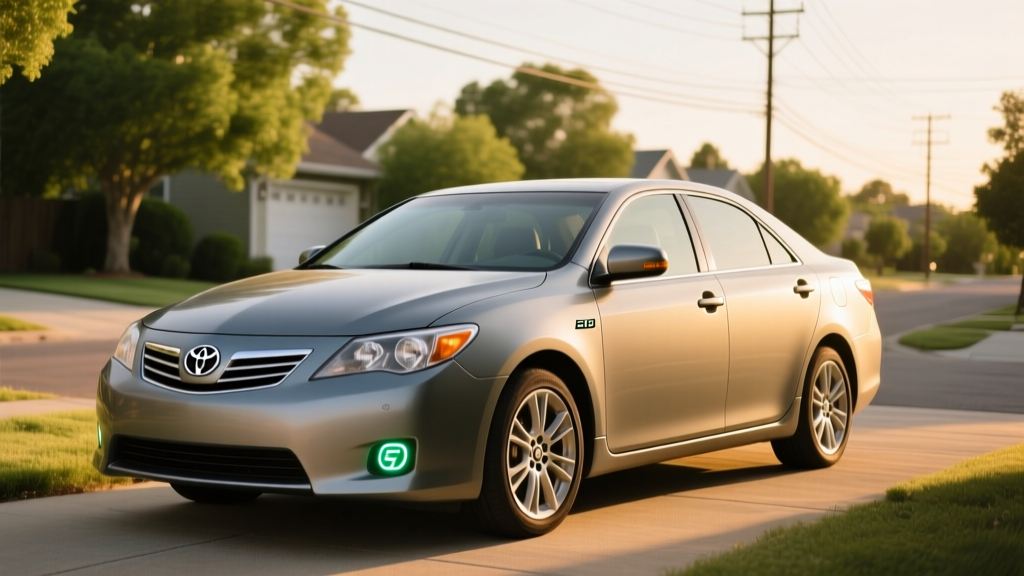
The 2007 Toyota Camry Hybrid was Toyota's first foray into hybridizing America's best-selling sedan, pairing a 2.4-liter four-cylinder with an electric motor through the now-legendary Hybrid Synergy Drive. Nearly two decades later, this second-generation Camry Hybrid (XV40 chassis) remains a fixture on the used market, and for good reason: it delivers genuinely strong fuel economy, Toyota's proven reliability, and a battery system that has demonstrated remarkable longevity when properly maintained.
For buyers researching the 2007 Camry Hybrid as a budget-friendly commuter or a first hybrid purchase, the key questions center on real-world MPG, hybrid battery replacement cost, and whether a nearly 20-year-old hybrid is a smart buy. This guide answers all of them with data, not guesswork.
EPA Fuel Economy vs. Real-World MPG
The EPA rated the 2007 Camry Hybrid at 33 mpg city / 34 mpg highway / 34 mpg combined. Those numbers held up well for the era and still compare favorably to modern non-hybrid sedans.
| Driving Cycle | EPA Rating | Real-World Expectation |
|---|---|---|
| City | 33 MPG | 34–38 MPG (hybrids excel in stop-and-go) |
| Highway | 34 MPG | 30–33 MPG (less regen benefit at sustained speed) |
| Combined | 34 MPG | 31–35 MPG depending on driving mix |
As with most Toyota hybrids, real-world city driving often exceeds the EPA estimate. The regenerative braking system recovers energy during frequent stops, and the engine shuts off at idle — advantages that are maximized in urban traffic. Highway driving, where the gasoline engine runs continuously at higher loads, tends to yield slightly lower numbers than the EPA sticker suggests.
According to fueleconomy.gov, owner-reported averages for the 2007 Camry Hybrid cluster around 31–35 mpg combined, which aligns closely with the EPA figure. Drivers who maintain steady speeds and use the car primarily for city commuting routinely report 36+ mpg.
Hybrid Powertrain: How It Works
The 2007 Camry Hybrid uses Toyota's Hybrid Synergy Drive (HSD), a series-parallel full hybrid system. This is a conventional hybrid (HEV), not a plug-in hybrid (PHEV). You never plug it in — the battery charges through regenerative braking and the gasoline engine.
| Component | Specification |
|---|---|
| Gasoline Engine | 2.4L inline-4 (2AZ-FXE), 147 hp @ 6,000 rpm |
| Electric Motor | Permanent-magnet synchronous, 40 hp (30 kW) |
| Combined Net Output | 192 hp |
| Transmission | eCVT (planetary gearset, no fixed gears) |
| Hybrid Battery | NiMH (nickel-metal hydride), ~1.6 kWh gross |
| Drivetrain | Front-wheel drive |
| 0–60 mph | ~8.4 seconds |
The eCVT is not a belt-and-pulley CVT like those found in some competitors. It uses a planetary gearset to seamlessly blend power from the engine and electric motor. This design has fewer wear components than a conventional automatic or belt CVT and is a key reason Toyota hybrids have outstanding long-term powertrain reliability.
The 2007 Camry Hybrid is a conventional hybrid (HEV). It has no plug, no electric-only range to speak of (it can creep at low speeds on battery for roughly 1 mile), and no eligibility for federal plug-in tax credits. You simply fuel it with gasoline and drive. A plug-in hybrid (PHEV) like the newer Camry-based RAV4 Prime or Prius Prime offers 25–42 miles of electric-only range and can be charged from a wall outlet. If you want EV-like commuting without range anxiety, a PHEV is the path — but at a significantly higher purchase price.
Hybrid Battery Lifespan, Warranty & Replacement Cost
This is the single biggest concern for any used hybrid buyer, and it deserves a thorough answer.
Real-world battery longevity: The NiMH pack in the 2007 Camry Hybrid has proven remarkably durable. Data from owner forums, repair databases, and hybrid specialists shows these batteries commonly last 150,000–200,000 miles before significant capacity loss triggers a check-hybrid-system warning. Some units exceed 250,000 miles with original batteries. The key factors affecting lifespan are:
- Heat exposure: Vehicles in hot climates (Arizona, Texas, Southern California) see faster NiMH degradation. The battery is located behind the rear seat, and cabin heat soaks into it.
- Usage patterns: Batteries that are regularly cycled (daily driving) tend to outlast those in cars that sit for weeks at a time. NiMH chemistry benefits from regular use.
- Age: Even with low miles, a 17+ year-old NiMH pack is approaching the end of its natural service life due to calendar degradation.
Replacement cost breakdown (2026 estimates):
| Option | Cost Range | Warranty |
|---|---|---|
| New OEM Toyota battery | $3,000–$4,000 (parts + labor) | 1 year / unlimited miles from Toyota |
| Refurbished / reconditioned pack | $1,200–$2,200 (parts + labor) | 1–3 years depending on vendor |
| Used salvage-yard pack | $500–$1,000 (parts + labor) | 30–90 days typical |
| Individual module replacement | $300–$800 (parts + labor) | Varies; only failed modules replaced |
The refurbished route has become the most popular choice for 2007 Camry Hybrid owners. Several established hybrid battery rebuilders test and balance individual NiMH modules, replacing only the weak ones, and sell complete packs with 1–3 year warranties. This keeps the repair economical relative to the car's value.
Pricing in 2026: What You'll Actually Pay
The 2007 Camry Hybrid originally stickered around $26,480 (base MSRP). In the 2026 used market, examples typically sell for $4,000–$7,500 depending on mileage, condition, battery health, and region. Clean-title, lower-mileage examples with documented battery service command the top of that range.
| Condition / Mileage | Typical Price Range |
|---|---|
| Under 100k miles, excellent, battery verified | $6,500–$7,500 |
| 100k–150k miles, good, battery healthy | $5,000–$6,500 |
| 150k+ miles, fair, original battery | $4,000–$5,000 |
| High miles, battery needs replacement | $2,500–$4,000 |
Tax credit eligibility: The 2007 Camry Hybrid does not qualify for the federal §30D clean vehicle tax credit. That credit applies only to new plug-in vehicles (BEVs and PHEVs) meeting current battery sourcing and MSRP requirements, as outlined on IRS.gov. Used hybrid purchases carry no federal incentive. Some states may offer minimal used-vehicle rebates, but these typically target plug-in vehicles as well. Check your state's energy office for current programs.
Reliability & Ownership Costs
The 2007 Camry Hybrid benefits from Toyota's strongest reputation era for build quality. The XV40-generation Camry platform is widely regarded as one of the most reliable midsize sedans ever built, and the hybrid variant adds the proven HSD powertrain with its inherently simple eCVT.
Common issues to inspect before buying:
- Hybrid battery health: Have a hybrid specialist run a battery health scan (using a Techstream or equivalent OBD tool) to check individual module voltages and internal resistance. A healthy pack shows balanced modules within ~0.2V of each other.
- Brake actuator: The electrohydraulic brake actuator on this generation can fail at high mileage ($1,200–$1,800 replacement). Listen for unusual pump cycling or a firm pedal.
- Water pump: The engine-driven water pump is a known wear item around 100k–130k miles. Confirm it has been replaced or budget ~$400 for the service.
- 12V auxiliary battery: Like all hybrids, the Camry has a standard 12V battery (located in the trunk). If it dies, the car won't start even if the hybrid pack is fully charged. Replace proactively every 4–5 years.
- Inverter coolant pump: A secondary electric coolant pump circulates fluid through the hybrid inverter. Failure is uncommon but can cause hybrid system overheating. Check for recalls — Toyota issued a recall for some model years.
Annual maintenance costs for a well-maintained 2007 Camry Hybrid typically run $400–$700/year once major wear items (brakes, tires, fluids) are addressed. The regenerative braking system extends pad life significantly — many owners report 80,000+ miles on original rear brake pads.
Camry Hybrid vs. Alternatives: Which Should You Choose?
- Your budget is under $8,000
- You want proven hybrid reliability without plug-in complexity
- Your commute is mostly city / stop-and-go
- You lack access to home or workplace charging
- You want low annual fuel costs (~$1,200–$1,500/yr at 12k miles)
- You want electric-only commuting (consider a PHEV or BEV)
- You need modern safety tech (AEB, lane-keep, blind-spot)
- You want federal tax credits (only plug-in vehicles qualify)
- The hybrid battery has already failed and isn't factored into price
- You want Apple CarPlay / Android Auto (not available in 2007)
Compared to a full EV: A used BEV like a 2018+ Nissan Leaf or Chevy Bolt offers zero tailpipe emissions and lower per-mile energy costs, but requires home charging access and carries its own battery degradation concerns. The Camry Hybrid wins on simplicity — no charging infrastructure needed, and you can refuel in 3 minutes anywhere.
Compared to a gas-only Camry: The 2007 gas Camry (4-cylinder) gets roughly 21/31/24 mpg. The hybrid's 34 mpg combined saves approximately $350–$500 per year in fuel costs at 12,000 miles driven annually (assuming $3.30/gallon regular). Over five years, that's $1,750–$2,500 in savings — enough to offset a potential battery replacement.
Frequently Asked Questions
How many MPG does the 2007 Camry Hybrid get?
The EPA rates it at 33 city / 34 highway / 34 combined. In real-world driving, expect 31–35 mpg combined, with city driving often reaching 36–38 mpg thanks to regenerative braking. Highway-only driving at 70+ mph may drop to 29–31 mpg.
Does the 2007 Camry Hybrid need to be plugged in?
No. This is a conventional hybrid (HEV), not a plug-in hybrid (PHEV). The battery charges automatically through regenerative braking and the gasoline engine. You fuel it exactly like a regular car — just with better mileage.
How long does the hybrid battery last?
Most 2007 Camry Hybrid NiMH batteries last 150,000–200,000 miles before significant degradation. Given the vehicle's age (17+ years), calendar aging is now a factor even on low-mileage examples. Budget for a potential battery replacement or purchase an example with a recently replaced/refurbished pack.
What does it cost to replace the hybrid battery?
A refurbished pack costs $1,200–$2,200 installed, which is the most common route for a car of this value. A new OEM Toyota battery runs $3,000–$4,000. Individual module repair can cost as little as $300–$800 if only a few cells have failed.
Is the 2007 Camry Hybrid reliable?
Yes, it ranks among the most reliable vehicles of its era. The HSD powertrain, eCVT transmission, and 2AZ-FXE engine have proven extremely durable. The main risk is hybrid battery age, not mechanical failure. Regular maintenance records and a pre-purchase hybrid battery scan are strongly recommended.
Does the 2007 Camry Hybrid qualify for any tax credit?
No. The federal §30D clean vehicle credit applies only to new plug-in electric vehicles (BEVs and PHEVs) meeting current-year battery sourcing, MSRP, and buyer income requirements. The 2007 Camry Hybrid is a conventional hybrid purchased used, so no federal credit applies. Check your state energy office for any local incentives on used hybrid purchases, though these are rare.
Hybrid vs. PHEV vs. EV — which fits me?
Choose the HEV (like this Camry Hybrid) if you want better MPG with zero lifestyle change — no charging, no plugs, just fill up with gas. Choose a PHEV (like a RAV4 Prime or Prius Prime) if you have home charging and want 25–42 miles of electric-only commuting with a gas engine for longer trips. Choose a BEV (full electric) if you have reliable charging access, want the lowest per-mile cost and zero tailpipe emissions, and your daily driving fits within the vehicle's range.