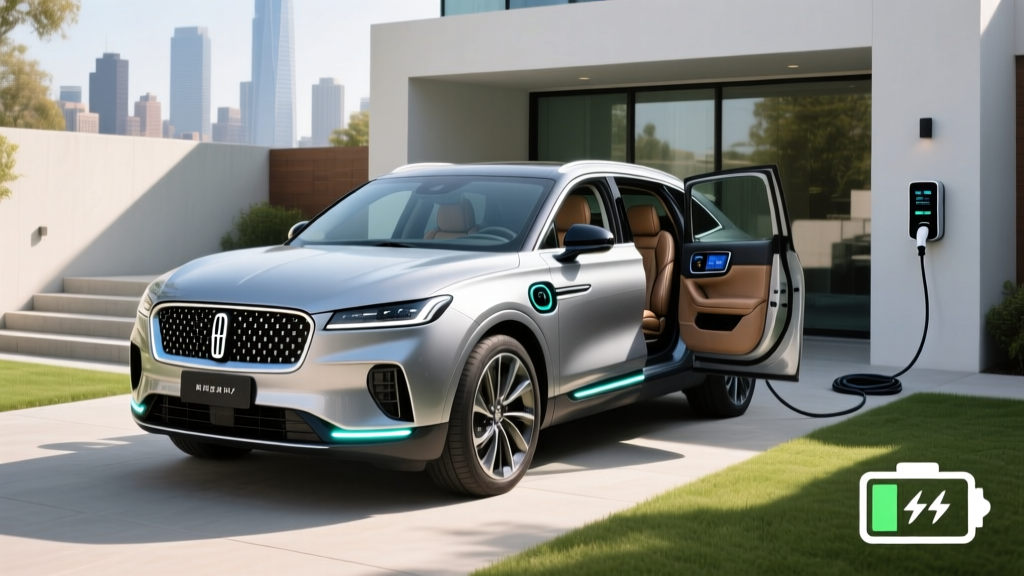
The 2026 Lincoln Corsair Grand Touring occupies a narrow but compelling niche: it's one of the few plug-in hybrid luxury compact SUVs that pairs genuine electric-only commuting capability with the upscale cabin Lincoln buyers expect. With an EPA-estimated 28 miles of all-electric range and a combined 33 MPG once the battery depletes, the Corsair PHEV targets drivers who want daily EV-like operation without range anxiety on longer trips. But does the math actually work in 2026's evolving incentive landscape? Here's the full data-driven breakdown.
Quick Verdict: Who Should Consider the Corsair PHEV
The Lincoln Corsair Grand Touring is a strong fit if your daily commute falls under 30 miles round-trip, you have access to Level 1 or Level 2 home charging, and you still want the flexibility of a gas engine for weekend road trips. It's less ideal if you're ready to go fully electric — in which case, consider the Genesis GV60 or Tesla Model Y — or if you drive mostly highway miles, where the Corsair's aerodynamic profile and added battery weight reduce its efficiency advantage.
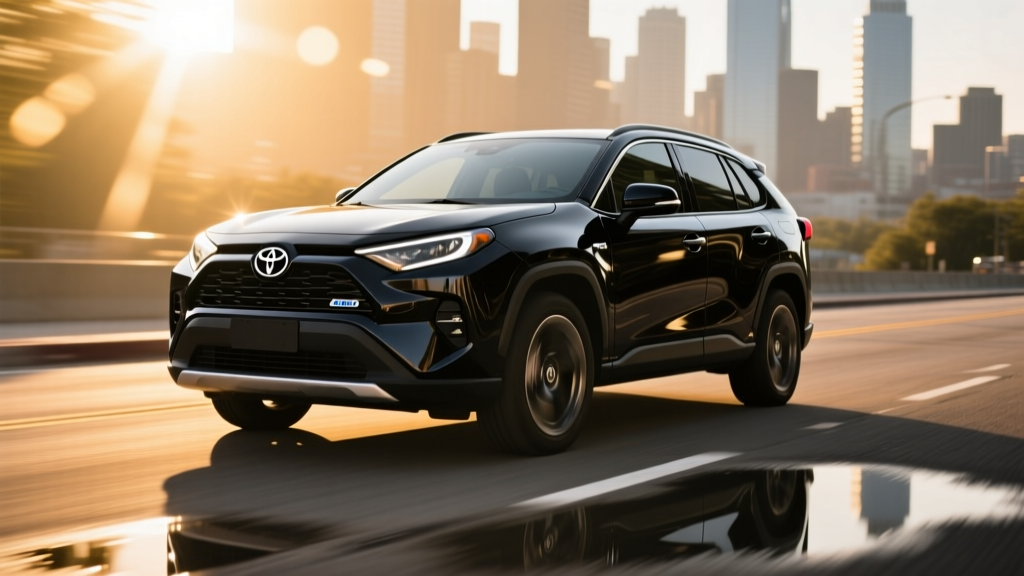
A conventional hybrid (HEV) like the Toyota RAV4 Hybrid uses a small battery charged solely by regenerative braking and the engine — you never plug it in. A plug-in hybrid (PHEV) like the Corsair Grand Touring carries a larger battery (14.4 kWh usable) that you charge from a wall outlet or charging station, giving it a genuine electric-only driving mode before the gas engine takes over. The Corsair is offered exclusively as a PHEV in its Grand Touring trim; the standard Corsair uses a turbocharged gas engine with no hybrid system.
Electric-Only Range and Total Range
The 2026 Corsair Grand Touring carries a 14.4 kWh lithium-ion battery pack (NMC chemistry) that delivers an EPA-estimated 28 miles of all-electric range. In real-world driving, expect that figure to fluctuate:
- Ideal conditions (mild weather, city driving under 45 mph, flat terrain): 30–32 miles
- Highway driving (65–75 mph sustained): 22–25 miles electric-only
- Cold weather (below 35°F with cabin heating): 18–22 miles
Once the battery depletes, the 2.5-liter Atkinson-cycle four-cylinder engine and electric motor work together as a conventional hybrid, delivering an EPA-estimated 33 MPG combined. Total system range — electric plus a full tank of gas — lands around 430 miles, eliminating any range anxiety on road trips.
EPA 28 mi electric-only; 33 MPG combined hybrid mode. Plan on ~22–25 mi electric range for highway-heavy commutes and 18–22 mi in freezing temperatures. The combined 430-mile total range means you'll visit gas stations far less often than a gas-only Corsair, but you're still tethered to fuel for long trips.
Fuel Economy and Efficiency Breakdown
Here's the complete EPA efficiency picture for the 2026 Lincoln Corsair Grand Touring, sourced from fueleconomy.gov:
| Metric | City | Highway | Combined |
|---|---|---|---|
| Charge-depleting (EV mode) | 104 MPGe | 91 MPGe | 97 MPGe |
| Charge-sustaining (hybrid mode) | 34 MPG | 32 MPG | 33 MPG |
Real-world MPG note: PHEVs reward city driving. In stop-and-go traffic where regenerative braking recaptures energy frequently, owners commonly report 35–38 MPG in hybrid mode — above the EPA city figure. On sustained highway trips at 75 mph, expect 29–31 MPG. If you charge nightly and commute under 28 miles, you may go weeks without using gasoline at all.
Powertrain, Battery, and Charging
| Specification | Value |
|---|---|
| Engine | 2.5L Atkinson-cycle 4-cylinder |
| Electric motor | Permanent-magnet synchronous (front axle) |
| Combined system output | 266 hp / 290 lb-ft torque |
| Transmission | eCVT (power-split device) |
| Drivetrain | eAWD (rear axle motor-driven) |
| Battery capacity | 14.4 kWh usable (NMC lithium-ion) |
| EV-only range (EPA) | 28 miles |
| 0–60 mph | ~6.2 seconds |
| Towing capacity | 2,000 lbs |
Charging Times and Connector Details
The Corsair Grand Touring uses a J1772 connector for AC charging and does not support DC fast charging — a common limitation among PHEVs in this class. Here's what to expect:
| Level | Power | 0–100% Time | Miles of EV Range/Hour |
|---|---|---|---|
| Level 1 (120V household) | 1.4 kW | ~10–11 hours | ~3 mi/hr |
| Level 2 (240V, 32A) | 7.7 kW (onboard max) | ~2.0–2.5 hours | ~14 mi/hr |
Practical charging advice: A Level 2 home charger is strongly recommended. At 7.7 kW onboard acceptance, a 32-amp Level 2 station (such as the ChargePoint Home Flex or Emporia Vue) will fully recharge the Corsair overnight in roughly 2–2.5 hours. On a standard 120V outlet, you'll add only about 3 miles of EV range per hour — barely enough to replenish a short commute. Because there's no DC fast charging capability, public charging stops are impractical for this vehicle.
Pricing, Trims, and Tax Credit Eligibility
The 2026 Lincoln Corsair Grand Touring starts at a base MSRP of approximately $53,995 (including destination). Well-equipped examples with the Elements Plus package, 20-inch wheels, and the Revel audio system push the sticker price toward $60,000–$62,000.
Federal Tax Credit Status (§30D)
As of the 2026 tax year, the Lincoln Corsair Grand Touring does not qualify for the full $7,500 federal EV tax credit under IRS §30D rules. The primary reasons:
- Battery sourcing requirements: The Corsair's battery cells do not meet the critical minerals and battery component thresholds mandated for vehicles placed in service in 2026.
- Final assembly: While the Corsair is assembled in Louisville, Kentucky (meeting the North American assembly requirement), the battery component sourcing fails the phased percentage requirements.
- ✅ MSRP under $80,000 (SUV cap): Passes
- ✅ Buyer income under $150K single / $300K joint: Depends on buyer
- ✅ North American final assembly: Passes
- ❌ Critical minerals requirement (2026: 80%): Fails
- ❌ Battery component requirement (2026: 100%): Fails
Result: No federal credit. Always verify current eligibility at fueleconomy.gov before purchasing, as rules change.
State incentives may apply. Several states offer their own PHEV rebates — for example, Colorado offers up to $2,500 for qualifying electrified vehicles, and certain utility companies provide $500–$1,000 rebates for Level 2 charger installation. Check your state's energy office and local utility for specifics.
Battery Warranty, Reliability, and Replacement Cost
- Hybrid/EV battery: 8 years / 100,000 miles (whichever comes first), covering defects and capacity loss below 70% of original capacity
- Hybrid components (inverter, electric motor, eCVT): 8 years / 100,000 miles
- Powertrain warranty: 6 years / 70,000 miles
- Bumper-to-bumper: 4 years / 50,000 miles
Reliability outlook: The Corsair Grand Touring shares its powertrain architecture with the Ford Escape PHEV, which has accumulated years of real-world data. The eCVT power-split design is proven and has fewer wear components than a traditional automatic transmission. Lincoln's hybrid battery packs have historically shown low failure rates within the warranty period.
Battery replacement cost: If the high-voltage battery requires replacement out of warranty, expect a dealer-quoted price in the range of $6,000–$9,000 including parts and labor. Independent hybrid specialists may offer refurbished packs for $3,500–$5,000. However, based on degradation data from similar Ford/Lincoln NMC packs, most owners see only 8–12% capacity loss over 100,000 miles — meaning a 28-mile EV range might become 24–25 miles after a decade of use, still functional for most commutes.
According to IIHS ratings, the Corsair earns strong crashworthiness scores, though owners should note that the PHEV variant's additional weight (roughly 300 lbs more than the gas model) slightly increases braking distances.
Interior, Technology, and Driving Experience
The Corsair Grand Touring interior matches its luxury aspirations: genuine leather upholstery, a 13.2-inch touchscreen running SYNC 4, wireless Apple CarPlay/Android Auto, and Lincoln's Co-Pilot360 2.0 suite (adaptive cruise, lane-centering, evasive steering assist). The rear seat offers 37.6 inches of legroom — competitive with the BMW X3 and Audi Q5.
Cargo space is modestly impacted by the battery pack: 27.6 cubic feet behind the rear seats and 57.6 cubic feet with the rear seats folded, compared to 28.9/60.7 in the gas-only Corsair. The difference is small but measurable if you regularly haul bulky items.
Driving dynamics: The 266-hp combined output provides confident acceleration, and the eAWD system delivers seamless torque to the rear axle when traction demands it. In EV mode, the cabin is remarkably quiet — no engine noise at all until you exceed the electric range or floor the accelerator. The transition from EV to hybrid mode is nearly imperceptible, a credit to Ford's power-split calibration.
Ownership Costs: Corsair PHEV vs. Gas vs. Full EV
| Cost Factor | Corsair PHEV | Corsair Gas (2.0T) | Tesla Model Y LR |
|---|---|---|---|
| Purchase price (base MSRP) | $53,995 | $42,995 | $46,990 |
| Federal tax credit | $0 | $0 | $7,500* |
| Fuel/electricity (5 yrs) | $5,200 | $11,400 | $3,600 |
| Maintenance (5 yrs) | $3,800 | $4,500 | $2,200 |
| Net 5-year cost | ~$62,995 | ~$58,895 | ~$45,290 |
*Tesla Model Y eligibility for the $7,500 credit depends on 2026 sourcing rules and buyer income. Verify at IRS.gov.
The Corsair PHEV's fuel savings over the gas model are meaningful — roughly $6,200 over five years — but the higher purchase price and lack of federal tax credit mean the gas Corsair still wins on pure economics. The Model Y, with its federal credit and lower operating costs, is the clear financial winner, though it sacrifices the gas-engine flexibility and Lincoln's luxury brand cachet.
Decision Framework: Corsair PHEV vs. Alternatives
- Your daily commute is under 30 miles and you can charge at home
- You want a luxury compact SUV with genuine electric commuting but road-trip flexibility
- You value a quiet, refined cabin and Lincoln's dealership experience
- You're not ready to rely on public DC fast charging infrastructure
- You want the lowest operating costs and access to the $7,500 federal credit
- You drive under 300 miles daily and have reliable charging access
- You want to eliminate oil changes and gas-engine maintenance entirely
- You can't charge at home (apartment, no garage outlet access)
- Your budget is closer to $43,000–$48,000
- Your commute is mostly highway driving where PHEV advantages diminish
Frequently Asked Questions
How many MPG does the Lincoln Corsair PHEV get?
The 2026 Corsair Grand Touring achieves an EPA-estimated 34 MPG city / 32 MPG highway / 33 MPG combined in hybrid mode after the battery is depleted. In electric-only mode, it earns 97 MPGe combined. Real-world city driving often yields 35–38 MPG thanks to regenerative braking, while sustained highway driving drops to 29–31 MPG.
How far can the Corsair PHEV go on electric only?
The EPA rates the Corsair Grand Touring at 28 miles of electric-only range. In real-world conditions, expect 22–25 miles on the highway and 18–22 miles in cold weather. For commuters with a sub-28-mile round trip and nightly charging, gasoline consumption can drop to near zero during the work week.
Does the Lincoln Corsair PHEV qualify for a tax credit?
As of the 2026 tax year, the Corsair Grand Touring does not qualify for the $7,500 federal §30D tax credit due to battery component and critical mineral sourcing requirements. State-level incentives may still apply — check your state energy office and local utility. Always confirm eligibility on fueleconomy.gov before purchasing.
Is the Corsair PHEV reliable and what does battery replacement cost?
The Corsair's power-split hybrid system is based on proven Ford/Lincoln architecture shared with the Escape PHEV. The high-voltage battery is warranted for 8 years/100,000 miles with coverage if capacity drops below 70%. Out-of-warranty battery replacement costs approximately $6,000–$9,000 at a dealer, or $3,500–$5,000 through independent hybrid specialists. Historical degradation data suggests 8–12% capacity loss over 100,000 miles.
Can I charge the Corsair PHEV at a DC fast charger?
No. The Corsair Grand Touring only supports AC charging via a J1772 connector at up to 7.7 kW (Level 2). There is no DC fast charging capability — a common limitation among PHEVs. A home Level 2 charger is the practical solution, fully recharging the battery in about 2–2.5 hours.
Hybrid vs. PHEV vs. EV — which fits me?
A conventional hybrid (HEV) requires no charging and suits drivers without home charging access who want better fuel economy. A PHEV like the Corsair is ideal if you can charge at home, commute under 30 miles, but still want gas-engine flexibility. A full EV (BEV) offers the lowest operating costs and zero tailpipe emissions but requires reliable charging access and acceptance of 250–330 mile range limits between charges.