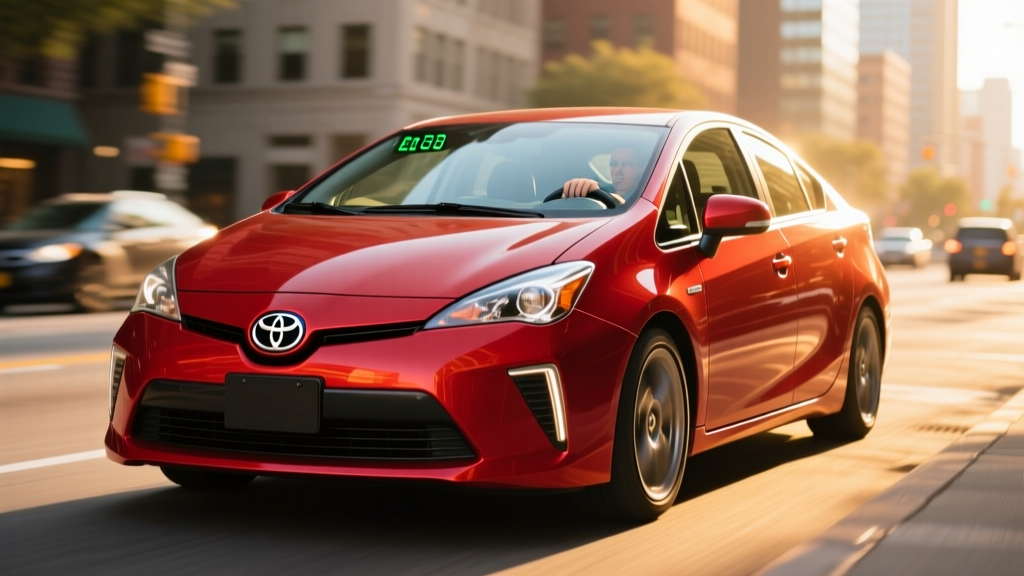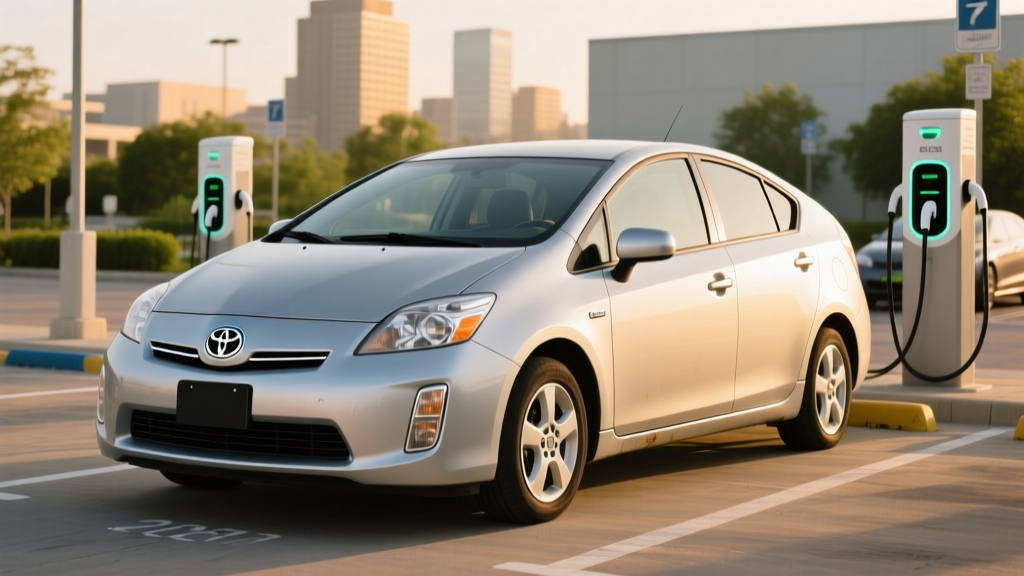
If you've been searching for a "2006 Toyota hybrid," you're almost certainly looking at the second-generation Toyota Prius (XW20) — the vehicle that put hybrid technology on the map for millions of American drivers. Nearly two decades after it rolled off the assembly line, this car still shows up in used-car listings, owner forums, and budget-commuter conversations. The question for 2026 buyers is straightforward: does a 20-year-old hybrid still deliver on the fuel-savings promise, or is it a money pit waiting to happen?
This guide breaks down the real numbers — EPA fuel economy, battery replacement costs, reliability track records, and how the 2006 Prius compares to modern hybrids, plug-in hybrids (PHEVs), and full battery-electric vehicles (BEVs) you can buy today.
2006 Toyota Prius Hybrid: Core Specifications at a Glance
| Specification | Value |
|---|---|
| Powertrain Type | Conventional Hybrid (HEV) — no plug |
| Gasoline Engine | 1.5L inline-4 (76 hp) |
| Electric Motor | 50 kW (67 hp) permanent-magnet AC motor |
| Combined System Output | 110 hp |
| Transmission | Planetary eCVT (no traditional gears) |
| Hybrid Battery | 1.3 kWh Nickel-Metal Hydride (NiMH) |
| EPA Fuel Economy | 46 MPG combined (48 city / 45 highway) |
| Fuel Tank Capacity | 11.9 gallons |
| Estimated Total Range | ~547 miles per tank |
| 0–60 mph | ~10.4 seconds |
| Curb Weight | ~2,932 lbs |
| Original MSRP (2006) | $22,120 (base) |
| 2026 Used Price Range | $2,500–$6,500 depending on condition/mileage |
How Many MPG Does the 2006 Toyota Prius Hybrid Actually Get?
The EPA rated the 2006 Prius at 48 city / 45 highway / 46 combined MPG. Those numbers were exceptional in 2006 and remain respectable in 2026 — they're close to what some current non-plug compact hybrids achieve.
But here's what matters more: real-world MPG. The second-generation Prius has a well-documented tendency to exceed its EPA city rating in stop-and-go driving because regenerative braking recaptures energy that a gas car wastes as heat. Owners on forums like PriusChat and in long-term fuel-logging apps consistently report:
- City / suburban driving: 48–54 MPG (regenerative braking maximizes electric-motor usage)
- Highway (70+ mph sustained): 40–44 MPG (aerodynamic drag and reduced regen benefit)
- Cold weather (below 35°F): 38–42 MPG (engine runs more often for cabin heat, battery efficiency drops)
- Combined real-world average: 44–50 MPG across mixed driving
This is a critical distinction from full EVs, which lose range in cold weather and on highways. The 2006 Prius is at its most efficient in the exact conditions — city traffic — where conventional gas cars are at their worst.
HEV vs PHEV vs EV: Understanding What the 2006 Prius Is (and Isn't)
Conventional Hybrid (HEV) — This is the 2006 Prius. It has a small battery (1.3 kWh) that charges itself through regenerative braking and the gasoline engine. You never plug it in. It cannot drive on electric power alone for more than about a mile at very low speed. It does not qualify for any federal EV tax credit.
| Feature | HEV (e.g., 2006 Prius) | PHEV (e.g., 2026 Prius Prime) | BEV (e.g., 2026 Tesla Model 3) |
|---|---|---|---|
| Plug-in charging? | No | Yes | Yes |
| Electric-only range | ~1 mi at low speed | 44 mi (EPA) | 330+ mi (EPA) |
| Total range | ~547 mi | ~600+ mi | 330+ mi |
| Fuel / energy cost per mile | ~$0.07 (gas) | ~$0.03 (electric) / $0.07 (gas) | ~$0.04 (electric) |
| Federal tax credit (§30D) | None | Up to $7,500 (if eligible) | Up to $7,500 (if eligible) |
| Home charging needed? | No | Recommended for full benefit | Essential |
| Typical 2026 starting price | $2,500–$6,500 (used) | $33,445 (new MSRP) | $38,990 (new MSRP) |
The 2006 Prius is a pure HEV. It's designed for buyers who want better fuel economy with zero behavioral change — no plugging in, no range planning, no charging apps. You fill it with gas and drive.
Hybrid Battery Life: Reliability, Degradation, and Replacement Cost
Battery Warranty (Original): Toyota covered the 2006 Prius hybrid battery for 8 years / 100,000 miles (10 years / 150,000 miles in California-emissions states). That warranty has long expired on every 2006 model.
Real-World Battery Lifespan: Data from owner surveys and repair shops indicates the NiMH battery in the 2nd-gen Prius typically lasts 120,000–180,000 miles before significant capacity loss triggers a check-engine light or noticeable fuel-economy decline. Some units exceed 200,000 miles; others fail around 100,000 miles, especially in hot climates (Arizona, Texas, Florida).
This is the single biggest financial risk of buying a 2006 Prius in 2026. Here's what battery replacement looks like:
| Option | Cost Range | Notes |
|---|---|---|
| Refurbished / reconditioned NiMH pack | $600–$1,200 | Aftermarket; 1–3 year warranty typical; most popular budget choice |
| Individual module replacement (1–3 bad cells) | $150–$400 | Viable if only a few modules have failed; requires diagnostic scan |
| Remanufactured OEM-equivalent pack | $1,200–$2,000 | Better warranty (2–5 years); installed by hybrid specialists |
| Brand-new OEM Toyota pack | $2,000–$3,000 | Often uneconomical for a car worth $4,000; may not even be available for this model year |
Key insight: Unlike modern EVs with 8-year/100,000-mile battery warranties backed by manufacturers, a 2006 Prius battery replacement is entirely an out-of-pocket expense. However, the relatively low cost of refurbished NiMH packs ($600–$1,200) means a battery failure is a repair, not a total-loss event — especially compared to some early EV battery replacements that exceeded $15,000.
Is the 2006 Toyota Prius Hybrid Reliable in 2026?
The second-generation Prius earned a reputation as one of the most reliable vehicles Toyota has ever built. The planetary eCVT transmission has no belts, no clutch packs, and no friction bands — there's essentially nothing to wear out. The IIHS rated it "Good" in frontal offset and side-impact crash tests (with optional side airbags).
However, a 20-year-old vehicle has age-related concerns that mileage alone doesn't capture:
- Hybrid battery: As discussed above — expect to budget $600–$2,000 for a replacement unless the current owner has already done it with documentation.
- 12V auxiliary battery: The Prius uses a standard 12V battery to boot the computers. These fail every 3–5 years and cost $150–$250 to replace. A dead 12V battery will make the car completely inoperable — even if the hybrid battery is full.
- Brake actuator / regenerative braking system: The brake actuator assembly on the XW20 is a known failure point, typically between 100,000–150,000 miles. Replacement runs $800–$1,500 at a dealer.
- Catalytic converter: Theft risk is real, and replacement costs $800–$1,800. The Prius cat is valuable due to precious-metal content.
- Coolant system: The inverter coolant pump and engine coolant system should be inspected; failures can damage the hybrid inverter ($1,500+ repair).
Does the 2006 Toyota Prius Qualify for Any Tax Credits?
No. The 2006 Prius does not qualify for the federal §30D Clean Vehicle Credit. That credit applies only to new plug-in electric vehicles (BEVs and PHEVs) meeting current battery-sourcing, MSRP, and buyer-income requirements.
For used electrified vehicles, the Used Clean Vehicle Credit (§25E) offers up to $4,000 (30% of the sale price, capped) — but it requires the vehicle to have a battery capacity of at least 7 kWh and to be a plug-in vehicle (PHEV or BEV). The 2006 Prius has a 1.3 kWh NiMH battery and no plug, so it does not qualify for this credit either.
Bottom line: You're paying the full used-market price with no federal tax incentive. The value proposition rests entirely on the low purchase price and ongoing fuel savings.
2006 Prius vs Modern Alternatives: What Should You Actually Buy?
✓ Pros of the 2006 Prius
- Extremely low purchase price ($2,500–$6,500)
- Proven 46–50 MPG real-world economy
- No charging infrastructure needed
- Massive aftermarket parts and knowledge base
- eCVT transmission is virtually bulletproof
- Low insurance and registration costs
✗ Cons of the 2006 Prius
- Hybrid battery likely near end of life (budget for replacement)
- No federal or state tax credits
- Outdated safety tech (no automatic emergency braking, no backup camera standard)
- Slow acceleration (10.4 sec 0–60)
- Aging interior, infotainment, and ride quality
- Brake actuator and inverter coolant pump are known failure points
Who should buy the 2006 Prius?
- Budget-first commuters who need sub-$5,000 transportation with excellent fuel economy
- DIY-minded owners comfortable with basic hybrid maintenance (there are extensive YouTube tutorials and forum guides)
- Drivers without access to home or workplace charging — HEVs need no plug
- Second-car or short-trip urban runabouts
Who should look at a modern PHEV or BEV instead?
- Buyers who can charge at home and want to eliminate most gasoline use (consider a used 2018–2022 Prius Prime PHEV, ~$16,000–$22,000, with 25 mi electric-only range)
- Those wanting modern safety features — automatic emergency braking, lane-keeping, blind-spot monitoring
- Drivers eligible for the §30D or §25E tax credits on a newer plug-in vehicle
- Anyone planning to keep the car 8+ years and wanting a fresh battery warranty
Frequently Asked Questions
How many MPG does the 2006 Toyota Prius hybrid get in real-world driving?
The EPA rates it at 48 city / 45 highway / 46 combined. In real-world use, expect 44–50 MPG combined, with city driving often yielding 48–54 MPG thanks to regenerative braking. Cold weather and sustained highway speeds above 70 mph reduce this to 38–44 MPG.
Does the 2006 Toyota Prius need to be plugged in?
No. The 2006 Prius is a conventional hybrid (HEV). Its 1.3 kWh NiMH battery charges exclusively through regenerative braking and the gasoline engine. There is no plug, no charging port, and no electric-only driving mode of any meaningful distance.
How much does it cost to replace the hybrid battery in a 2006 Prius?
A refurbished NiMH pack costs $600–$1,200 installed. Individual module replacement (if only a few cells have failed) runs $150–$400. A remanufactured OEM-equivalent pack with a multi-year warranty costs $1,200–$2,000. Brand-new OEM packs may no longer be readily available for this model year.
Is the 2006 Prius more reliable than a gas car of the same age?
The powertrain (engine + eCVT) is generally more reliable than a conventional automatic transmission of the same era because the eCVT has far fewer wearable components. However, hybrid-specific parts — the battery pack, brake actuator, and inverter coolant pump — add failure points that a simple gas car doesn't have. On balance, a well-maintained 2006 Prius is reliable, but budget $1,000–$2,000 in the first year for deferred maintenance.
Should I buy a 2006 Prius or a newer hybrid?
If your budget is strictly under $5,000 and you need reliable, efficient transportation today, the 2006 Prius is hard to beat on cost-per-mile. If you can spend $15,000–$25,000, a 2018+ Prius or Prius Prime PHEV offers dramatically better safety tech, a fresher battery with remaining warranty, Apple CarPlay/Android Auto, and (for the Prime) 25–44 miles of electric-only range. If you can charge at home and spend $30,000+, a new BEV eliminates gasoline entirely and qualifies for tax credits the 2006 model cannot.