Why a 20-Year-Old Hybrid's MPG Still Matters in 2026
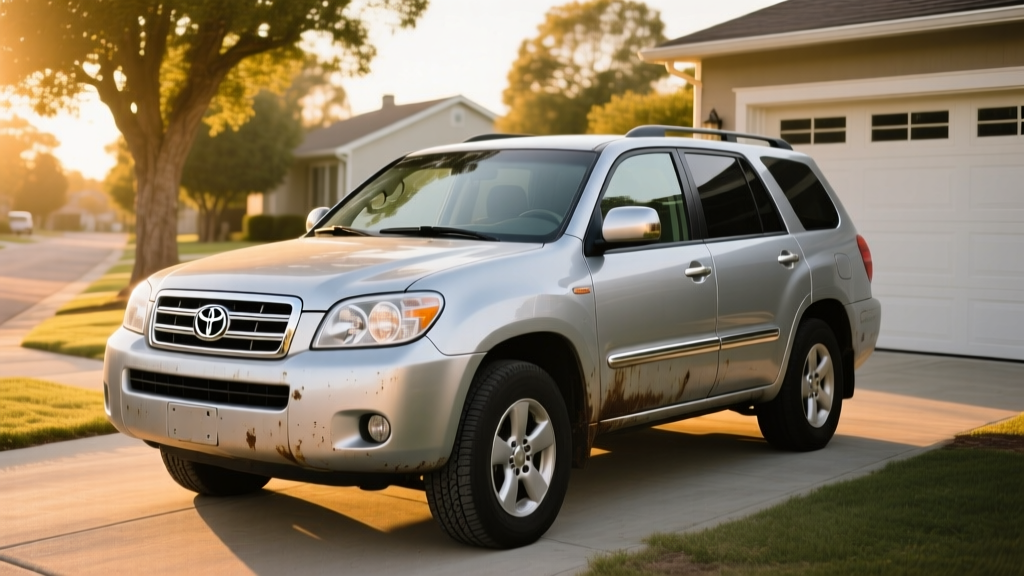
The 2006 Toyota Highlander Hybrid was one of the first mainstream SUVs to pair a V6 engine with a hybrid-electric drivetrain. For buyers shopping the used market in 2026 — or current owners wondering how their fuel economy has held up — understanding the real-world gas mileage of this generation is critical. Unlike modern plug-in hybrids (PHEVs) with 30+ miles of electric-only range, the 2006 Highlander Hybrid is a conventional hybrid (HEV): it never plugs in, runs on gasoline alone, and uses a small nickel-metal hydride (NiMH) battery to assist the engine and recapture braking energy.
Let's separate the EPA sticker numbers from what you'll actually see at the pump two decades later, and examine whether this early hybrid still delivers meaningful fuel savings versus a conventional gas SUV.
HEV vs PHEV: What the 2006 Highlander Hybrid Actually Is
Conventional Hybrid (HEV) — 2006 Highlander Hybrid
- Plugs in? No — charges via regenerative braking and engine
- Electric-only range: ~1 mile at low speed (not EPA-rated)
- Battery: 6.5 kWh NiMH (gross), ~1.5 kWh usable
- Fuel: Gasoline only
- Charging infrastructure: None needed
Plug-In Hybrid (PHEV) — Modern Comparison (e.g., 2026 RAV4 Prime)
- Plugs in? Yes — Level 1/Level 2 charging
- Electric-only range: 42 miles EPA
- Battery: 18.1 kWh lithium-ion
- Fuel: Gasoline + grid electricity
- Charging infrastructure: Home outlet or Level 2 charger
The distinction matters because some shoppers confuse the 2006 Highlander Hybrid with Toyota's later PHEV models. The 2006 model has no plug, no electric-only highway driving, and no EV mode that lasts more than a brief low-speed crawl. Its hybrid system exists to improve fuel economy and provide brief electric assist — not to replace gasoline.
EPA Gas Mileage Ratings: City, Highway, and Combined
According to fueleconomy.gov, the 2006 Toyota Highlander Hybrid with AWD carries these EPA estimates:
| Driving Cycle | EPA Rating | Real-World Expectation (2026) |
|---|---|---|
| City | 31 MPG | 26–29 MPG |
| Highway | 27 MPG | 24–26 MPG |
| Combined | 28 MPG | 25–27 MPG |
Why the real-world drop? The 2006 was rated under the pre-2008 EPA testing methodology, which was more generous than today's cycles. When the EPA revised its testing in 2008 to better reflect real driving (higher speeds, air conditioning use, cold starts), the equivalent 2008 Highlander Hybrid was re-rated at 26 city / 26 highway / 26 combined. If you're seeing 25–27 MPG combined in a well-maintained 2006 unit today, that aligns with the modern adjusted equivalent — not the original sticker.
City vs. highway behavior: Like all Toyota hybrids using the Synergy Drive system, the 2006 Highlander Hybrid performs best in stop-and-go city traffic where regenerative braking recharges the battery frequently and the engine can shut off at stops. Highway driving at 70+ MPH relies almost entirely on the gasoline engine, erasing much of the hybrid advantage. Expect city MPG to exceed highway MPG by 2–4 MPG — the opposite of a conventional gas SUV.
Powertrain Specs: What's Moving This 4,400-lb SUV
| Specification | 2006 Highlander Hybrid AWD |
|---|---|
| Engine | 3.3L V6 (3MZ-FE) |
| Engine HP | 215 hp @ 5,600 rpm |
| Electric Motor (front) | 123 kW (165 hp) |
| Electric Motor (rear, AWD) | 50 kW (67 hp) |
| Net Combined System HP | 270 hp |
| Transmission | eCVT (planetary gearset) |
| Battery Type | NiMH (Nickel-Metal Hydride) |
| Battery Capacity (gross) | 6.5 kWh |
| Curb Weight | ~4,390 lbs |
| 0–60 MPH | ~7.5 seconds |
| Towing Capacity | 3,500 lbs |
The combined 270 hp output made this one of the quickest midsize SUVs of its era. The eCVT transmission — not a belt-and-cone CVT but a planetary gearset that seamlessly blends engine and motor power — is a hallmark of Toyota's Hybrid Synergy Drive and contributes to the vehicle's reputation for mechanical durability. There are no traditional transmission bands, clutches, or torque converters to wear out.
Battery Health, Degradation, and Replacement Cost in 2026
Original Battery Warranty
Toyota warranted the 2006 Highlander Hybrid's NiMH battery for 8 years / 100,000 miles (10 years / 150,000 miles in CARB states including California, New York, Massachusetts, and others). That factory warranty has expired for all 2006 models.
Expected Battery Lifespan
NiMH batteries in Toyota hybrids of this era typically last 150,000–200,000 miles before significant capacity loss. At 20 years old, many surviving examples have either already had a battery replacement or are running on degraded packs.
Replacement Cost (2026)
- Remanufactured NiMH pack (installed): $2,000–$3,200
- New OEM Toyota pack: $3,500–$4,800 (limited availability)
- Individual module reconditioning: $500–$1,200 (independent hybrid shops)
How degradation affects MPG: A degraded NiMH battery holds less charge, which means the electric motor assists less and the V6 engine runs more often. Owners with high-mileage, original batteries commonly report a 2–4 MPG drop from their vehicle's earlier life. If a 2006 Highlander Hybrid is getting only 20–22 MPG combined, the battery is likely the primary culprit — not the engine or transmission.
A practical diagnostic: use an OBD-II scanner with hybrid-specific software (such as Techstream or Dr. Prius) to check the battery's internal resistance and individual module voltages. A healthy pack shows balanced modules within 0.2V of each other. Wide variance signals imminent failure.
Reliability Track Record and Common Issues
The 2006 Highlander Hybrid benefits from Toyota's strongest reliability era. The 3MZ-FE V6 is a timing-belt engine (belt replacement interval: ~90,000 miles / 7 years — overdue on most surviving examples). Beyond the hybrid battery, the drivetrain is conventional Toyota and parts remain widely available.
Known issues specific to the hybrid system:
- Inverter coolant pump: A recall (NHTSA campaign 11V-237) addressed potential failure of the inverter coolant pump, which could overheat the hybrid inverter. Verify this recall was performed.
- Brake actuator: The electro-hydraulic brake system (which integrates regenerative braking) can develop faults after 150,000+ miles. Replacement runs $1,500–$2,500.
- 12V auxiliary battery: Located in the rear cargo area, this conventional 12V battery can fail without warning and prevent the hybrid system from booting. Replace proactively every 4–5 years.
The eCVT transmission is widely regarded as one of the most durable automatic transmissions ever produced. Unlike belt-driven CVTs found in some competitors, Toyota's planetary-gear eCVT has no wear-prone friction elements.
Does the 2006 Highlander Hybrid Qualify for Any Tax Credits?
No. The 2006 Toyota Highlander Hybrid does not qualify for the current federal §30D clean vehicle tax credit (up to $7,500). That credit applies only to new plug-in electric vehicles — both battery-electric (BEV) and plug-in hybrid (PHEV) models that meet battery sourcing, MSRP caps, and buyer income limits as defined by the IRS. Conventional hybrids (HEVs) that don't plug in have never qualified for §30D.
The original 2006 Highlander Hybrid did qualify for a much smaller federal tax credit under the Energy Policy Act of 2005 — up to $2,200 — but that credit phased out for Toyota in 2007 after the manufacturer hit 60,000 cumulative hybrid sales. That benefit is long expired and irrelevant to used buyers today.
State incentives: A handful of states offer used-EV or used-hybrid incentives, but these almost universally target plug-in vehicles (PHEVs and BEVs), not conventional hybrids. Check your state's energy office for current programs, but do not expect any incentive for a 2006 HEV purchase.
Who Should Buy This Hybrid vs. a Full EV or Gas SUV
Choose the 2006 Highlander Hybrid If:
- You need an affordable AWD SUV under $6,000–$8,000
- Your driving is mostly city and suburban (where the hybrid system saves the most fuel)
- You have no access to home or workplace charging (HEV needs no plug)
- You want Toyota reliability without EV complexity
- You tow occasionally (3,500-lb rating exceeds most modern compact EVs)
Look at a Modern PHEV or BEV Instead If:
- You have Level 2 home charging and a short commute (a PHEV covers 30–42 miles on electricity alone)
- You want current safety tech (automatic emergency braking, lane-keep assist — absent on the 2006)
- You want to qualify for the §30D federal tax credit on a new purchase
- Fuel cost savings are a priority (a BEV at $0.12/kWh costs ~$0.04/mile vs. ~$0.14/mile for this hybrid at $3.50/gal)
- You want a battery warranty that's still active
The 2006 Highlander Hybrid occupies a specific niche: it's a budget-friendly, no-plug-required SUV that still delivers measurably better fuel economy than a gas-only 2006 Highlander V6 (rated at 18 city / 22 highway / 20 combined per fueleconomy.gov). That's a ~40% improvement in city MPG. For a buyer who drives 12,000 miles per year with 60% city driving, the hybrid saves roughly 120 gallons of fuel annually — about $420 at $3.50/gallon.
However, a 2026 PHEV like the Toyota RAV4 Prime (42 miles electric-only, 38 MPG combined on gas) or a BEV like the Hyundai Ioniq 5 (310 miles EPA range, 114 MPGe) will save dramatically more on fuel if you can charge at home. The 2006 Highlander Hybrid's value proposition is strictly for buyers who cannot plug in and need a cheap, capable, AWD vehicle today.
Frequently Asked Questions
How many MPG does the 2006 Toyota Highlander Hybrid get?
The EPA originally rated it at 31 city / 27 highway / 28 combined. Under modern adjusted testing methodology, the equivalent is closer to 26/26/26. Real-world expectation for a 2026-owned example with a healthy battery: 25–27 MPG combined, with city driving yielding 26–29 MPG and highway cruising at 70 MPH yielding 24–26 MPG.
Does the 2006 Highlander Hybrid need to be plugged in?
No. It is a conventional hybrid (HEV), not a plug-in hybrid (PHEV). The battery charges exclusively through regenerative braking and the gasoline engine. There is no charging port and no electric-only driving range beyond brief low-speed maneuvering.
How far can it drive on electric power alone?
Effectively zero miles at normal driving speeds. Under 25 MPH with a fully charged battery and light throttle, the electric motor can propel the vehicle for roughly 1 mile before the V6 engine starts. This is not an EPA-rated electric-only range — it's a brief assist mode, not a plug-in EV mode.
Is the hybrid battery expensive to replace?
A remanufactured NiMH battery pack costs $2,000–$3,200 installed at a hybrid specialist shop. A new OEM Toyota pack runs $3,500–$4,800 but may have limited availability for a 2006 model year. Some independent shops offer individual module reconditioning for $500–$1,200, which extends life by 3–5 years but is not a permanent fix.
Is the 2006 Highlander Hybrid reliable?
Yes, with maintenance caveats. The 3MZ-FE V6 and eCVT planetary gearset are durable. The main reliability risk is the aging NiMH battery (20 years old on all examples), the inverter coolant pump (check recall status), and the electro-hydraulic brake actuator at high mileage. With a fresh battery and maintained timing belt, these vehicles routinely exceed 250,000 miles.
Does it qualify for any federal or state tax credit in 2026?
No. The federal §30D clean vehicle credit applies only to new plug-in vehicles (BEVs and PHEVs). Conventional hybrids that don't plug in have never qualified. The original $2,200 credit available at purchase in 2006 phased out in 2007 and is not retroactive.
How does its MPG compare to a modern hybrid SUV?
A 2026 Toyota Highlander Hybrid (non-plug-in) is EPA-rated at 35 city / 35 highway / 35 combined — roughly 25–30% better than the 2006 model, thanks to a lighter platform, a more efficient 2.5L four-cylinder engine, and a lithium-ion battery. A 2026 RAV4 Hybrid achieves 41 city / 38 highway / 39 combined in a smaller package.