Quick Verdict: A Pioneer That Paved the Way
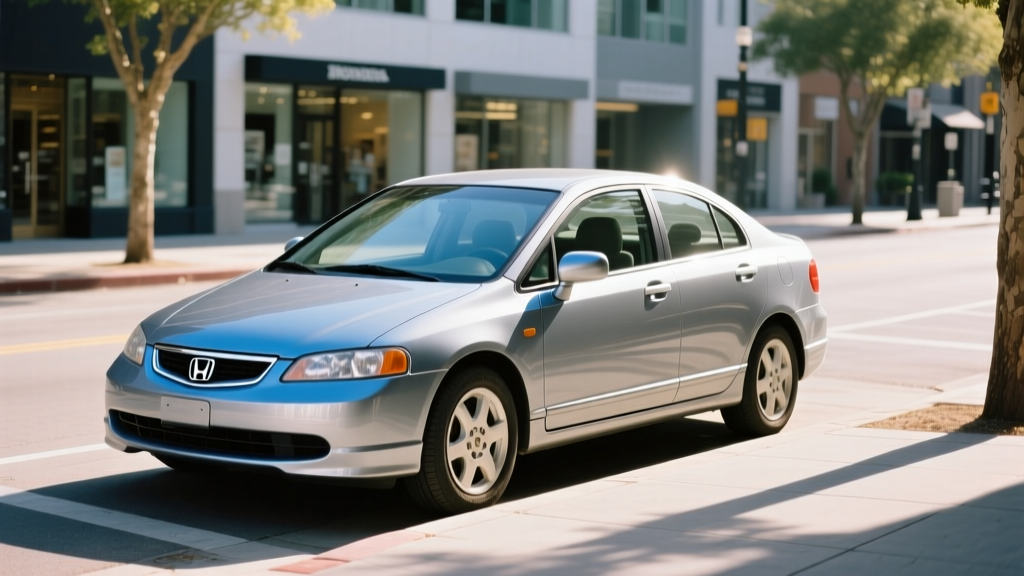
The 2004 Honda Civic Hybrid was one of the first mainstream gasoline-electric hybrids sold in the United States, arriving in a market where the Toyota Prius was still finding its footing. Two decades later, this compact HEV remains a case study in early hybrid engineering — and a cautionary tale about battery longevity. If you're considering one as an ultra-budget commuter or researching it as a benchmark for how far hybrid technology has come, here's everything you need to know, grounded in real numbers.
| Spec | 2004 Honda Civic Hybrid |
|---|---|
| Powertrain | 1.3L i-DSI 4-cyl + IMA electric motor |
| Combined Horsepower | 93 hp (85 hp engine + 13 hp motor assist) |
| Transmission | 5-speed manual or CVT |
| EPA MPG (City/Hwy/Combined) | 48 / 47 / 47 (CVT); 45 / 51 / 47 (Manual) |
| Hybrid Battery | NiMH, ~0.5 kWh (nominal) |
| Hybrid System | Integrated Motor Assist (IMA) — mild parallel hybrid |
| Cargo Volume | 10.1 cu ft (trunk) |
| Curb Weight | ~2,600 lbs |
| Original MSRP | ~$19,995 (2004) |
| Current Used Price (2026) | $1,500–$3,500 (private party, condition-dependent) |
HEV vs PHEV: Where the 2004 Civic Hybrid Fits
Before going further, it's essential to distinguish between hybrid types, because confusion here leads to bad purchasing decisions.
| Feature | Conventional Hybrid (HEV) | Plug-In Hybrid (PHEV) |
|---|---|---|
| Plug-in charging? | No — charges via regenerative braking & engine | Yes — requires wall or station charging for EV range |
| Electric-only range | 0 miles (motor only assists engine) | 20–50 miles (model-dependent) |
| Battery size | 0.5–2 kWh (small) | 8–25 kWh (substantial) |
| Example (2004 era) | 2004 Civic Hybrid, Prius | None widely available in 2004 |
| Federal tax credit | Expired for this model long ago | Up to $7,500 under §30D (current qualifying models only) |
The 2004 Honda Civic Hybrid is a conventional HEV. It cannot be plugged in. Its IMA (Integrated Motor Assist) system uses a small electric motor sandwiched between the engine and transmission to provide torque assist during acceleration and enable idle stop-start. The gasoline engine always drives the wheels. You fuel it exactly like a regular car — at the pump — and never need to think about charging.
Fuel Economy: EPA Numbers vs Real-World MPG
| Driving Scenario | CVT Transmission | 5-Speed Manual |
|---|---|---|
| EPA City | 48 MPG | 45 MPG |
| EPA Highway | 47 MPG | 51 MPG |
| EPA Combined | 47 MPG | 47 MPG |
| Real-World Combined (owner reports) | 40–45 MPG | 42–48 MPG |
| Real-World Highway (70+ mph) | 38–42 MPG | 42–46 MPG |
Per fueleconomy.gov, the CVT-equipped 2004 Civic Hybrid earned a 47 MPG combined rating — impressive for 2004 and still competitive with many modern non-hybrid compacts. However, real-world results depend heavily on battery health.
The hybrid advantage reverses at highway speeds. Unlike modern hybrids that can run electric-only at low speeds, the IMA system provides minimal electric assist at steady highway cruise. The 1.3L engine does most of the work, and the car's aerodynamics (designed for the early 2000s) create drag. City driving, where regen braking and idle stop-start shine, is where this car delivers its best numbers.
Cold weather penalty: Expect a 10–15% MPG drop in sub-freezing temperatures. The IMA battery becomes less efficient, the engine runs richer during warmup, and cabin heating loads the small engine harder.
The IMA System: How Honda's Early Hybrid Actually Works
Honda's Integrated Motor Assist was fundamentally different from Toyota's Hybrid Synergy Drive used in the Prius. Understanding this matters for both driving experience and long-term reliability.
- Parallel-only architecture: The electric motor cannot drive the wheels independently. It only assists the gasoline engine during acceleration.
- No EV mode: Unlike the Prius (which can creep on electric power at low speeds), the Civic Hybrid's engine is always mechanically connected to the drivetrain.
- Idle stop: The engine shuts off at stops to save fuel. The IMA motor restarts it instantly when you release the brake — this was a key efficiency feature.
- Regenerative braking: Deceleration captures kinetic energy to recharge the NiMH battery pack.
- Deceleration cylinder deactivation: Under braking, the engine closes all intake/exhaust valves on three cylinders, reducing pumping losses and improving regen efficiency.
The result is a car that drives almost identically to a standard Civic — there's no weird EV-mode transition, no CVT drone in most situations (if you chose the manual), and no range-anxiety concept because you simply fill the 11.9-gallon tank at any gas station. Total range: approximately 500–560 miles per tank depending on driving conditions.
Battery Lifespan, Degradation, and Replacement Costs
Original warranty: Honda covered the IMA battery for 8 years / 80,000 miles (10 years / 150,000 miles in CARB states like California, New York, and Massachusetts).
Current status (2026): This car is 22 years old. No factory warranty applies to any surviving example unless a replacement battery was installed recently under an extended coverage program.
The NiMH battery pack in the 2004 Civic Hybrid is the single biggest ownership concern — and it's the reason many of these cars were scrapped or sold cheaply.
Why the IMA Battery Fails
The pack consists of 11 NiMH D-cell-sized modules (132 total cells at 1.2V each, ~158V nominal). Over time, individual cells degrade unevenly. When one module weakens, the Battery Control Module (BCM) detects the imbalance and triggers the IMA warning light. At that point, the system disables motor assist and regen braking, dropping the car to roughly 35–38 MPG — essentially a heavy, underpowered Civic.
Replacement Options and Costs
| Option | Cost (Parts + Labor) | Longevity |
|---|---|---|
| New OEM Honda IMA battery | $2,000–$2,500 | 8–12 years (if available) |
| Refurbished/remanufactured pack | $1,000–$1,500 | 4–7 years |
| Aftermarket lithium conversion (Bumblebee, etc.) | $1,200–$1,800 | 10+ years (LiFePO4 chemistry) |
| DIY cell-level repair | $150–$400 (parts only) | 2–5 years (temporary fix) |
For a car worth $2,000–$3,500, a $2,000+ OEM battery replacement is economically painful. The aftermarket lithium conversion route (replacing NiMH with LiFePO4 cells and a compatible BMS) has become popular in the IMA community, offering better longevity and slightly improved assist performance. However, it requires technical skill or a specialty shop.
Key insight: Before purchasing any 2004 Civic Hybrid, demand to see whether the IMA battery has been replaced, and if so, when and with what. A car with a fresh lithium conversion is worth a premium. A car with an original 22-year-old NiMH pack is a $1,500+ liability waiting to happen.
Reliability: Beyond the Battery
Outside the IMA system, the 7th-generation Civic platform (2001–2005) is generally robust, though it has known issues:
- Transmission (manual): Early 7th-gen Civics had some bearing wear issues, but by 2004 most were resolved. The CVT, however, requires regular fluid changes with Honda HMMF fluid specifically — neglect leads to costly failure.
- Cracked exhaust manifold: The 1.3L i-DSI engine is prone to exhaust manifold cracking around 100,000–150,000 miles. A replacement manifold or header costs $200–$500.
- Motor mount wear: The hybrid's additional weight and stop-start cycling wear engine mounts faster than non-hybrid Civics. Budget $300–$500 for replacement if you feel excessive vibration at idle.
- 12V battery: Like any car, the standard 12V lead-acid battery needs replacement every 3–5 years. The IMA system relies on the 12V for ECU power — a dead 12V means the car won't start, even with a healthy hybrid battery.
With a healthy IMA battery and proper maintenance, these cars routinely reach 200,000–250,000 miles. The NHTSA safety ratings for this generation were acceptable for the era but would be considered below-average by today's standards — no electronic stability control, basic front airbags, and side airbags were optional.
Tax Credits and Incentives: Nothing Applies
Let's be direct: the 2004 Honda Civic Hybrid qualifies for no current federal or state tax incentives.
- The original §30D federal hybrid tax credit (up to $2,100 for this model) expired for Honda vehicles in 2008 after Honda hit the 60,000-unit manufacturer cap.
- The current §30D clean vehicle credit applies only to new qualifying BEVs and FCEVs (not conventional HEVs) with MSRP and income caps — see IRS guidelines.
- No state offers incentives for purchasing a 22-year-old used hybrid.
If tax incentives are part of your purchase calculus, you'll need to look at a new or recent-model BEV or PHEV. The 2004 Civic Hybrid's appeal is purely its low purchase price and fuel efficiency.
Who Should Buy This Car (And Who Shouldn't)
✅ Choose the 2004 Civic Hybrid If:
- You need a sub-$3,000 commuter car with strong city MPG
- You drive mostly in stop-and-go urban traffic where regen braking maximizes efficiency
- You're mechanically inclined and comfortable with a potential IMA battery project
- You want to avoid the upfront cost and charging logistics of a full EV
- You value simplicity — no plug, no apps, no charging networks
❌ Skip It If:
- You do mostly highway driving (the hybrid advantage is minimal here)
- You want modern safety features (ESC, backup camera, AEB)
- You're not prepared for a $1,000–$2,500 battery replacement possibility
- You need more than 10.1 cu ft of cargo space
- You want any form of electric-only driving or plug-in capability
Hybrid vs PHEV vs EV: Which Fits You?
| Your Situation | Best Choice | 2026 Example |
|---|---|---|
| Budget under $3,500, city commute, no charging access | Used HEV (like this Civic) | 2004 Civic Hybrid, 2005 Prius |
| Home charging available, short daily commute, road trips occasionally | New or used PHEV | Toyota Prius Prime ($33,445), RAV4 Prime |
| Home charging, daily driving under 250 miles, want lowest operating cost | BEV | Chevy Equinox EV ($33,600), Tesla Model 3 ($38,990) |
| No home charging, long highway commutes, rural area | HEV (modern) | Toyota Corolla Hybrid ($23,500) |
Frequently Asked Questions
How many MPG does the 2004 Honda Civic Hybrid get?
The EPA rates it at 48 city / 47 highway / 47 combined (CVT). Real-world owners typically report 40–45 MPG combined, with better numbers in city driving and lower on sustained highway trips. A degraded IMA battery will drop this to roughly 35–38 MPG.
Does the 2004 Civic Hybrid need to be plugged in?
No. It is a conventional hybrid (HEV), not a plug-in hybrid (PHEV). The small NiMH battery recharges exclusively through regenerative braking and engine-driven generation. You never plug it in.
Can the 2004 Civic Hybrid drive on electric power alone?
No. Honda's IMA system is a parallel-assist design — the electric motor only supplements the gasoline engine. The car cannot move on electric power alone, unlike Toyota's Hybrid Synergy Drive in the Prius which allows limited low-speed EV creeping.
How much does it cost to replace the hybrid battery?
Between $1,000 and $2,500 depending on the route you take. A refurbished NiMH pack runs $1,000–$1,500 installed. An aftermarket lithium (LiFePO4) conversion is $1,200–$1,800. A new OEM Honda pack, if still available, is $2,000–$2,500. Given the car's value, most owners opt for refurbished or lithium conversion.
Is the 2004 Civic Hybrid reliable?
The gasoline powertrain and chassis are reliable Honda components. The weak link is the IMA NiMH battery, which is almost certainly degraded or already replaced on any surviving example. The CVT transmission also requires specific Honda HMMF fluid changes — neglect is costly. If the IMA battery has been addressed (replaced or converted), the car is mechanically sound for basic commuting.
Does it qualify for any tax credit in 2026?
No. The original federal hybrid tax credit for Honda vehicles expired in 2008, and current §30D clean vehicle credits apply only to qualifying new BEVs and FCEVs — not conventional hybrids, and not used vehicles of this age. There is no federal or state incentive available for purchasing a 2004 Civic Hybrid.
What's the total range on a full tank?
With an 11.9-gallon fuel tank and real-world combined MPG of ~42, expect approximately 500 miles per fill-up. Under ideal city conditions with a healthy battery, you might stretch to 550+ miles.