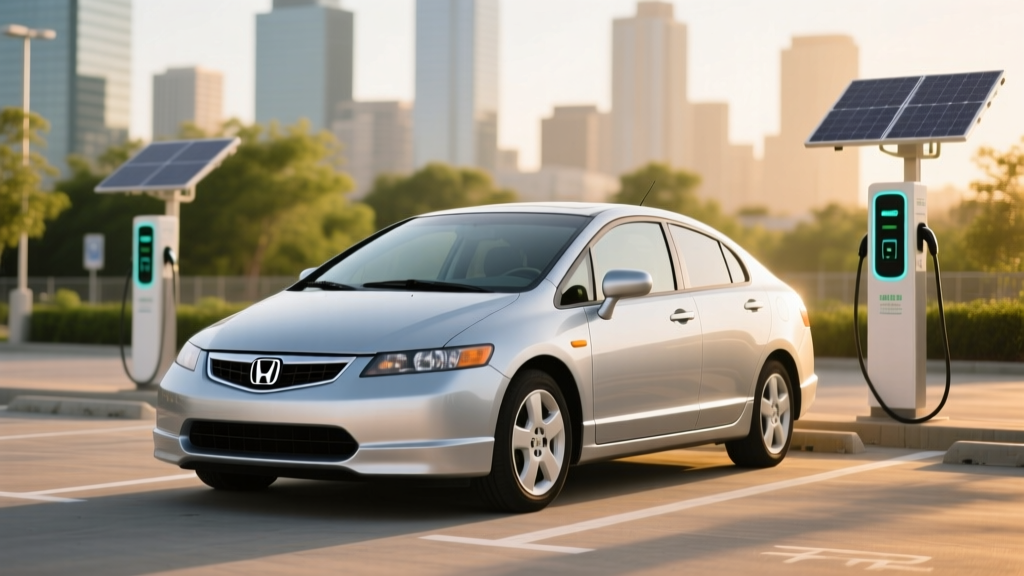
Before the Toyota Prius became a cultural icon and long before plug-in hybrids roamed American highways, a tiny, teardrop-shaped two-seater rolled off Honda's assembly line and quietly rewrote the rules of fuel efficiency. The 2001 Honda Insight — often searched simply as "2001 Honda hybrid" — was Honda's first production hybrid sold in the United States and the first mass-market hybrid available to American consumers. In 2026, more than two decades later, it remains a fascinating study in hybrid engineering fundamentals and a benchmark for what simplicity can achieve.
If you're researching this car — whether as a prospective used-car buyer, a hybrid-history enthusiast, or someone trying to understand how far hybrid technology has come — this guide covers everything: real-world fuel economy, the Integrated Motor Assist (IMA) system, battery longevity and replacement costs, and how the original Insight stacks up against today's HEVs, PHEVs, and BEVs.
What Exactly Is the 2001 Honda Insight?
The 2001 Honda Insight is a conventional hybrid electric vehicle (HEV) — not a plug-in hybrid (PHEV) and not a battery electric vehicle (BEV). This distinction matters enormously, especially for buyers cross-shopping used hybrids.
HEV vs. PHEV: The Core Difference
Conventional Hybrid (HEV) — like the 2001 Insight: The gasoline engine and a small electric motor work together. The battery recharges through regenerative braking and engine power. You never plug it in. There is no electric-only driving range to speak of.
Plug-in Hybrid (PHEV) — like the modern Toyota RAV4 Prime or Honda Clarity PHEV: A larger battery (typically 10–20 kWh) provides 20–50 miles of electric-only driving. You plug it in to recharge. Once the battery depletes, it operates as a conventional hybrid.
The 2001 Insight has a 0.5 kWh nickel-metal hydride (NiMH) battery — roughly 1/30th the capacity of a modern PHEV. It cannot be plugged in and provides no standalone electric-only range.
2001 Honda Insight Fuel Economy: EPA and Real-World MPG
The headline number on the 2001 Insight has always been its fuel economy — and it remains remarkable even by 2026 standards. Here is the official EPA data, sourced from fueleconomy.gov:
| Metric | Manual Transmission | CVT Automatic |
|---|---|---|
| EPA City | 49 MPG | 57 MPG |
| EPA Highway | 61 MPG | 56 MPG |
| EPA Combined | 53 MPG | 56 MPG |
| Fuel Tank | 10.6 gal | 10.6 gal |
| Total Range (est.) | ~560 miles | ~595 miles |
Real-World MPG: What Owners Actually Report
EPA testing in 2001 used different methodology than today's adjusted figures, and the Insight's numbers have always been somewhat sensitive to driving style. Here's what long-term owner data and enthusiast community reports consistently show:
- City driving (manual): 45–55 MPG — hybrids excel in stop-and-go traffic where regenerative braking recaptures energy
- Highway driving (manual): 55–70 MPG — the Insight's ultra-light weight (under 1,900 lbs) and aerodynamic drag coefficient of 0.25 deliver extraordinary highway efficiency
- Cold weather penalty: Expect a 10–15% drop in MPG below 40°F, consistent with all hybrids due to reduced battery efficiency and longer engine warm-up cycles
- Hypermiling potential: Enthusiast drivers have documented 70–80+ MPG using pulse-and-glide techniques, though this is not practical for daily commuting
The CVT-equipped model actually achieved a higher EPA city rating than the manual because the continuously variable transmission kept the engine closer to its optimal efficiency point in stop-and-go conditions. On the highway, the manual transmission's direct mechanical connection gave it a slight edge.
Powertrain: The IMA System Explained
The 2001 Insight uses Honda's Integrated Motor Assist (IMA) system — a parallel hybrid architecture that was elegantly simple compared to Toyota's more complex power-split Hybrid Synergy Drive.
| Specification | Value |
|---|---|
| Engine | 1.0L 3-cylinder (67 HP) |
| Electric Motor | 10 kW (13 HP) thin DC brushless |
| Combined System Output | 73 HP @ 5,700 RPM |
| Torque | 92 lb-ft @ 4,800 RPM |
| Battery Chemistry | Nickel-Metal Hydride (NiMH) |
| Battery Capacity | ~0.5 kWh (6.5 Ah, 144V nominal) |
| Curb Weight | 1,850 lbs (manual) |
| 0–60 MPH | ~10.5 seconds |
| Transmission | 5-speed manual or CVT |
The IMA system works as a power-assist hybrid: the electric motor sits between the engine and transmission, providing supplemental torque during acceleration and recapturing energy during braking. The motor alone cannot propel the car — it only assists the gasoline engine. This is fundamentally different from Toyota's system, which can drive the wheels on electric power alone at low speeds.
The Insight's extraordinary efficiency came from a combination of factors beyond just the hybrid system:
- Aluminum body and chassis keeping weight under 1,900 lbs
- Class-leading 0.25 drag coefficient
- Low rolling-resistance tires
- Idle stop system that shuts off the engine at stops (a feature now ubiquitous in modern vehicles)
- Lean-burn engine technology on the manual transmission model
Battery Lifespan, Degradation, and Replacement Cost
Original Battery Warranty
Honda originally warranted the 2001 Insight's IMA battery for 8 years / 80,000 miles (extended to 10 years / 150,000 miles in California and other CARB-adopting states). That warranty has long since expired on every surviving example.
NiMH Battery Longevity: What 25 Years of Data Shows
The nickel-metal hydride battery in the 2001 Insight has a well-documented aging profile. Here's what owners and independent shops report:
- Typical lifespan: 10–15 years or 120,000–180,000 miles before significant degradation
- Failure mode: Individual NiMH cells degrade unevenly, causing the battery management system to reduce usable capacity — you'll see reduced assist and lower MPG before total failure
- Warning signs: IMA warning light on dash, reduced regenerative braking, noticeable fuel economy drop (e.g., falling from 50+ to 35–40 MPG), frequent recalibration cycles
Battery Replacement Options and Costs (2026 Pricing)
| Option | Cost Range | Notes |
|---|---|---|
| OEM Honda remanufactured pack | $2,000–$3,000 | Limited availability; may require dealer order |
| Aftermarket rebuilt NiMH pack | $1,200–$2,200 | From hybrid specialists like Bumblebee Batteries |
| Individual cell replacement / grid charging | $200–$600 | DIY-friendly; extends life 1–3 more years |
| Lithium conversion (aftermarket) | $2,500–$4,000 | Lighter, longer-lasting; enthusiast community option |
For a used 2001 Insight currently valued at $3,000–$7,000 in good condition, a battery replacement is a meaningful percentage of the car's value. Factor this into any purchase decision — ask the seller for IMA battery health data or recent calibration records.
2001 Insight vs. Modern Hybrids: How Does It Compare?
To put the original Insight in context, here's how it stacks up against current-generation Honda hybrids and a popular modern competitor:
| Vehicle | Type | Combined MPG | HP | Seats | MSRP / Avg Used |
|---|---|---|---|---|---|
| 2001 Honda Insight | HEV | 53–56 | 73 | 2 | $3K–$7K used |
| 2026 Honda Civic Hybrid | HEV | 49 | 200 | 5 | $30,350 |
| 2026 Honda Accord Hybrid | HEV | 44–48 | 204 | 5 | $34,995 |
| 2026 Toyota Prius | HEV | 52–57 | 194 | 5 | $29,450 |
The Insight's combined MPG remains competitive with the best modern hybrids — a testament to the physics of lightweight design. But modern hybrids deliver that efficiency while carrying four or five passengers, producing 2.5–3x the horsepower, and meeting far stricter safety standards. The trade-off is clear: the Insight sacrifices practicality and power for its efficiency crown.
Tax Credits and Incentives: Does the 2001 Insight Qualify?
No. The 2001 Honda Insight does not qualify for any current federal tax credit. Here's why, based on IRS §30D clean vehicle credit rules:
- The federal used clean vehicle credit (up to $4,000 or 30% of sale price, whichever is less) applies only to vehicles purchased from a licensed dealer for $25,000 or less. While the Insight's price may fall under this cap, the credit requires the vehicle to have a minimum battery capacity of 7 kWh. The Insight's ~0.5 kWh NiMH pack falls far short of this threshold.
- The original Alternative Motor Vehicle Credit that applied to the Insight when new (up to $1,450 for qualifying hybrid vehicles) expired decades ago and was only available to the original purchaser.
- No state-level hybrid incentive programs in 2026 cover 25-year-old conventional hybrids.
If you're buying a 2001 Insight, expect to pay the full negotiated price with no tax credit offset.
Who Should Consider the 2001 Honda Insight Today?
✓ Buy It If
- You want a hyper-efficient daily commuter with 50+ MPG real-world
- You appreciate automotive history and want a collectible hybrid pioneer
- You drive alone and rarely need to carry passengers or cargo
- You're mechanically inclined and can handle NiMH battery maintenance
- You want to minimize fuel costs on a tight budget
✗ Skip It If
- You need back seats or meaningful cargo space
- You want modern safety features (the Insight predates ESC, side airbags standard)
- You're uncomfortable with a 25-year-old battery and potential replacement costs
- You need highway passing power (73 HP makes merging stressful)
- You want any electric-only driving capability
Hybrid vs. PHEV vs. EV: Which Fits You?
If you're cross-shopping the Insight against modern electrified options, use this decision framework:
- Choose a conventional hybrid (HEV) — like the Insight or a modern Civic Hybrid — if you have no home charging access and want maximum simplicity with no plug-in requirement.
- Choose a plug-in hybrid (PHEV) — like a used Toyota Prius Prime — if you have home Level 2 charging and a commute under 40 miles, letting you drive mostly on electricity while retaining gas-engine range flexibility.
- Choose a battery electric vehicle (BEV) — like a used Chevrolet Bolt or Nissan Leaf — if you have reliable home charging, drive under 200 miles daily, and want zero tailpipe emissions with minimal maintenance.
Frequently Asked Questions
How many MPG does the 2001 Honda Insight get in real driving?
Most owners report 45–55 MPG combined in normal driving conditions. Highway-only driving can push into the 60–70 MPG range, especially with the manual transmission. Cold weather (below 40°F) typically reduces fuel economy by 10–15%, bringing combined figures to around 40–48 MPG. These numbers still rival or beat the best 2026 hybrids.
Can the 2001 Honda Insight drive on electric power alone?
No. The Insight uses Honda's IMA parallel hybrid system, where the electric motor only assists the gasoline engine — it cannot propel the car independently. The vehicle has no electric-only range. This is a fundamental difference from plug-in hybrids (PHEVs), which offer 20–50 miles of electric-only driving.
Is the 2001 Honda Insight reliable?
The mechanical components — the 1.0L three-cylinder engine, transmission, and chassis — are generally very reliable and simple to service. The primary reliability concern is the IMA battery pack. Original NiMH batteries typically last 10–15 years; any surviving 2001 Insight has likely had at least one battery replacement or will need one soon. Independent hybrid shops can rebuild packs for $1,200–$2,200.
What does it cost to replace the IMA battery?
Expect $1,200–$3,000 depending on whether you go with an aftermarket rebuilt pack or an OEM remanufactured unit. DIY-inclined owners can extend battery life with grid charging and individual cell balancing for $200–$600. Lithium conversion kits from the enthusiast community run $2,500–$4,000 and offer longer life and lighter weight.
Does the 2001 Insight qualify for any federal tax credit?
No. The IRS §30D used clean vehicle credit requires a minimum battery capacity of 7 kWh. The Insight's ~0.5 kWh NiMH battery does not meet this threshold. No current federal or state incentive programs cover this vehicle.
Is the 2001 Insight safe by modern standards?
By 2026 standards, no. The Insight earned acceptable ratings in its era, but it lacks electronic stability control (not required until 2012), has minimal side-impact protection, and its lightweight aluminum structure, while innovative, offers less crash energy absorption than modern vehicles. The NHTSA did not conduct full crash testing on the first-generation Insight. If safety is a priority, a modern hybrid is a significantly better choice.
How does the Insight compare to the first-generation Toyota Prius?
The 2001–2003 Prius (first generation sold in the US) achieved 41 MPG combined — notably less than the Insight's 53–56 MPG. However, the Prius offered four doors, seating for five, and Toyota's more sophisticated power-split hybrid system that could drive on electric power alone at low speeds. The Insight was the efficiency king; the Prius was the practicality king. History shows which approach won the market.
The 2001 Honda Insight remains a remarkable engineering achievement — a car that achieved over 50 MPG combined using technology from a quarter-century ago. For the right buyer — a solo commuter, a hybrid enthusiast, or someone who values radical efficiency over modern amenities — it's still a compelling choice. But go in with eyes open about the battery, the safety limitations, and the reality of owning a 25-year-old vehicle. The Insight started something important; today's hybrids carry its legacy forward with more power, more seats, and far fewer compromises.