The federal tax credit landscape for electrified vehicles is one of the most confusing topics in car buying. Shoppers searching for which hybrids qualify for tax credit often discover a frustrating reality: conventional hybrids (HEVs) like the Toyota Prius don't qualify at all, while many plug-in hybrids (PHEVs) face strict battery-sourcing, MSRP, and buyer-income hurdles under IRS §30D rules. This guide cuts through the noise with exact figures, current 2026 eligibility data, and a practical framework for deciding whether a PHEV, HEV, or full BEV is right for you.
HEV vs PHEV vs BEV: Understanding What Qualifies
Before listing specific models, it's critical to distinguish the three electrified powertrain types, because the tax code treats them very differently.
| Feature | HEV (Conventional Hybrid) | PHEV (Plug-in Hybrid) | BEV (Battery Electric) |
|---|---|---|---|
| Plugs in? | No — charges via regenerative braking and engine | Yes — Level 1 or Level 2 AC charging | Yes — Level 1, Level 2, or DC fast charge |
| Battery size | 0.5–2 kWh (small buffer) | 10–25 kWh (usable) | 50–120+ kWh |
| Electric-only range | None (motor assists engine) | 20–45 miles typical | 200–400+ miles |
| §30D federal tax credit | Never qualifies | Up to $7,500 — if all criteria met | Up to $7,500 — if all criteria met |
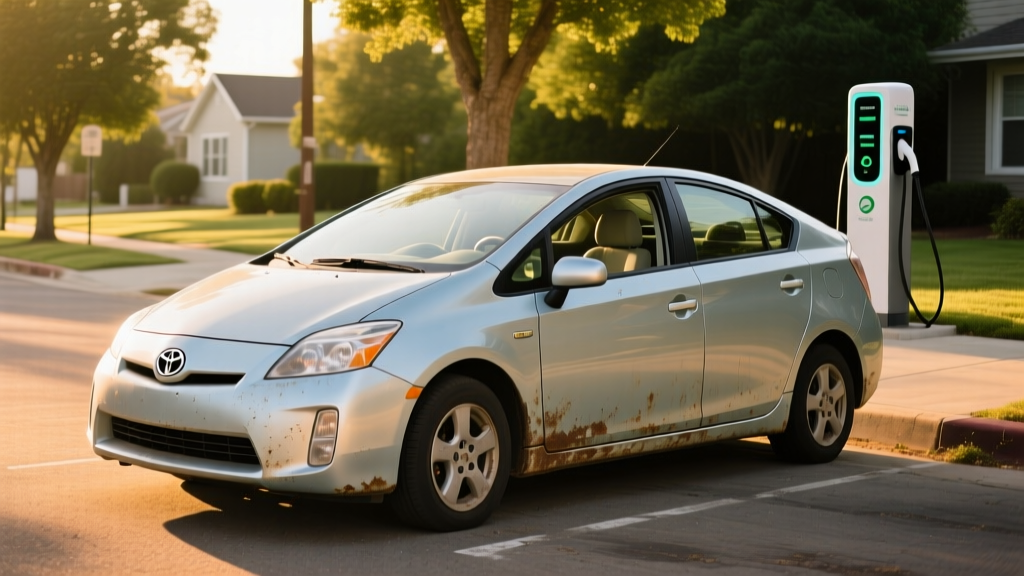
| Example | Toyota Prius HEV | Toyota RAV4 Prime | Tesla Model Y |
The key takeaway: if you want a tax credit, you need a plug-in vehicle — either a PHEV or a BEV. Conventional hybrids, no matter how efficient, receive zero federal purchase incentive. Some states offer their own rebates for HEVs (check your state energy office), but these are separate from the IRS §30D credit.
§30D Tax Credit Rules for PHEVs in 2026
The federal plug-in vehicle tax credit, governed by IRS §30D, applies to qualifying PHEVs and BEVs. However, meeting the requirements is far from automatic. Here's the current framework for 2026:
- Battery capacity: Vehicle must have at least 7 kWh of battery capacity (eliminates most mild hybrids and HEVs).
- MSRP cap: Vans, SUVs, and pickup trucks: $80,000 max. Sedans and other passenger cars: $55,000 max.
- Buyer income cap: Modified AGI cannot exceed $300,000 (joint), $225,000 (head of household), or $150,000 (single).
- North American final assembly: Vehicle must be assembled in North America (VIN check required).
- Critical minerals & battery component sourcing: Phased percentages increase annually. In 2026, qualifying vehicles must meet escalating thresholds for domestically sourced or free-trade-partner-sourced critical minerals and battery components. Failure to meet either threshold halves the credit to $3,750; failure to meet both eliminates it entirely.
- Point-of-sale transfer: Buyers can transfer the credit to the dealer at purchase, reducing the sale price directly — or claim it on their federal tax return.
- Foreign entity of concern (FEOC) restriction: Vehicles with battery components from a FEOC are disqualified entirely.
Because sourcing requirements tighten each year, a PHEV that qualified in 2024 may not qualify in 2026. Always verify current eligibility on the fueleconomy.gov tax credit page before purchasing.
Top PHEVs on Sale in 2026: MPG, Range, and Credit Status
Below is a snapshot of major PHEVs available for the 2026 model year, with the specs that matter most to buyers weighing a plug-in hybrid purchase.
| Model | EPA Combined MPG | EV Range (mi) | Battery (kWh usable) | Combined HP | Base MSRP | §30D Credit Status (2026) |
|---|---|---|---|---|---|---|
| Toyota RAV4 Prime (AWD) | 94 MPGe (EV) / 38 MPG (gas) | 42 | 18.1 kWh | 302 | $44,715 | Eligibility varies — sourcing may limit to $3,750 or $0 |
| Chrysler Pacifica PHEV | 82 MPGe (EV) / 30 MPG (gas) | 32 | 16.0 kWh | 260 | $51,095 | Check current sourcing compliance |
| Jeep Wrangler 4xe | 49 MPGe (EV) / 20 MPG (gas) | 21 | 17.3 kWh | 375 | $51,795 | MSRP under $80K cap; sourcing-dependent |
| Jeep Grand Cherokee 4xe | 56 MPGe (EV) / 23 MPG (gas) | 26 | 17.3 kWh | 375 | $60,495 | MSRP under $80K cap; sourcing-dependent |
| Ford Escape PHEV | 105 MPGe (EV) / 40 MPG (gas) | 37 | 14.4 kWh | 210 | $39,495 | Check current sourcing compliance |
| Toyota Prius Prime | 127 MPGe (EV) / 52 MPG (gas) | 44 | 13.6 kWh | 220 | $34,075 | Sedan MSRP cap $55K met; sourcing-dependent |
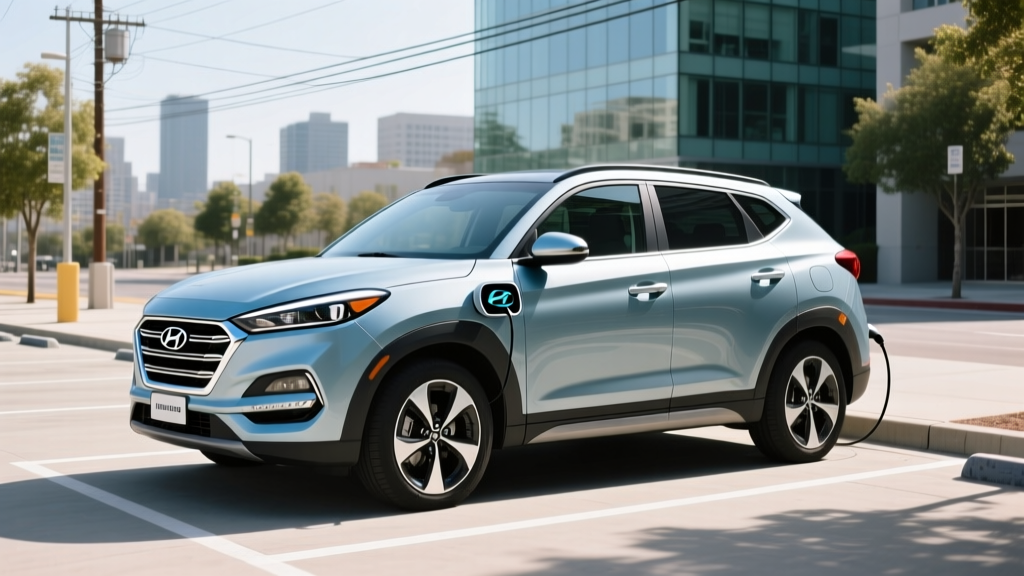
| Hyundai Tucson PHEV | 80 MPGe (EV) / 35 MPG (gas) | 33 | 13.8 kWh | 261 | $39,475 | Assembly in Korea — likely ineligible |
| Kia Sportage PHEV | 84 MPGe (EV) / 35 MPG (gas) | 34 | 13.8 kWh | 261 | $40,190 | Assembly in Korea — likely ineligible |
Fuel Economy Deep Dive: MPG and MPGe Explained
PHEV efficiency is reported in two metrics, and confusing them is one of the most common buyer mistakes:
- MPGe (miles per gallon equivalent): Measures efficiency while operating on battery power alone. One gallon of gasoline contains roughly 33.7 kWh of energy, so MPGe converts electrical consumption into a gasoline-equivalent number. A PHEV rated at 100 MPGe uses about 33.7 kWh per 100 miles in electric mode.
- MPG (miles per gallon): Measures efficiency once the battery is depleted and the vehicle operates as a conventional hybrid.
| Model | City MPG (gas) | Highway MPG (gas) | Combined MPG (gas) | Combined MPGe (electric) |
|---|---|---|---|---|
| Toyota Prius Prime | 50 | 50 | 52 | 127 |
| Ford Escape PHEV | 42 | 37 | 40 | 105 |
| Toyota RAV4 Prime | 40 | 36 | 38 | 94 |
| Chrysler Pacifica PHEV | 30 | 31 | 30 | 82 |
| Jeep Wrangler 4xe | 20 | 20 | 20 | 49 |
Real-world MPG vs. EPA: Hybrids and PHEVs in gas mode often exceed their EPA city rating in stop-and-go traffic because regenerative braking recovers energy that conventional cars waste as heat. On the highway, however, expect real-world MPG to fall 3–8 MPG below the EPA combined figure, particularly at speeds above 70 mph where aerodynamic drag dominates. The Prius Prime's 52 MPG combined is achievable in mixed suburban driving, but sustained 80-mph highway trips may yield closer to 44–47 MPG.
Charging a PHEV: What You Need to Know
PHEV batteries are small enough that Level 1 (120V household outlet) charging is practical — unlike with full EVs, where Level 1 is painfully slow. Most PHEVs include a Level 1 cord and can fully recharge overnight on a standard outlet.
| Charging Level | Power (kW) | Typical PHEV Full Charge Time | Miles of EV Range Per Hour |
|---|---|---|---|
| Level 1 (120V) | ~1.2–1.4 kW | 8–14 hours (full) | ~4–6 mi/hr |
| Level 2 (240V) | 3.3–7.2 kW | 2–4 hours (full) | ~12–25 mi/hr |
| DC Fast Charge | Varies | Most PHEVs: not supported | N/A for most |
DC fast charging: The vast majority of PHEVs do not support DC fast charging. The Mitsubishi Outlander PHEV is a rare exception, accepting up to 22 kW via CHAdeMO. Toyota, Ford, Chrysler, Jeep, Hyundai, and Kia PHEVs are limited to AC charging only. This isn't a practical limitation — with batteries under 20 kWh, a Level 2 home charger fully replenishes any PHEV in under four hours, and Level 1 works overnight.
Battery Reliability, Warranty, and Replacement Cost
Hybrid and PHEV battery longevity is one of the top concerns for buyers. The data is reassuring: modern lithium-ion hybrid batteries are engineered to last the life of the vehicle under normal use.
Real-world degradation: Toyota's hybrid battery track record is exceptional — the original Prius batteries routinely exceeded 150,000 miles with minimal degradation. Modern PHEV batteries use more robust thermal management and conservative state-of-charge buffers (using only 70–85% of the physical cell capacity) to minimize wear. Expect a PHEV battery to retain 85–90% of its original capacity after 100,000 miles.
Replacement cost if out of warranty:
- Prius Prime: $3,000–$4,500 (battery pack)
- RAV4 Prime: $5,000–$7,000
- Jeep Wrangler 4xe: $6,000–$8,500
- Pacifica PHEV: $7,000–$9,000
These are ballpark figures including parts and labor at a dealership. Independent hybrid battery shops often offer refurbished replacements for 40–60% less.
PHEV vs HEV vs BEV: Which Should You Choose?
Choose a PHEV if:
- You can charge at home (even a standard 120V outlet works) and want 25–44 miles of daily electric driving.
- You take road trips where charging infrastructure is sparse or unpredictable.
- You want to reduce fuel consumption without range anxiety.
- Your daily commute is under 40 miles round-trip — you may burn almost zero gasoline on weekdays.
Choose a conventional HEV if:
- You cannot charge at home (apartment, street parking, no garage).
- You want maximum fuel efficiency with zero behavioral change.
- Upfront cost matters — HEVs typically cost $3,000–$6,000 less than their PHEV counterparts.
- You don't need or want to worry about tax credits.
Choose a BEV if:
- You have reliable home Level 2 charging and your daily driving is under 250 miles.
- You want the lowest per-mile fuel cost (electricity at $0.14/kWh ≈ $4.50 per "gallon equivalent").
- You want to eliminate oil changes, spark plugs, and transmission fluid entirely.
- You can access the full $7,500 §30D credit, bringing effective purchase price below a comparable PHEV.
Pros and Cons of Buying a PHEV in 2026
Pros
- 25–44 miles of zero-emission electric driving covers most daily commutes
- Gas engine eliminates range anxiety on road trips
- Smaller battery = lower environmental manufacturing footprint than a BEV
- Level 1 (120V) charging is sufficient — no $500–$1,500 Level 2 installation required
- Hybrid-mode MPG still beats most gas-only vehicles (30–52 MPG combined)
- Some models may qualify for up to $7,500 federal tax credit
Cons
- Higher upfront cost than HEV or gas equivalents ($5,000–$10,000 premium)
- Tax credit eligibility is uncertain and sourcing-dependent — not guaranteed
- Two powertrains mean two systems to maintain (engine oil + electric drivetrain)
- DC fast charging is unavailable on nearly all models
- Electric range drops 20–35% in cold weather
- Cargo space may be reduced by battery placement
Frequently Asked Questions
Do conventional hybrids like the Toyota Prius HEV qualify for any federal tax credit?
No. The IRS §30D Clean Vehicle Credit applies only to plug-in vehicles with at least 7 kWh of battery capacity. Conventional hybrids (HEVs) recharge their small batteries through regenerative braking and the gasoline engine — they have no plug and do not qualify. Some states or utilities may offer separate rebates for HEVs, but these are not federal credits.
Which PHEVs currently qualify for the full $7,500 tax credit?
Credit eligibility changes as automakers adjust battery sourcing. As of early 2026, many PHEVs face partial or full disqualification due to FEOC battery-component restrictions and critical-mineral sourcing thresholds. The safest approach is to check the fueleconomy.gov credit lookup tool for the specific VIN you're considering. Models assembled outside North America (like the Hyundai Tucson PHEV and Kia Sportage PHEV, built in South Korea) are categorically ineligible regardless of sourcing.
How far can a PHEV go on electric power alone?
Current 2026 PHEVs offer 21–44 miles of EPA-rated electric-only range. The Toyota Prius Prime leads at 44 miles, followed by the RAV4 Prime at 42 miles and the Ford Escape PHEV at 37 miles. In real-world cold-weather or highway driving, expect 15–35 miles of usable electric range. Once depleted, the gas engine engages seamlessly, providing 300–500+ additional miles of total range.
Is a PHEV reliable compared to a gas car or full EV?
PHEVs carry the complexity of two powertrains, but major manufacturers have extensive hybrid reliability data. Toyota's hybrid systems are among the most proven in the industry, with millions of units on the road. The main long-term cost risk is battery replacement after warranty expiration ($3,000–$9,000 depending on model), but modern batteries are designed for 150,000+ mile lifespans. Engine maintenance (oil changes, filters) continues as with any gas vehicle.
Can I charge a PHEV on a regular household outlet?
Yes. PHEV batteries are small enough (13–18 kWh) that a standard 120V Level 1 outlet will fully recharge most models in 8–14 hours — perfect for overnight charging. A Level 2 (240V) home charger reduces this to 2–4 hours but is not required. This is a major advantage over BEVs, where Level 1 charging adds only 3–5 miles of range per hour and is impractical as a primary charging method.
Does my income affect whether I can claim the PHEV tax credit?
Yes. Under §30D, your modified adjusted gross income (MAGI) must not exceed $300,000 for joint filers, $225,000 for heads of household, or $150,000 for single filers. If your income exceeds these thresholds in either the purchase year or the prior year, you are ineligible. The credit is also non-refundable — meaning it can only reduce your tax liability to zero, not generate a refund beyond what you owe (unless transferred at point of sale).