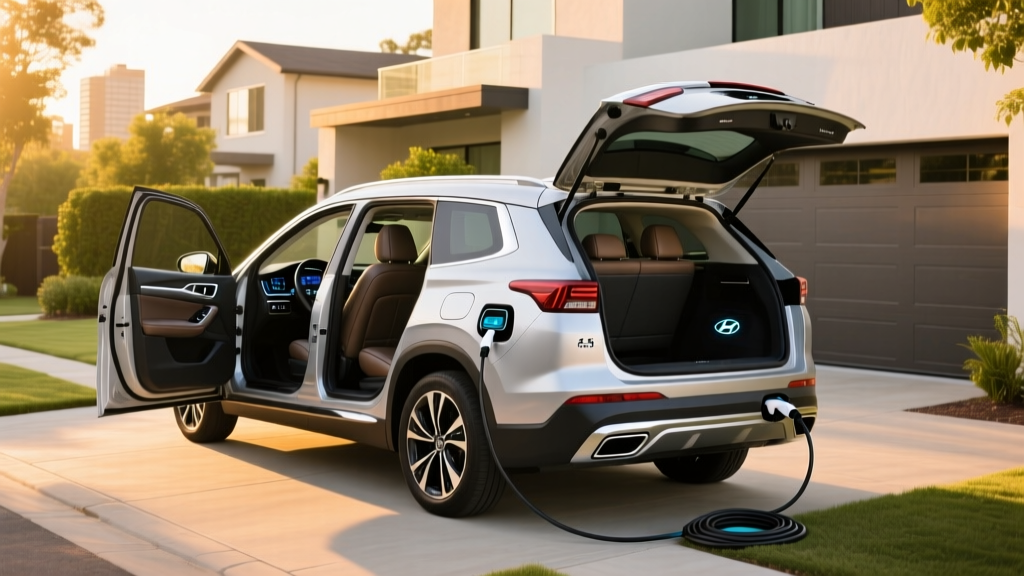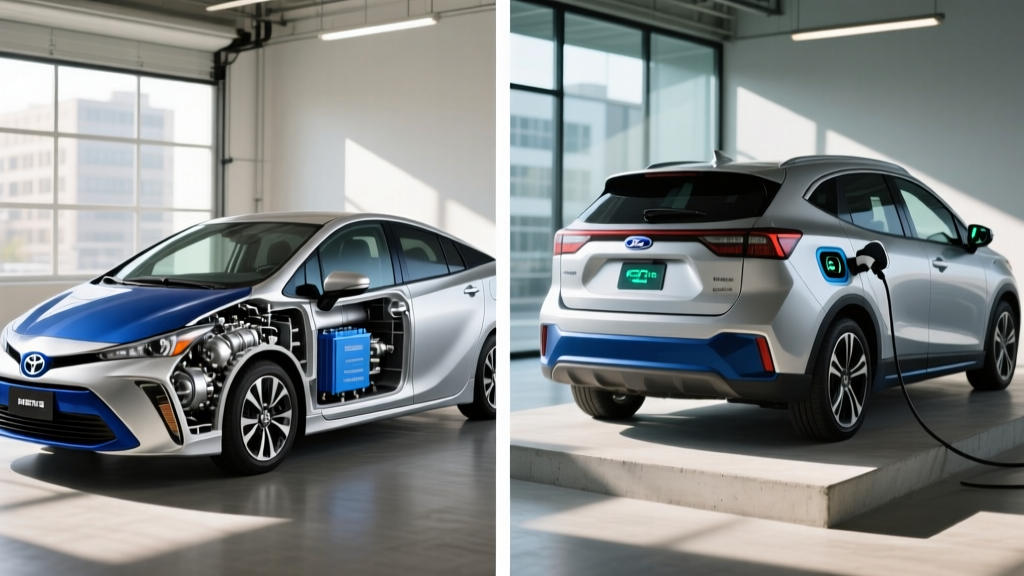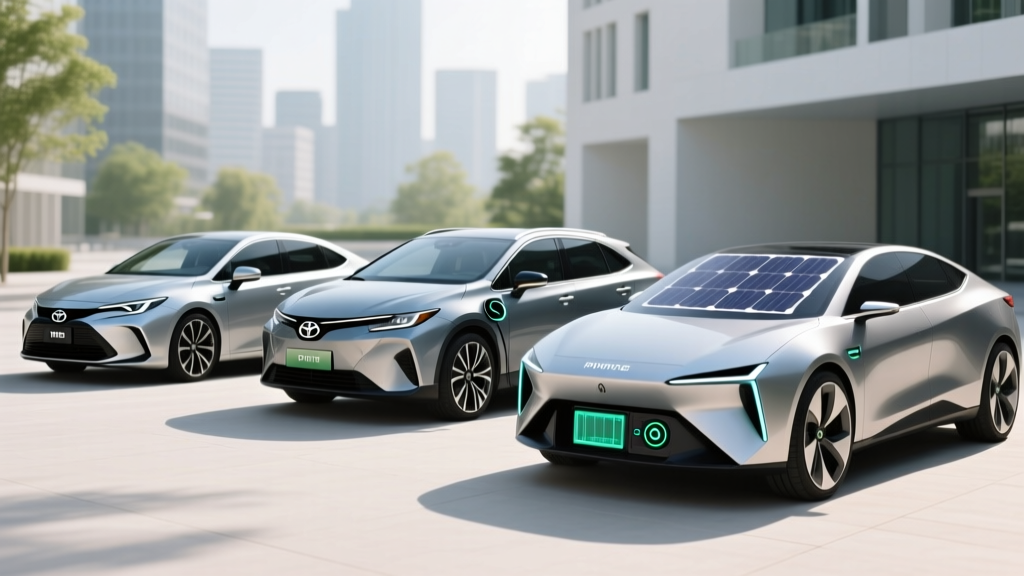
What Exactly Is a Hybrid Vehicle?
A hybrid vehicle pairs a gasoline engine with one or more electric motors and a battery pack. The electric system assists during acceleration, captures energy during braking (regenerative braking), and in some cases can drive the car on electricity alone for short distances. The result: significantly better fuel economy than a conventional gas car, without the range limitations or charging infrastructure dependence of a full battery-electric vehicle (BEV).
But not all hybrids are the same. The term "hybrid" covers two fundamentally different architectures, and confusing them is the single most common mistake buyers make. Let's separate them clearly before looking at the numbers.
Conventional Hybrid (HEV) vs Plug-In Hybrid (PHEV)
| Feature | HEV (Conventional Hybrid) | PHEV (Plug-In Hybrid) |
|---|---|---|
| Battery size | 0.5–2.0 kWh | 10–25 kWh (typically) |
| Plug in to charge? | No — charges via engine + regen | Yes — Level 1 or Level 2 |
| Electric-only driving | Very short, low-speed only (~1 mi) | 20–50+ miles at highway speeds |
| Primary fuel | Gasoline (always) | Electricity first, then gasoline |
| Federal tax credit | No | Up to $7,500 (if eligible under §30D) |
| Example (2026) | Toyota Prius (57 MPG combined) | Toyota RAV4 Prime (42 mi electric, 94 MPGe) |
The distinction matters enormously for your wallet and daily routine. An HEV is a "buy it and forget it" proposition — you fuel it like any gas car and simply enjoy better MPG. A PHEV rewards you with electric-only commuting but requires access to a plug (ideally at home) to capture its full value.
How Many MPG Does a Hybrid Get?
Fuel economy is the headline reason most buyers go hybrid. Here's how several popular 2026 models stack up, with EPA city, highway, and combined figures sourced from fueleconomy.gov:
| Vehicle (2026) | Type | City MPG | Highway MPG | Combined MPG | MPGe (PHEV) |
|---|---|---|---|---|---|
| Toyota Prius LE | HEV | 57 | 56 | 57 | — |
| Honda Accord Hybrid | HEV | 51 | 44 | 48 | — |
| Hyundai Tucson Hybrid | HEV | 38 | 38 | 38 | — |
| Toyota RAV4 Prime | PHEV | 94 MPGe (combined electric+gas) | 94 MPGe | ||
| Jeep Wrangler 4xe | PHEV | 49 MPGe (combined) | 49 MPGe | ||
| Ford Escape PHEV | PHEV | 105 MPGe (combined) | 105 MPGe | ||
Real-World MPG vs. EPA Sticker: What to Expect
One of the pleasant surprises with conventional hybrids is that they frequently exceed their EPA ratings in city driving. The Toyota Prius, rated at 57 MPG combined, routinely returns 60–65 MPG in stop-and-go urban traffic where regenerative braking recovers the most energy and the engine runs less often.
Highway driving is the opposite story. At sustained 70–80 mph speeds, the electric motor contributes less and aerodynamic drag dominates. Expect the Prius to deliver closer to 50–53 MPG on a long highway trip. The Honda Accord Hybrid shows a similar pattern: its 51 MPG city rating is genuinely achievable, but highway figures often land 3–5 MPG below the sticker.
For PHEVs, real-world MPGe depends entirely on how often you charge. If you commute 30 miles round-trip and plug in nightly, you may burn almost zero gasoline for months. If you never plug in, a PHEV operates as a slightly heavier (and slightly less efficient) conventional hybrid — the RAV4 Prime returns about 38 MPG on gas alone, which is respectable but below the non-plug-in RAV4 Hybrid's 41 MPG combined.
PHEV Electric-Only Range: How Far Can You Go Without Gas?
Electric-only range is the PHEV's killer feature. Here's what current popular models deliver on a full charge, per EPA testing:
| 2026 PHEV Model | Battery (kWh) | Electric-Only Range | Total Range (Elec + Gas) | Level 2 Charge Time | DC Fast Charge? |
|---|---|---|---|---|---|
| Toyota RAV4 Prime | 18.1 kWh | 42 miles | ~600 miles | ~2.5 hours (240V/32A) | No |
| Toyota Prius Prime | 13.6 kWh | 44 miles | ~600 miles | ~4 hours (240V/16A) | No |
| Ford Escape PHEV | 14.4 kWh | 37 miles | ~520 miles | ~3.5 hours (240V) | No |
| Jeep Wrangler 4xe | 17.3 kWh | 21 miles | ~370 miles | ~2 hours (240V/32A) | No |
| Chrysler Pacifica PHEV | 16.0 kWh | 32 miles | ~460 miles | ~2 hours (240V/32A) | No |
| Hyundai Tucson PHEV | 13.8 kWh | 33 miles | ~420 miles | ~2 hours (240V/32A) | No |
Notice that no mainstream PHEV currently offers DC fast charging. All charge via Level 1 (120V household outlet, adding roughly 4–6 miles of range per hour) or Level 2 (240V, the practical standard). This is because PHEV batteries are small enough that a full Level 2 charge completes overnight or during a workday — DC fast charging hardware would add cost and weight for minimal benefit.
A critical note on real-world electric range: EPA PHEV range figures assume moderate temperatures and mixed driving. In cold weather (below 35°F), expect a 15–25% reduction in electric-only range due to battery chemistry limitations and cabin heating demands. A RAV4 Prime rated at 42 miles may deliver 32–36 miles on a January morning in Chicago.
Powertrain Specs: What's Under the Hood
Hybrids combine an internal combustion engine with electric motor(s). The combined output is often substantially higher than the gas engine alone, because the electric motor fills in torque at low RPMs where gas engines are weakest.
| 2026 Model | Engine | Combined HP | 0-60 mph | Drivetrain |
|---|---|---|---|---|
| Toyota Prius LE (HEV) | 2.0L 4-cyl + 2 motors | 194 hp | 7.2 sec | FWD |
| Toyota Prius Prime (PHEV) | 2.0L 4-cyl + 2 motors | 220 hp | 6.6 sec | FWD |
| Toyota RAV4 Prime (PHEV) | 2.5L 4-cyl + 3 motors | 302 hp | 5.7 sec | AWD (eAWD) |
| Honda Accord Hybrid | 2.0L 4-cyl + 2 motors | 204 hp | 7.0 sec | FWD |
| Hyundai Tucson Hybrid | 1.6L turbo 4-cyl + motor | 226 hp | 7.1 sec | AWD |
| Jeep Wrangler 4xe (PHEV) | 2.0L turbo 4-cyl + 2 motors | 375 hp | 6.0 sec | 4WD |
The RAV4 Prime's 302 hp and 5.7-second 0-60 time make it one of the quickest vehicles in Toyota's lineup — a fact that surprises many buyers who associate hybrids with slow, economy-focused driving. The Jeep Wrangler 4xe's 490 lb-ft of combined torque (375 hp) is similarly eye-opening for an off-road SUV. Modern hybrids are not compromises on performance; the electric motor's instant torque delivery often makes them feel quicker than their gas-only counterparts.
Pricing and Tax Credit Eligibility
Hybrids and PHEVs carry a price premium over their gas-only equivalents, typically $1,500–$5,000 depending on the model. Here's where things stand for 2026:
| 2026 Model | Starting MSRP | Federal Tax Credit (§30D) | Effective Price (with credit) |
|---|---|---|---|
| Toyota Prius LE (HEV) | $28,550 | None (HEV) | $28,550 |
| Toyota Prius Prime SE (PHEV) | $33,475 | Up to $7,500* | ~$25,975* |
| Toyota RAV4 Prime SE (PHEV) | $43,690 | Up to $7,500* | ~$36,190* |
| Ford Escape PHEV | $40,500 | Up to $7,500* | ~$33,000* |
| Jeep Wrangler 4xe (PHEV) | $51,595 | Up to $7,500* | ~$44,095* |
| Hyundai Tucson PHEV | $39,550 | Up to $7,500* | ~$32,050* |
*Federal tax credit eligibility under IRS §30D is subject to multiple requirements that change frequently:
- MSRP caps: SUVs, vans, and trucks must have an MSRP at or below $80,000; sedans at or below $55,000.
- Buyer income limits: Modified AGI must not exceed $150,000 (single), $225,000 (head of household), or $300,000 (joint).
- Battery sourcing: Increasing percentages of critical minerals and battery components must be sourced from the US or FTA partners — these thresholds tighten annually and can disqualify models mid-year.
- Point-of-sale transfer: As of 2024+, you can transfer the credit to the dealer at purchase, reducing your out-of-pocket cost immediately rather than waiting for tax filing.
Conventional hybrids (HEVs) do not qualify for the federal §30D clean vehicle credit. Some states offer separate rebates for HEVs, but these vary widely — check your state energy office or the Alternative Fuels Data Center for current programs.
Battery Warranty, Lifespan, and Replacement Cost
Hybrid Battery Warranty: The Standard
Federal emissions regulations effectively mandate that hybrid battery packs carry a warranty of at least 8 years/100,000 miles (10 years/150,000 miles in CARB states including California, New York, Massachusetts, and others). This applies to both HEVs and PHEVs.
What the warranty covers: Battery capacity falling below a defined threshold (typically 60–70% of original capacity) or complete failure. Normal gradual degradation is expected and is not covered unless it crosses the threshold.
Real-World Battery Longevity
Modern hybrid battery packs — primarily nickel-metal hydride (NiMH) in Toyota's HEVs and lithium-ion (NMC chemistry) in most PHEVs — have proven remarkably durable. Toyota Prius batteries routinely last 150,000–200,000+ miles before significant degradation. The smaller battery in an HEV undergoes shallow charge/discharge cycles (typically staying between 40–80% state of charge), which is far less stressful than the deeper cycles in a BEV or PHEV.
PHEV batteries face more demanding use — daily full charges and deeper discharges — but the larger capacity provides a buffer. Real-world data from fleets and long-term owners suggests PHEV batteries retain 80–90% capacity after 100,000 miles when charged at Level 2 rates.
Battery Replacement Cost
If your hybrid battery does fail outside of warranty, replacement costs in 2026 range as follows:
- HEV battery (Toyota Prius): $2,000–$4,000 (OEM), $1,000–$2,000 (aftermarket refurbished)
- PHEV battery (RAV4 Prime, etc.): $5,000–$8,000 (OEM)
These costs have declined steadily over the past decade as battery manufacturing has scaled. Independent hybrid repair shops can often replace individual failed cells within a pack for $500–$1,500, extending the pack's life at a fraction of full replacement cost.
Hybrid vs PHEV vs EV: Which Is Right for You?
Choose a Conventional Hybrid (HEV) If:
- You don't have access to home or workplace charging
- You want maximum MPG with zero behavior change — just fill up with gas
- You drive a mix of city and highway miles and want strong real-world economy in both
- You want the lowest upfront cost among electrified options
- You plan to keep the vehicle 10+ years and value proven long-term reliability
Choose a Plug-In Hybrid (PHEV) If:
- You can charge at home (even a standard 120V outlet works overnight for 20–40 miles of range)
- Your daily commute is under 40 miles round-trip (you'll rarely burn gas on weekdays)
- You take road trips and want gasoline flexibility without range anxiety
- You want to qualify for the federal tax credit (up to $7,500) to offset the higher MSRP
- You're not ready for a full EV but want to drive on electricity most days
Choose a Full EV (BEV) If:
- You have reliable Level 2 home charging (240V)
- Your daily driving is within the vehicle's real-world range, and DC fast chargers are available for longer trips
- You want the lowest per-mile fuel cost (electricity at $0.12/kWh ≈ $3.50/gallon equivalent)
- You want minimal maintenance (no oil changes, no transmission fluid, fewer moving parts)
- You want the maximum available federal tax credit and live in a state with additional EV incentives
Pros and Cons at a Glance
✅ Pros of Hybrids
- 30–100% better fuel economy vs gas-only equivalents
- No charging needed (HEV) or optional charging (PHEV)
- Proven reliability — 15+ years of real-world data
- Strong 8–10 year battery warranties
- Regenerative braking reduces brake pad wear (often 80,000+ mi on original pads)
- PHEVs qualify for up to $7,500 federal credit
- Instant electric torque makes many hybrids quicker than gas versions
❌ Cons of Hybrids
- Higher upfront cost vs gas-only ($1,500–$5,000 premium)
- HEVs do not qualify for federal tax credits
- PHEVs require charging access to realize full fuel savings
- Highway MPG gains are smaller than city gains
- PHEV battery adds 200–400 lbs, slightly reducing cargo/payload
- Some models have limited availability due to high demand (RAV4 Prime waitlists)
- Battery replacement out of warranty is a $2,000–$8,000 expense
Frequently Asked Questions
Do conventional hybrids need to be plugged in?
No. A conventional hybrid (HEV) charges its battery entirely through the gasoline engine and regenerative braking. You never plug it in. You simply refuel at a gas station as normal and the hybrid system manages the battery automatically.
How long do hybrid batteries last?
Most hybrid batteries last 150,000–200,000+ miles in real-world use. They are covered by a minimum 8-year/100,000-mile warranty (10 years/150,000 miles in CARB states). Failure before 100,000 miles is uncommon in modern designs.
Is a PHEV worth it if I can't charge at home?
Generally, no. Without regular charging, a PHEV operates as a heavier, slightly less efficient conventional hybrid. The premium you paid for the larger battery and plug-in hardware won't be recouped through fuel savings. An HEV is a better choice if you lack charging access.
Do hybrids cost more to maintain?
No — hybrids typically cost the same or less to maintain than gas-only cars. Regenerative braking extends brake pad life significantly. There are no additional fluids to change related to the hybrid system. Toyota's hybrid powertrains use a planetary gearset (eCVT) with no traditional transmission bands or clutches to replace.
Can a hybrid run on electricity alone?
A conventional hybrid (HEV) can drive on electricity alone for roughly one mile at very low speeds (under 25 mph). A PHEV can drive 20–50 miles at full highway speeds on electricity alone before the gasoline engine engages.
What happens if the hybrid battery dies while driving?
The vehicle will alert you with dashboard warnings well before a battery failure becomes critical. In most cases, the car can still be driven (in a reduced-power "limp" mode) to a service location using the gasoline engine alone. A complete hybrid battery failure that disables the vehicle entirely is extremely rare.
Sources: EPA fuel economy data via fueleconomy.gov; IRS Clean Vehicle Tax Credits via irs.gov; manufacturer specifications.