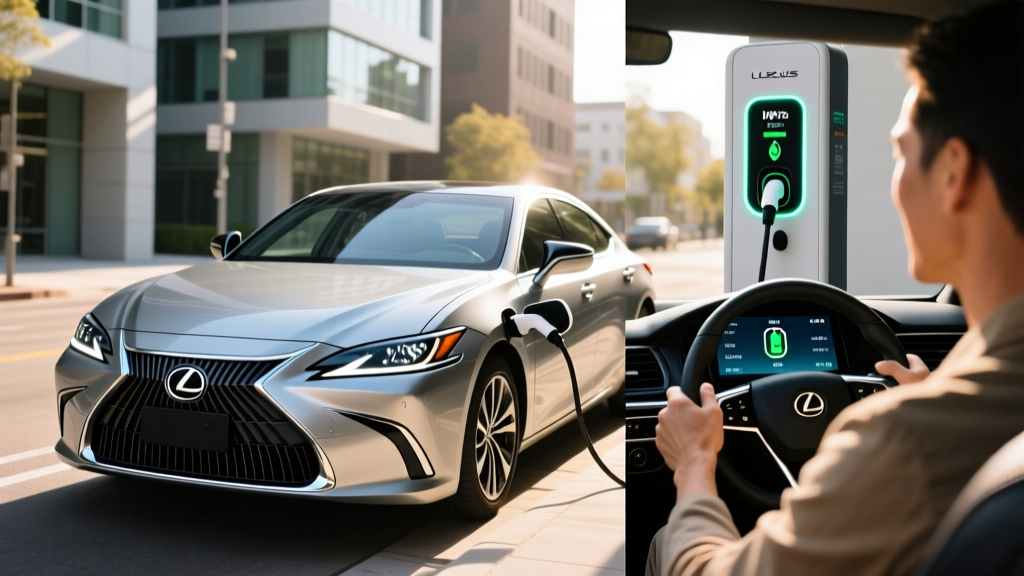
If you've asked yourself "what is a hybrid automobile" while shopping for a more efficient vehicle, you're not alone. The term covers two fundamentally different powertrains — the conventional hybrid (HEV) and the plug-in hybrid (PHEV) — and confusing them is the single biggest mistake buyers make. One never plugs in and sips fuel in stop-and-go traffic. The other drives 30–45 miles on electricity alone before its gas engine wakes up. Both are hybrids. Both save fuel. But their ownership economics, daily routines, and tax-credit eligibility are worlds apart.
This guide gives you the exact specs, EPA numbers, warranty terms, and decision framework you need to choose the right electrified vehicle in 2026 — no marketing fluff, just data.
What Is a Hybrid Automobile? The Core Definition
A hybrid automobile is any vehicle that combines an internal-combustion engine with at least one electric motor and a battery pack. The electric motor assists during acceleration, captures energy during braking (regenerative braking), and in some cases can propel the vehicle on electricity alone for short distances. The result is lower fuel consumption and tailpipe emissions compared to a conventional gas-only car of similar size and power.
That's the umbrella definition. Under it sit two distinct architectures:
- HEV (Hybrid Electric Vehicle): The battery is small (typically 1–2 kWh), recharged only by the engine and regenerative braking. You never plug it in. Think Toyota Prius, Honda CR-V Hybrid.
- PHEV (Plug-in Hybrid Electric Vehicle): The battery is larger (typically 12–25 kWh), can be recharged from a wall outlet or public charger, and provides meaningful electric-only range before the engine engages. Think Toyota RAV4 Prime, Jeep Wrangler 4xe.
| Feature | HEV (Conventional Hybrid) | PHEV (Plug-in Hybrid) |
|---|---|---|
| Plugs in? | No | Yes (Level 1 or Level 2) |
| Battery size | ~1–2 kWh | ~12–25 kWh |
| Electric-only range | ~1 mi or less (low-speed assist) | 25–45 mi (EPA) |
| Federal tax credit (§30D) | No | Up to $7,500 (eligibility varies) |
| Best for | No home charging, simple ownership | Home charging, short commutes |
| Price premium over gas model | $1,000–$3,000 | $5,000–$12,000 |
How Many MPG Does a Hybrid Get? EPA and Real-World Numbers
Fuel economy is the primary reason most buyers consider a hybrid. Here's how current benchmarks stack up, with EPA figures from fueleconomy.gov:
| Vehicle (2025–2026 MY) | City | Highway | Combined | Type |
|---|---|---|---|---|
| Toyota Prius | 57 | 56 | 57 | HEV |
| Toyota Prius PHEV (Prime) | 52 (hybrid mode) | 48 (hybrid mode) | 50 (hybrid) / 127 MPGe | PHEV |
| Honda CR-V Hybrid | 43 | 36 | 40 | HEV |
| Toyota RAV4 PHEV (Prime) | 40 (hybrid mode) | 36 (hybrid mode) | 38 (hybrid) / 94 MPGe | PHEV |
| Ford Escape PHEV | 42 (hybrid mode) | 37 (hybrid mode) | 39 (hybrid) / 105 MPGe | PHEV |
| Hyundai Tucson PHEV | 35 (hybrid mode) | 35 (hybrid mode) | 35 (hybrid) / 80 MPGe | PHEV |
Real-world MPG reality check: Conventional hybrids (HEVs) frequently exceed their EPA city estimates in real-world stop-and-go driving because regenerative braking recaptures more energy at low speeds. Many Prius owners report 60+ MPG in urban traffic. Highway MPG, however, tends to run 2–5 MPG below the sticker because the electric motor contributes less at sustained high speeds. For PHEVs, once the battery depletes and the engine takes over, expect hybrid-mode MPG to track within 1–3 MPG of the EPA combined figure — unless you're hauling cargo or climbing grades, where a 10–15% drop is normal.
How Far Can a PHEV Go on Electric Only?
Electric-only range is what separates a PHEV from an HEV in daily use. If your commute falls within the electric range and you charge at home, you may go weeks without burning gasoline. Here are EPA-rated electric-only ranges for popular 2025–2026 PHEVs:
| PHEV Model | Battery (kWh) | EV Range (EPA mi) | Total Range (mi) | DC Fast Charge? |
|---|---|---|---|---|
| Toyota Prius Prime | 13.6 | 44 | ~600 | No |
| Toyota RAV4 Prime | 18.1 | 42 | ~600 | No |
| Ford Escape PHEV | 14.4 | 37 | ~520 | No |
| Jeep Wrangler 4xe | 17.3 | 21 | ~370 | No |
| Hyundai Tucson PHEV | 13.8 | 33 | ~440 | No |
| BMW X5 xDrive50e | 25.7 | 38 | ~460 | No |
Key detail most buyers miss: Nearly all PHEVs on the US market do not support DC fast charging. They charge via Level 1 (120V household outlet, ~1–2 kW) or Level 2 (240V, ~3.3–7.2 kW). A Prius Prime on a standard 120V outlet takes roughly 4 hours for a full charge; on a Level 2 home charger, about 2 hours. This means PHEV ownership practically requires access to a garage or driveway with an outlet — public charging infrastructure is largely irrelevant for these vehicles.
Real-world electric range caveat: EPA electric-range figures assume moderate temperatures and mixed driving. In winter (below 35°F), expect a 20–30% reduction in electric-only range due to battery chemistry and cabin heating demands. A RAV4 Prime rated at 42 miles may deliver 30–33 miles on a cold January morning. Highway-speed electric driving (70+ mph) also drains the battery faster — expect 15–20% less range than the EPA sticker on long interstate stretches.
Powertrain Specs: Engine + Motor Combined Output
Hybrids pair a gasoline engine with one or more electric motors. Combined horsepower is typically higher than either source alone, and electric torque fills in the low-RPM gap that makes small engines feel sluggish off the line. Here's what the powertrains look like in current benchmarks:
| Model | Engine | Combined HP | 0–60 mph | Drivetrain |
|---|---|---|---|---|
| Toyota Prius HEV | 2.0L 4-cyl | 194 | 7.2 sec | FWD / AWD |
| Toyota Prius Prime | 2.0L 4-cyl | 220 | 6.6 sec | FWD |
| Toyota RAV4 Prime | 2.5L 4-cyl | 302 | 5.7 sec | AWD |
| Honda CR-V Hybrid | 2.0L 4-cyl | 204 | 7.6 sec | FWD / AWD |
| Ford Escape PHEV | 2.5L 4-cyl | 210 | 7.5 sec | FWD |
| BMW X5 xDrive50e | 3.0L I6 turbo | 483 | 4.6 sec | AWD |
The RAV4 Prime's 302 combined horsepower makes it the quickest RAV4 Toyota sells — a fact that surprises many buyers who assume hybrids sacrifice performance for efficiency. Electric motor torque is the equalizer here, providing instant low-end response that a gas-only 4-cylinder can't match.
Hybrid Battery Warranty and Reliability: What to Expect
Battery longevity is the top concern for hybrid shoppers, and the data is reassuring. Modern hybrid battery packs are engineered for the life of the vehicle, and federal law mandates a minimum warranty of 8 years / 100,000 miles for hybrid and EV battery components (with 10 years / 150,000 miles required in California and states that follow CARB standards).
- Toyota (HEV & PHEV): 10 years / 150,000 miles (all 50 states, from 2020 MY onward)
- Honda: 8 years / 100,000 miles (federal); 10 years / 150,000 miles (CARB states)
- Ford: 8 years / 100,000 miles (federal); 10 years / 150,000 miles (CARB states)
- Hyundai / Kia: 10 years / 100,000 miles (all 50 states)
- BMW: 8 years / 80,000 miles
Warranty covers battery capacity below a manufacturer-defined threshold (typically 60–70% of original capacity). Source: manufacturer warranty documentation and NHTSA.
Battery replacement cost: If a hybrid battery fails outside warranty, replacement costs vary widely. A Toyota Prius HEV battery replacement runs approximately $2,000–$3,500 (parts and labor). A PHEV battery, being significantly larger, costs $4,000–$8,000+ depending on the model. However, real-world failure data from sources like Consumer Reports and iSeeCars shows that modern nickel-metal-hydride (NiMH) and lithium-ion hybrid batteries routinely last 150,000–200,000+ miles with minimal degradation. The Prius, in particular, has a 20+ year track record of battery reliability that is among the best-documented in the auto industry.
General reliability: Hybrids consistently rank at or near the top of dependability studies. Toyota's hybrid powertrains, with their planetary-gear eCVT design (no traditional belt-and-pulley CVT, no conventional transmission), have fewer wear components than a gas-only drivetrain. Brake pad life is also extended — regenerative braking handles most deceleration, so friction brakes see far less use. It's common for hybrid owners to report original brake pads at 80,000+ miles.
Pricing and Tax Credit Eligibility for Hybrids in 2026
Conventional hybrids (HEVs) do not qualify for the federal §30D clean vehicle tax credit — that credit is reserved for plug-in vehicles (BEVs and PHEVs) with sufficient battery capacity. PHEVs, however, may qualify for up to $7,500, subject to several requirements that change periodically.
To claim up to $7,500 for a new PHEV, the vehicle and buyer must meet all of the following, per IRS.gov:
- Battery capacity: ≥ 7 kWh (all current PHEVs listed above qualify)
- MSRP cap: ≤ $80,000 for SUVs, vans, and pickups; ≤ $55,000 for sedans
- Buyer income cap: AGI ≤ $150,000 (single), $225,000 (head of household), $300,000 (married filing jointly)
- North American final assembly: Vehicle must be assembled in the US, Canada, or Mexico
- Battery component sourcing: Phased percentages of battery components must be manufactured or assembled in North America
- Critical minerals: Phased percentages of critical minerals must be sourced from the US or FTA partners
- Point-of-sale transfer: Eligible buyers can transfer the credit to the dealer at purchase, reducing the sale price directly
Rules are subject to change. Consult a tax professional and verify current eligibility on IRS.gov before purchasing.
Representative pricing (2025–2026 MSRP, base trims):
- Toyota Prius HEV: ~$28,550 — no federal credit
- Toyota Prius Prime PHEV: ~$33,450 — may qualify for $7,500 (effective ~$25,950)
- Honda CR-V Hybrid: ~$35,950 — no federal credit
- Toyota RAV4 Prime PHEV: ~$44,500 — may qualify for $7,500 (effective ~$37,000)
- Ford Escape PHEV: ~$40,500 — may qualify for $3,751–$7,500 depending on sourcing compliance
- Hyundai Tucson PHEV: ~$39,750 — may qualify for partial credit (assembly and sourcing dependent)
The Prius Prime illustrates the PHEV value equation clearly: after the potential $7,500 credit, its effective price undercuts the gas-only Prius, while adding 44 miles of electric range and 220 combined horsepower. That math is why the Prime consistently sells out and commands waitlists.
Hybrid vs PHEV vs Full EV: Which Fits Your Life?
The right choice depends on three variables: your daily mileage, your charging access, and your road-trip tolerance. Here's a concrete decision framework:
- You live in an apartment or lack access to a garage/driveway outlet
- Your commute is 20–60 miles and you want zero behavior change
- You want the lowest upfront cost and simplest ownership (no charging, no plugs)
- You drive 15,000+ miles/year and want proven, maintenance-light efficiency
- You have a garage or driveway with at least a 120V outlet
- Your daily round-trip commute is under 40 miles (you'll rarely burn gas)
- You want electric daily driving but also take road trips where charging infrastructure is sparse
- You qualify for the §30D tax credit and the math makes the PHEV price-competitive with an HEV
- You have reliable Level 2 home charging
- Your household has a second vehicle for rare long trips, or you're comfortable with DC fast charging on road trips
- You want to eliminate gasoline costs and maintenance entirely (no oil changes, no exhaust system)
- Your state offers additional EV incentives on top of the federal credit
Pros and Cons of Owning a Hybrid Automobile
- 20–50% better fuel economy vs gas-only equivalents
- No range anxiety — gas stations everywhere, instant refueling
- Proven long-term reliability (20+ year track record for Toyota hybrids)
- Lower brake wear from regenerative braking
- HEVs require zero behavior change — no plugs, no apps
- PHEVs offer daily electric commuting with road-trip flexibility
- Strong resale value, especially Toyota and Honda hybrids
- Higher upfront cost ($1,000–$12,000 premium over gas-only models)
- HEVs do not qualify for federal tax credits
- PHEVs require home charging access to realize full value
- PHEV battery adds 200–400 lbs, slightly reducing cargo capacity in some models
- Hybrid battery replacement is expensive if out of warranty ($2,000–$8,000)
- Some hybrids have reduced towing capacity vs gas-only variants
- PHEV electric range drops 20–30% in cold weather
Frequently Asked Questions
Do hybrid cars need to be plugged in?
No. Conventional hybrids (HEVs) like the Toyota Prius and Honda CR-V Hybrid never plug in. Their small batteries are charged entirely by the gasoline engine and regenerative braking. Only plug-in hybrids (PHEVs) require or benefit from being plugged in.
How long do hybrid batteries last?
Modern hybrid batteries routinely last 150,000–200,000+ miles based on long-term fleet data. Toyota's hybrid battery warranty covers 10 years / 150,000 miles in all 50 states. Failure before 150,000 miles is uncommon in well-maintained vehicles.
What does it cost to replace a hybrid battery?
Out-of-warranty replacement costs range from approximately $2,000–$3,500 for a conventional hybrid (Prius HEV) to $4,000–$8,000+ for a plug-in hybrid with a larger battery pack. Refurbished and third-party replacement options can reduce costs by 30–50%.
Is a hybrid worth it if I mostly drive on the highway?
Hybrids provide their greatest fuel savings in city and stop-and-go driving, where regenerative braking and electric assist are most active. On the highway, a hybrid's advantage over a fuel-efficient gas car narrows to roughly 5–15%. If 80%+ of your driving is highway, the payback period for the hybrid premium lengthens — but you'll still save at the pump, and the drivetrain reliability benefits remain.
Can a PHEV save me money vs a regular hybrid?
Yes, if you can charge at home and your daily driving is within the electric range. A PHEV doing 35 electric miles per day at $0.14/kWh costs roughly $1.40/day in electricity vs ~$4.50/day in gasoline for a 40-MPG HEV covering the same distance. Over a year, that's approximately $750–$1,000 in fuel savings. Factor in the potential $7,500 federal tax credit and the PHEV often breaks even or wins on total cost of ownership within 3–4 years.
Do hybrids qualify for any tax credits?
Conventional hybrids (HEVs) do not qualify for the federal §30D clean vehicle credit. Plug-in hybrids (PHEVs) with ≥ 7 kWh battery capacity may qualify for up to $7,500, subject to MSRP caps, buyer income limits, battery sourcing requirements, and North American assembly rules. Some states offer additional rebates for PHEVs — check your state's energy office or fueleconomy.gov for current incentives.
A hybrid automobile in 2026 is a mature, data-proven technology — not a compromise, but a deliberate engineering choice. Whether you select an HEV for its plug-free simplicity or a PHEV for its electric-commute capability, the key is matching the powertrain to your actual driving pattern, charging access, and budget. The numbers above give you the foundation to make that call with confidence.