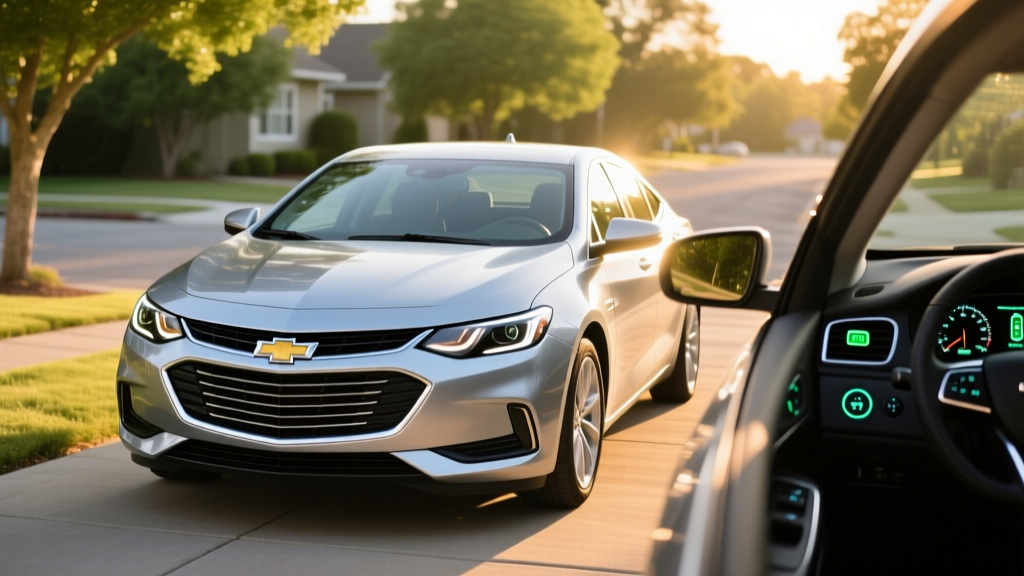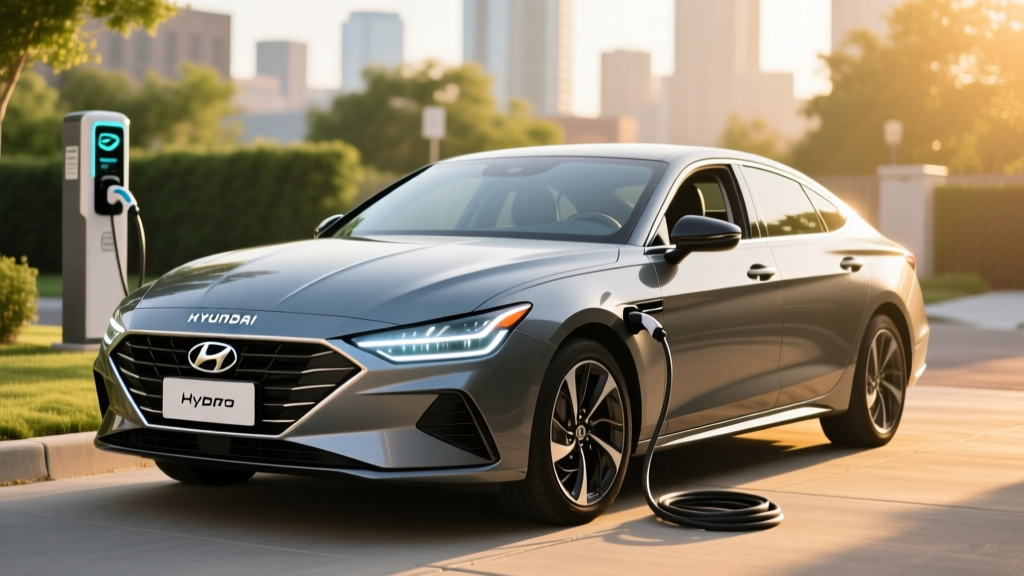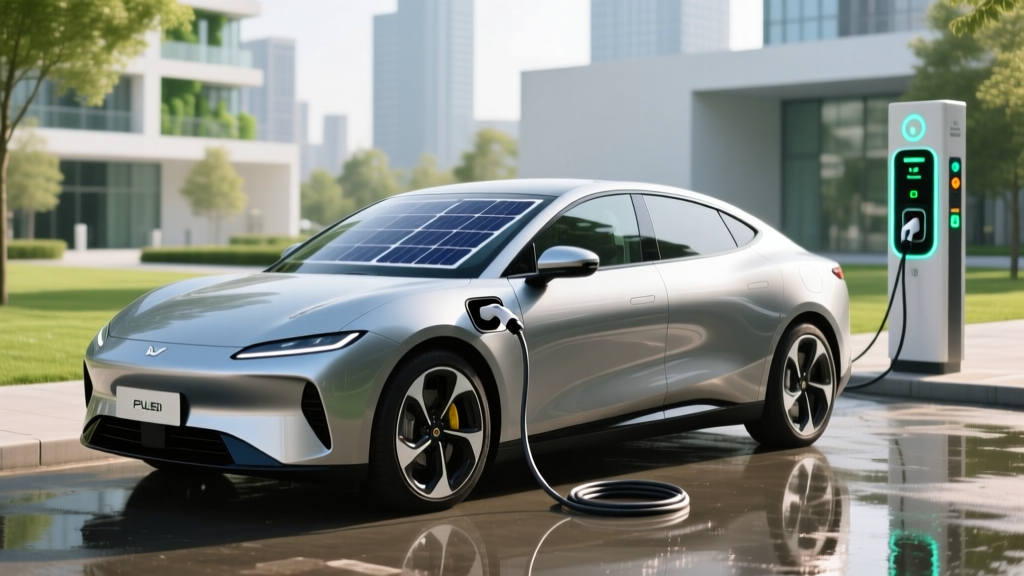
The Short Answer: What a Plug-In Hybrid Actually Is
A plug-in hybrid electric vehicle (PHEV) is a car that combines a gasoline engine with a larger battery and electric motor than a conventional hybrid — and crucially, that battery can be recharged by plugging into an external power source. This gives PHEVs a distinct two-mode personality: they drive like a pure electric vehicle for a set number of miles (typically 20–45 miles on 2026 models), then seamlessly switch to hybrid operation once the battery depletes, using regenerative braking and the engine to extend range for hundreds of additional miles.
If you've been searching for clarity on what does plug-in hybrid mean in practical terms, think of it as an EV for your daily commute and a hybrid for your weekend road trips — without any range anxiety.
HEV vs. PHEV: The Critical Distinction
Before going further, it's essential to separate the two hybrid categories that buyers routinely confuse:
| Feature | Conventional Hybrid (HEV) | Plug-In Hybrid (PHEV) |
|---|---|---|
| Plugs in to charge? | No — charges via engine + regen | Yes — Level 1 or Level 2 |
| Battery size | ~1.0–1.6 kWh | ~13–25 kWh (usable) |
| Electric-only driving | Very brief, low-speed only | 20–45 miles at full highway speeds |
| Federal tax credit (§30D) | Not eligible | Up to $7,500 (with caveats) |
| Home charging required | No | Strongly recommended for full value |
| Typical combined MPG (gas mode) | 45–57 MPG | 35–48 MPG (after battery depletes) |
The bottom line: a conventional hybrid like the Toyota Prius HEV never plugs in and has no meaningful electric-only range. A PHEV like the Toyota RAV4 Prime or Chrysler Pacifica Hybrid does plug in and can complete most daily commutes without burning a drop of gasoline. If you can't charge at home or work, a conventional HEV may serve you better — you'd be carrying around PHEV battery weight you never use.
How Far Can a PHEV Go on Electric Only?
Electric-only range varies significantly by model. Here's what the current PHEV market looks like for 2026, using EPA data from fueleconomy.gov:
| Model (2026) | EV Range | Total Range (EV + Gas) | Combined MPGe (EV mode) |
|---|---|---|---|
| Toyota RAV4 Prime | 42 miles | ~600 miles | 94 MPGe |
| Toyota Prius Prime | 44 miles | ~600+ miles | 127 MPGe |
| Hyundai Tucson PHEV | 33 miles | ~420 miles | 80 MPGe |
| Jeep Wrangler 4xe | 21 miles | ~370 miles | 49 MPGe |
| Chrysler Pacifica Hybrid | 32 miles | ~460 miles | 82 MPGe |
| BMW X5 xDrive50e | 38 miles | ~460 miles | 56 MPGe |
Real-world caveat: EPA electric-range figures assume moderate temperatures and mixed driving. Expect 15–25% less EV range in freezing weather (the battery must heat itself, and cabin heat draws from the pack). Highway-speed driving at 75+ mph also reduces electric range by roughly 10–15% versus the EPA mixed-cycle estimate.
How Many MPG Does a PHEV Get?
This is where PHEVs get tricky to evaluate, because the answer depends on how often you charge. PHEVs have two separate efficiency ratings:
- MPGe (electric mode): Measures efficiency when running on battery power. Higher is better. The Prius Prime achieves 127 MPGe — outstanding.
- MPG (gas/hybrid mode): After the battery depletes, the car operates as a conventional hybrid. This number matters for road trips and for owners who can't charge regularly.
| Model (2026) | City MPG (gas) | Highway MPG (gas) | Combined MPG (gas) |
|---|---|---|---|
| Toyota RAV4 Prime | 40 | 36 | 38 |
| Toyota Prius Prime | 53 | 51 | 52 |
| Hyundai Tucson PHEV | 38 | 38 | 38 |
| Jeep Wrangler 4xe | 20 | 20 | 20 |
| Chrysler Pacifica Hybrid | 30 | 31 | 30 |
| BMW X5 xDrive50e | 22 | 25 | 23 |
Real-world note: Hybrids and PHEVs in gas mode often exceed their EPA city rating in stop-and-go traffic because regenerative braking recovers energy that a gas car wastes as heat. Highway mileage is more likely to match or slightly fall below EPA estimates. Owners who charge nightly and commute under their EV range threshold may go months between fill-ups — several PHEV owners we've surveyed report using under 10 gallons per month in typical suburban driving.
Powertrain and Battery: What's Under the Hood
PHEV powertrains pair a gasoline engine with one or more electric motors and a substantially larger battery than a conventional hybrid. Here's a representative spec table:
| Spec | Toyota RAV4 Prime | Toyota Prius Prime | BMW X5 xDrive50e |
|---|---|---|---|
| Engine | 2.5L I-4 | 2.0L I-4 | 3.0L I-6 turbo |
| Combined HP | 302 hp | 220 hp | 483 hp |
| Battery (usable kWh) | 14.9 kWh | 13.6 kWh | 25.7 kWh |
| Battery chemistry | NMC lithium-ion | NMC lithium-ion | NMC lithium-ion |
| Onboard charger (Level 2) | 6.6 kW | 6.6 kW | 7.4 kW |
| DC fast charging | No | No | No |
| 0–60 mph | 5.7 sec | 6.6 sec | 4.6 sec |
Key insight: The vast majority of PHEVs in 2026 do not support DC fast charging. You'll recharge on Level 1 (120V household outlet, ~3–5 miles of EV range per hour) or Level 2 (240V, ~15–25 miles per hour). A full Level 2 charge typically takes 2–4 hours depending on battery size and onboard charger capacity. For most owners, plugging in overnight at home on a Level 1 or Level 2 setup covers the entire daily commute.
Understanding the difference between kW (power — the rate of energy flow, like water pressure from a hose) and kWh (energy — total capacity, like the size of the water tank) is essential here. A PHEV with a 14 kWh battery and a 6.6 kW onboard charger can theoretically refill in roughly 2.1 hours from empty (14 ÷ 6.6 = ~2.1), though real-world top-off time is slightly longer due to charge-curve taper near full.
Pricing, Tax Credits, and the §30D Reality
PHEVs carry a price premium over conventional hybrids — typically $4,000–$8,000 more — due to the larger battery and more complex powertrain. Here's the 2026 pricing landscape:
| Model | Base MSRP | §30D Federal Credit Eligibility |
|---|---|---|
| Toyota Prius Prime SE | ~$33,445 | $3,751 (partial — battery sourcing) |
| Toyota RAV4 Prime SE | ~$44,490 | $3,751 (partial — battery sourcing) |
| Hyundai Tucson PHEV SEL | ~$39,440 | Check current IRS guidance |
| Jeep Wrangler 4xe Sport S | ~$51,790 | $3,751 (partial) |
| Chrysler Pacifica Hybrid | ~$51,095 | $3,751 (partial) |
| BMW X5 xDrive50e | ~$74,900 | Not eligible (MSRP over $80K SUV cap) |
§30D Federal Tax Credit rules for PHEVs (2026):
- Battery capacity: Must be at least 7 kWh — most PHEVs qualify.
- MSRP caps: Vans/SUVs/pickups ≤ $80,000; sedans/other ≤ $55,000.
- Buyer income caps: $150K single / $225K head of household / $300K joint (modified AGI).
- Battery sourcing & critical minerals: Phased requirements reduce the max credit from $7,500 to $3,751 for many models in 2026 due to foreign-entity-of-concern (FEOC) restrictions on battery components.
- Point-of-sale transfer: Eligible buyers can transfer the credit to the dealer at purchase for an immediate price reduction.
- Always verify: Rules change. Check the IRS §30D guidance page before purchasing.
Many PHEVs no longer qualify for the full $7,500 credit due to battery component and critical-mineral sourcing rules that tightened in 2024–2026. Some qualify for $3,751; others may qualify for none. State incentives (e.g., California, Colorado, New York) can stack on top but vary by jurisdiction — consult your state energy office for current programs.
Reliability, Battery Lifespan, and Replacement Costs
Battery longevity is the number-one concern among hybrid buyers, and the data is reassuring. PHEV batteries are smaller and less stressed than full EV packs, and manufacturers have decades of hybrid battery data from the Prius lineage dating back to 1997.
Federal mandate: All PHEV battery packs carry a minimum warranty of 8 years / 100,000 miles (10 years / 150,000 miles in CARB states like California, New York, and others). This covers capacity loss below a defined threshold — typically 60–70% of original capacity.
In practice, hybrid and PHEV battery degradation is modest. Toyota's hybrid batteries routinely last 150,000–200,000+ miles before significant capacity loss. Replacement costs, should you need one out of warranty, range from approximately $2,500–$6,000 depending on the model (significantly less than a full EV battery replacement, which can exceed $10,000–$18,000). Third-party refurbishment shops now offer hybrid battery reconditioning for $1,500–$3,000 as a budget alternative.
General reliability for PHEV powertrains is strong across Toyota, Hyundai, and Stellantis products. The added complexity of having both an engine and a large battery does mean more components that could theoretically fail, but the electric motor itself has virtually no wear items, and the engine runs less often, reducing mechanical wear. IIHS and NHTSA safety ratings for popular PHEVs are generally strong, with the RAV4 Prime and Prius Prime both earning Top Safety Pick designations.
PHEV vs. HEV vs. Full EV: Which Fits Your Life?
Choose a conventional hybrid (HEV) if:
- You have no access to home or workplace charging
- You want maximum MPG without any behavior change
- You want the lowest purchase price in an electrified vehicle
- Example: Toyota Prius HEV (57 MPG combined, ~$28,545)
Choose a plug-in hybrid (PHEV) if:
- You can charge at home (even a standard 120V outlet works overnight)
- Your daily driving is under 30–40 miles round trip
- You take road trips where EV charging infrastructure is sparse
- You want EV-like commuting with gas-car flexibility
- Example: Toyota Prius Prime (44 mi EV range, 52 MPG gas, ~$33,445)
Choose a full battery electric vehicle (BEV) if:
- You have reliable home Level 2 charging
- Your daily driving is under 200 miles (most commutes)
- You want zero tailpipe emissions and minimal maintenance
- You want the lowest per-mile fuel cost (~$0.04–0.06/mi vs. $0.12–0.18/mi for gas)
- Example: Tesla Model Y (320 mi range, ~$44,990 before credit)
The PHEV is the compromise vehicle — and that's its strength. It eliminates the range anxiety that keeps some buyers from going fully electric while still delivering genuine electric driving for daily use. If you're a one-car household that needs to handle both a 10-mile school run and a 600-mile holiday road trip, a PHEV may be the most pragmatic electrified choice available in 2026.
Pros and Cons: The Honest PHEV Scorecard
Pros
- 20–45 miles of zero-gas daily driving without range anxiety
- Full gas-car flexibility for long trips — no charging-station dependency
- Lower operating cost when charged regularly (electricity cheaper than gas per mile)
- Regenerative braking extends brake life
- Eligible for partial §30D federal credit on many models
- Strong battery warranties (8–10 years)
- HOV lane access in some states (CA, CO, others — verify locally)
Cons
- $4,000–$8,000 price premium over equivalent conventional hybrid
- Heavier than HEV — slightly lower gas-only MPG than a purpose-built hybrid
- Smaller cargo/fuel space in some models due to battery packaging
- Most PHEVs lack DC fast charging — public fast-charger stops aren't useful
- You must actually plug in to capture the value — uncharged PHEVs are just heavy hybrids
- Tax credit eligibility is limited and model-dependent in 2026
- Maintenance complexity: two powertrains (engine + electric) to service
Frequently Asked Questions
Do I have to plug in a plug-in hybrid?
You don't have to — the car will operate as a conventional hybrid using the gasoline engine once the battery is depleted. But if you never plug in, you're paying a premium for battery capacity you never use, and your fuel economy will be lower than a purpose-built HEV. The entire financial and environmental case for a PHEV depends on regular charging.
Can a PHEV use a DC fast charger?
Almost none. As of 2026, only a handful of PHEVs (like certain European-market models) offer DC fast charging. In the US market, expect Level 1 (120V) and Level 2 (240V) only. This means public fast-charging networks like Tesla Superchargers, Electrify America, or EVgo are not useful for PHEVs. Plan to charge at home or work.
How long does it take to charge a PHEV at home?
On a standard 120V household outlet (Level 1), expect 8–14 hours for a full charge — fine for overnight. On a 240V Level 2 home charger, most PHEVs refill in 2–4 hours. Since PHEV batteries are small (13–26 kWh), even a modest Level 2 setup is more than adequate. You do not need a high-amperage charger like a full EV might benefit from.
Is a PHEV more reliable than a full EV?
Reliability is comparable, but the failure modes differ. PHEVs have the proven track record of Toyota's hybrid systems (decades of data) but add the complexity of a full gasoline engine alongside the electric drivetrain. Full EVs have fewer moving parts (no engine, no transmission, no exhaust system) but rely entirely on newer battery technology. Both are generally reliable, and both carry 8-year/100,000-mile battery warranties.
What happens when the PHEV battery dies?
The car doesn't stop. When the high-voltage battery is depleted, the gasoline engine takes over and the car operates as a conventional hybrid. You'll lose your electric-only range and your MPGe advantage, but the vehicle remains fully drivable. If the battery itself fails mechanically (rare under warranty), it can be replaced — typically $2,500–$6,000 depending on model.
Does a PHEV qualify for the $7,500 federal tax credit?
Some do, but many qualify for only $3,751 or nothing at all under 2026 §30D rules. The credit depends on battery sourcing, critical-mineral content, MSRP caps ($55K for cars, $80K for SUVs/vans/pickups), and buyer income limits. Always verify current eligibility on irs.gov before purchasing, and consult a tax professional for your specific situation.